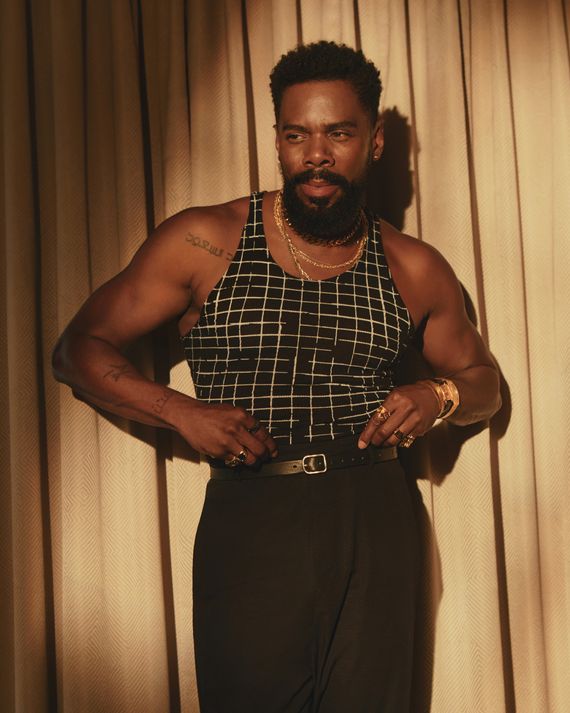
Colman Domingo has established himself as a versatile and formidable force in contemporary acting, seamlessly transitioning between stage, television, and film. His career is defined by a rigorous commitment to character depth, high-profile collaborations with visionary directors, and a consistent ability to anchor complex narratives through both dramatic intensity and charismatic screen presence.
The Foundations of a Multi-Hyphenate Talent
Colman Domingo’s trajectory began in the professional theater, where he cultivated the discipline and range that would later become his professional trademark. Born in Philadelphia, Pennsylvania, his early years were spent honing his craft through rigorous stage work. This foundation is critical to understanding his current approach to acting; theatrical training often requires an actor to master vocal projection, physical economy, and the ability to maintain narrative momentum in real-time.
His transition into television and film did not occur overnight but through a series of increasingly significant supporting roles that demonstrated his utility as a "character actor" capable of stealing scenes. By the mid-2010s, he had moved from ensemble contributions to lead roles, signaling a shift in his industry standing. Today, his work is characterized by a specific intentionality—he rarely plays the same archetype twice. Whether portraying historical figures, complex villains, or nuanced family men, Domingo approaches scripts with an analytical eye toward the character's internal psychology rather than merely adhering to the surface-level tropes of a genre.
Notable Projects and Artistic Milestones
To understand the scope of Colman Domingo’s work, one must examine the breadth of his project selection. His filmography reflects a strategy of alternating between commercial blockbusters and independent dramas that prioritize artistic merit.
Significant Film and Television Contributions
The following table outlines key projects that represent pivotal moments in his professional development, illustrating the range of his portfolio.
| Project Title | Role | Medium | Notable Impact |
|---|---|---|---|
| Fear the Walking Dead | Victor Strand | Television | Long-term series regular role showing character evolution |
| If Beale Street Could Talk | Joseph Rivers | Film | Critical acclaim for emotive, grounded performance |
| Ma Rainey's Black Bottom | Cutler | Film | Demonstration of ensemble acting and period-piece mastery |
| Rustin | Bayard Rustin | Film | Leading role securing significant industry award recognition |
| Sing Sing | Divine G | Film | High-level independent drama showcasing psychological depth |
The Shift to Leading Man Status
The mid-2020s marked a definitive transition for Domingo from a highly respected character actor to a verified leading man. In projects like Rustin, where he portrayed the civil rights leader Bayard Rustin, he demonstrated the ability to carry the emotional and political weight of a feature-length film. This performance was not merely a biographical recreation; it required a sophisticated understanding of historical context and the physical embodiment of a figure whose legacy is often overlooked.
The Method and Craft: Approaching the Script
Colman Domingo’s process is frequently cited as being rooted in character study and research. When preparing for a role, he often treats the screenplay as a blueprint rather than a final product. This is particularly evident in his collaboration with directors who favor improvisation or heightened realism. By dissecting the motivation behind a character's dialogue, he creates a performance that feels lived-in rather than practiced.
Furthermore, his background as a playwright—having written works like Dot and Wild with Happy—informs his acting. Because he understands the mechanics of how a story is constructed from the writer’s perspective, he is adept at finding the "beats" in a scene that need the most emphasis. He understands when to pull back and let the silence communicate more than dialogue ever could, a technique that has become a staple of his cinematic performances.
Impact on Industry Representation
Beyond his individual performances, Colman Domingo has become an influential figure regarding the types of stories being told in Hollywood. As an openly gay Black man, his career progression serves as a case study in the slow but steady opening of industry doors to diverse protagonists. He has been vocal about the necessity of authentic storytelling and the importance of hiring creatives who can bring lived experience to the screen.
In 2026, the industry landscape is markedly different than it was at the start of his career, and figures like Domingo have been instrumental in this shift. By consistently choosing roles that challenge the status quo, he has helped normalize the presence of complex, multifaceted Black characters in genres that were previously restrictive. His influence is not just measured in screen time, but in the ripple effect his work has on casting decisions and production priorities across major studios.
Navigating the Industry as a Professional Actor
For those interested in the craft of acting or the business of the entertainment industry, Colman Domingo’s career offers a roadmap for longevity. Unlike performers who burn out through early, rapid fame, Domingo’s path emphasizes:
- Strategic Diversification: By working in theater, independent film, and high-budget television simultaneously, he protects his career against the volatility of any single sector of the industry.
- Commitment to Craft: Regardless of the production's budget, he maintains a high standard of performance. This consistency creates trust with directors and casting agents.
- Intellectual Engagement: He treats his career as a professional vocation rather than a pursuit of notoriety. By involving himself in the writing and producing sides of the industry, he gains greater agency over the narratives he participates in.
Common Questions Regarding Colman Domingo’s Career
How did Colman Domingo transition from theater to film?
Domingo moved through theater circles in San Francisco and New York, eventually catching the attention of casting directors through his stage work. He transitioned into film by accepting supporting roles that required high-level dramatic capability, allowing him to demonstrate his versatility before moving into lead positions.
What is his approach to biographical roles?
When playing real-life figures, Domingo emphasizes the "internal life" over mere imitation. He seeks to uncover the personal motivations and private struggles of his subjects, which often requires extensive historical research and an attempt to humanize figures who are often viewed through a rigid, iconographic lens.
How does his experience as a writer influence his acting?
His writing experience allows him to understand the structure of a narrative. He is able to identify the core intent of a scene, which helps him make more informed choices about where to direct his energy during a take, often leading to more efficient and impactful performances.
Is he still active in theater?
Yes, he maintains a deep connection to the stage. Even while managing a busy film and television schedule, he frequently returns to theater, both as an actor and a creative, viewing it as the essential arena for maintaining his artistic edge.
What has been the most significant evolution in his career?
The shift from ensemble player to central protagonist represents his biggest evolution. Achieving this required both a mastery of his craft and a changing industry that began to prioritize the depth he brings to leading roles in character-driven narratives.
Practical Recommendation for Further Study
For those who wish to study Colman Domingo’s craft, the most effective approach is to compare his performances across different mediums. Start by watching his stage-adjacent work, such as Ma Rainey's Black Bottom, and contrast it with his more internalized, quiet work in If Beale Street Could Talk. Note the difference in physical movement and vocal modulation. This comparison provides a clear demonstration of how a top-tier actor adapts their techniques to suit the constraints and requirements of different formats. Furthermore, reviewing his interviews regarding his playwriting process can offer deeper insight into the psychological framework he applies to his characters. By treating his filmography as a collection of case studies, viewers can gain a better understanding of how a disciplined, intentional actor navigates the complex landscape of 2026 entertainment.