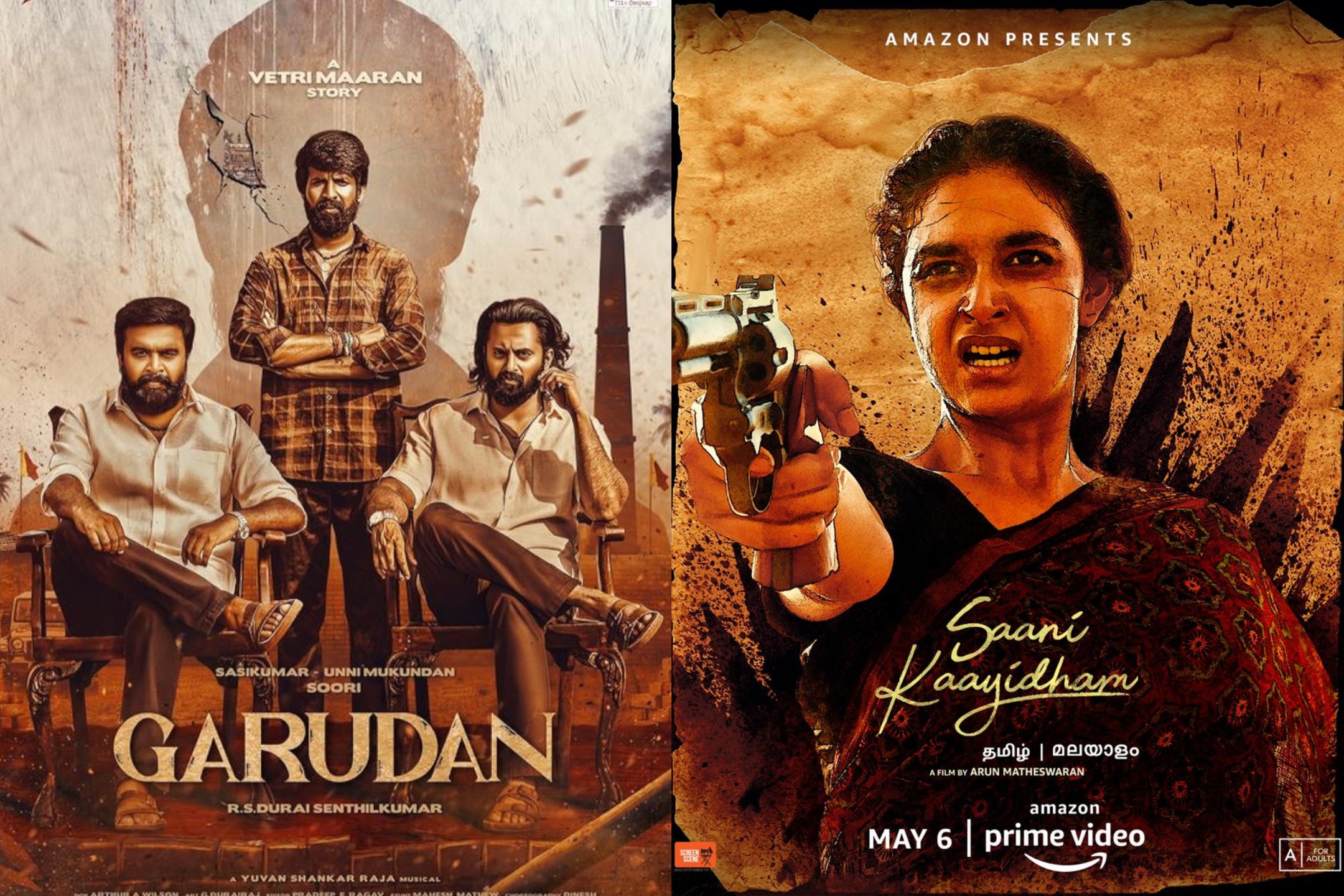
Tamil action films, frequently characterized by their high-octane choreography and "mass" appeal, represent a dominant segment of the Indian film industry. As of 2026, the genre has evolved from traditional hero-centric narratives into sophisticated cinematic universes and gritty neo-noir thrillers, leveraging advanced VFX and international stunt coordination to reach a global audience via streaming platforms and worldwide theatrical releases.
Tamil cinema, or Kollywood, has long been a powerhouse of action-oriented storytelling. What began as stylized stage-combat adaptations in the mid-20th century has transformed into a multi-billion rupee industry. The genre is no longer just about physical brawls; it encompasses psychological thrillers, socio-political action, and high-concept science fiction. To understand the current landscape of Tamil action films in 2026, one must examine the historical shifts, the technical advancements, and the key figures who have redefined the "action" aesthetic.
The Historical Foundations of Tamil Action Cinema
The roots of action in Tamil cinema can be traced back to the swashbuckling adventures of the 1950s and 60s. Actors like M.G. Ramachandran (MGR) and Sivaji Ganesan set the template for the "action hero." MGR, in particular, utilized action as a vehicle for social justice, where his characters often fought against oppression. These films relied on rhythmic swordplay and choreographed fistfights that, while rudimentary by today’s standards, established the "hero vs. villain" dynamic that remains a staple.
In the late 1970s and 80s, the arrival of Rajinikanth and Kamal Haasan shifted the paradigm. Rajinikanth introduced a unique "style" to action—fast-paced movements, signature gestures (like the cigarette toss), and punch dialogues that energized the audience. Simultaneously, Kamal Haasan brought a technical rigors to the genre, often experimenting with international martial arts and realistic stunt work, as seen in films like Vikram (1986). This era moved away from the stage-like choreography toward more cinematic, punchy encounters.
The 1990s and early 2000s saw the rise of the "Rural Actioner." Directors like Bharathiraja and later Hari focused on high-intensity, grounded violence set against the backdrop of southern Tamil Nadu. These films introduced the "sickle-wielding" protagonist, a trope that became synonymous with Tamil action for over a decade. However, this period also gave birth to the "Urban Action Thriller," with Mani Ratnam’s Thalapathi and Ayutha Ezhuthu providing a more nuanced, atmospheric approach to violence and conflict.
The Contemporary Shift: LCU and Cinematic Universes
By 2026, the most significant trend in Tamil action films is the maturation of the cinematic universe. Initiated by director Lokesh Kanagaraj, the Lokesh Cinematic Universe (LCU) revolutionized how action narratives are structured. Starting with Kaithi (2019) and expanding through Vikram (2022) and Leo (2023), the LCU demonstrated that audiences were hungry for interconnected storylines where characters from different films cross paths.
The LCU’s success shifted the focus from standalone "masala" films—which mix action, comedy, and romance—to dedicated action-thrillers with consistent internal logic. These films are characterized by:
- Darker Tones: Moving away from bright, colorful sets to moody, low-light environments.
- Complex Antagonists: Villains are no longer caricatures; they are given depth and formidable backstories.
- High Stakes: The violence is often more visceral, with a focus on weapon-based combat and tactical strategy rather than just superhuman strength.
Other directors have followed suit, creating their own thematic franchises. The focus in 2026 has moved toward "world-building," where the environment is as much a character as the lead actor. This has led to a surge in high-concept action films that blend elements of espionage, drug cartels, and political conspiracies.
Technical Milestones in Tamil Action Choreography
The technical depth of Tamil action films has reached an all-time high in 2026. The reliance on "wire-work" and obvious CGI has been largely replaced by a blend of practical stunts and "invisible" VFX. International stunt coordinators from Hollywood and East Asia are now frequently hired to design sequences that are both safe and spectacular.
Stunt Design and Practical Effects
Modern Tamil films prioritize "long-take" action sequences, where a single camera follows the protagonist through a complex brawl without cutting. This requires immense rehearsals and precision. The use of "Pre-viz" (Pre-visualization) technology—using 3D animation to plan shots before filming—has become standard practice for big-budget productions. This reduces on-set errors and allows for more ambitious set pieces, such as high-speed chases on Chennai’s busy arterial roads or elaborate rooftop pursuits.
Sound Engineering and Cinematography
Action is as much about what the audience hears as what they see. In 2026, Dolby Atmos 7.1.4 is the standard for theatrical releases, ensuring that every punch, gunshot, and explosion is immersive. Cinematographers now use specialized rigs like the "Bolt High-Speed Cinebot" to capture movements that the human eye cannot track, providing a hyper-realistic feel to fast-paced combat.
Comparative Analysis of Tamil Action Sub-genres
To better understand the diversity within the genre, the following table compares the three primary sub-genres of Tamil action cinema prevalent in 2026.
| Sub-genre | Typical Themes | Key Directors/Influences | Notable Characteristics |
|---|---|---|---|
| Mass Masala | Heroism, Family, Social Justice | H. Vinoth, Nelson Dilipkumar | Slow-motion entries, punch dialogues, large-scale gravity-defying stunts. |
| Neo-Noir / Gritty Realism | Crime, Survival, Revenge | Vetrimaaran, Lokesh Kanagaraj | Raw violence, desaturated color palettes, realistic weapon use (knives, machetes). |
| Techno-Thriller / Sci-Fi | Espionage, Cyber-warfare, AI | Shankar, Atlee | High-budget VFX, futuristic gadgets, international locations, sleek cinematography. |
The Influence of "Mass" Culture and the Hero Image
The concept of "Mass" is unique to South Indian cinema, particularly Tamil and Telugu. A "Mass" film is designed to cater to the widest possible audience, featuring a larger-than-life protagonist who embodies the aspirations of the common man. In 2026, the "Mass" element has been refined. While the hero still performs extraordinary feats, there is an increasing demand for emotional vulnerability.
Actors like Vijay and Ajith Kumar have mastered the balance between being an invincible action star and an emotionally resonant character. Vijay’s films often incorporate heavy dance-based action and topical social messages, while Ajith’s films tend toward sleek, vehicle-based action and heist themes. The younger generation of actors, such as Dhanush and Sivakarthikeyan, have also carved out niches in action, with Dhanush often leaning toward raw, intense performances in films directed by Vetrimaaran.
The "Mass Entry" sequence—the first time the hero appears on screen—remains a pivotal moment in Tamil action films. In 2026, these entries have become more creative, using innovative camera angles and background scores (composed by maestros like Anirudh Ravichander) to build localized hype that translates into massive opening-day box office numbers.
Global Accessibility and the Role of OTT Platforms
The global reach of Tamil action films has expanded exponentially due to streaming services like Netflix, Amazon Prime Video, and Disney+ Hotstar. Action is a universal language; while a comedy might lose its humor in translation, a well-executed chase sequence or a hand-to-hand combat scene resonates across cultures.
Subtitling and Dubbing
By 2026, Tamil action films are often released simultaneously in multiple languages (Hindi, Telugu, Kannada, Malayalam) and subtitled in over 20 global languages. This has led to a significant fan base in countries like Japan, France, and the United States. The "Pan-Indian" film model, where a movie is marketed to the entire Indian subcontinent rather than just the Tamil-speaking population, has become the default for high-budget action projects.
Digital-First Action
There is also a growing market for "Direct-to-OTT" action films. These projects often have slightly smaller budgets but more experimental narratives. They allow directors to explore darker, "R-rated" content that might face censorship hurdles in a traditional theatrical release. This has given rise to the "Action Mini-Series," which provides the same quality of stunt work but with more time for character development.
Common Challenges and Industry Standards
Despite the successes, the Tamil action genre faces several challenges in 2026. The primary concern is the rising cost of production. High-octane action sequences are expensive, and the pressure to outdo previous films can lead to bloated budgets.
- Safety Protocols: Following several high-profile on-set accidents in the early 2020s, the South Indian Film Employees Federation (FEFSI) has implemented strict safety guidelines. Every action sequence must now be overseen by a certified safety officer, and insurance for stunt performers has become mandatory.
- Plagiarism and Originality: With easy access to global cinema, audiences are quick to point out if a stunt sequence is copied from a Hollywood or Korean film. This has forced Tamil stunt directors to innovate and create "rooted" action—stunts that feel uniquely Indian or Tamil in context.
- Censorship: The Central Board of Film Certification (CBFC) continues to monitor depictions of violence. Filmmakers in 2026 often have to create two versions of a film: a "U/A" version for theaters and a more intense "A" or "Uncut" version for streaming platforms.
Frequently Asked Questions (FAQ)
What defines a "Mass" action film in Tamil cinema?
A "Mass" film is a high-energy commercial entertainer specifically designed to highlight the charisma and heroism of a lead star. It typically includes stylized action, powerful dialogues (punch lines), emotional stakes involving family or community, and upbeat musical numbers. The goal is to provide a "larger-than-life" experience that triggers a visceral reaction from the audience, often seen through whistling and cheering in theaters.
Who are the most influential action directors in Kollywood as of 2026?
Lokesh Kanagaraj is currently the most influential for his work in creating interconnected cinematic universes. Vetrimaaran is celebrated for his raw, realistic, and socially conscious action dramas. Shankar remains the pioneer of big-budget, VFX-driven spectacles, while H. Vinoth is known for his detailed, research-heavy action thrillers involving heists and corporate espionage.
Is the "LCU" (Lokesh Cinematic Universe) still active in 2026?
Yes, the LCU remains a cornerstone of Tamil cinema in 2026. Following the success of Leo, the universe has expanded with sequels and spin-offs, integrating characters from Kaithi and Vikram. It has become a benchmark for franchise filmmaking in India, influencing how other directors approach multi-starrer projects.
How has VFX changed Tamil action movies recently?
VFX is now used more for "augmentation" rather than just creating fantasy creatures. In 2026, VFX is used to enhance the impact of practical stunts, clean up safety wires, and create complex environments that would be impossible to film on location. De-aging technology and AI-driven stunt doubles are also being used to allow veteran actors to perform high-intensity sequences convincingly.
Where can international viewers watch the latest Tamil action films?
Most major Tamil action films are available on global streaming platforms such as Netflix and Amazon Prime Video within 4 to 8 weeks of their theatrical release. Platforms like Simply South and Tentkotta also cater specifically to the Tamil diaspora, offering a vast library of both new releases and classic action films.
Future Outlook and Recommendations
For those looking to explore the depth of Tamil action cinema in 2026, the best approach is to start with the "LCU" films to understand the modern technical standard, then work backward to the 1990s classics like Baasha or Thalapathi to grasp the cultural roots of the genre.
The industry is currently moving toward a more sustainable model where action is not just a spectacle but an integral part of the storytelling. As AI and real-time rendering technologies become more integrated into the filmmaking process, the "Action Films Tamil" category is expected to push the boundaries of what is possible on screen, further blurring the lines between regional cinema and global blockbusters.