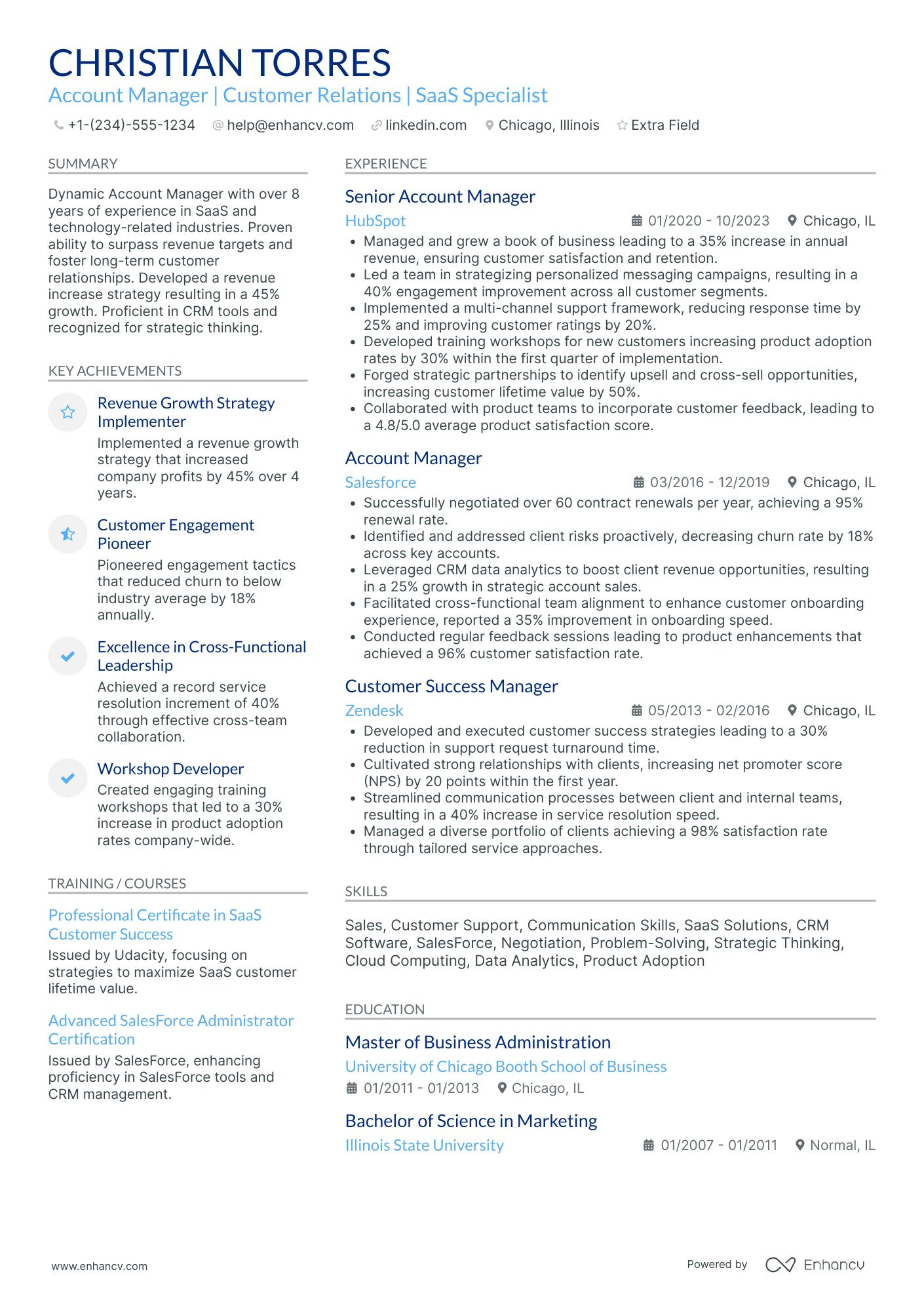
An Account Manager acts as the primary point of contact between a company and its clients, focusing on nurturing long-term relationships, ensuring customer satisfaction, and identifying opportunities for account growth. They balance client advocacy with business objectives to maximize retention and drive sustainable revenue through strategic partnership and proactive problem-solving.
As we move through 2026, the role of the Account Manager (AM) has evolved significantly. While the core mission remains rooted in relationship management, the integration of advanced predictive analytics and AI-driven CRM platforms has shifted the focus from reactive support to proactive strategy. Today’s Account Manager is not merely a liaison but a business consultant who understands the client’s industry as deeply as their own.
The Core Objectives of an Account Manager
The primary objective of an Account Manager is to manage and grow a portfolio of existing clients. Unlike Sales Representatives or Account Executives, who typically focus on "hunting" or acquiring new business, the AM is the "farmer" who cultivates existing ground. In the 2026 business landscape, this cultivation is data-dependent and high-touch.
Client Retention and Churn Mitigation
The most critical metric for any Account Manager is the retention rate. In a subscription-heavy economy, losing a client (churn) is often more expensive than acquiring a new one. The AM must identify early warning signs of dissatisfaction—such as decreased product usage or missed check-ins—and intervene before the client decides to terminate the contract.
Strategic Relationship Building
An effective AM moves beyond the procurement department and builds relationships with key stakeholders across the client’s organization. This includes C-suite executives, department heads, and end-users. By understanding the pain points of different levels of the organization, the AM can position the company’s products or services as indispensable solutions.
Revenue Expansion (Upselling and Cross-selling)
While retention is the floor, expansion is the ceiling. Account Managers are responsible for identifying where a client could benefit from additional features, higher-tier services, or complementary products. This requires a consultative approach rather than a hard-sell tactic; the AM must prove that the expansion will provide a clear Return on Investment (ROI) for the client.
Key Responsibilities and Duties
The daily tasks of an Account Manager vary by industry, but several core responsibilities remain universal. For a job description to be effective in 2026, it must clearly outline these operational expectations.
1. Account Planning and Strategy
Account Managers must develop individual "success plans" for their high-value clients. This involves setting goals for the year, identifying potential risks, and mapping out how the client will achieve their desired outcomes using the company’s services. This strategy is often reviewed quarterly (Quarterly Business Reviews or QBRs) to ensure alignment.
2. Performance Monitoring and Reporting
In 2026, clients expect transparency and proof of value. AMs are responsible for tracking Key Performance Indicators (KPIs) related to the client’s account and presenting these metrics in an easy-to-digest format. This might include cost-savings reports, efficiency gains, or usage statistics generated by automated platforms.
3. Conflict Resolution and Escalation Management
When things go wrong—whether it is a technical failure, a shipping delay, or a billing error—the Account Manager is the first person the client calls. The AM must remain calm, empathetic, and solution-oriented. They coordinate with internal teams (such as Product, Engineering, or Finance) to resolve issues quickly while keeping the client informed at every step.
4. Market and Industry Analysis
To act as a consultant, an AM must stay informed about the client's industry trends, competitors, and regulatory changes. If a new regulation affects how a client operates, the AM should be ready to explain how their company’s product can help the client remain compliant.
Essential Skills and Qualifications for 2026
The barrier to entry for account management has risen as the role becomes more technical and strategic. Modern job descriptions should emphasize a blend of "soft" emotional intelligence and "hard" analytical capabilities.
Soft Skills
- Active Listening: The ability to hear not just what the client says, but what they mean. Understanding unspoken frustrations is key to preventing churn.
- Negotiation: AMs often handle contract renewals. They must be able to negotiate terms that satisfy the client while protecting the company’s margins.
- Empathy and Emotional Intelligence (EQ): Building trust requires genuine human connection. In an era of AI automation, high EQ is a major competitive advantage for human Account Managers.
- Adaptability: Client needs change rapidly. An AM must be able to pivot their strategy when a client undergoes a merger, a leadership change, or a shift in market focus.
Hard Skills
- CRM Proficiency: Mastery of tools like Salesforce, HubSpot, or specialized 2026-era AI-augmented CRMs is mandatory. The AM must maintain "clean" data to ensure accurate forecasting.
- Data Literacy: The ability to interpret complex datasets and translate them into actionable business insights for the client.
- Project Management: AMs often lead cross-departmental projects to implement new solutions for a client. Familiarity with methodologies like Agile or tools like Asana and Monday.com is highly beneficial.
- Financial Acumen: Understanding P&L statements, gross margins, and lifetime value (LTV) helps the AM make better decisions about which accounts to prioritize and how to price expansion deals.
Comparing Related Roles
It is common for organizations to confuse the role of an Account Manager with similar titles. Distinguishing these in a job description prevents candidate confusion and ensures the right person is hired for the specific business need.
| Role | Primary Focus | Main Goal | Typical Metric |
|---|---|---|---|
| Account Manager (AM) | Existing Clients | Relationship & Growth | Net Revenue Retention (NRR) |
| Account Executive (AE) | New Prospects | Closing Initial Deals | New Logo Revenue |
| Customer Success Manager (CSM) | Product Adoption | Ensuring User Value | Health Score / Usage Rates |
| Project Manager (PM) | Specific Deliverables | Timeline & Execution | On-time Delivery / Budget |
While the Customer Success Manager and Account Manager roles have significant overlap, the AM usually carries a direct sales quota or revenue target, whereas the CSM is often more focused on the technical health and adoption of the product.
Industry-Specific Variations
The "Account Manager" title can mean very different things depending on the sector. When drafting a job description, it is vital to include the specific nuances of the industry.
Software as a Service (SaaS)
In SaaS, the AM focuses heavily on seat expansion and feature upsells. They work closely with Customer Success to ensure the client is actually using the software they pay for. The pace is fast, and the focus is on annual recurring revenue (ARR).
Advertising and Creative Agencies
Here, the AM acts as a bridge between the client's marketing team and the agency's creative department. They must manage "scope creep"—ensuring the agency doesn't do more work than the client is paying for—while ensuring the creative output aligns with the client's brand.
Manufacturing and Logistics
In these sectors, the AM manages complex supply chain relationships. The focus is on operational efficiency, lead times, and volume commitments. Reliability and long-term stability are prioritized over rapid expansion.
Standard Job Description Template (2026)
This template can be adapted for various seniority levels (Junior, Senior, or Key Account Manager).
Job Title: Senior Account Manager
Location: [City, State / Remote] Department: Sales/Customer Success Reports to: Director of Account Management
Job Summary: We are seeking a strategic and results-driven Senior Account Manager to oversee a portfolio of our most valued clients. You will be responsible for maintaining high retention rates, driving account growth through consultative selling, and acting as a trusted advisor to our clients. In 2026, we pride ourselves on being a data-first organization, and you will use our proprietary AI insights to deliver exceptional value to our partners.
Key Responsibilities:
- Manage a portfolio of [Number] accounts, totaling $[Amount] in annual revenue.
- Conduct monthly performance reviews and formal Quarterly Business Reviews (QBRs).
- Identify expansion opportunities and lead the negotiation for renewals and upsells.
- Collaborate with the Product team to advocate for client-requested features.
- Maintain 95%+ client retention rates across your assigned book of business.
Required Qualifications:
- Bachelor’s degree in Business, Communications, or a related field.
- 5+ years of experience in account management or client-facing roles.
- Proven track record of meeting or exceeding expansion quotas.
- Expert-level knowledge of CRM software and data visualization tools.
- Exceptional presentation skills, both in-person and via virtual platforms.
Preferred Skills:
- Industry-specific certifications (e.g., [Specific Certification]).
- Experience with AI-driven predictive analytics tools.
- Multilingual capabilities (if managing international accounts).
Typical Performance Metrics (KPIs)
To evaluate the success of an Account Manager, organizations in 2026 typically look at a balanced scorecard of quantitative and qualitative metrics.
- Net Revenue Retention (NRR): This calculates the percentage of recurring revenue retained from existing customers over a set period, including expansion and minus any downgrades or churn. An NRR over 100% is generally considered the "gold standard."
- Customer Satisfaction Score (CSAT) or Net Promoter Score (NPS): These surveys measure how the client feels about the relationship. A high NPS is a leading indicator of a future renewal.
- Account Health Score: A composite metric that combines product usage data, support ticket volume, and engagement levels to predict whether an account is "at risk" or "healthy."
- Organic Growth Rate: The percentage of new revenue generated specifically from existing accounts rather than new business.
The Future of the Role: Account Management in 2026
The role of the Account Manager is currently undergoing a "hyper-personalization" phase. With AI handling routine administrative tasks like scheduling, data entry, and basic reporting, the AM’s time is freed up for high-level strategy.
In 2026, the most successful Account Managers are those who can synthesize information from multiple sources to provide "insight-led" management. They don't just tell the client what happened; they tell the client what will happen if they don't adjust their strategy. This shift from "manager" to "partner" is the defining characteristic of the modern profession.
FAQ
What is the difference between an Account Manager and a Key Account Manager? An Account Manager typically handles a larger volume of mid-sized accounts, focusing on standardized processes and broad retention. A Key Account Manager (KAM) is assigned to the company's most prestigious or highest-revenue clients. KAM roles require a much deeper level of strategic integration, often involving multi-year roadmaps and bespoke service agreements.
Is an Account Manager a sales role? Yes, but with a different focus. While it is a "sales" role in the sense that AMs are responsible for revenue (renewals and upsells), the methodology is consultative and relationship-based rather than transactional. In many organizations, AMs have a base salary with a commission or bonus structure tied to retention and expansion targets.
What are the most common career paths for an Account Manager? Account Managers often progress into Senior Account Management, Key Account Management, or Account Director roles. Some transition into Customer Success leadership, while others move into specialized Strategic Partnership roles. Because of their deep understanding of client needs, they are also excellent candidates for Product Management or Marketing leadership positions.
Do Account Managers need a specific degree? Most employers require a Bachelor’s degree in Business, Marketing, or a related field. However, in technical industries like Engineering or Biotech, a degree in the specific field (e.g., Mechanical Engineering) paired with business experience is often preferred to ensure the AM can speak the client’s technical language.
How has AI changed the Account Manager job description in 2026? AI has removed the "busy work." Modern job descriptions now emphasize data interpretation and strategic emotional intelligence over manual reporting. AMs are now expected to use predictive AI to identify which clients are likely to churn or buy more before the client even realizes it themselves.
Practical Recommendations for Hiring Managers
When writing an account manager job description, avoid being too generic. Clearly define what "success" looks like for the first six months. If the primary goal is to stabilize a portfolio with high churn, say so. If the goal is to aggressively upsell a new product line, make that the focus.
For candidates, emphasize your ability to solve business problems, not just your ability to "get along" with people. In 2026, being liked is a prerequisite, but being valuable is what ensures long-term career success.