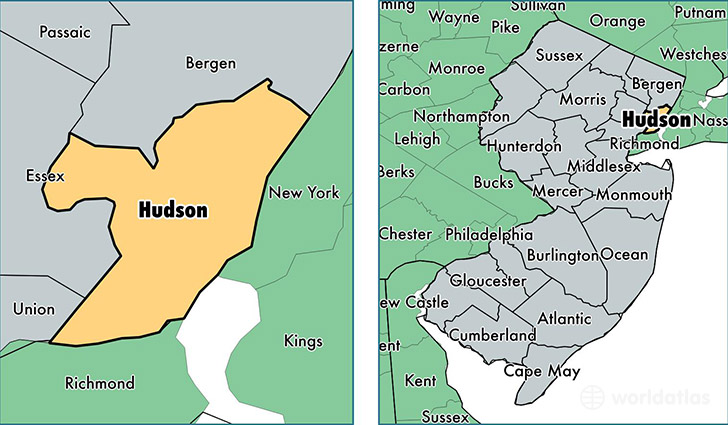
Accessing Hudson County, NJ land records involves navigating the official systems maintained by the Hudson County Register's Office and the New Jersey Automated Land Records System (NJALRS). Whether you are verifying property ownership, tracing a chain of title, or conducting historical research, you can access these public documents through online digital portals or by visiting the county office in Jersey City.
Understanding Hudson County Land Records
Land records serve as the legal foundation for property ownership, encumbrances, and real estate transactions within Hudson County, New Jersey. These documents provide a transparent, publicly accessible history of every parcel of land, commercial building, and residential home across the county's twelve municipalities, including Jersey City, Hoboken, Bayonne, and Union City.
The primary purpose of maintaining these records is to establish a clear chain of title. When a property is bought, sold, or refinanced, the transaction must be officially recorded to be recognized under New Jersey property law. For buyers, investors, and title researchers, understanding how these documents are indexed and retrieved is essential for uncovering potential legal issues, such as active liens, mortgages, easements, or restrictions that run with the land.
In Hudson County, the responsibility for recording and maintaining these instruments falls under the jurisdiction of the Hudson County Register’s Office. This office handles all documents related to real property transactions dating back decades, and in many cases, centuries. While modern digitization has made remote retrieval easier than ever, navigating these archives requires a clear understanding of the tools, indexing methods, and terminology unique to New Jersey real estate administration.
Types of Land Records Available in Hudson County
When searching through Hudson County archives, you will encounter various document types, each serving a specific legal function in real estate transactions. Knowing what specific record you need will drastically streamline your search process and help you avoid unnecessary fees or wasted time.
Deeds
A deed is a legal instrument used to transfer ownership of real property from one party (the grantor) to another (the grantee). In Hudson County land records, deeds contain crucial information, including the legal description of the property, the consideration (purchase price), the date of transfer, and signatures notarized according to New Jersey state standards. Common deed types include:
- Warranty Deeds: Provide the highest level of protection, guaranteeing that the grantor holds clear title to the property.
- Quitclaim Deeds: Transfer whatever interest the grantor has without making warranties about the validity of the title.
- Executor's or Administrator's Deeds: Used when property is transferred from an estate during probate proceedings.
Mortgages and Deeds of Trust
Mortgage documents record the financial lien placed on a property by a lender to secure a loan. When a borrower finances a home in Hudson County, the mortgage document is recorded to notify the public of the debt. Once the mortgage is fully paid off, the lender must record a Satisfaction of Mortgage or Discharge of Mortgage to clear the lien from the public record.
Liens and Encumbrances
Beyond standard mortgages, various involuntary liens can be attached to a property and recorded against the owner's name. These include mechanics' liens (filed by contractors for unpaid work), municipal utility liens, state and federal tax liens, and homeowners association (HOA) judgments. Accessing these records is critical during a real estate transaction to ensure the buyer does not inherit someone else's financial obligations.
Maps, Plats, and Condominium Floor Plans
Subdivision maps, survey plats, and condominium master deeds outline the physical boundaries and architectural divisions of real estate parcels. In densely populated urban environments like Hudson County, condominium floor plans and tax maps are particularly vital for identifying exact unit boundaries, common elements, and lot dimensions.
| Document Type | Primary Purpose | Key Information Contained |
|---|---|---|
| Deed | Transfers real property ownership | Grantor, grantee, legal description, purchase price |
| Mortgage | Secures a real estate loan with a property lien | Lender, borrower, loan amount, property description |
| Discharge/Satisfaction | Releases a property from a mortgage lien | Original loan date, recording reference, lender signature |
| Tax/Municipal Lien | Records unpaid taxes or municipal assessments | Amount owed, issuing agency, parcel identifier |
| Subdivision Map | Defines legal boundaries of divided land parcels | Lot numbers, street layouts, surveyor certifications |
Methods for Accessing Hudson County Land Records
Researchers have two primary pathways for accessing Hudson County property records: utilizing online digital databases from a computer or conducting in-person research at the county government facilities. Each method has distinct advantages depending on the depth of your research and the age of the records required.
Online Digital Portals
The most convenient method for modern searches is through official online databases. Hudson County utilizes modern electronic recording and search platforms. The primary portal allows users to search public land records by entering criteria such as:
- Grantor or Grantee last name / business name
- Block and Lot numbers (the standard New Jersey parcel identification system)
- Book and Page numbers
- Recording date ranges
- Document type (e.g., deed, mortgage, lien)
While basic index searching is often free or accessible through public terminals, viewing and printing uncertified copies of actual document images may require creating an account and paying nominal per-page viewing fees or subscription rates established by the county or its software vendor.
In-Person Research at the Hudson County Register's Office
For older records, complex title chains, or when digital systems experience downtime, visiting the physical office is necessary. The Hudson County Register’s Office is located within the county government complex in Jersey City.
The office provides public computer terminals where visitors can access the complete digital archives free of charge. Staff members can guide you on how to use the search software, though they are legally prohibited from performing substantive title searches or offering legal advice. Certified copies of documents, which bear the official seal of the county register, can be requested in person for a statutory fee per page.
Step-by-Step Guide to Performing a Property Search
Conducting an efficient property search in Hudson County requires a systematic approach. Whether you are using an online portal or an in-person terminal, following a structured workflow prevents missed documents and errors.
- Identify the Target Property Details: Gather as much preliminary information as possible. At minimum, you will need the property owner’s full legal name, the street address, or ideally, the municipal Block and Lot numbers. In New Jersey, the Block and Lot system is the most reliable index identifier because names can change or feature common spellings.
- Determine the Municipality: Hudson County comprises distinct taxing districts (municipalities). You must know whether the property is located in Jersey City, Hoboken, Bayonne, West New York, North Bergen, Secaucus, Kearny, Harrison, Weehawken, Guttenberg, or the townships of East Newark / Union City, as block and lot numbering restarts within each municipality.
- Access the Search System: Navigate to the official Hudson County Register online portal or log into the designated New Jersey automated land records network.
- Execute the Index Search: Enter your parameters. If searching by name, check both grantor (seller/borrower) and grantee (buyer/lender) indices across an appropriate date range.
- Review Document Summaries (Metadata): Examine the search results list. Look at document types, recording dates, and cross-references (such as a mortgage referencing a prior deed).
- Inspect Document Images: Open the digital image files for relevant documents. Verify signatures, legal descriptions, and marginal notes (such as margin stamps indicating subsequent assignments or discharges).
- Save or Print Records: Download PDF copies for your records or order certified copies if required for legal, financial, or court purposes.
Costs, Fees, and Official Policies
Accessing public land records in New Jersey involves statutory fee schedules set by state law and county administration. Understanding these costs helps you budget for professional projects or personal research.
Searching the public index databases online or via public terminals in the county office is generally free. However, downloading digital copies, viewing secure high-resolution images, or obtaining certified paper copies incurs fees.
- Uncertified copies: Typically cost a nominal fee per page when printed directly from public portals or office printers.
- Certified copies: Require a flat base fee plus a per-page charge, reflecting the labor and legal attestation provided by the Register's Office staff.
- Recording fees: If you are submitting a document for recording (such as a new deed or mortgage), fees are calculated based on the number of pages, type of document, and statutory surcharges mandated by the State of New Jersey. Payment must typically be made via approved methods, such as county-accepted credit cards, checks, or escrow accounts for frequent title company users.
Common Challenges and Troubleshooting
Navigating land records in a densely populated, historic county like Hudson can present unique obstacles. Recognizing these challenges in advance helps researchers troubleshoot search roadblocks effectively.
Name Variations and Spelling Errors
Historic indexing was often performed manually, leading to typographical errors, phonetic spellings, or omissions of middle initials. If a grantor or grantee name search yields no results, try searching variations of the last name, omitting middle names, or searching by corporate name abbreviations (e.g., "LLC," "Inc.," or shortened company titles).
Block and Lot Re-mapping
Municipalities frequently rezone, subdivide, or re-map neighborhoods. A parcel that sits on a modern subdivided lot may have a completely different block and lot designation in records dating back to the early 20th century. When researching older titles, use the historical tax maps available at the county office or consult municipal engineering departments to trace lot splits and combinations.
Missing or Unindexed Records
While modern documents are indexed immediately upon electronic recording, historical documents from older eras may rely on handwritten liber and page books. If a digital search fails to locate an instrument predating widespread computerization, you may need to search the physical grant-grantee ledger books or microfiche archives housed at the county repository.
Frequently Asked Questions
Can I search Hudson County land records for free online?
Yes, basic index searches and public database queries are generally accessible without charge. However, viewing full document images, downloading high-resolution PDF files, or obtaining official certified copies usually requires nominal per-page fees or subscription tiers depending on the specific portal configuration.
What is a Block and Lot number, and why do I need it?
In New Jersey, every parcel of real estate is assigned a unique identifier consisting of a Block number and a Lot number within a specific municipality. Because individuals can share the same name, the Block and Lot system provides an unambiguous method for locating property records without confusion.
How far back do Hudson County land records go?
Hudson County land records date back to the creation of the county in 1840, and in some cases, include older colonial-era and Bergen County records from which Hudson was partitioned. However, complete digital indexing is typically robust from the late 20th century onward, with older records requiring archival book or microfiche searches.
Are online land records legally binding?
Online records and uncertified digital downloads serve as valuable tools for preliminary research, due diligence, and informational purposes. If you need records for court proceedings, formal legal disputes, or institutional financing, you must obtain official certified copies bearing the seal of the Hudson County Register.
Who maintains Hudson County land records?
The records are officially maintained and administered by the Hudson County Register’s Office, located in Jersey City. This elected or appointed county office is responsible for receiving, indexing, recording, and preserving all deeds, mortgages, and property liens within the county.
Next Actions for Property Researchers
If you are ready to begin your search, start by gathering the exact property address and municipal taxing district information. Visit the official Hudson County Register’s portal to run a preliminary index search using the property's Block and Lot numbers. For complex title examinations, disputed property lines, or historical genealogies predating digital databases, plan a visit to the physical archives in Jersey City to consult master reference books and speak directly with county records personnel.