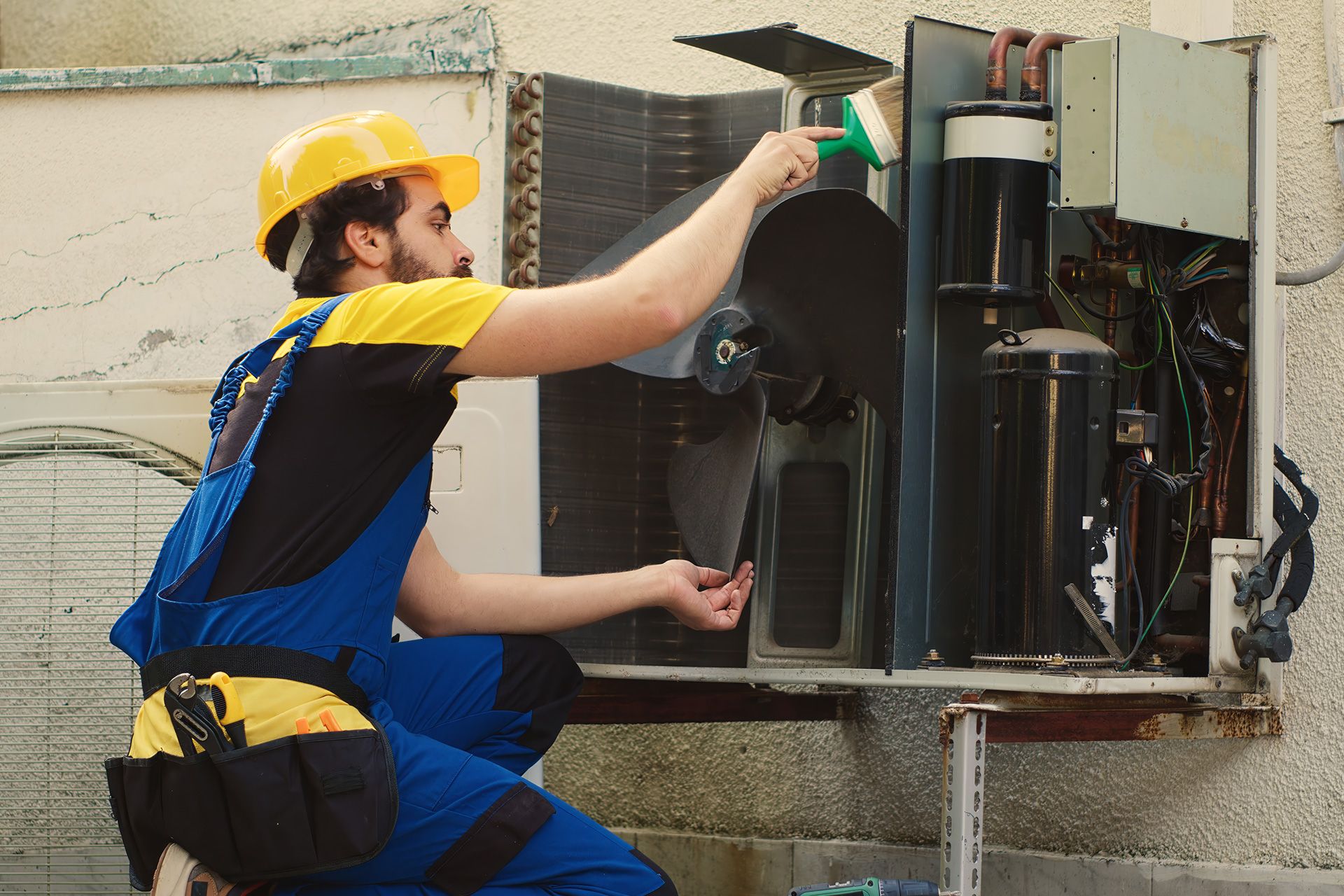
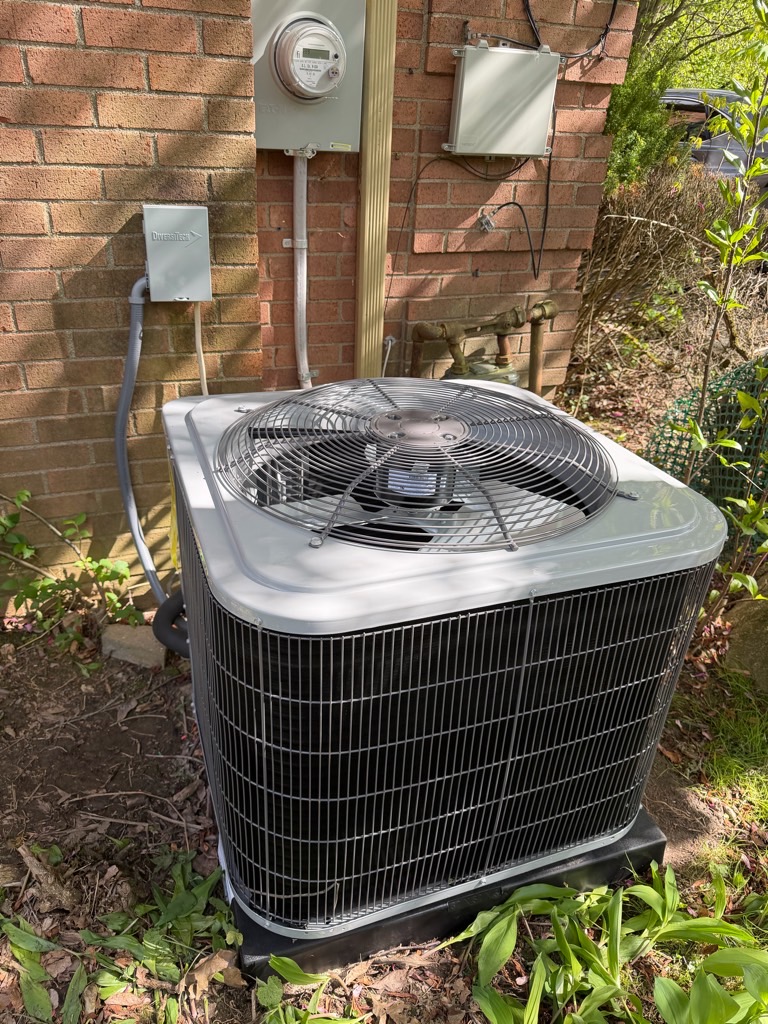
If your AC outside unit is not spinning, it is usually due to a failed capacitor, a tripped circuit breaker, or a burnt-out fan motor. Other common causes include a defective contactor or debris blocking the blades. To prevent compressor damage, turn the system off immediately and check for power or mechanical obstructions before calling a technician.
The outdoor portion of your air conditioning system, known as the condenser unit, is the heart of your home’s cooling process. Its primary job is to dissipate the heat collected from inside your home into the outside air. Central to this task is the condenser fan. When this fan stops spinning, the entire cooling cycle grinds to a halt. As of 2026, even with the prevalence of high-efficiency SEER2 systems and smart diagnostics, mechanical and electrical failures in the outdoor unit remain the leading cause of emergency HVAC calls during the summer months.
Understanding the Role of the Condenser Fan
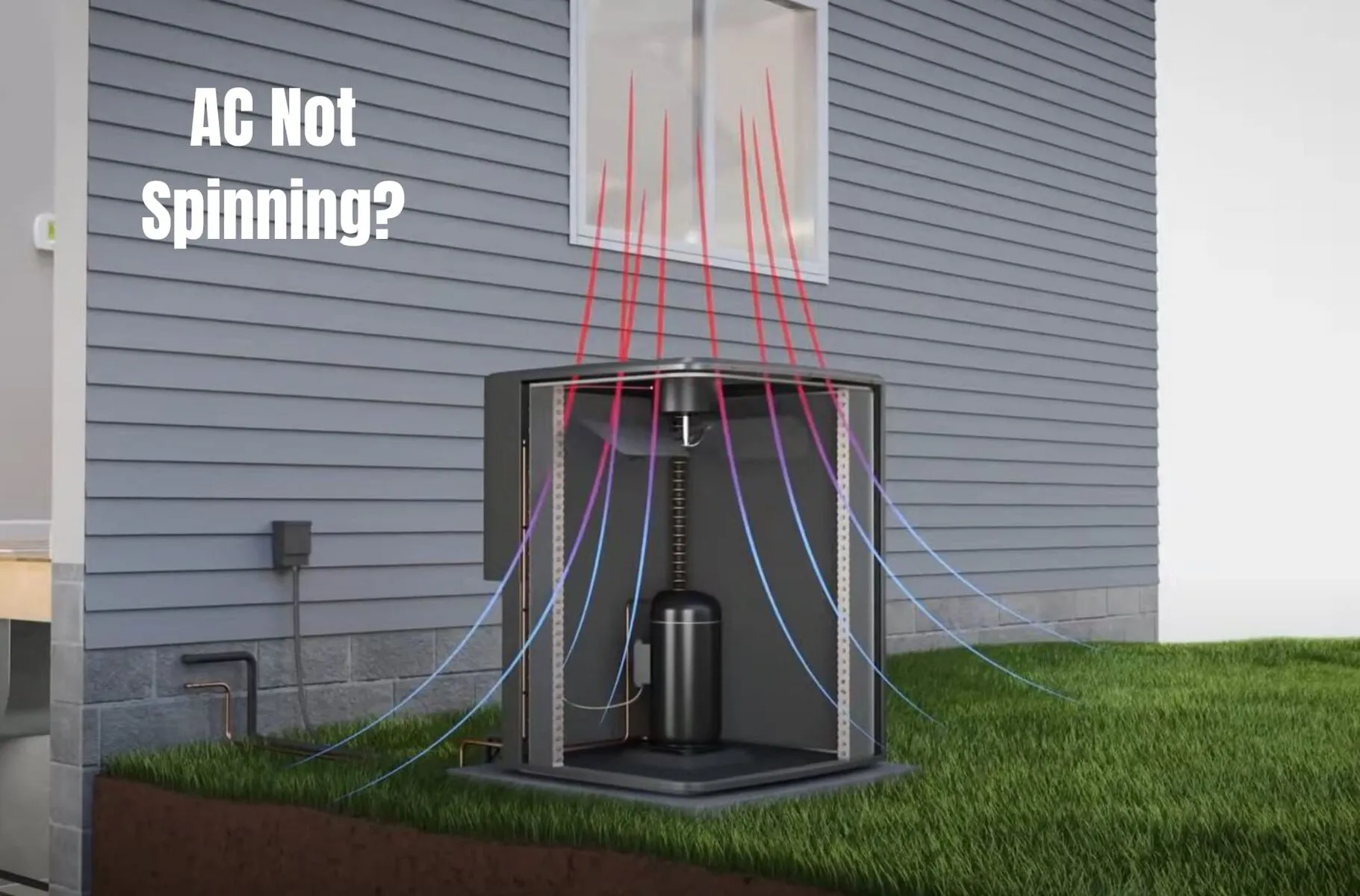
Before diving into the troubleshooting steps, it is essential to understand why the spinning motion of the outside unit is so critical. The air conditioner works by circulating refrigerant between the indoor evaporator coil and the outdoor condenser coil. The refrigerant absorbs heat from your indoor air and carries it outside.
Once the hot refrigerant reaches the outdoor unit, it is in a high-pressure, high-temperature gaseous state. The condenser fan pulls outdoor air through the metal fins of the condenser coil. This airflow removes the heat from the refrigerant, allowing it to condense back into a liquid so it can return indoors and repeat the process.
If the fan is not spinning, the heat has nowhere to go. The refrigerant remains hot, the compressor (the most expensive part of your system) begins to overheat, and eventually, the high-pressure limit switch will trip to prevent the system from exploding or melting down. Operating an AC unit without a spinning outdoor fan can lead to catastrophic compressor failure within hours.
Safety First: Electrical and Mechanical Precautions
Working on an HVAC system involves high-voltage electricity and moving parts. Before you inspect the unit, you must follow these safety protocols:
- Power Down: Turn off the AC at the thermostat. Then, locate the outdoor "disconnect box" (usually a small metal box mounted on the wall near the unit) and pull the disconnect or flip the switch to the "OFF" position.
- Verify Power is Off: If you have a non-contact voltage tester, use it to ensure no electricity is flowing to the unit.
- Physical Safety: Never stick your hands into the fan cage while the power is connected. Use only non-conductive tools for testing.
The "Stick Test": A Preliminary Diagnostic
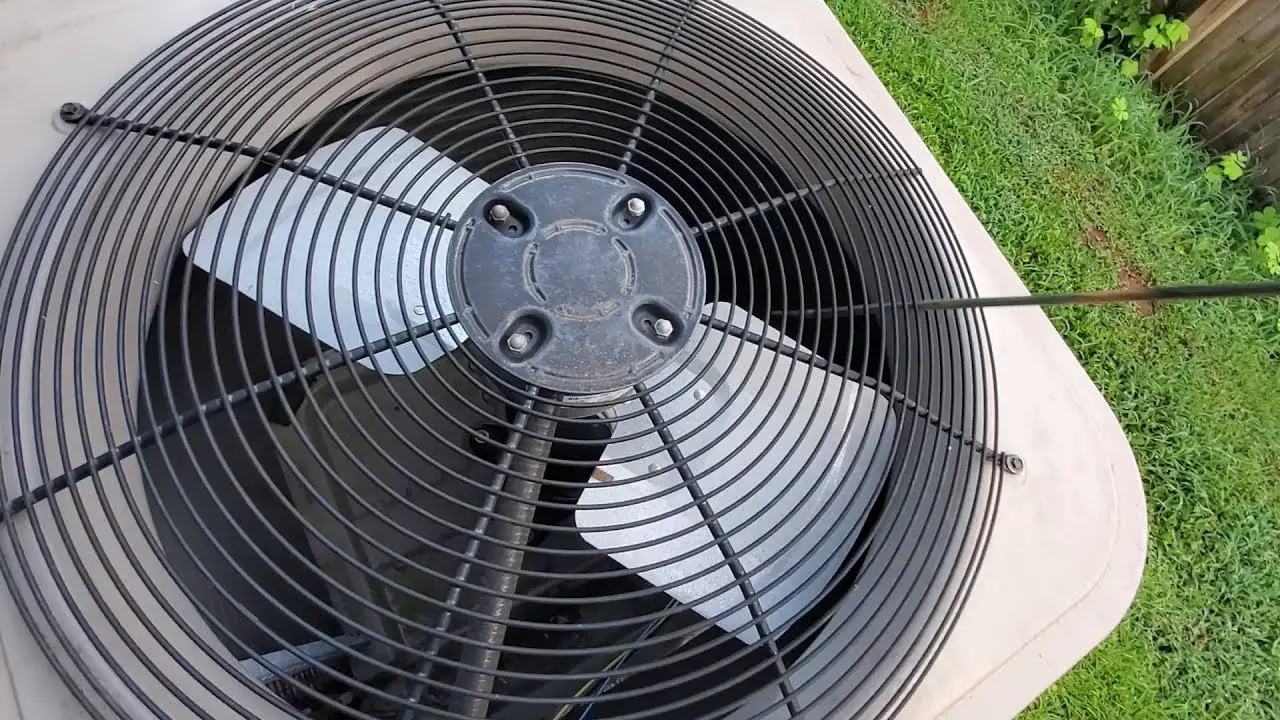
One of the most effective ways to narrow down the cause of a non-spinning fan is the "stick test." This test helps determine if the issue is a failed start capacitor or a completely dead motor.
- The Process: With the thermostat calling for cooling and the power to the outdoor unit turned ON, take a long, thin, non-conductive object (like a wooden paint stirrer or a plastic rod). Insert it through the fan grille and give one of the fan blades a gentle push in the direction it normally spins.
- The Results: If the fan starts spinning on its own and continues to run, your fan motor is likely fine, but your capacitor has failed. The capacitor provides the "kick" of energy needed to start the motor. If the fan still refuses to move, or if it moves sluggishly and then stops, the motor itself is likely seized or burnt out.
Common Causes of an AC Fan Not Spinning
1. Failed Run or Start Capacitor
In 2026, the capacitor remains the most frequent point of failure in residential HVAC systems. A capacitor is a small, cylindrical component that stores an electrical charge to help the fan motor start and stay running.
Capacitors are highly sensitive to heat. During record-breaking summer temperatures, the chemical electrolyte inside the capacitor can expand, causing the top of the metal canister to bulge or "mushroom." If you see a bulging top or leaking fluid, the capacitor is dead. Even without physical signs, a capacitor can lose its "farad" rating, meaning it no longer holds enough charge to assist the motor.
2. Tripped Circuit Breaker or Blown Fuse
If the fan is not spinning and you don't hear any humming sounds coming from the unit, there may be no power reaching the condenser at all.
- The Breaker: Check your home's main electrical panel. If the breaker for the AC is in the middle "tripped" position, flip it fully to off and then back to on.
- The Disconnect: Some outdoor units have internal fuses located in the disconnect box. If these fuses blow due to a power surge, the fan will not receive voltage.
- The Underlying Issue: If the breaker trips again immediately, do not keep resetting it. This usually indicates a "short to ground," meaning a wire is touching metal or the motor windings have failed, creating a fire hazard.
3. Defective Contactor
The contactor is a small relay switch that receives a low-voltage signal from your thermostat. When that signal arrives, the contactor closes, allowing high-voltage electricity to flow to the fan motor and the compressor.
- Pitting and Charring: Over time, the silver-plated "points" on the contactor can become charred or pitted due to electrical arcing. This prevents a clean connection.
- Insect Interference: In many regions, ants or spiders are attracted to the electromagnetic field of the contactor. If an insect gets crushed between the contact points, it can block the flow of electricity.
4. Burnt Out or Seized Fan Motor
If the motor is receiving power and has a good capacitor but still won't spin, the motor itself is the culprit.
- Seized Bearings: If you try to spin the fan blades with a stick (with the power OFF) and they feel stiff or won't move at all, the internal bearings have seized. This is common in older units where the factory lubrication has dried up.
- Burnt Windings: The copper coils inside the motor can overheat and melt their protective insulation, causing an internal short. You may smell a "burnt electronics" odor near the top of the unit if this has occurred.
5. Debris and Obstructions
Sometimes the simplest explanation is the right one. Because the outdoor unit sits in the elements, it is susceptible to nature.
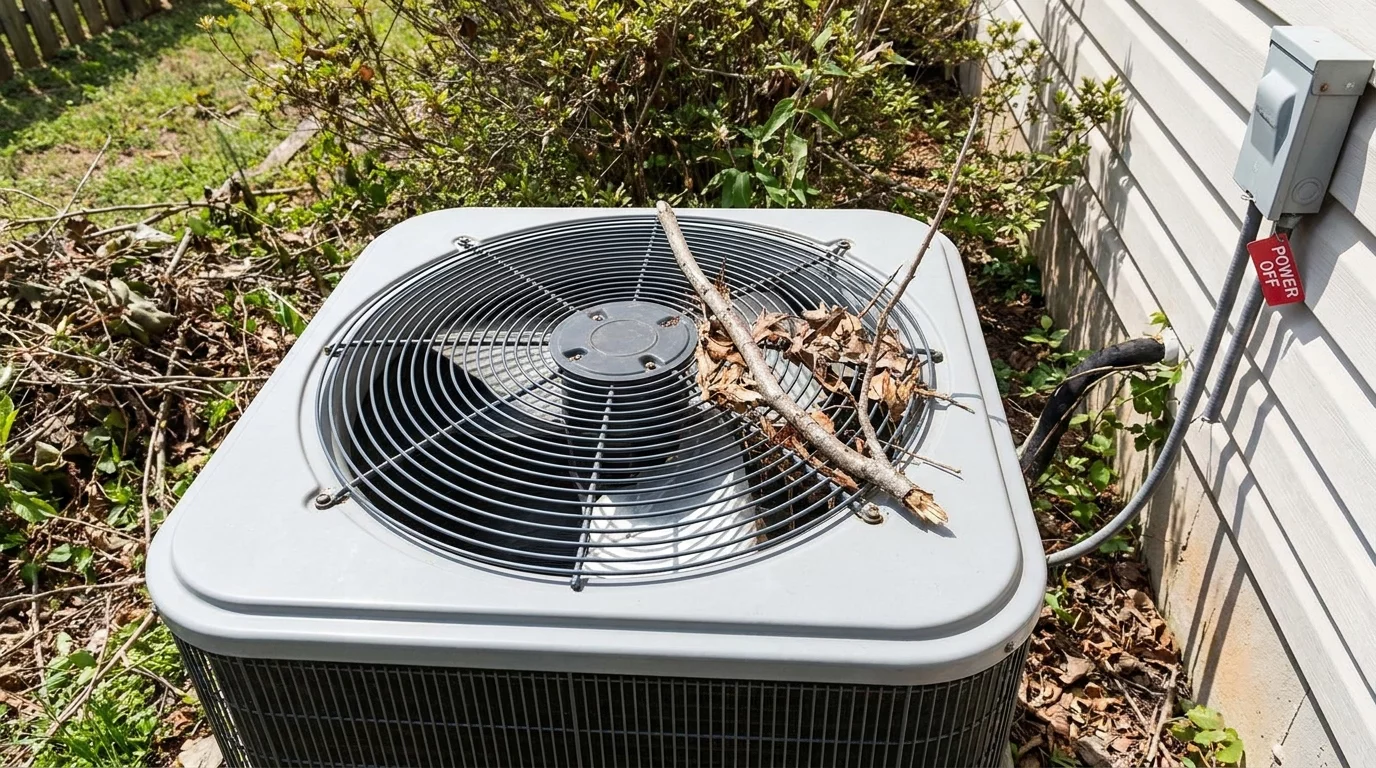
- Vegetation: Vines, tall grass, or fallen branches can get caught in the fan blades.
- Ice Accumulation: If your AC is running while the refrigerant is low, the coils can freeze over. In extreme cases, ice can build up so thick that it physically prevents the fan blades from turning.
Troubleshooting Comparison Table
| Symptom | Likely Cause | Difficulty to Fix | Estimated 2026 Cost (Pro) |
|---|---|---|---|
| Fan spins when pushed with a stick | Failed Capacitor | Moderate (High Voltage Risk) | $150 - $300 |
| No sound, no fan, no compressor | Tripped Breaker / No Power | Easy | $0 (DIY) / $100 (Service Call) |
| Humming sound, but fan won't spin | Seized Motor / Capacitor | Hard | $400 - $800 |
| Fan is stiff when turned manually | Seized Bearings | Hard | $450 - $900 |
| Clicking sound but nothing starts | Bad Contactor | Moderate | $200 - $400 |
Advanced Diagnostics: Using a Multimeter
If you are comfortable with electrical tools, a multimeter can provide a definitive answer. By testing for voltage at the contactor, you can determine if the problem is "upstream" (thermostat, wiring, or breaker) or "downstream" (motor or capacitor).
- Check for 240V: Test the "Line" side of the contactor. If you don't have voltage here, the problem is your breaker or disconnect.
- Check for 24V: Test the small wires on the side of the contactor. If you don't have 24V when the AC is "on" at the thermostat, your thermostat or the indoor control board is the problem.
- Check MFD (Microfarads): Most modern multimeters have a setting to test capacitance. If the reading is more than 6% below the rating printed on the capacitor label, it must be replaced.
Note: Capacitors store energy even when the power is off. They must be safely discharged using a resistor or a specialized tool before handling to avoid a dangerous shock.
When to Call a Professional
While replacing a capacitor is a common DIY task for the handy homeowner, most other fan issues require professional intervention. According to the U.S. Department of Energy, improper HVAC repair can reduce efficiency and lead to premature system failure.
You should call a licensed HVAC technician if:
- The circuit breaker continues to trip.
- There is a strong smell of burning plastic or ozone.
- The fan motor needs replacement (this often involves matching specific RPMs and shaft lengths).
- The unit is under manufacturer warranty (DIY repairs may void your coverage).
Preventing Fan Failures
To ensure your AC outside unit keeps spinning through the hottest months of 2026, implement these maintenance habits:
- Clear the Perimeter: Keep at least two feet of clear space around the outdoor unit. Trim back bushes and remove fallen leaves.
- Annual Cleaning: Gently spray the condenser coils with a garden hose (not a pressure washer) to remove dust and pollen. This reduces the load on the fan motor.
- Pre-Season Inspections: Have a professional check the "health" of your capacitor and contactor once a year. Replacing a $50 part during a scheduled visit is much cheaper than an emergency repair on a Sunday afternoon.
Frequently Asked Questions
Can I run my AC if the outdoor fan isn't spinning?
No. You should turn the system off at the thermostat immediately. Without the fan, the outdoor unit cannot release heat. This causes the compressor to operate at dangerously high temperatures and pressures. Running the system in this state can lead to a "slugging" event or a compressor motor burnout, which typically costs $2,000 to $4,000 to repair in 2026.
Why is my AC fan spinning slowly?
A fan spinning slowly usually indicates a failing run capacitor or a motor that is beginning to seize. If the capacitor is weak, it cannot provide the necessary torque to keep the motor at full speed. Alternatively, the motor's internal bearings may be worn out, creating friction that slows the blades. This requires immediate attention as it still leads to overheating.
Does a non-spinning fan mean I need a new AC?
Not necessarily. In most cases, the issue is a component failure like a capacitor or a motor, which can be replaced for a fraction of the cost of a new system. However, if your unit is more than 12-15 years old and uses R-22 refrigerant (which has been phased out), a major motor failure might be the catalyst to consider a more efficient SEER2-compliant replacement.
Can a dirty air filter cause the outside fan to stop?
While a dirty air filter primarily affects the indoor unit (causing the evaporator coil to freeze), it doesn't directly cause the outdoor fan to stop spinning. However, if the indoor coil freezes, it can send liquid refrigerant back to the compressor, which may cause the entire outdoor unit to shut down as a safety precaution. Always ensure your filters are clean before troubleshooting the exterior.
How long do AC fan motors typically last?
On average, a condenser fan motor lasts between 10 and 15 years. Their lifespan is heavily influenced by how hard they have to work. Units in dusty environments or those that are never cleaned will experience more friction and heat, leading to a shorter lifespan. High-quality motors with "ball bearings" generally last longer than cheaper "sleeve bearing" models.
Final Recommendation
If you discover your AC outside unit is not spinning, the first step is to turn off the power. Perform a visual inspection for debris and attempt the "stick test" to check for a failed capacitor. If the fan starts with a manual push, you have found a relatively simple and inexpensive fix. However, if the fan remains stationary or the breaker trips, contact a qualified HVAC technician to prevent permanent damage to your compressor. Regular maintenance remains the best defense against these mid-summer cooling failures.