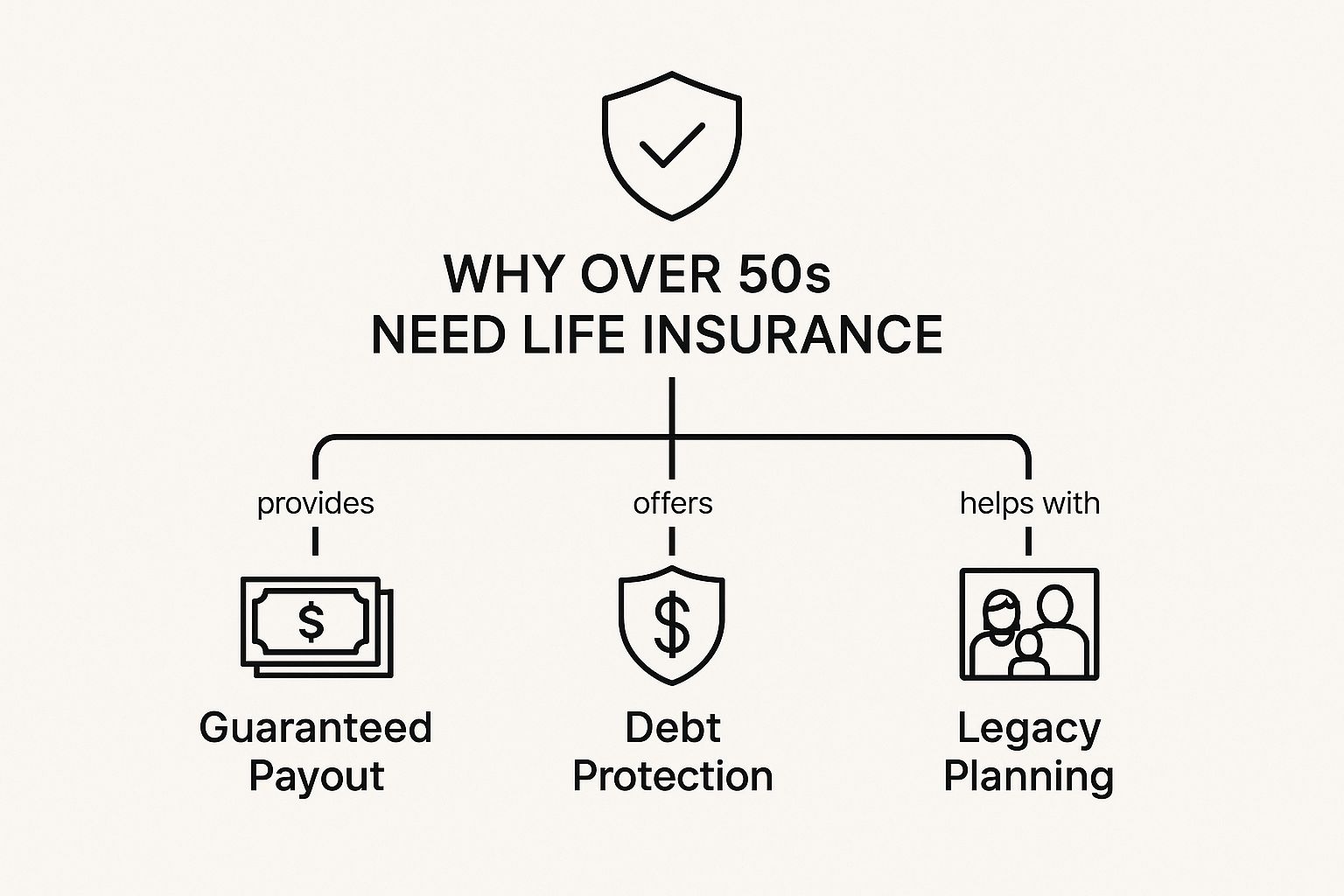
Choosing life insurance when you are over 50 in the UK requires careful consideration of guaranteed acceptance policies, whole-of-life coverage, and decreasing term insurance, keeping in mind that age-related underwriting changes, health disclosures, and policy terms will significantly dictate your monthly premiums and final payout amounts.
Navigating the financial landscape as you cross the threshold into your fifties and beyond brings a unique set of priorities. Securing your family’s financial future, covering potential funeral costs, or leaving a legacy to loved ones often climbs to the top of your personal checklist. However, the insurance market shifts considerably as you age. Premiums rise, underwriting criteria tighten, and the types of policies available change compared to when you were in your twenties or thirties.
In the UK, the "over 50s life insurance" sector is heavily advertised, often marketed as "guaranteed acceptance" plans. While these can offer peace of mind, they are not always the optimal choice for every individual. Making an informed decision requires looking past the marketing slogans and understanding the mechanics of different policy structures, payout mechanics, and long-term costs.
1. Understand the Different Types of Over 50s Policies
Before comparing providers or looking at monthly costs, you must understand the specific categories of life insurance available to UK residents aged 50 and over. Not all policies function the same way, and choosing the wrong type can leave your beneficiaries short-changed or result in wasted premiums.
Guaranteed Over 50s Life Insurance Plans
These plans are specifically designed for older adults. The primary selling point is that no medical exam or health questionnaire is required. If you are a UK resident within the eligible age bracket (typically 50 to 80), you are guaranteed to be accepted.
- The Catch: Because the insurer takes on everyone without assessing their health, the premiums are often higher relative to the payout size. Furthermore, most of these plans feature a "qualifying period"—usually 12 to 24 months. If you pass away from natural causes during this initial window, your beneficiaries will only receive a refund of the premiums paid, rather than the full cash sum.
Whole-of-Life Insurance (Underwritten)
Unlike guaranteed plans, underwritten whole-of-life insurance requires you to answer medical questions or undergo a nurse-administered health screening.
- The Benefit: If you are in relatively good health for your age, passing these checks allows insurers to offer you a much higher payout for a lower monthly premium than a guaranteed plan. The policy stays active for the remainder of your life, ensuring a payout whenever you pass away.
Term Life Insurance
If your primary concern is covering a specific financial obligation—such as the remaining years on an interest-only mortgage or providing income until your children are financially independent—a term life insurance policy might be appropriate.
- The Mechanism: These policies run for a fixed period (e.g., 10, 15, or 20 years). If you die within the term, the payout is made. If you outlive the term, the policy expires with no payout and no refund of premiums. While cheaper at age 50 than at age 70, premiums will still reflect your age at application.
2. Calculate Your True Financial Needs and Inflation Risks
One of the most common pitfalls when buying life insurance over 50 is miscalculating the actual amount of coverage required. Many consumers pick a round number, such as £5,000 or £10,000, without auditing what expenses their estate will actually face.
Factoring in Funeral Costs and Final Expenses
In the UK, the cost of dying has risen notably over the decades. According to industry data and funeral director cost indexes, a standard funeral can easily run into several thousand pounds when factoring in professional fees, burial or cremation charges, and memorial services. An over-50s policy is frequently used precisely for this purpose. Ensure your payout covers these baseline final expenses so they do not fall on grieving family members.
The Impact of Inflation on Fixed Payouts
This is a critical factor that many policyholders overlook. If you purchase a guaranteed over-50s plan with a fixed payout of £10,000, inflation will quietly erode the purchasing power of that money over time.
- Example: If you take out a policy at age 52 and live until age 82, a £10,000 lump sum will buy significantly less in three decades than it does today.
- The Solution: Look for policies that offer index-linking, where your coverage amount (and your monthly premium) increases annually in line with the Retail Prices Index (RPI) or Consumer Prices Index (CPI). Alternatively, be prepared to buy additional coverage as you age if your budget allows.
3. Balance Monthly Premiums Against Total Lifetime Cost
When evaluating life insurance, comparing monthly direct debits is natural, but it can be deeply misleading for long-term policies. You must evaluate the total cost of ownership over your expected lifespan.
The Danger of Living Longer Than Expected
With guaranteed over-50s plans, you usually continue paying premiums for the rest of your life, or up to a specific age (such as 90). If you live a long, healthy life, the total amount of premiums you pay into the policy can easily exceed the actual cash sum paid out to your family upon your death.
| Policy Type | Medical Check Required? | Premium Structure | Payout Guarantee | Risk of Paying More Than Payout? |
|---|---|---|---|---|
| Guaranteed Over 50s | No | Fixed for life | Guaranteed after initial period | High, if you live to an advanced age |
| Underwritten Whole-of-Life | Yes | Fixed or reviewable | Guaranteed upon death | Moderate to High |
| Term Life Insurance | Yes | Fixed for the term | Only if death occurs within term | High (if you outlive the term, nothing is returned) |
Always ask the insurer or broker for a projection of total premiums paid by age 80 or 85 to see if the investment makes mathematical sense compared to building a dedicated savings fund.
4. Scrutinize Policy Terms, Exclusions, and Trust Arrangements
The fine print of a UK life insurance policy dictates whether your family will experience a smooth payout or a protracted administrative hurdle after you pass away.
Understanding Exclusions and Waiting Periods
As noted earlier, guaranteed acceptance plans almost universally feature a 12-to-24-month moratorium on natural deaths. If death occurs via an accident during this window, full payouts are usually triggered, but natural deaths result strictly in a refund of premiums. Read the policy document carefully to verify these exact timelines. Furthermore, check for any travel exclusions or high-risk hobby limitations, though these are less common in standard over-50s whole-of-life policies.
Writing Your Policy in Trust
This is one of the most powerful steps you can take when setting up life insurance in the UK, yet it is frequently ignored.
- What it means: "Writing a policy in trust" means you legally separate the insurance payout from your estate.
- Why it matters: If a policy is not placed in trust, the payout forms part of your estate upon death. This means it may be subjected to Inheritance Tax (IHT) and, crucially, it cannot be paid out until probate is granted. Probate can take many months in the UK, leaving your family struggling to pay for immediate expenses like a funeral. Placing the policy in trust ensures the money goes directly to your chosen beneficiaries swiftly and tax-efficiently, bypassing probate entirely. Most insurers provide free trust forms with their policies.
5. Compare Providers, Use Whole-Market Brokers, and Check Financial Stability
Not all insurance providers are created equal. Finding the best policy involves looking beyond the household names seen on daytime television advertisements and examining the financial soundness and customer service records of the institutions backing the product.
Avoid Single-Provider Bias
Many well-known brands heavily market their own specific over-50s plans. However, going directly to one provider means you only see their pricing and terms. Utilizing a whole-of-market broker or a reputable comparison service allows you to view multiple quotes side-by-side. Keep in mind that for guaranteed over-50s plans, pricing is largely standardized by age and desired payout, but underwritten policies will vary wildly depending on your personal health declaration.
Check Financial Strength and Regulatory Status
Ensure any provider you consider is authorized and regulated by the Financial Conduct Authority (FCA) and protected by the Financial Services Compensation Scheme (FSCS). The FSCS provides a vital safety net; if the insurance provider collapses and cannot pay claims, you or your beneficiaries may be eligible for compensation from the scheme. Review independent consumer review platforms and financial rating agencies (such as Defaqto) to gauge the provider's track record in handling claims efficiently.
Disclaimer: This article is for informational purposes only and does not constitute formal financial advice. Insurance needs vary based on individual circumstances. Consider consulting an independent financial adviser (IFA) regulated by the FCA before purchasing long-term financial products.
Frequently Asked Questions
Can I get over 50s life insurance if I have existing medical conditions?
Yes. If you choose a guaranteed acceptance over-50s plan, your medical history is completely irrelevant—you cannot be turned down based on pre-existing conditions. However, if you apply for an underwritten whole-of-life or term policy, you must disclose your health history. Certain conditions may result in higher premiums (loadings) or specific exclusions, though many controlled conditions are easily insurable.
What happens if I stop paying my monthly premiums?
If you stop paying your premiums, your policy will typically lapse. For most over-50s whole-of-life plans, this means your coverage ceases immediately, and you will lose all the money you paid into the policy up to that point. Unlike some investment-linked insurance products, standard over-50s term and whole-of-life plans rarely build up a cash surrender value in the early or middle years of the policy.
Is the payout from over-50s life insurance taxable in the UK?
The payout itself is generally free from UK Income Tax. However, as mentioned previously, if the total value of your estate (including the insurance payout) exceeds the standard Inheritance Tax threshold (nil-rate band), the payout could be subject to a 40% Inheritance Tax charge—unless you have proactively placed the policy into a trust.
Is there an age limit to take out an over-50s policy?
Yes. While policies are branded for "over 50s," providers enforce upper age limits for new applications. These limits typically range from age 75 to age 85, depending on the specific provider and the structure of the policy. Once accepted, however, a whole-of-life policy will remain active for the rest of your days as long as premiums are maintained.
Can I have more than one life insurance policy?
Yes, you can hold multiple life insurance policies across different providers in the UK, provided you can afford the combined monthly premiums. Many people take out a small guaranteed over-50s plan specifically for funeral costs while maintaining a separate term policy to cover remaining mortgage debts or provide a larger inheritance for their dependents.