Finding a reliable financial safety net requires navigating complex policy wording, but securing 30 year term life insurance with transparent terms ensures your family receives the promised death benefit without unexpected exclusions or surprise rate hikes. Understanding how these contracts operate, what constitutes a truly transparent policy, and how to evaluate your options protects your long-term investment.
Understanding 30 Year Term Life Insurance and Market Transparency
When planning for financial security over a three-decade horizon, individuals often look for financial protection that remains stable, predictable, and free from unexpected policy changes. The phrase "30 year term life insurance no hidden" addresses a common consumer anxiety: the fear that an insurance contract contains obscure clauses, escalating costs, or restrictive definitions that could jeopardize a payout when beneficiaries need it most.
In the life insurance industry, a standard 30-year term policy provides a guaranteed death benefit and a locked-in premium for a full thirty years. However, the degree of transparency varies significantly among providers. Transparency in this context means complete clarity regarding how premiums are calculated, what exclusions apply to the death benefit, how the underwriting process evaluates health risks, and whether the policy includes conversion privileges. Consumers searching for straightforward policies want to avoid modified contracts, escalating premium schedules disguised as level rates, or ambiguous definitions of suicide, aviation, or hazardous activities.
Evaluating life insurance through a transparency-focused lens requires looking past marketing slogans and examining the actual policy jacket—the legal contract between the insurer and the policyholder. Because a thirty-year commitment spans major life changes, including career shifts, family growth, and natural aging, understanding the mechanics of these policies is essential for long-term peace of mind.
Core Characteristics of a Transparent 30-Year Term Policy
A truly transparent 30-year term life insurance contract exhibits several distinct characteristics that distinguish it from overly complex permanent products or policies with deceptive pricing structures. Recognizing these features allows applicants to identify straightforward coverage immediately.
Level Premiums and Guaranteed Rates
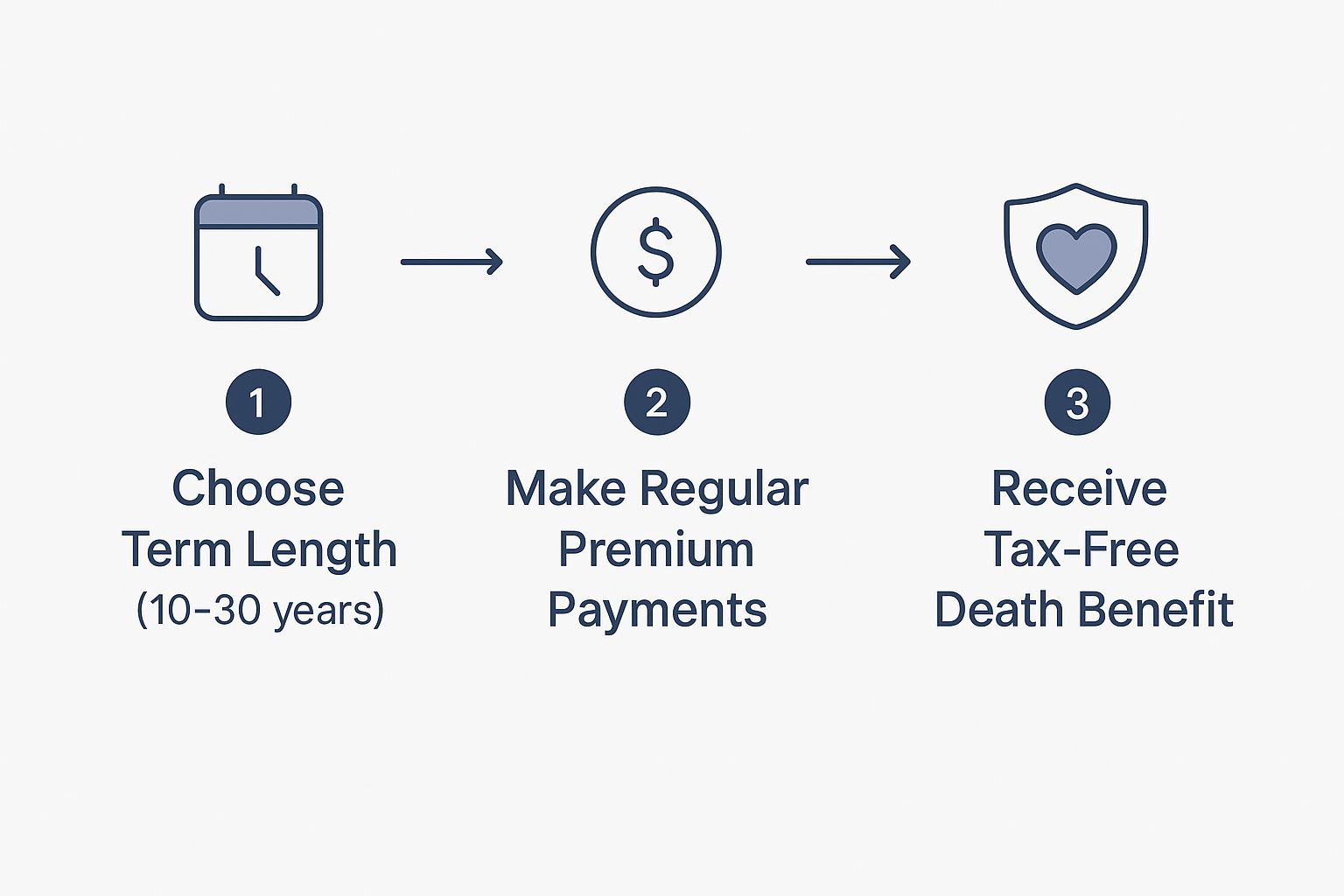
The foundation of a reliable 30-year term policy is a level premium guarantee. During the entire thirty-year duration, the monthly or annual cost remains identical. Transparent insurers explicitly state in the contract that they cannot raise rates due to changing health, advancing age, or unfavorable economic conditions. If a quote or policy mentions adjustable rates or non-guaranteed premium scales after an initial teaser period, it is not a true level-term contract.
Unambiguous Underwriting and Medical Requirements
Transparency begins before the policy is even issued. Clear underwriting guidelines outline precisely what medical exams, lab work, and historical health records are required. Insurers offering transparent policies provide clear rate class definitions—such as Preferred Plus, Preferred, Standard Plus, and Standard—along with the specific blood pressure, cholesterol, and family history thresholds required to qualify for each tier. This prevents "bait-and-switch" pricing where an applicant is quoted a premier rate only to be subjected to arbitrary hikes during underwriting.
Straightforward Death Benefit Provisions
The death benefit is the primary reason for purchasing term life insurance. In a transparent policy, the payout is a guaranteed fixed amount paid income-tax-free to the designated beneficiaries upon the insured's passing. The contract should clearly outline the rare circumstances where a death benefit might be contested or denied, primarily limited to the standard two-year contestability period for material misrepresentation on the application and suicide within the first two years of coverage.
Comparing Term Types and Transparency Levels
To understand where transparent 30-year term policies fit into the broader market, it helps to compare them against alternative structures. The following table contrasts standard term products, no-hidden term policies, and permanent alternatives.
| Policy Feature | Standard 30-Year Term | Transparent/No-Hidden Term | Permanent Life (e.g., Whole Life) |
|---|---|---|---|
| Duration | Fixed 30 years | Fixed 30 years | Lifetime |
| Premium Structure | Usually level, but check riders | Strictly level and guaranteed | Level or flexible, significantly higher cost |
| Cash Value | None | None | Accumulates tax-deferred cash value |
| Underwriting Clarity | Varies by carrier | Highly detailed requirements and rate charts | Complex financial and medical underwriting |
| Hidden Fees Risk | Low to Moderate | Minimal due to strict contract wording | Moderate to High (due to administrative and management fees) |
| Primary Purpose | Budget-friendly income replacement | Maximum predictability and consumer protection | Estate planning and lifetime wealth accumulation |
Evaluating Potential Pitfalls and Hidden Clauses
Even when a policy is marketed as straightforward, policyholders must remain vigilant about specific clauses that can impact the effectiveness of their coverage over a thirty-year timeline. Examining the fine print reveals how insurers manage risk and where unexpected challenges might arise.
The Two-Year Contestability and Suicide Clauses
By industry standard and legal regulation, life insurance policies include a contestability period—typically the first two years of the contract. During this window, the insurance company has the legal right to investigate the original application for material misrepresentation. If an applicant omits a significant medical condition or history of dangerous hobbies, the insurer can deny a claim or rescind the policy. A transparent insurer explains this rule clearly during the application process rather than relying on the fine print to surprise grieving families. Similarly, the suicide clause dictates that if the insured dies by suicide within the first two years, the insurer only refunds the premiums paid. After two years, the full death benefit is typically payable.
Riders and Optional Add-Ons
Many 30-year term policies offer optional riders, such as accelerated death benefits, waiver of premium for disability, or child term riders. While these features provide valuable supplemental protection, they can sometimes introduce hidden costs or complex administrative rules. For instance, an accelerated death benefit rider allows the policyholder to access a portion of the death benefit early if diagnosed with a terminal illness, often with little to no additional cost. However, other riders may increase the base premium or carry strict eligibility triggers. Consumers seeking transparency must review the specific fee schedule for every selected rider to ensure there are no unexpected cost increases.
Conversion Privileges
A crucial component of a long-term term policy is the conversion option. This provision allows the policyholder to convert their 30-year term insurance into a permanent life insurance policy (such as whole life or universal life) without undergoing a new medical exam. Transparent policies explicitly state the timeline during which conversion is permitted (e.g., the first 20 years or up to a specific age), the administrative fees involved, and whether the new policy retains the original health rating. Lack of clarity around conversion rules can trap a policyholder who eventually needs permanent coverage but faces unexpected health declines.
Step-by-Step Guide to Securing a Transparent Policy
Navigating the application and purchase process requires a methodical approach to ensure that the final contract meets your expectations for clarity and reliability.
- Assess Financial Obligations and Coverage Needs: Calculate the exact financial support your dependents would require over the next thirty years, accounting for outstanding mortgages, education costs, and income replacement.
- Research Financially Stable Insurers: Focus on companies with strong financial strength ratings from independent rating agencies like AM Best, Standard & Poor's, or Moody's, ensuring they have the capital reserves to pay claims decades into the future.
- Review Sample Policy Jackets: Request a specimen copy of the policy contract before signing. Read the definitions section and the general provisions to verify that premium guarantees and benefit terms are explicitly stated.
- Complete Accurate Medical Underwriting: Provide completely honest and detailed disclosures on your application regarding medical history, lifestyle, and occupation to prevent any future contestability issues.
- Analyze the Final Offer: Compare the issued policy against your initial quotes to confirm that the health rating, premium amount, and coverage terms match your expectations exactly.
Frequently Asked Questions
Can a 30-year term life insurance company raise my rates after ten years?
No, if you purchase a true level-premium 30-year term life insurance policy, the insurance company is legally bound by the contract to keep your premiums identical for the entire thirty-year term. If a policy features escalating or adjustable rates after a set period, it is not a level-term contract.
What happens at the end of the 30-year term?
Once the thirty years expire, the coverage terminates unless you renew it on a yearly renewable term basis (which typically comes with significantly higher, age-based premiums) or convert it into a permanent life insurance policy if your contract includes a conversion privilege.
Are death benefits from a 30-year term policy taxable?
In most cases, life insurance death benefits paid to a designated individual beneficiary are received completely income-tax-free under United States federal tax law. However, estate taxes may apply if the estate itself is named as the beneficiary or if the total estate exceeds federal exemption thresholds.
How does the insurance company verify medical history during underwriting?
Insurers verify medical history by reviewing your application disclosures, ordering an authorized attending physician statement (APS) from your doctors, running a prescription history database check, reviewing motor vehicle records, and occasionally requiring a paramedical exam that includes blood and urine samples.
Can I cancel a 30-year term life insurance policy if I no longer need it?
Yes, term life insurance contracts can be cancelled at any time simply by stopping premium payments or formally notifying the insurance carrier in writing. Because term policies do not build cash value, there is no cash surrender value returned upon cancellation.
Conclusion and Next Actions
Securing 30 year term life insurance with transparent, reliable terms requires careful attention to contract details, guaranteed pricing structures, and insurer financial strength. By prioritizing clear provisions over complex marketing claims, you can establish a predictable, long-term safety net for your family. Your immediate next step is to evaluate your precise coverage needs, request specimen policy contracts from top-rated insurers, and consult with an independent insurance professional to review the specific legal wording before submitting your application.