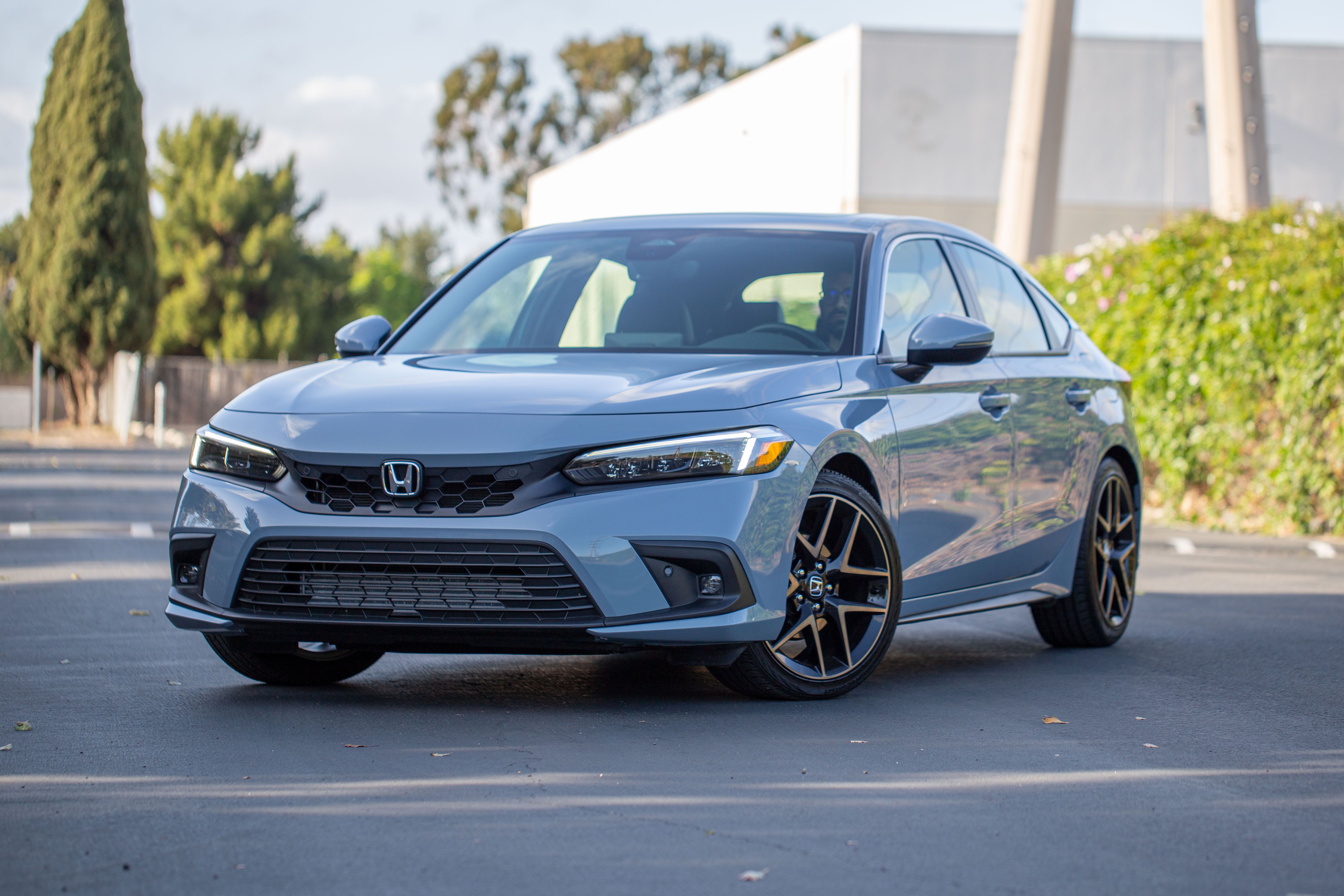
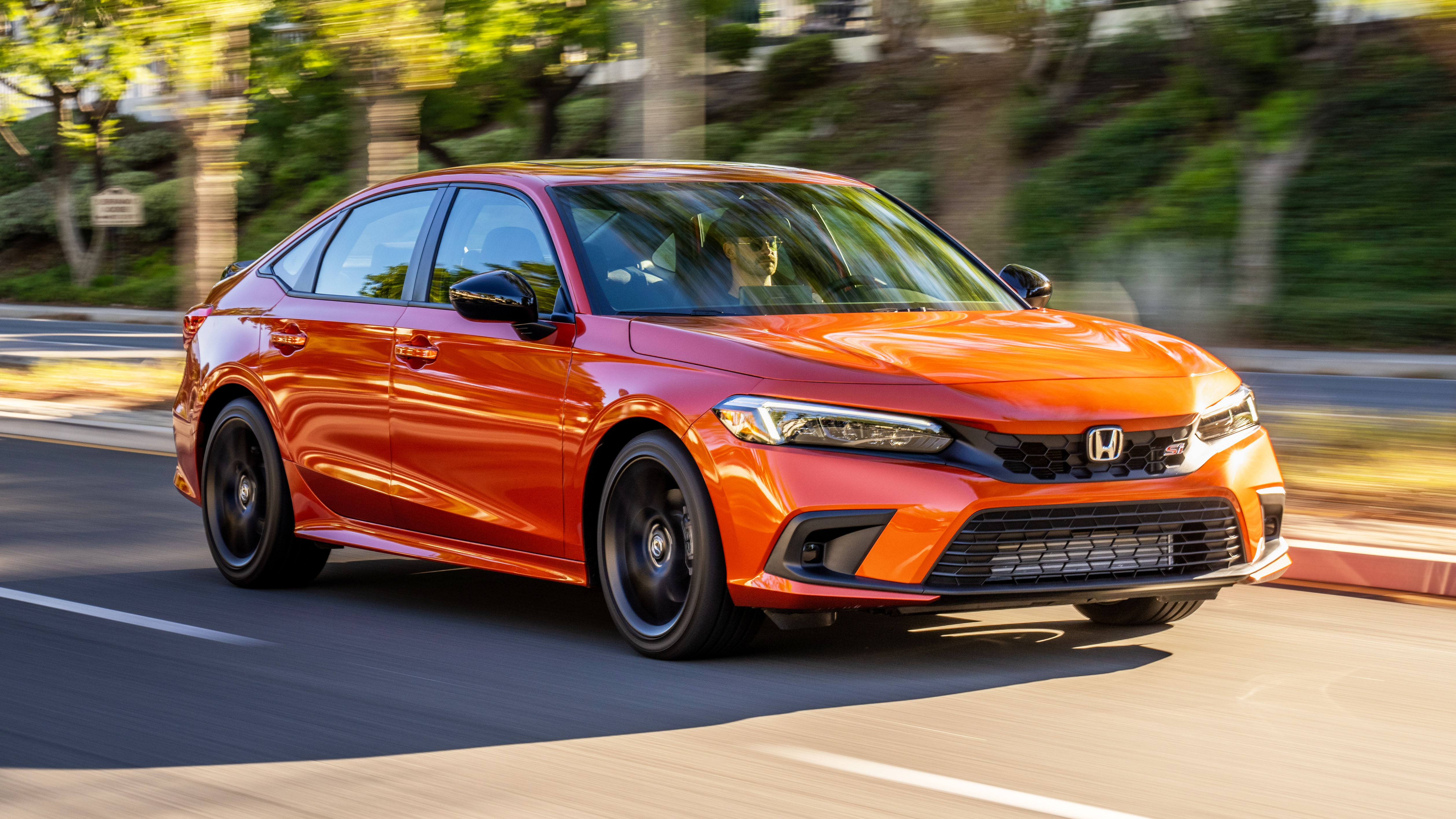
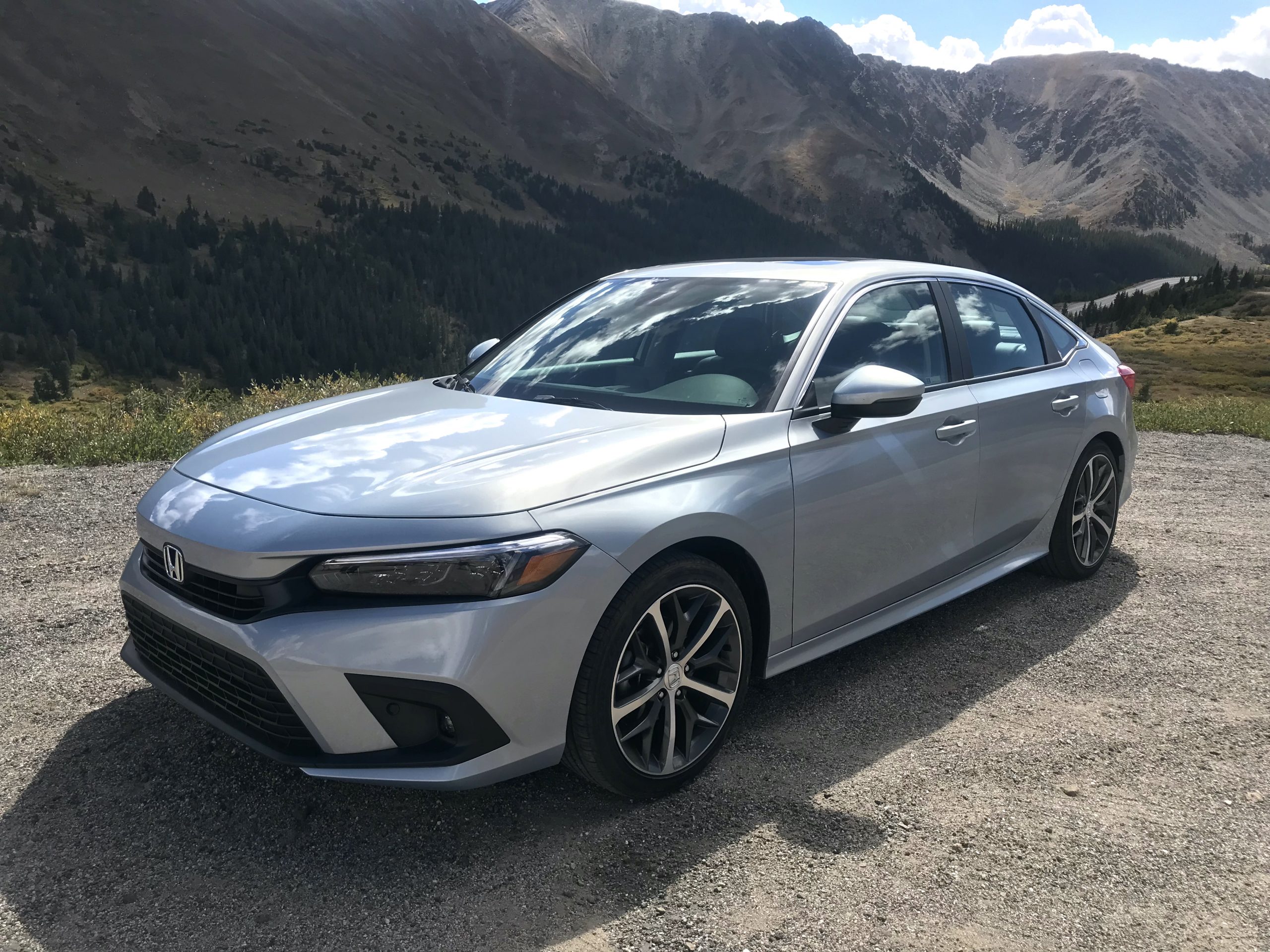
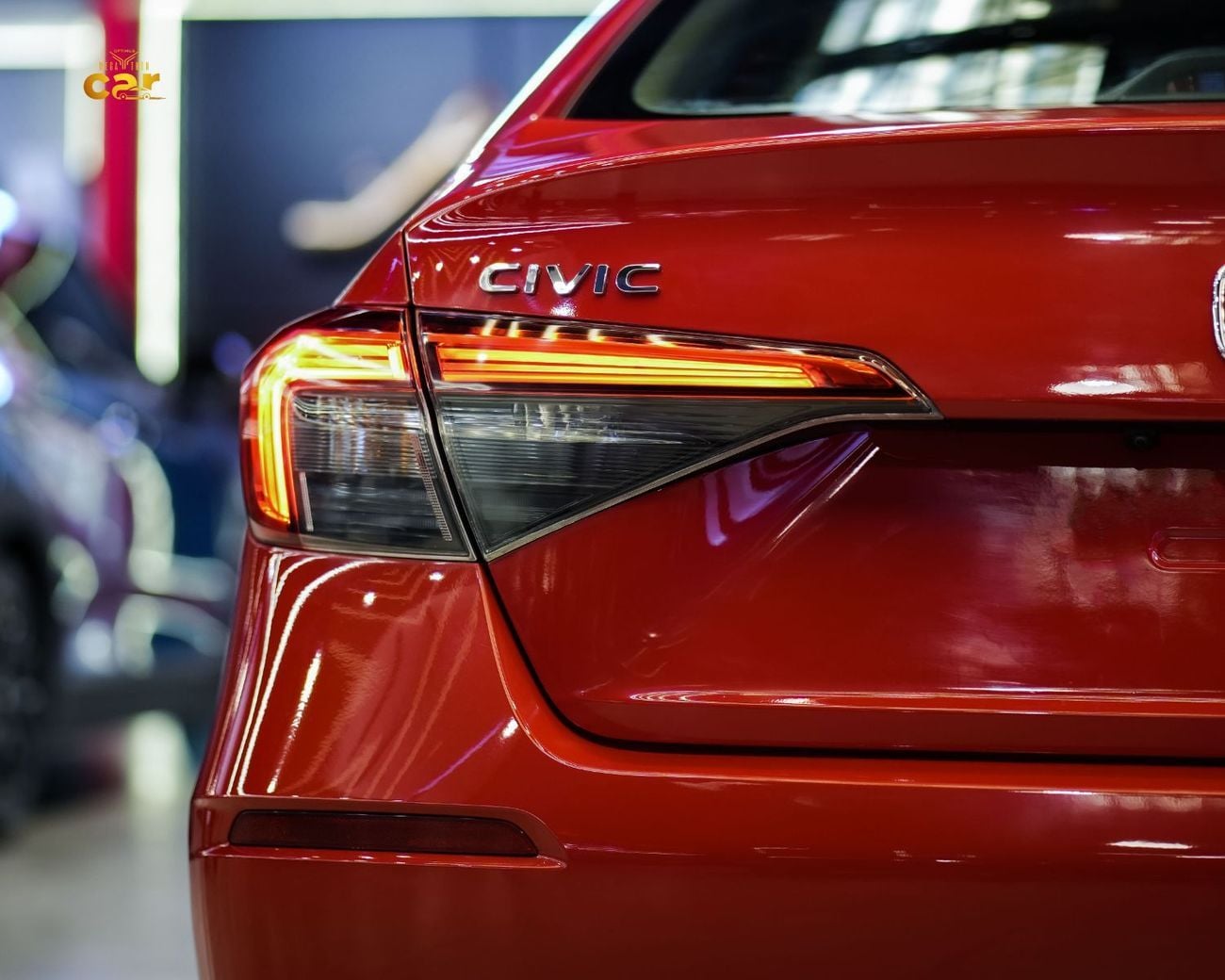
The 2022 Honda Civic Sport is powered by a 2.0-liter dual overhead cam (DOHC) i-VTEC 4-cylinder engine that produces 158 horsepower and 138 lb-ft of torque. This 11th-generation model features a standard Continuously Variable Transmission (CVT) with paddle shifters, 18-inch gloss-black alloy wheels, and a comprehensive suite of Honda Sensing® safety technologies, balancing everyday efficiency with a more aggressive aesthetic.
The Foundation of the 11th Generation: Chassis and Engineering
The 2022 model year marked the debut of the 11th-generation Honda Civic, representing a significant shift in design philosophy and structural engineering. For the Sport trim, this meant more than just a new body; it introduced a chassis with 8% greater torsional rigidity and 13% greater bending rigidity compared to the previous generation.
This structural stiffness is the silent contributor to the Civic Sport’s handling characteristics. By creating a more rigid frame, Honda engineers allowed the suspension to work more precisely. The front suspension utilizes a MacPherson strut design with friction-reducing components, while the rear features a multi-link setup mounted to a high-rigidity subframe. This combination minimizes road vibrations while keeping the car planted during spirited cornering—a key requirement for a trim labeled "Sport."
The Sport trim also features a specific steering calibration. It uses a dual-pinion electronic power steering (EPS) system that provides more feedback and a more linear feel than the base LX trim. In 2026, these 2022 models remain highly regarded in the pre-owned market specifically because this chassis refinement has proven to age gracefully, maintaining its "new car" tightness longer than many competitors in the compact segment.
Powertrain Analysis: The 2.0L i-VTEC Engine
While the higher EX and Touring trims moved to a turbocharged 1.5-liter engine, the 2022 Honda Civic Sport retained the naturally aspirated 2.0-liter K20C2 engine. This decision was strategic, prioritizing long-term reliability and linear power delivery over the peak torque of a turbocharger.
Engine Specifications
The K20C2 is an inline 4-cylinder engine with a displacement of 1,996 cc. It features a 10.8:1 compression ratio and an aluminum-alloy block and head. The 158 horsepower peaks at 6,500 rpm, while the 138 lb-ft of torque arrives at 4,200 rpm. This means the engine is "rev-happy," rewarding drivers who aren't afraid to use the upper reaches of the tachometer.
Transmission and "Step-Shift" Logic
The standard transmission is a M-CVT (Continuously Variable Transmission). Unlike older CVTs that felt rubbery or disconnected, the 2022 version includes "Step-Shift" programming. Under heavy acceleration, the CVT simulates traditional gear changes to reduce the "droning" effect often associated with belt-driven transmissions.
The Sport trim adds a specific "Sport Mode" button on the center console. When engaged, the transmission holds higher ratios for better throttle response, and the instrument cluster glow changes to reflect the more aggressive setting. The inclusion of steering-wheel-mounted paddle shifters allows the driver to toggle through seven simulated gear ratios, providing a degree of manual control that is essential for descending hills or preparing for a highway pass.
Exterior Dimensions and Sport-Specific Styling
The 2022 Civic Sport is visually distinguished by its "blackout" treatment. While the LX trim uses smaller wheels and more chrome, the Sport adopts a more sinister, modern look that has remained contemporary through 2026.
Dimension Table: 2022 Honda Civic Sport Sedan
| Specification | Measurement |
|---|---|
| Wheelbase | 107.7 inches |
| Length | 184.0 inches |
| Height | 55.7 inches |
| Width | 70.9 inches |
| Track (Front/Rear) | 60.5 / 61.7 inches |
| Curb Weight | 2,935 lbs |
| Ground Clearance (Unladen) | 6.7 inches |
| Wheel Size | 18-inch Gloss Black Alloy |
| Tire Size | 235/40 R18 91W |
The 18-inch wheels are wrapped in low-profile tires, which sharpen the steering response compared to the 16-inch wheels found on the base model. To complement the wheels, Honda equipped the Sport trim with matte black window surrounds, black side mirrors, and a chrome exhaust finisher. These elements work together to lower the visual center of gravity, making the car look wider and more aggressive than its physical dimensions suggest.
Interior Design and Technology Integration
Inside the 2022 Civic Sport, the design focuses on "Man-Maximum, Machine-Minimum" (M/M) philosophy. This results in a clean, uncluttered dashboard dominated by a unique honeycomb mesh accent that hides the air vents.
Seating and Materials
The Sport trim features a unique upholstery blend. While the base LX uses standard cloth, the Sport utilizes a combination of black cloth and synthetic leather (SofTex) bolsters. This provides the durability of cloth in high-wear areas with the premium look and feel of leather where it is most visible. The pedals are finished in aluminum, and the steering wheel and shift knob are wrapped in leather, significantly elevating the tactile experience of the driver.
Technology Suite
- Infotainment: A 7-inch color touchscreen is standard. It includes physical knobs for volume and tuning, which was a direct response to consumer feedback regarding previous all-touch systems.
- Connectivity: Apple CarPlay® and Android Auto™ integration are standard via a wired connection.
- Audio: The Sport trim receives an 8-speaker audio system, an upgrade over the 4-speaker system in the base model, providing a much fuller sound stage.
- Instrumentation: The driver's display is a 7-inch color TFT screen that provides digital readouts for speed, fuel economy, and safety alerts, paired with a traditional analog speedometer.
Safety and Driver-Assistive Technologies
One of the strongest selling points of the 2022 Honda Civic Sport is that it did not gatekeep safety features behind higher price points. The Honda Sensing® suite was standard equipment.
Honda Sensing® Features
- Collision Mitigation Braking System™ (CMBS™): Uses a camera and radar to detect vehicles or pedestrians ahead and applies brake pressure if a collision is deemed unavoidable.
- Road Departure Mitigation System (RDM): Detects if the car is drifting too close to the side of the road without a turn signal and provides steering assistance.
- Adaptive Cruise Control (ACC) with Low-Speed Follow: Maintains a set following interval behind detected vehicles. The "Low-Speed Follow" capability allows the car to come to a complete stop and resume in traffic.
- Lane Keeping Assist System (LKAS): Gently adjusts steering to keep the vehicle centered in a detected lane.
- Traffic Sign Recognition (TSR): Uses the front camera to "read" speed limit signs and display them on the driver's instrument cluster.
Additionally, the 2022 Sport includes 10 airbags, including the first-ever application of a "donut-shaped" driver’s airbag designed to cradle the head and reduce rotation during an angled frontal impact. In 2026, these safety specs remain competitive with brand-new entry-level vehicles, making the 2022 Sport a highly safe choice for families or new drivers.
Fuel Efficiency and Real-World Economy
Despite its "Sport" moniker and 18-inch wheels, this trim remains a highly efficient commuter. However, the larger wheels and stickier tires do result in a slight fuel economy penalty compared to the LX trim with smaller tires.
- EPA Ratings (Sedan): 30 City / 37 Highway / 33 Combined MPG.
- Fuel Tank Capacity: 12.4 gallons.
- Recommended Fuel: 87 Octane Unleaded.
With a 12.4-gallon tank, the 2022 Civic Sport offers a highway cruising range of approximately 450 miles. For owners in 2026, maintaining this efficiency requires ensuring the 18-inch tires are kept at the manufacturer-recommended PSI (33 front / 32 rear), as the larger contact patch is more sensitive to pressure changes than the tires on smaller-wheeled trims.
Comparison: Sport vs. Other 2022 Civic Trims
| Feature | LX Trim | Sport Trim | EX Trim |
|---|---|---|---|
| Engine | 2.0L NA (158 hp) | 2.0L NA (158 hp) | 1.5L Turbo (180 hp) |
| Wheels | 16-inch Steel | 18-inch Black Alloy | 17-inch Alloy |
| Start Type | Key | Push-Button/Remote | Push-Button/Remote |
| Speakers | 4 | 8 | 8 |
| Exhaust | Hidden | Chrome Finisher | Hidden |
| Seats | Cloth | Cloth/Synthetic Leather | Cloth (Heated) |
The Sport trim serves as the "sweet spot" for buyers who want the aggressive look of a performance car without the higher insurance premiums or maintenance costs of the turbocharged engines or the manual-only Si model.
Long-Term Maintenance and Reliability in 2026
As of 2026, the 2022 Honda Civic Sport has established a solid track record for reliability. The naturally aspirated 2.0L engine is less complex than the turbocharged alternatives, meaning fewer potential failure points like turbo seals or intercooler leaks.
Common Maintenance Intervals
- Engine Oil: Typically every 7,500 to 10,000 miles (as dictated by the Maintenance Minder system).
- CVT Fluid: Recommended replacement every 30,000 to 60,000 miles, depending on driving conditions.
- Brake Pads: The Sport's slightly more aggressive driving profile sometimes leads to pad wear around the 40,000-mile mark.
- Tires: The 18-inch 235/40 R18 tires are more expensive to replace than 16-inch tires. Owners in 2026 should check for uneven inner-edge wear, which can occur if the alignment is not checked after hitting significant potholes.
The 11th-gen Civic also improved its paint durability and interior material quality over the 10th gen, reducing the "rattles" that some older Honda owners complained about. The 2022 model was the pioneer of this improved build quality.
Frequently Asked Questions
Does the 2022 Honda Civic Sport have a turbo?
No, the 2022 Honda Civic Sport is equipped with a 2.0-liter naturally aspirated 4-cylinder engine. The turbocharged 1.5-liter engine is reserved for the EX and Touring trims (and the Si). While the Sport lacks the turbo's low-end torque, it is often preferred by long-term owners for its simplicity and the classic i-VTEC power band.
Can you get a manual transmission in the 2022 Civic Sport?
For the 2022 model year, the Civic Sport Sedan was only available with a CVT. However, if you chose the Civic Sport Hatchback, a 6-speed manual transmission was available as an option. The Sedan Sport is strictly an automatic affair, though it does include paddle shifters to simulate manual control.
What is the difference between "Eco" and "Sport" mode?
In "Eco" mode, the car optimizes fuel efficiency by dulling throttle response and adjusting the climate control system's power consumption. In "Sport" mode, the CVT shifts into a higher-performance mapping, the throttle becomes more sensitive, and the steering weight increases slightly to provide a more connected feel.
Is the 2022 Honda Civic Sport good on gas?
Yes, it is very efficient for its class. It achieves an EPA-rated 37 MPG on the highway. While the 18-inch wheels make it slightly less efficient than the base LX trim (which gets 40 MPG highway), it still outperforms many other compact cars in real-world fuel economy.
Does it have Apple CarPlay and Android Auto?
Yes, the 2022 Civic Sport comes standard with wired Apple CarPlay and Android Auto. You must connect your smartphone via a USB cable to the port located in the center stack. Wireless connectivity was exclusive to the 9-inch screen found on the Touring trim.
Next Steps for Buyers and Owners
If you are researching the 2022 Honda Civic Sport in 2026, your next action should be a thorough inspection of the vehicle's maintenance history. Specifically, verify that the CVT fluid has been changed if the car has surpassed 50,000 miles.
Due to its popularity, the 2022 Sport trim maintains high resale value. When test-driving, pay close attention to the ride quality; the 18-inch wheels provide excellent grip but can transmit more road harshness if the tires are worn or if the suspension bushings have aged prematurely. Overall, the 2022 Civic Sport remains one of the most balanced "all-rounder" vehicles produced in the last decade, offering a blend of style, safety, and mechanical simplicity that is increasingly hard to find.