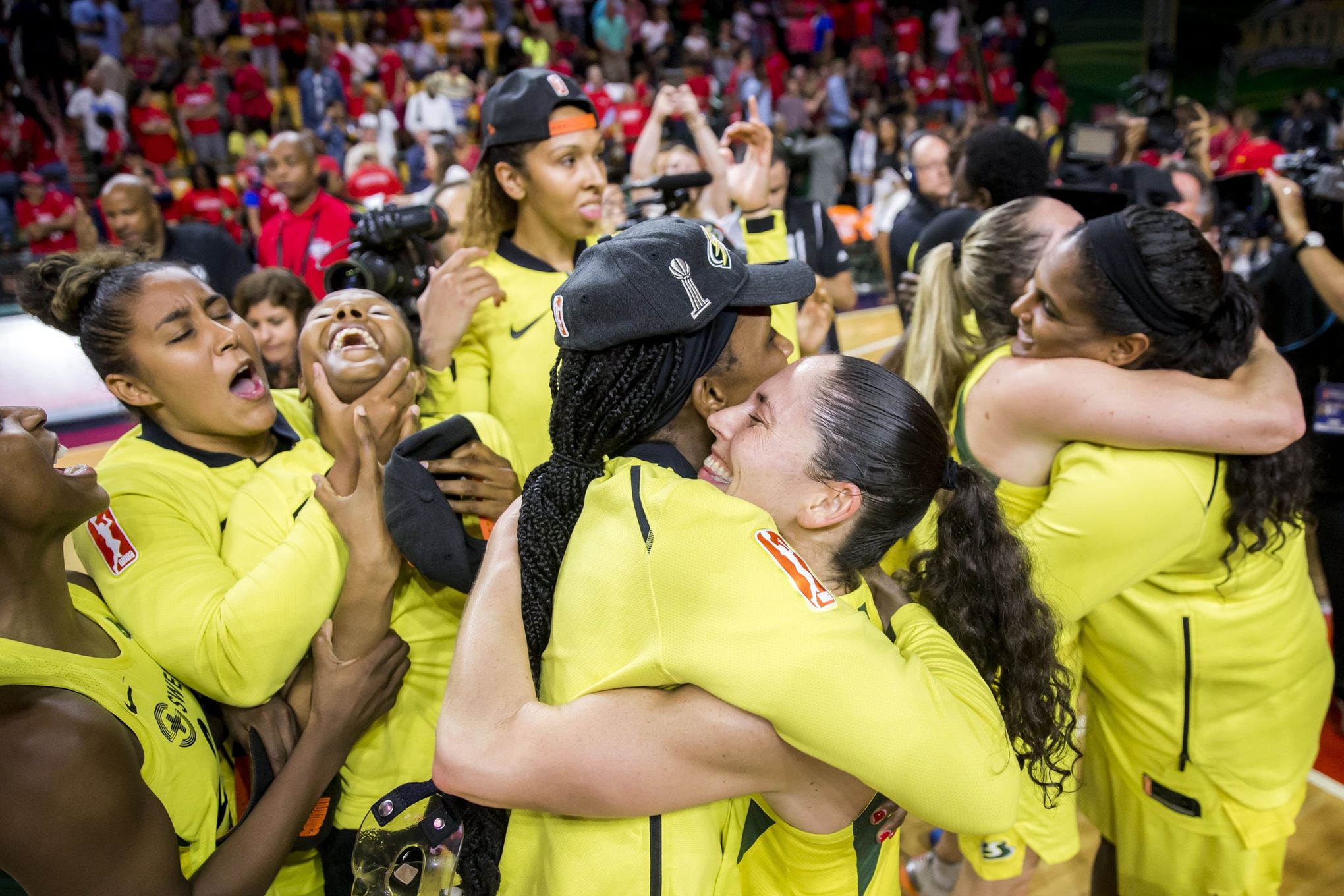
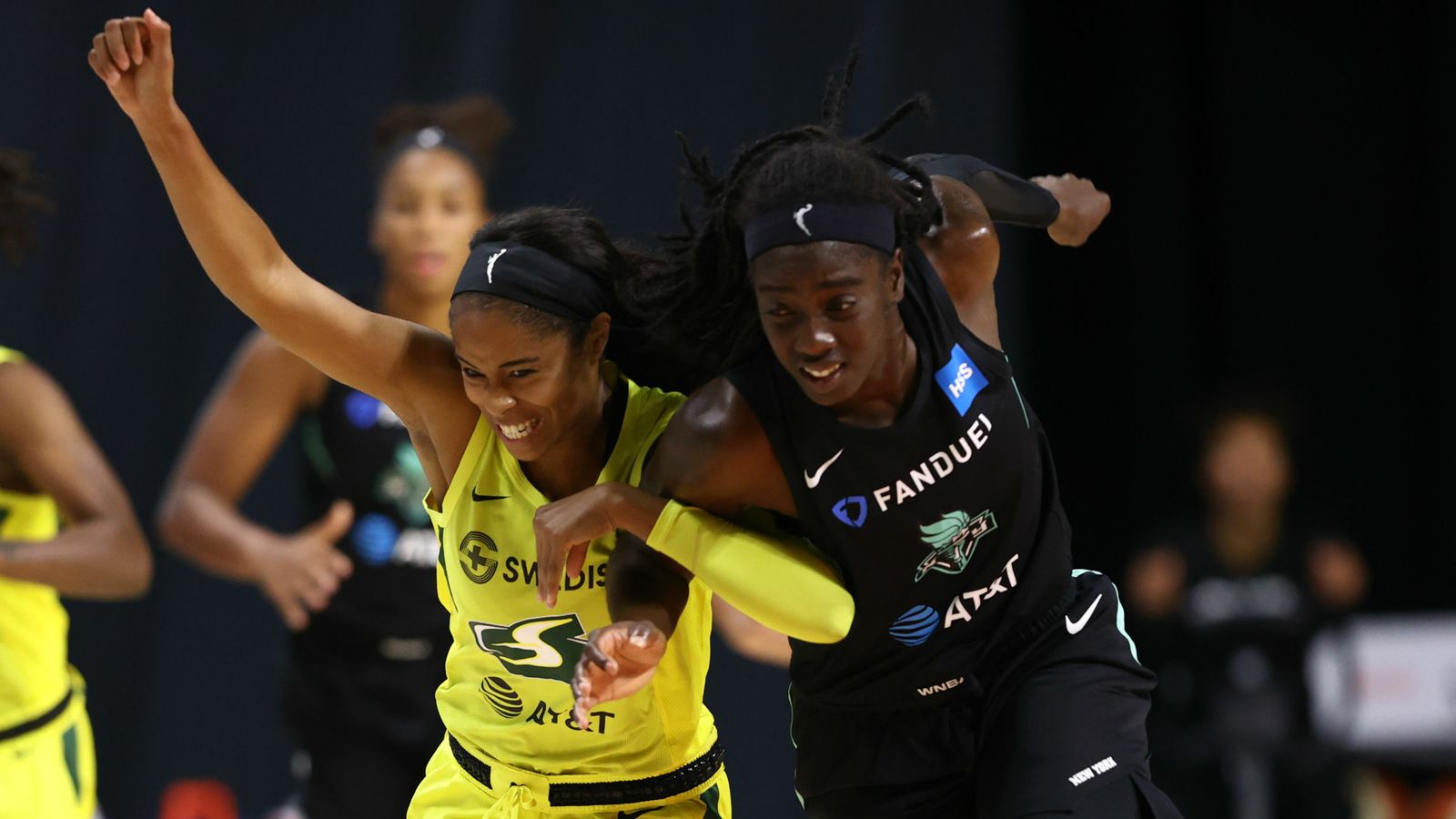
The 2018 WNBA Championship, won by the Seattle Storm in a three-game sweep over the Washington Mystics, represented a masterclass in offensive efficiency and cohesive team basketball. This series confirmed the Storm's resurgence as a league powerhouse, securing the franchise’s third title and cementing Breanna Stewart’s status as a generational talent during her dominant MVP season.
The Path to the 2018 Finals
To understand the magnitude of the 2018 WNBA Championship, one must examine the regular season performance that set the stage. The Seattle Storm finished the 2018 regular season with a league-best record of 26-8. This record granted them the top seed in the playoffs and a double-bye directly into the semifinals, a crucial advantage in the high-stakes WNBA postseason format.
Under the guidance of head coach Dan Hughes, the Storm established a tactical identity centered on high-percentage shooting, transition efficiency, and the undeniable chemistry between their core leaders: Breanna Stewart, Sue Bird, and Jewell Loyd. The team’s offensive rating was among the highest in the league that season, driven by Stewart’s ability to score from all three levels and Bird’s veteran floor generalship.
Conversely, the Washington Mystics, coached by Mike Thibault, entered their first-ever Finals appearance as underdogs but with significant momentum. Led by Elena Delle Donne, the Mystics had navigated a grueling five-game semifinal series against the Atlanta Dream. The physical toll of that series, combined with an injury to Delle Donne that hampered her movement throughout the Finals, played a significant role in the series outcome.
Series Breakdown: A Clinical Sweep
The 2018 Finals were scheduled as a best-of-five series. While analysts predicted a competitive back-and-forth battle, the Seattle Storm’s execution proved too much for the Mystics to overcome over the course of three games.
Game 1: Establishing Authority
In the opening game, played at the KeyArena in Seattle, the Storm signaled their intent early. The game showcased the depth of the Seattle roster. While Stewart was the headline performer, the defensive pressure applied by the Storm guards disrupted the Mystics' perimeter shooting. The final score of 89-76 reflected a balanced effort, with Seattle shooting at an impressive clip and controlling the defensive glass, denying Washington second-chance opportunities.
Game 2: The Grit and Grind
Game 2 was significantly closer, testing the Storm’s composure in crunch time. The Mystics attempted to adjust their defensive scheme, placing more focus on limiting Stewart’s touches in the paint. However, this opened up opportunities for Sue Bird and Jewell Loyd to capitalize on perimeter looks. The Storm secured a 75-73 victory, a win that relied heavily on late-game free-throw shooting and a pivotal defensive stop by Natasha Howard in the closing seconds. This win effectively broke the Mystics' spirit, as they faced an uphill battle heading to D.C. for the remainder of the series.
Game 3: The Clincher
The final game in Washington was a decisive blowout. With the championship within reach, the Storm played with an intensity that the fatigued Mystics could not match. The Storm secured a 98-82 victory, with Breanna Stewart posting 30 points. The offensive explosion was fueled by efficient ball movement, resulting in 26 assists for the team. This game served as a coronation for the Storm, marking the final time the organization would hoist a trophy at the historic KeyArena before its renovation.
Statistical Comparison of Key Performers
The following table highlights the production of the central figures who defined the 2018 Finals. These metrics illustrate the efficiency gap between the two teams throughout the three-game stretch.
| Player | Team | PPG (Finals) | RPG (Finals) | APG (Finals) | Notable Contribution |
|---|---|---|---|---|---|
| Breanna Stewart | Seattle | 25.7 | 6.0 | 2.0 | Finals MVP Award |
| Elena Delle Donne | Washington | 16.0 | 5.0 | 2.0 | Battled through injury |
| Sue Bird | Seattle | 11.3 | 2.0 | 5.0 | Veteran leadership |
| Natasha Howard | Seattle | 11.3 | 7.7 | 1.0 | Defensive anchor |
| Kristi Toliver | Washington | 16.3 | 1.3 | 4.3 | Primary perimeter threat |
Breanna Stewart: The Defining Talent
The 2018 Championship will forever be synonymous with the rise of Breanna Stewart. Having already secured the league MVP honors during the regular season, her performance in the Finals served as the ultimate verification of her status as the league's premier player.
Stewart’s versatility was the primary tactical hurdle for the Mystics. As a forward with the ball-handling skills of a guard and the length of a center, she forced Washington to commit double-teams, which allowed the Storm's supporting cast to flourish. Her selection as the Finals MVP was unanimous, reflecting not just her scoring output, but her impact on rebounding and defensive switches. This championship served as the catalyst for her subsequent career trajectory, establishing the standard by which all subsequent league MVPs would be measured.
The Tactical Evolution of the 2018 Storm
The success of the 2018 Seattle Storm can be attributed to the "positionless" basketball philosophy implemented by Dan Hughes. By deploying lineups that emphasized spacing, the Storm created a high-gravity offense. When Stewart pulled opposing bigs away from the rim, the lane became accessible for drives by Jewell Loyd and Alysha Clark.
On the defensive end, the Storm utilized a switching scheme that prevented the Mystics from finding easy looks off screens. The collective basketball IQ of the squad—anchored by the legendary Sue Bird—meant that even when a defensive rotation broke down, the players were positioned correctly to recover. This level of tactical discipline is rarely seen in professional sports and remains a subject of study for basketball analysts regarding how to construct a championship-caliber roster.
Frequently Asked Questions
Who was the Finals MVP for the 2018 WNBA Championship? Breanna Stewart was named the Finals MVP. She dominated the three-game series against the Washington Mystics, averaging nearly 26 points per game and providing essential defensive stops during high-pressure moments.
How many games did the 2018 WNBA Finals last? The series was a 3-0 sweep in favor of the Seattle Storm. While the WNBA Finals are a best-of-five format, the Storm managed to win the first three consecutive games, ending the series before a fourth game was necessary.
What impact did Elena Delle Donne’s injury have on the series? Elena Delle Donne suffered a bone bruise in her knee during the semifinals against Atlanta. This injury significantly limited her mobility and explosive jumping ability, which the Seattle Storm successfully exploited by pressuring her defensively and forcing her to settle for contested jump shots rather than attacking the rim.
Where were the 2018 WNBA Finals played? The first two games were held at the KeyArena in Seattle, Washington. The third game was hosted by the Washington Mystics at the George Washington University Smith Center, as their usual arena was undergoing construction at the time.
What made the 2018 Seattle Storm roster particularly effective? The 2018 roster was a blend of elite scoring, veteran experience, and defensive versatility. By combining the young superstar power of Breanna Stewart and Jewell Loyd with the seasoned leadership of Sue Bird, the team possessed both the physical tools and the mental toughness required to navigate a championship run.
Legacy and Aftermath
The 2018 WNBA Championship stands as a pivotal moment in the league’s history. It highlighted the importance of continuity and star development. For the Seattle Storm, it proved that building around a core of versatile, high-IQ players could result in sustained success. For the Washington Mystics, the loss served as a developmental milestone; the experience gained in 2018 provided the foundation for their own championship victory in 2019.
The series is also remembered for the final chapter of the original KeyArena, which was retired as a professional sports venue shortly thereafter. The 2018 title was a perfect send-off, cementing the arena’s place in WNBA lore as the site of one of the most clinical postseason performances in the history of the league.
For basketball enthusiasts today, the 2018 Finals remains a primary example of how elite coaching, coupled with a well-balanced roster, can overcome any opponent. Whether analyzing the pick-and-roll dynamics or the individual defensive assignments, the 2018 series offers a wealth of technical data for those interested in the evolution of modern women's professional basketball.