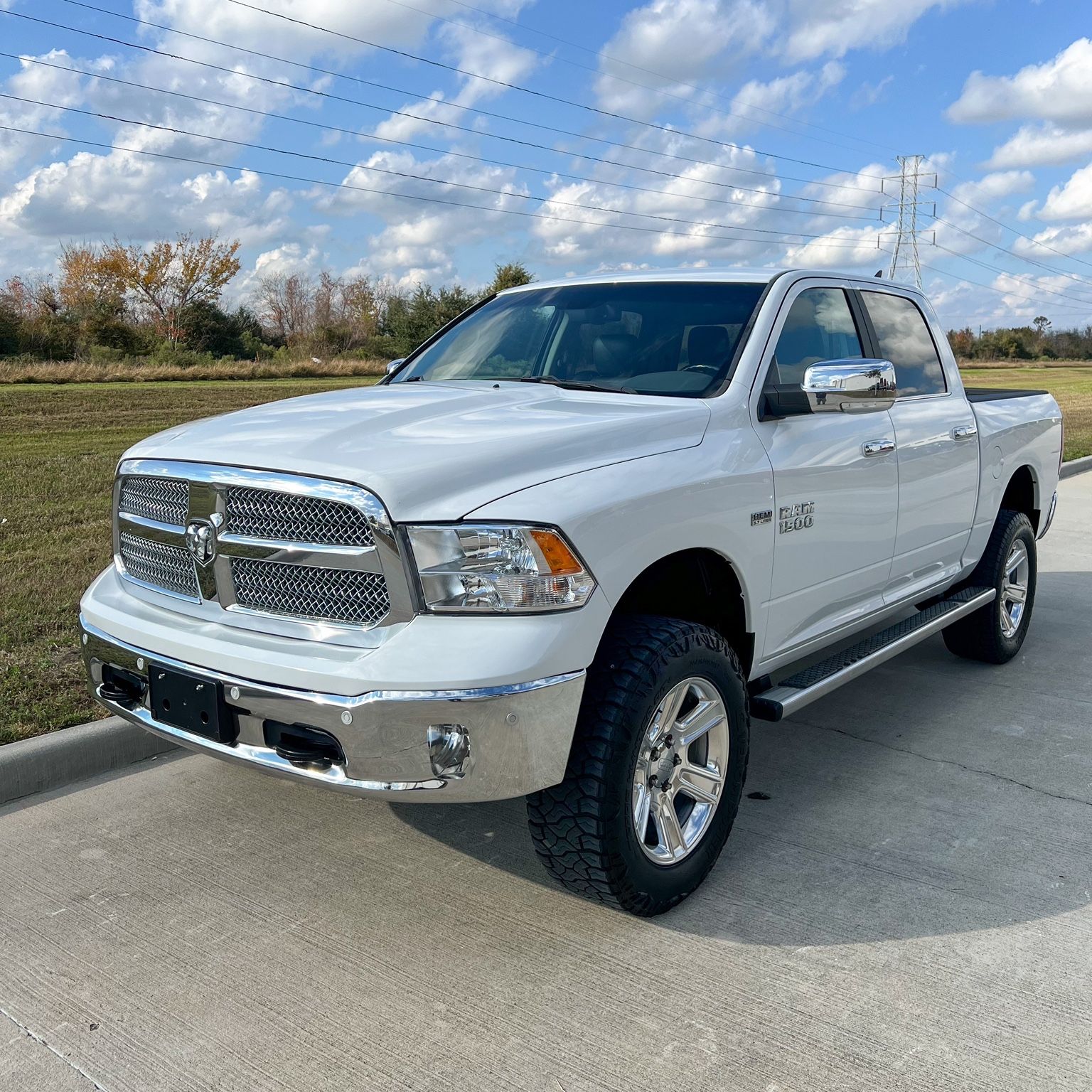
The 2017 Ram 1500 achieves an EPA-estimated fuel economy ranging from 12 to 21 mpg in the city and 17 to 29 mpg on the highway, depending heavily on whether you choose the 3.0L EcoDiesel V6, the 3.6L Pentastar V6, or the 5.7L HEMI V8 engine configuration.
Understanding the fuel economy, range, and overall operational efficiency of a half-ton pickup truck requires looking past window-sticker estimates and examining how different powertrains, axle ratios, and real-world driving conditions impact fuel consumption. For prospective buyers, fleet managers, and current owners of the 2017 Ram 1500, tracking mileage metrics is essential for budgeting fuel costs, planning long-distance towing trips, and diagnosing potential mechanical issues that degrade efficiency over time.
Overview of the 2017 Ram 1500 Powertrain Lineup
The 2017 Ram 1500 offered three distinct engine options, each pairing with specific transmissions and rear-axle ratios. These mechanical variations create a wide span of fuel economy figures across the trim lineup, ranging from the workhorse V8 configurations to the efficiency-focused EcoDiesel models.
When evaluating a 2017 Ram 1500, matching your daily driving habits, payload requirements, and towing needs to the correct engine is the single most effective way to optimize real-world mileage. The three available powerplants include:
- 3.0L EcoDiesel V6: Engineered for maximum range and low-end torque, this turbocharged diesel engine prioritizes highway efficiency and heavy-duty towing capability without demanding large quantities of fuel under cruising conditions.
- 3.6L Pentastar V6: A lightweight, aluminum-block gasoline engine featuring variable valve timing, designed to provide a balanced compromise between daily drivability, city fuel economy, and modest payload capacity.
- 5.7L HEMI V8: A high-displacement traditional pushrod V8 built for heavy hauling and towing, utilizing Cylinder Deactivation technology to shut down four cylinders under light loads to conserve fuel.
EPA Fuel Economy Ratings by Engine Configuration
The United States Environmental Protection Agency (EPA) evaluates vehicles under standardized laboratory conditions to establish baseline fuel economy figures. For the 2017 Ram 1500, these official ratings vary based on cab style (Regular Cab, Quad Cab, Crew Cab) and drivetrain configuration (Rear-Wheel Drive vs. Four-Wheel Drive).
3.0L EcoDiesel V6 Mileage Estimates
The EcoDiesel engine delivers the highest fuel economy numbers in the half-ton truck segment for its model year. Rear-wheel-drive (2WD) models achieve an impressive EPA rating of 20 mpg city and 27 to 29 mpg highway, depending on aerodynamic aids like active grille shutters and the HFE (High Fuel Efficiency) package. Four-wheel-drive (4WD) variants see a slight reduction due to increased drivetrain weight and mechanical drag, typically returning around 19 mpg city and 27 mpg highway.
3.6L Pentastar V6 Mileage Estimates
Paired with the TorqueFlite 8-speed automatic transmission, the 3.6L Pentastar V6 provides steady efficiency for everyday commuting. 2WD configurations are rated at 17 mpg city and 25 mpg highway. Selecting a 4WD model adjusts these figures to 16 mpg in the city and 23 mpg on the highway. Models equipped with the HFE package push highway numbers up to 25 mpg while utilizing aerodynamic enhancements and a lighter standard configuration.
5.7L HEMI V8 Mileage Estimates
The iconic 5.7L HEMI V8 prioritizes power delivery, resulting in lower baseline efficiency. Rear-wheel-drive versions are rated at 15 mpg city and 22 mpg highway. Four-wheel-drive versions, which account for a massive share of the used market, drop to 15 mpg city and 21 mpg highway (or 17 to 22 mpg depending on the final drive ratio, such as the 3.21 versus the 3.92 axle ratios).
Comparative Mileage and Capacity Table
To help compare how different configurations affect overall utility and fuel economy, the following table breaks down EPA estimates and fuel tank capacities for standard 2017 Ram 1500 models.
| Engine Option | Drivetrain | EPA City (MPG) | EPA Hwy (MPG) | Combined (MPG) | Standard Tank Capacity | Estimated Max Range |
|---|---|---|---|---|---|---|
| 3.0L EcoDiesel V6 | 2WD | 20–21 | 27–29 | 23–24 | 26.0 or 32.0 gal | ~700–900 miles |
| 3.0L EcoDiesel V6 | 4WD | 19 | 27 | 22 | 26.0 or 32.0 gal | ~650–850 miles |
| 3.6L Pentastar V6 | 2WD | 17 | 25 | 20 | 26.0 or 32.0 gal | ~520–700 miles |
| 3.6L Pentastar V6 | 4WD | 16 | 23 | 19 | 26.0 or 32.0 gal | ~490–640 miles |
| 5.7L HEMI V8 | 2WD | 15 | 22 | 17 | 26.0 or 32.0 gal | ~440–570 miles |
| 5.7L HEMI V8 | 4WD | 15 | 21 | 17 | 26.0 or 32.0 gal | ~440–550 miles |
Note: Fuel range estimates are calculated using standard and optional fuel tank sizes (26 gallons standard on most trims, with 32-gallon optional long-range tanks available on Quad and Crew cabs).
Real-World Driving Factors Impacting Fuel Mileage
Laboratory EPA tests provide a baseline, but real-world driving conditions routinely alter fuel economy. Drivers of the 2017 Ram 1500 often report deviations from sticker estimates based on several distinct operational variables.
Axle Ratios and Final Drive
Ram offered multiple axle ratios for the 2017 model year, most notably the 3.21 and the 3.92.
- The 3.21 axle ratio is optimized for highway cruising, keeping engine RPMs lower at 70 mph and returning better highway mileage.
- The 3.92 axle ratio provides superior mechanical advantage for towing heavy trailers and pulling away from stops, but forces the engine to spin faster at cruising speeds, reducing highway fuel economy by 1 to 3 mpg.
Towing and Payload Heavy Loads
Physics dictates that moving a heavy trailer or a bed full of dense material requires exponential energy increases. Towing a 6,000-pound travel trailer with a 5.7L HEMI V8 typically cuts fuel mileage down to 8 to 11 mpg, regardless of whether you are driving on flat interstates or rolling hills. Maintaining proper tire pressure and keeping speeds moderate while towing are critical steps to prevent fuel consumption from dropping even further.
Ambient Temperature and Weather
Internal combustion engines, particularly modern diesels and computerized gasoline engines, suffer efficiency losses in cold winter weather. Cold ambient temperatures force engines to run richer air-fuel mixtures during warm-up cycles, increase transmission fluid viscosity, and cause dense air resistance. Furthermore, winter-blend diesel and gasoline fuels contain slightly less energy per gallon than summer-blend formulations, dropping fuel mileage by 5% to 15% during winter months.
Maintenance Practices to Protect and Restore Fuel Economy
Over years of service, mechanical wear, carbon buildup, and neglected maintenance items can cause a 2017 Ram 1500 to fall short of its original fuel economy benchmarks. Implementing a targeted maintenance schedule ensures optimal combustion efficiency.
- Spark Plug Replacement: For HEMI V8 and Pentastar V6 models, worn spark plugs cause incomplete combustion and misfires. Replace spark plugs every 30,000 to 100,000 miles depending on the specific plug type specified in your owner's manual.
- Mass Air Flow (MAF) and Throttle Body Cleaning: A dirty MAF sensor miscalculates incoming air volume, leading to an incorrect air-fuel ratio. Cleaning the sensor with dedicated electrical cleaner restores accurate engine management data.
- Transmission and Differential Fluid Changes: Fresh fluids reduce internal friction within the 8-speed automatic transmission and axle differentials, ensuring parasitic drag is kept to a minimum.
- Tire Pressure Monitoring and Alignment: Incorrect tire pressure creates rolling resistance. Maintain proper PSI ratings listed on the driver's door jamb placard. Check vehicle alignment annually to prevent scrubbing and drag.
Frequently Asked Questions
What is the best engine choice in the 2017 Ram 1500 for fuel economy?
The 3.0L EcoDiesel V6 provides the highest fuel economy, achieving up to 29 mpg on the highway in 2WD configurations. If you prefer gasoline, the 3.6L Pentastar V6 offers the next best efficiency, averaging up to 25 mpg highway while avoiding the complex maintenance costs associated with modern diesel emissions systems.
Does the 2017 Ram 1500 HEMI V8 have cylinder deactivation?
Yes. The 5.7L HEMI V8 features a Multi-Displacement System (MDS), which seamlessly shuts down four cylinders when cruising under light throttle loads. This technology improves highway fuel economy by roughly 5% to 20%, depending on driving terrain and speed.
How big is the fuel tank on a 2017 Ram 1500?
Most 2017 Ram 1500 models feature a standard 26-gallon fuel tank. However, many Quad Cab and Crew Cab configurations were ordered with an optional 32-gallon large-capacity fuel tank, which significantly extends the driving range between fill-ups.
Why is my fuel mileage lower than the EPA estimate?
Real-world mileage often falls below EPA estimates due to factors like aggressive driving, excessive idling, heavy cargo, oversized aftermarket tires, roof racks, lifted suspension kits, and winter weather conditions. Mechanical issues such as dragging brake calipers, clogged air filters, or failing oxygen sensors can also reduce fuel economy.
How much can a 2017 Ram 1500 tow?
Maximum towing capacity varies by configuration, ranging from approximately 4,500 pounds up to 10,620 pounds when properly equipped. Models configured for maximum towing usually feature the 5.7L HEMI V8 engine, a 3.92 rear axle ratio, and proper weight-distributing hitch equipment.
Conclusion and Next Actions
Evaluating the mileage of a 2017 Ram 1500 requires balancing your need for raw power against your daily commuting costs. While the EcoDiesel and Pentastar V6 options maximize fuel efficiency, the HEMI V8 offers unmatched towing authority at the expense of higher fuel consumption. To verify or improve the efficiency of your specific truck, begin by auditing your current tire pressures, replacing dirty air filters, and reviewing your driving habits against your typical route profiles.