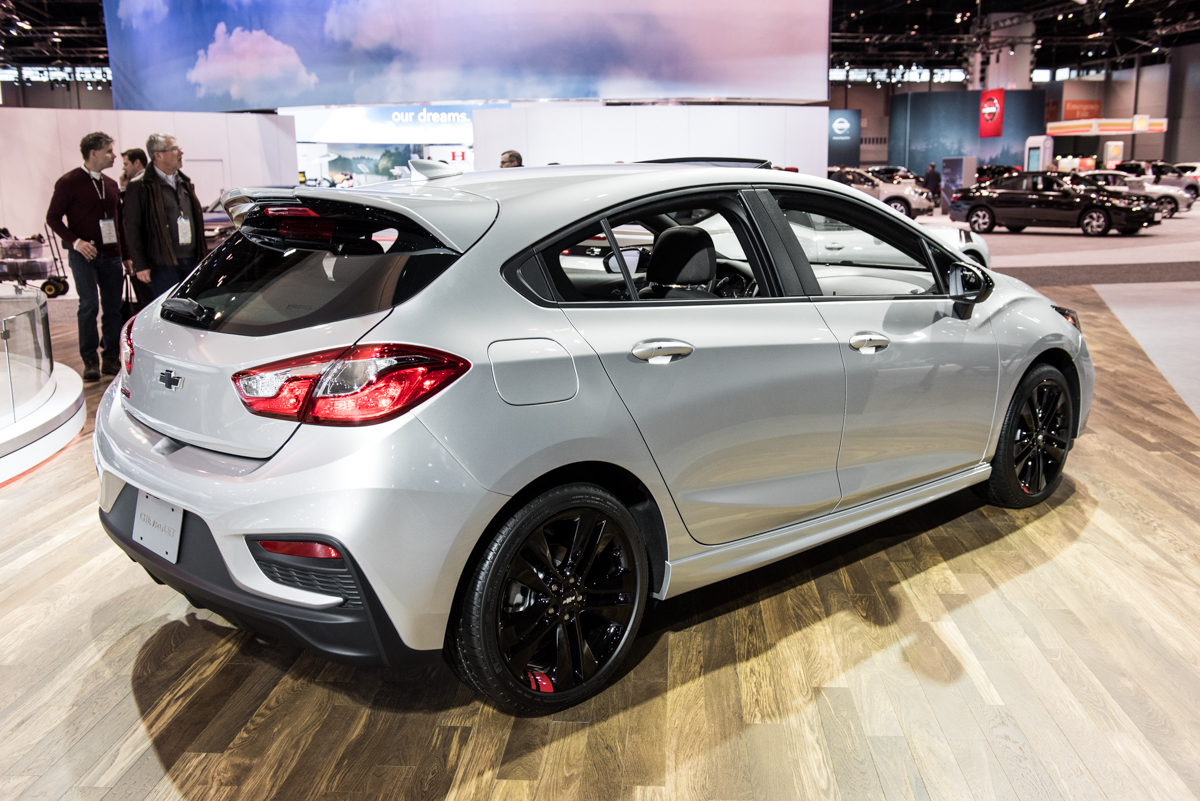
The 2017 Chevrolet Cruze has a curb weight ranging from 2,870 lbs to 3,229 lbs (1,302 kg to 1,465 kg), depending on the body style (sedan or hatchback), trim level, engine type, and transmission. Its Gross Vehicle Weight Rating (GVWR) spans between 3,858 lbs and 4,145 lbs, giving it a functional payload capacity of roughly 850 lbs to 1,000 lbs.
Understanding these figures is vital whether you are loading up for a road trip, evaluating fuel efficiency, or replacing suspension and brake components. Vehicle weight is not just a figure on a spec sheet; it directly governs acceleration, braking energy, cornering stability, payload limits, and long-term wear on critical mechanical systems.
Decoding the 2017 Chevy Cruze Weight Metrics
Automotive weight specifications are often grouped together, but each acronym represents a distinct operational parameter defined by the manufacturer and federal safety standards. To understand what the numbers mean for daily driving, you must first separate structural mass from operating capacity.
Curb Weight
Curb weight refers to the total weight of the vehicle with standard equipment, all necessary operating fluids (engine oil, coolant, transmission fluid, and brake fluid), and a tank filled to 100% fuel capacity, but without any passengers or cargo.
For the 2017 model year, Chevrolet redesigned the Cruze on General Motors' D2XX global platform. By utilizing hot-stamped, ultra-high-strength steel in 8% of the body architecture and optimized press-hardened steel throughout the chassis, GM engineers shed approximately 250 lbs (113 kg) compared to the first-generation (2011–2016) Delta II platform. This structural engineering reduced the base curb weight of the entrance-level sedan to 2,870 lbs.
Gross Vehicle Weight Rating (GVWR)
Gross Vehicle Weight Rating is the maximum operating mass of the vehicle as specified by Chevrolet, including the vehicle's structural mass, all fluids, passengers, cargo, and aftermarket accessories.
Exceeding the GVWR invalidates safety ratings, places dangerous stresses on frame components, and risks mechanical failure. On the 2017 Cruze, the driver can find the certified GVWR printed on the Safety Standard Certification Label located on the driver-side B-pillar inside the door jamb.
Gross Axle Weight Rating (GAWR)
GAWR is the maximum distributed weight that a single axle assembly—front or rear—can safely carry. Because the 2017 Chevy Cruze uses a front-engine, front-wheel-drive (FWD) layout, the static mass is front-heavy.
- Front GAWR (FRT GAWR): Typically ranges between 2,100 lbs and 2,250 lbs. It carries the weight of the 1.4L Ecotec turbo or 1.6L Whisper Diesel engine, transaxle, radiator, battery, and front-seat occupants.
- Rear GAWR (RR GAWR): Typically ranges between 1,750 lbs and 1,900 lbs. It carries the rear suspension, fuel tank, trunk contents, and rear passengers.
Payload Capacity
Payload is the maximum weight of people, gear, luggage, and optional equipment you can safely add inside or onto the vehicle. Calculating your exact payload capacity requires a simple formula:
$$\text{Payload Capacity} = \text{GVWR} - \text{Curb Weight}$$
If your 2017 Cruze LT Sedan has a GVWR of 3,880 lbs and a curb weight of 2,932 lbs, your available payload capacity is 948 lbs. If four adults weighing 200 lbs each enter the car (800 lbs total), you only have 148 lbs of remaining capacity for cargo in the trunk before exceeding the vehicle's safe operating limits.
Detailed Weight Breakdown by Trim, Engine, and Body Style
The weight of a 2017 Chevy Cruze varies noticeably depending on whether you choose the sedan or hatchback, the 1.4L gasoline turbo engine or the 1.6L turbo-diesel engine, and manual or automatic transmissions.
Higher trim levels like the Premier include additional structural reinforcement, power seats, larger 17-inch or 18-inch wheels, sound deadening, and sunroof assemblies that increase overall curb weight.
| Trim & Body Style | Engine & Transmission | Curb Weight (lbs) | Estimated GVWR (lbs) | Max Payload Capacity (lbs) |
|---|---|---|---|---|
| L Sedan | 1.4L Turbo Gas / 6-Speed Manual | 2,870 | 3,858 | 988 |
| LS Sedan | 1.4L Turbo Gas / 6-Speed Manual | 2,870 | 3,858 | 988 |
| LS Sedan | 1.4L Turbo Gas / 6-Speed Automatic | 2,917 | 3,880 | 963 |
| LT Sedan | 1.4L Turbo Gas / 6-Speed Manual | 2,897 | 3,858 | 961 |
| LT Sedan | 1.4L Turbo Gas / 6-Speed Automatic | 2,932 | 3,880 | 948 |
| Premier Sedan | 1.4L Turbo Gas / 6-Speed Automatic | 2,980–3,047 | 3,968 | 921–988 |
| LT Hatchback | 1.4L Turbo Gas / 6-Speed Manual | 2,963 | 3,924 | 961 |
| LT Hatchback | 1.4L Turbo Gas / 6-Speed Automatic | 2,987 | 3,946 | 959 |
| Premier Hatchback | 1.4L Turbo Gas / 6-Speed Automatic | 3,095 | 4,035 | 940 |
| Diesel Sedan | 1.6L Turbo-Diesel / 6-Speed Manual | 3,124 | 4,079 | 955 |
| Diesel Sedan | 1.6L Turbo-Diesel / 9-Speed Automatic | 3,229 | 4,145 | 916 |
Sedan vs. Hatchback Structural Mass
The 5-door Hatchback variant, introduced for the 2017 model year, adds roughly 70 to 100 lbs of curb weight over an equivalent sedan trim. This additional mass comes from the reinforced rear roof pillars, larger rear glass panel, heavy tailgate hinge hardware, and added structural bracing surrounding the large rear opening to preserve torsional rigidity.
Gas vs. Diesel Weight Differences
The 1.6L LH7 "Whisper Diesel" engine option—offered late in the 2017 model year—adds substantial weight to the front end. The cast-iron or heavy-duty aluminum block components, selective catalytic reduction (SCR) emissions hardware, diesel exhaust fluid (DEF) tank, and the heavy 9T50 9-speed automatic transmission increase curb weight by over 200 lbs compared to the 1.4L gasoline model.
Payload and Towing Rules: Real-World Capabilities
Understanding the payload limits of your 2017 Cruze prevents unnecessary strain on the drivetrain and keeps the chassis handling predictably.
Calculating Real-World Load Limits
A common mistake among vehicle owners is assuming five adult seats mean the car can comfortably carry five heavy adults along with full luggage.
Consider this real-world operational scenario:
- Vehicle: 2017 Chevy Cruze LT Automatic Sedan (Curb Weight: 2,932 lbs | GVWR: 3,880 lbs | Payload Limit: 948 lbs)
- Driver & Passengers: 4 adults averaging 190 lbs = 760 lbs
- Cargo in Trunk: 4 suitcases at 45 lbs each = 180 lbs
- Total Payload Added: 760 lbs + 180 lbs = 940 lbs
In this scenario, the vehicle is within 8 lbs of its legal and mechanical maximum GVWR limit. Adding a roof rack, personal carry-ons, or heavier gear will push the car past its payload threshold, causing the rear suspension to bottom out against the jounce bumpers.
| Component | Weight | Details |
|---|---|---|
| Gross Vehicle Weight (GVWR) | 3,880 lbs | |
| Curb Weight | 2,932 lbs | Car, Engine Fluids, Full Fuel |
| Payload Capacity | 948 lbs | Passengers + Trunk Cargo + Gear |
Can the 2017 Chevy Cruze Tow a Trailer?
Official GM Guidelines state that towing a trailer is not recommended for the 2017 Chevrolet Cruze in North America.
Unlike European variants of the D2XX platform that receive explicit tow ratings, General Motors rates the North American 1.4L Turbo and 1.6L Diesel Cruze models with a 0 lb towing capacity.
While aftermarket hitches (Class I or Class II) are sold for mounting bike racks or lightweight cargo trays, pulling a loaded utility trailer or small camper introduces several severe mechanical risks:
- Transmission Overheating: The Hydra-Matic 6T40 6-speed and 9T50 9-speed automatic transmissions lack dedicated auxiliary fluid coolers required to handle persistent thermal loads from trailering.
- Brake Overheating: The 15-inch or 16-inch factory disc brakes are dimensioned specifically for the vehicle's GVWR. The heat dissipation capabilities of small passenger-car rotors will degrade under trailering loads, leading to dangerous brake fade.
- Unibody Structural Stress: The rear unibody crossmembers lack integrated frame-rail mounting points designed to support continuous vertical tongue weight and dynamic pulling stress.
How Weight Impacts Fuel Economy and Driving Dynamics
Vehicle weight dictates how much energy is required to accelerate, stay in motion, and bring the chassis to a complete stop.
Power-to-Weight Ratio and Acceleration
The 2017 Chevy Cruze 1.4L Ecotec LE2 turbo engine produces 153 horsepower and 177 lb-ft of torque.
To determine how responsive a car feels, mechanics calculate its power-to-weight ratio (vehicle weight divided by horsepower):
$$\text{Power-to-Weight Ratio} = \frac{\text{Curb Weight (lbs)}}{\text{Horsepower (hp)}}$$
- 2017 Cruze LS Sedan (2,870 lbs): $2,870 / 153 = \mathbf{18.75\text{ lbs/hp}}$
- 2017 Cruze Premier Hatchback (3,095 lbs): $3,095 / 153 = \mathbf{20.22\text{ lbs/hp}}$
A lighter trim level carries fewer pounds per horsepower, resulting in livelier throttle response and faster 0-60 mph acceleration times (approx. 7.7 seconds for the light manual sedan versus 8.4 seconds for the heavier Premier hatchback). When the car is loaded with maximum payload, the power-to-weight ratio drops significantly to around 25.3 lbs/hp, causing noticeable sluggishness when merging onto highways or climbing mountain passes.
- Lighter Mass
- Lower Resistance
- Faster Acceleration / Shorter Stopping Distances
- Heavier Mass
- Higher Resistance
- Sluggish Response / Longer Stopping Distances
EPA Fuel Economy Ratings by Weight Class
Lightweight engineering directly translates into lower fuel consumption. The EPA places vehicles into specific weight classes when conducting official emissions and fuel economy testing.
- The lighter 2017 Cruze LS/LT Sedan achieves up to 30 mpg City / 40 mpg Highway / 34 mpg Combined.
- The heavier Cruze Premier Hatchback drops slightly to 28 mpg City / 37 mpg Highway / 31 mpg Combined.
- The Cruze Diesel Sedan, despite its higher curb weight (3,229 lbs), counteracts its weight penalty with extreme thermal efficiency, earning an EPA rating of 31 mpg City / 47 mpg Highway (and up to 52 mpg highway on manual models).
Every additional 100 lbs of gear or cargo inside the Cruze reduces real-world fuel economy by approximately 1% to 2% in city driving due to the continuous energy required to overcome inertia during stop-and-go maneuvers.
Braking, Suspension, and Maintenance Considerations
Carrying extra weight places direct physical strain on wear-and-tear chassis parts. Knowing how weight distribution affects key maintenance items ensures safety and extends component longevity.
Front-to-Rear Weight Distribution
The 2017 Chevy Cruze carries approximately 60% of its static weight over the front wheels and 40% over the rear wheels.
Because of this front-heavy balance:
- Front Brakes: Perform roughly 70% to 80% of the total stopping work. Front brake pads and rotors wear out twice as fast as rear components.
- Front Suspension: Struts, lower control arm bushings, and sway bar links experience elevated compression forces during hard braking when dynamic weight shifts forward (pitching).
- Tire Rotation: Front tires suffer accelerated tread wear due to carrying both engine weight and steering friction. Rotating tires every 5,000 to 7,500 miles is critical to ensure even wear across all four corners.
Brake Kinetic Energy Dissipation
When stopping a vehicle, the braking system converts kinetic energy into thermal energy. The energy formula illustrates how mass directly escalates brake temperatures:
$$E_k = \frac{1}{2} m v^2$$
Where $m$ is the total vehicle mass and $v$ is velocity. If you double the vehicle payload mass, you double the heat energy that brake rotors and pads must absorb. Overloading a 2017 Cruze increases braking distance substantially and can lead to fluid boiling, rotor warping, and pedal sponginess during severe down-hill stops.
Tire Pressure and Load Index Requirements
Tire inflation pressures must be maintained based on the vehicle's weight ratings, not the maximum pressure stamped on the tire sidewall.
Check the tire placard inside the driver-side door frame for factory specifications:
- Standard Tire Size: 195/65R15, 205/55R16, or 225/45R17 depending on trim.
- Recommended Inflation Pressure: 35 PSI (cold) front and rear for standard operational loads.
- Tire Load Index: Original equipment tires for the Cruze typically feature a load index of 91 (1,356 lbs max load per tire) or 94 (1,477 lbs max load per tire).
Installing replacement tires with a lower load rating than specified by Chevrolet compromises tire structural integrity and increases the risk of a high-speed blowout when carrying a full load of passengers.
Frequently Asked Questions
What is the exact curb weight of a 2017 Chevy Cruze?
The curb weight of a 2017 Chevy Cruze varies by trim and body style. The base L/LS manual sedan weighs 2,870 lbs, mid-level LT automatics weigh around 2,932 lbs, the Premier hatchback weighs 3,095 lbs, and the diesel automatic model weighs up to 3,229 lbs.
How much cargo and passenger weight can the 2017 Chevy Cruze hold?
The total payload capacity (passengers plus trunk cargo) for most 2017 Chevy Cruze models ranges between 850 lbs and 1,000 lbs. Check the tire and loading information sticker on your driver's side door pillar for your specific vehicle's certified payload limit.
Can I pull a small trailer with a 2017 Chevy Cruze?
No. General Motors explicitly states in the 2017 Chevrolet Cruze owner's manual that towing a trailer is not recommended. The vehicle is rated for 0 lbs of towing capacity in North America, and towing risks severe damage to the transmission, unibody structure, and brake components.
Why is the 2017 Chevy Cruze lighter than the 2015 model?
The 2017 Cruze represents the second-generation model (introduced in 2016), built on GM's D2XX platform. Engineers redesigned the frame using 8% hot-stamped, ultra-high-strength steel and optimized aluminum engine castings, shedding roughly 250 lbs compared to the heavier first-generation platform while increasing structural stiffness.
What is the difference between curb weight and GVWR on the Cruze?
Curb weight is the weight of the vehicle with a full tank of fuel and all fluids, but without any people or cargo inside. Gross Vehicle Weight Rating (GVWR) is the absolute maximum safe operating weight of the vehicle including the car itself, all occupants, luggage, accessories, and cargo.
Summary and Practical Recommendations
Understanding your 2017 Chevy Cruze's weight parameters keeps your vehicle operating safely while maximizing performance and longevity:
- Know Your Payload Limit: Keep overall passenger and trunk weight under 900 lbs to avoid bottoming out suspension components or overheating the braking system.
- Respect the No-Tow Rating: Avoid hitch-mounted trailers. Use hitches strictly for light cargo racks or bicycle carriers within the tongue-weight limits.
- Maintain Tire Pressures: Keep tires set to the door-placard specification (typically 35 PSI cold). Ensure replacement tires meet or exceed the factory load index rating of 91 or higher.
- Account for Weight Bias: Rotate tires consistently every 5,000 to 7,500 miles to counter the heavy 60/40 front-wheel weight balance inherent to the FWD platform.
EDITORIAL CATEGORY METADATA: