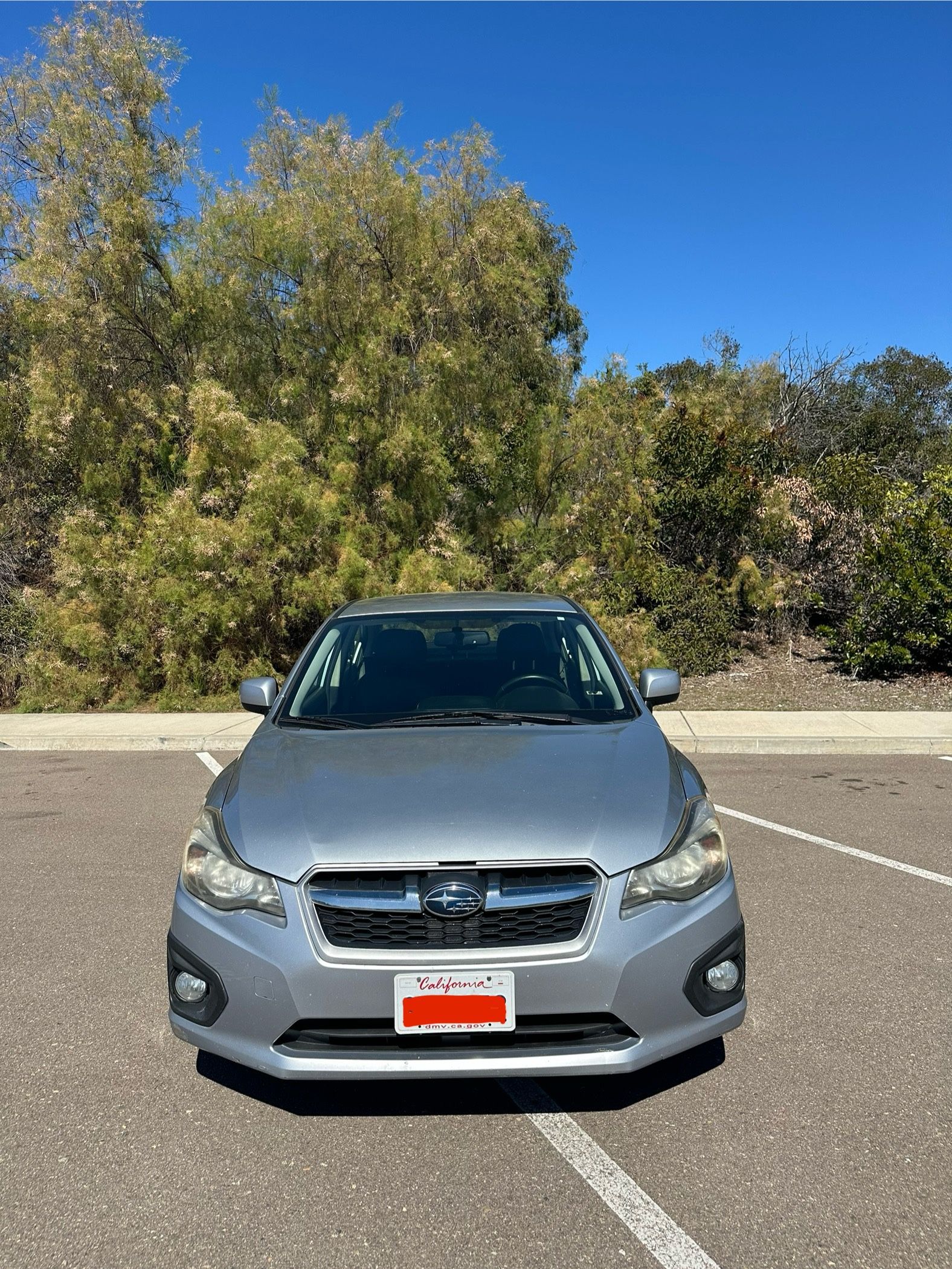
According to Kelley Blue Book (KBB), the 2013 Subaru Impreza maintains a strong reputation as an affordable, fuel-efficient compact car featuring standard all-wheel drive. Most used models currently trade between $4,500 and $7,800 depending on mileage, condition, and body style, earning high marks for safety and winter traction despite modest engine power.
Kelley Blue Book Valuation and Current Market Overview
When the fourth-generation Subaru Impreza arrived for the 2012 model year, it marked a significant architectural shift toward fuel economy and interior packaging. By 2013, Subaru refined minor interior appointments and expanded Bluetooth capability across the line. In the secondary market, Kelley Blue Book categorizes the 2013 Impreza as one of the most cost-effective methods for drivers to acquire an all-wheel-drive (AWD) vehicle without accepting the fuel penalties of a traditional crossover SUV.
Valuations on KBB are divided into three distinct figures: Trade-In Value, Private Party Value, and the Fair Purchase Price (dealer retail). For a 2013 Impreza in typical used condition with roughly 110,000 to 140,000 miles, current market evaluations generally align within these brackets:
- Fair Purchase Price (Dealer Retail): $6,200 – $8,500, representing well-sorted vehicles from independent or franchise dealerships with clean titles and inspection records.
- Private Party Value: $4,500 – $7,200, depending heavily on service records, body condition, and trim level.
- Trade-In Value: $2,800 – $4,800, which reflects wholesale dealer acquisitions before reconditioning costs.
Hatchback (5-door) variants routinely command a $600 to $1,200 premium over equivalent 4-door sedans on KBB, reflecting higher sustained consumer demand for utility-focused compacts. Furthermore, the sport-appearance packages (Sport Premium and Sport Limited) retain slightly better value retention due to two-tone rocker trim, roof rails, and upgraded alloy wheels.
Trim Levels and Factory Configurations
The 2013 Subaru Impreza was sold in two distinct body configurations: a traditional four-door sedan and a versatile five-door hatchback. Subaru offered the vehicle across five primary trim tiers, each engineered to address specific price points and luxury expectations.
2.0i (Base)
The entry-level 2.0i served as the budget-conscious anchor of the lineup. It features 15-inch steel wheels with plastic covers, manual air conditioning, power windows and door locks, a 60/40-split folding rear seat, and a basic four-speaker audio setup. While Spartan, 2013 models included standard Bluetooth hands-free phone connectivity and audio streaming, alongside a USB/iPod port, which were optional or absent in older compacts.
2.0i Premium
The Premium trim added standard 16-inch alloy wheels, an upgraded six-speaker audio system, cruise control, a rear stabilizer bar for improved handling composure, and an adjustable center armrest. Buyers could also find models equipped with the optional All-Weather Package, which added heated front seats, heated side mirrors, and a windshield wiper de-icer.
2.0i Limited
Offered strictly as a sedan or hatchback with the Continuously Variable Transmission (CVT), the Limited trim moved the Impreza closer to entry-level luxury. It included full leather upholstery, automatic climate control, a 4.3-inch multi-function center display with a standard backup camera, 17-inch alloy wheels, chrome exterior accents, and automatic headlights.
2.0i Sport Premium
Available exclusively in the five-door hatchback configuration, the Sport Premium blended the features of the Premium package with rugged styling. It added raised roof rails, distinct 17-inch gunmetal-finished aluminum-alloy wheels, fog lights, two-tone body side cladding, and sport-fabric upholstery with contrast stitching.
2.0i Sport Limited
Sitting at the top of the 5-door hatchback range, the Sport Limited merged all equipment from the Limited and Sport Premium packages. It paired the aggressive exterior styling, roof rails, and 17-inch wheels of the Sport with leather seating surfaces, automatic climate control, and upgraded interior acoustics.
2013 Subaru Impreza Specifications and Pricing Matrix
The following data summarizes the factory specifications, transmission options, and Kelley Blue Book Fair Purchase Price ranges for clean-title examples in average condition:
| Trim Level | Body Style | Standard Transmission | EPA Fuel Economy (City/Hwy) | Typical KBB Retail Range | Key Standard Features |
|---|---|---|---|---|---|
| 2.0i Base | Sedan / 5-Door | 5-Speed Manual (CVT optional) | 25/34 mpg (Man) | 27/36 mpg (CVT) | $4,500 – $5,800 | 15-inch steel wheels, Bluetooth, tilt/telescoping steering wheel, power accessories |
| 2.0i Premium | Sedan / 5-Door | 5-Speed Manual (CVT optional) | 25/34 mpg (Man) | 27/36 mpg (CVT) | $5,400 – $6,800 | 16-inch alloy wheels, 6-speaker sound, rear stabilizer bar, optional All-Weather Package |
| 2.0i Limited | Sedan / 5-Door | Lineartronic CVT | 27/36 mpg | $6,200 – $7,600 | Leather seating, automatic climate control, 17-inch alloys, rearview camera |
| 2.0i Sport Premium | 5-Door Only | 5-Speed Manual (CVT optional) | 25/34 mpg (Man) | 27/36 mpg (CVT) | $5,800 – $7,200 | Roof rails, 17-inch gunmetal wheels, two-tone sport styling, fog lights |
| 2.0i Sport Limited | 5-Door Only | Lineartronic CVT | 27/36 mpg | $6,600 – $8,200 | Leather seating, roof rails, automatic climate control, 17-inch gunmetal wheels |
Powertrain, Performance, and Fuel Economy
Every 2013 Impreza left the Gunma, Japan assembly plant equipped with Subaru's 2.0-liter FB20 horizontally opposed (boxer) four-cylinder engine. The power plant generates 148 horsepower at 6,200 RPM and 145 lb-ft of torque at 4,200 RPM. This engine replaced the older 2.5-liter EJ25 engine used up through the 2011 model year, trading sheer displacement and mid-range torque for double-overhead camshafts (DOHC), dual active valve control, and vastly reduced internal friction.
Powertrain Overview: Engine: 2.0L DOHC 16-valve Boxer-4 (FB20) Horsepower: 148 hp @ 6,200 RPM Torque: 145 lb-ft @ 4,200 RPM Drivetrain: Symmetrical All-Wheel Drive Transmissions: 5-Speed Manual or Lineartronic CVT EPA Rating (CVT): 27 City / 36 Highway / 30 Combined
Transmission Mechanics and Symmetrical AWD
Subaru utilized two distinct AWD systems depending on the transmission chosen:
- Continuous AWD (5-Speed Manual): Employs a mechanical bevel-gear center differential coupled with a viscous-coupling locking unit. Torque is split 50/50 front-to-rear under dry conditions. If wheel slippage occurs, the viscous unit mechanically transfers power to the axle with greater adhesion.
- Active Torque Split AWD (Lineartronic CVT): Employs an electronically controlled multi-plate transfer clutch pack integrated directly into the transmission housing. Under standard driving, power is routed roughly 60/40 front-to-rear. Sensors continuously monitor throttle angle, yaw rate, wheel speed, and steering angle to adjust the clutch clamping force dynamically, shifting power front or rear before wheels slip.
Driving Impressions and Practical Acceleration
KBB editors and independent road testers universally observed that while the 2013 Impreza is surefooted, it is by no means fast. The zero-to-60 mph acceleration run takes roughly 8.6 to 9.2 seconds depending on transmission and ambient temperature. The Lineartronic CVT keeps the engine in its optimal efficiency band, but rapid passing maneuvers on two-lane highways generate noticeable engine buzz without an instantaneous surge of forward velocity. For commuters seeking composed handling, sharp steering response, and low center-of-gravity cornering stability, the chassis performs admirably, but aggressive drivers will find the output pedestrian.
Safety Architecture and Crash Test Ratings
Safety represents one of the primary pillars sustaining the 2013 Impreza's KBB consumer scores. Built around Subaru's Ring-Shaped Reinforcement Frame, the vehicle dissipates impact energy away from the passenger compartment through high-tensile steel load paths.
The Insurance Institute for Highway Safety (IIHS) designated the 2013 Subaru Impreza a Top Safety Pick, awarding it top "Good" ratings in moderate overlap front, side, roof strength, and head restraints/seats tests. In the demanding small overlap front crash test introduced around this production period, the chassis earned an "Acceptable" rating, which outperformed many compact rivals of identical vintage.
Standard dynamic safety mechanisms include:
- Subaru Vehicle Dynamics Control (VDC) with stability and traction control integration.
- Four-wheel anti-lock disc brakes (ABS) with Electronic Brake-force Distribution (EBD) and Brake Assist.
- Seven standard airbags, including front-seat side-impact airbags, side curtain airbags running the length of the cabin, and a driver's knee airbag.
Known Mechanical Problems and Inspection Checkpoints
While KBB scores the 2013 Impreza highly for all-weather utility, prospective buyers must evaluate specific mechanical vulnerabilities unique to early fourth-generation FB20 engines and early Lineartronic gearboxes.
1. FB20 Engine Oil Consumption
The most documented issue affecting 2012–2014 Imprezas involves excessive engine oil consumption. Early iterations of the FB20 engine were manufactured with low-tension piston rings engineered to minimize friction and raise fuel economy numbers. Over time, some of these rings allowed motor oil to enter the combustion chamber, consuming up to one quart every 1,000 to 1,500 miles.
Subaru addressed this through Technical Service Bulletin (TSB) 02-157-14R and a subsequent class-action settlement that extended powertrain warranties to eight years or 100,000 miles. Vehicles that failed an official dealer oil consumption test received redesigned short-block assemblies containing updated piston rings and oil scrapers. Prospective buyers should always review maintenance records or contact a Subaru dealership service department with the VIN to check if the short-block was replaced under warranty.
2. Lineartronic CVT Valve Body Failure
As vehicles cross the 100,000-mile mark, a common failure pattern centers on the transmission valve body solenoids. The Torque Converter Lock-Up Duty Solenoid or Primary Pressure Solenoid can experience electrical circuit open/short states, illuminating the dashboard with a flashing "AT OIL TEMP" light alongside the Check Engine light (often throwing diagnostic trouble codes P0700 and P2763).
Replacing the entire transmission is unnecessary; replacing the valve body assembly atop the transmission restores normal operation. Independent specialists usually charge between $1,100 and $1,600 for parts and fluid replacement, whereas franchise dealers may charge upwards of $2,200.
3. Rear Wheel Bearing Wear
Like many Subarus of this generation, rear wheel bearing hubs are prone to premature wear, typically between 80,000 and 120,000 miles. A failing hub produces a distinct, low-frequency hum or rumbling noise that increases in volume with road speed and shifts intensity when changing lanes. Hub replacement requires pressing out the old unit, a straightforward repair costing roughly $350 to $600 per axle at independent repair shops.
4. Cam Carrier and Front Timing Cover Seepage
Unlike older EJ25 engines that suffered from external cylinder head gasket failure, the DOHC FB20 engine relies on multi-layer steel (MLS) head gaskets that rarely blow. However, the FB20 utilizes RTV silicone sealant across its timing chain covers and camshaft carrier housings. With age and thermal cycling, this sealant can degrade, leading to slow oil seepage onto the exhaust manifolds. While rarely catastrophic, resealing cam carriers requires removing the engine from the bay, resulting in substantial labor costs if oil loss becomes severe.
Kelley Blue Book Expert vs. Consumer Ratings
Kelley Blue Book presents two distinct evaluation metrics: the KBB Expert Rating, written by seasoned automotive journalists, and the KBB Consumer Rating, compiled from verified owner submissions over years of ownership.
KBB Rating Breakdown (Typical 2013 Data): Consumer Rating: 4.2 / 5.0 (over 300 owner reviews) Expert Rating: 3.8 / 5.0 (assessed at product release) Top Consumer Pros: Winter stability, hatchback cargo room, fuel range Top Consumer Cons: Mild cabin noise, acceleration lag, firm seats
Where Owners Agree With KBB Experts
Both automotive critics and everyday drivers praise the Impreza's visibility and outward site lines. The low dashboard cowl, thin A-pillars, and door-mounted side mirrors yield exceptional outward visibility. Furthermore, in snow belt states (New England, the Upper Midwest, and the Pacific Northwest), owners routinely highlight that the Impreza outperforms front-wheel-drive competitors equipped with all-season tires, providing unstoppability through snow drifts up to six inches deep.
Where Opinions Diverge
KBB editorial road testers often criticized the cabin noise levels at highway speeds, noting tire roar and wind turbulence around the A-pillars. In contrast, long-term consumers often look past these NVH (Noise, Vibration, and Harshness) trade-offs, viewing the car as utilitarian, unpretentious, and rugged transportation that prioritizes function over luxury.
2013 Impreza vs. Period Competitors
When cross-shopping compact vehicles from the 2013 model year, the Impreza occupies a niche defined by its standard drivetrain. Most competitors offered front-wheel drive exclusively.
Honda Civic (2013)
Refreshed rapidly by Honda for 2013 to rectify poor interior plastics from 2012, the Civic features bulletproof reliability through its 1.8-liter i-VTEC engine and traditional 5-speed automatic transmission. The Civic delivers a quieter highway ride, stronger baseline engine durability, and lower long-term maintenance costs. However, it lacks all-wheel drive, and its trunk capacity is dwarfed by the Impreza hatchback's utility.
Mazda 3 (2013)
The 2013 Mazda 3 (especially those equipped with the 2.0-liter SkyActiv-G engine) delivers superior driving engagement, sharper steering feel, and a punchier throttle response. Inside, the Mazda feels sportier. Nevertheless, it suffers from a cramped rear seat compared to the Impreza, and rust protection on undercarriage components in salt-heavy regions historically lagged behind Subaru's corrosion treatment.
Toyota Corolla (2013)
The 2013 Corolla represents the final year of the tenth generation (E140). It uses an outdated 4-speed automatic transmission and a basic torsion-beam rear suspension. While virtually indestructible mechanically, the 2013 Corolla is remarkably unengaging to drive and offers poor high-speed stability compared to the multi-link rear suspension and permanent AWD setup of the Subaru.
Pre-Purchase Inspection: Step-by-Step Guide
If you are inspecting a 2013 Subaru Impreza listed for sale, execute the following technical checks before making an offer:
- Check the Oil Dipstick and Tailpipe: Pull the dipstick on a cold engine. If the oil level sits below the lower pinhole or appears thick and jet-black, the vehicle may suffer from unresolved oil consumption. Inspect the inside lip of the exhaust pipe; thick, oily carbon buildup indicates oil passing through the exhaust valves.
- Scan for Stored Diagnostic Codes: Connect an OBD-II scanner capable of reading transmission modules. Check for cleared codes or permanent codes related to transmission slippage, lock-up solenoids (P2763, P2764), or catalytic converter efficiency (P0420).
- Perform a Low-Speed Turning Circle Test: Find an empty parking lot, turn the steering wheel to full lock, and slowly accelerate in a circle in both directions. Any violent shuddering, binding, or hopping sensation (known as "torque bind") points to damaged center transfer clutch plates in the CVT or a failing viscous coupling in manual models.
- Inspect Undercarriage Rust and Heat Shields: Examine the rear subframe, control arms, and exhaust system. Thin aluminum exhaust heat shields routinely corrode at their mounting bolts on 2013 Subarus, producing a loud metallic rattle at 1,800 to 2,200 RPM under light acceleration.
- Verify Maintenance History: Review receipts to verify that spark plugs were replaced at 60,000-mile intervals (a labor-intensive job on horizontal boxer engines due to frame clearance) and confirm whether the CVT fluid has ever been drained and refilled.
Frequently Asked Questions
Does the 2013 Subaru Impreza have timing belt replacement intervals?
No. The 2013 Subaru Impreza uses the 2.0-liter FB20 engine, which features a maintenance-free timing chain system rather than a rubber timing belt. Unlike the older EJ25 engines found in 2011 and older models that required timing belt and water pump replacements every 105,000 miles, the timing chain in the 2013 Impreza is designed to last the life of the engine provided routine engine oil changes are performed to keep the hydraulic chain tensioners operating correctly.
What causes the AT OIL TEMP light to flash on a 2013 Impreza?
A flashing "AT OIL TEMP" light indicates an electronic or hydraulic fault detected by the Transmission Control Module (TCM). While it can indicate fluid overheating, on the 2013 Impreza it most frequently denotes a failure within one of the internal solenoids housed inside the CVT valve body assembly. When this occurs, the transmission enters a fail-safe mode, cruise control is disabled, and the vehicle should be diagnosed with an OBD-II scanner to extract transmission trouble codes.
Is the 2013 Subaru Impreza good in deep snow?
Yes, the 2013 Impreza provides outstanding winter traction compared to other compact cars. With 5.7 inches of ground clearance and full-time Symmetrical All-Wheel Drive, the vehicle distributes torque constantly to all four wheels. When equipped with dedicated winter tires, it can easily navigate unplowed streets and hard-packed ice that routinely strand two-wheel-drive passenger vehicles.
Can I flat-tow a 2013 Subaru Impreza behind an RV?
You can flat-tow a 2013 Subaru Impreza with four wheels on the ground only if it is equipped with the 5-speed manual transmission. Models equipped with the Lineartronic Continuously Variable Transmission (CVT) cannot be flat-towed or towed with two wheels off the ground on a dolly; doing so starves the transfer clutches of lubrication and ruins the all-wheel-drive system. CVT models must always be transported on a flatbed trailer.
How much oil does the 2013 Impreza engine take?
The 2.0-liter FB20 engine requires 5.3 quarts (5.0 liters) of 0W-20 synthetic motor oil when changing oil and replacing the oil filter. Subaru recommends genuine 0W-20 API SN or resource-conserving synthetic oil to maintain optimal variable valve timing operation and engine efficiency. The oil filter is positioned on top of the engine block near the front intake manifold, making self-service straightforward.
Practical Recommendation
For used car buyers prioritizing foul-weather traction, fuel economy, and practical utility under $8,000, the 2013 Subaru Impreza represents an intelligent value proposition on Kelley Blue Book. However, because this specific production run sits directly within the era of FB20 piston ring updates and early CVT valve body attrition, successful ownership hinges on documentation.
Prioritize a 2013 Impreza 2.0i Premium or Sport Premium 5-Door that shows documented proof of either a warranty-backed engine short-block replacement or consistent, low oil consumption verification. If selecting a CVT model, budget approximately $1,200 for a potential valve body replacement if the mileage approaches 120,000 miles, or opt for the durable 5-speed manual transmission to eliminate high-dollar electronic automatic transmission risks entirely.