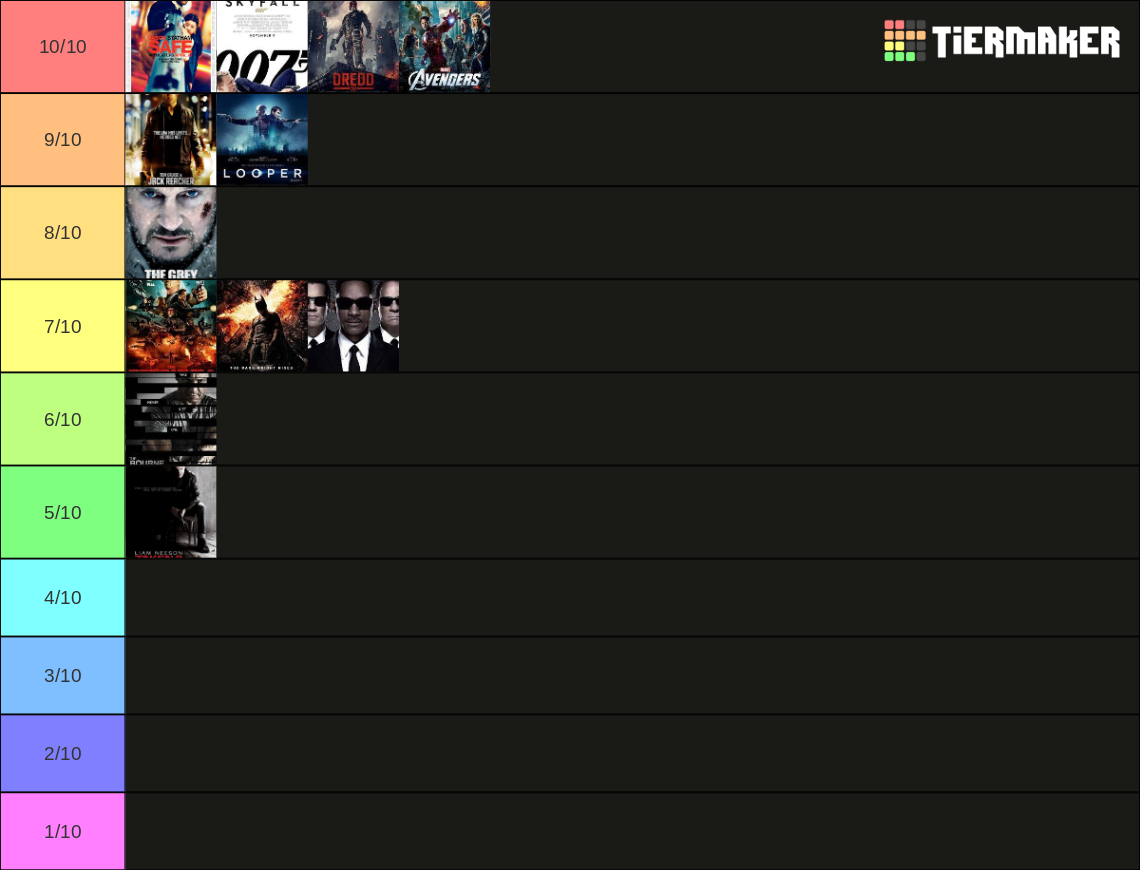
In 2012, the Hollywood action genre underwent a transformative shift, transitioning from the gritty realism of the 2000s toward the era of the interconnected cinematic universe. Led by the massive success of The Avengers, the year redefined blockbuster architecture, blending high-concept science fiction, nostalgic ensembles, and the solidification of the "Young Adult" dystopian action subgenre.
The Cultural Landscape of Action in 2012
Looking back from 2026, the year 2012 stands as a historical pivot point for the entertainment industry. It was a period where the "dark and gritty" aesthetic established by the mid-2000s began to merge with a newer demand for vibrant, serialized storytelling. The global box office was no longer just a secondary thought for Hollywood studios; it was the primary driver of creative decisions. This resulted in a slate of films that were increasingly grand in scale but also more focused on long-term brand management.
The year was characterized by the conclusion of major eras and the birth of new ones. Christopher Nolan wrapped up his grounded take on the Caped Crusader, while Marvel Studios proved that a multi-franchise crossover was not just a pipe dream but a goldmine. Meanwhile, the action genre began to experiment with "elevated" concepts—films like Looper and Dredd showed that action could be smart, visually distinct, and narratively complex, even if they didn't always match the billion-dollar returns of their superhero counterparts.
The Shift Toward the Shared Universe Model
The most significant event in the 2012 action movie list is undoubtedly the release of The Avengers. Directed by Joss Whedon, this film was the culmination of "Phase One" of the Marvel Cinematic Universe (MCU). Before 2012, the idea of combining four separate film franchises (Iron Man, Thor, Captain America, and The Hulk) into a single narrative event was considered a massive financial risk.
The Avengers succeeded by balancing ensemble chemistry with high-octane spectacle. It shifted the action genre's focus from the "lone hero" trope to the "team dynamic." This forced other studios to scramble for their own shared universes, a trend that dominated the following decade. The technical execution of the "Battle of New York" set a new standard for third-act action sequences, utilizing seamless CGI to manage multiple protagonists in a large-scale urban environment.
The Conclusion of the Gritty Realism Era
While Marvel was looking toward a bright, quip-heavy future, 2012 also saw the end of the "Dark Knight" era. The Dark Knight Rises served as the finale to Christopher Nolan’s trilogy. These films had defined the 2000s with their emphasis on practical stunts, psychological depth, and a rejection of the more fantastical elements of comic book lore.
The shift here was palpable. The Dark Knight Rises felt like the last of its kind—a massive, serious-minded epic that prioritized physical sets and in-camera effects over digital world-building. Its success (earning over $1 billion) proved there was still a massive appetite for "prestige" action, but the industry's momentum was clearly swinging toward the more colorful and flexible reality of the MCU.
The Rise of the Young Adult Dystopia
2012 was also the year that The Hunger Games exploded into the mainstream. While action movies had traditionally targeted a male-dominated demographic, The Hunger Games successfully captured a massive, diverse audience by centering on a female protagonist in a high-stakes, politically charged survival game.
This film initiated a "gold rush" for dystopian Young Adult (YA) adaptations. The action in these films was different; it was less about the "power fantasy" and more about the "survival struggle." Katniss Everdeen became an icon of the 2012 cultural snapshot, signaling that the action stars of the future didn't necessarily need to be muscle-bound men from the 1980s.
Comprehensive 2012 Action Movies List and Analysis
The following list represents the most influential action releases of 2012, categorized by their contribution to the genre's shift.
1. The Heavy Hitters (Blockbusters)
- The Avengers: The blueprint for the modern shared universe. It integrated multiple storylines and popularized the "post-credits scene" as a mandatory narrative tool.
- The Dark Knight Rises: The final word on the "gritty reboot" trend. It emphasized the weight of consequences and the physical toll of being a hero.
- Skyfall: Celebrating the 50th anniversary of James Bond, Sam Mendes brought a level of Oscar-caliber cinematography (thanks to Roger Deakins) to the spy genre, proving that Bond could be both classic and contemporary.
- The Amazing Spider-Man: A controversial reboot that attempted to modernize Peter Parker for a new generation, reflecting the industry's obsession with "restarting" intellectual property.
2. Sci-Fi and High-Concept Action
- Looper: Rian Johnson’s time-travel thriller was a breath of fresh air. It prioritized internal logic and character motivation over mindless explosions, becoming a favorite for fans of "smart" action.
- Dredd: Though it underperformed at the box office, Dredd became a massive cult classic. Its use of "Slow-Mo" cinematography and a contained, "tower-climb" plot structure influenced later hits like The Raid (which saw its international release around the same time).
- Total Recall (2012): A remake that focused heavily on CGI cityscapes and high-tech gadgetry, illustrating the mid-2010s trend of revisiting 80s properties with modern digital tools.
- Prometheus: Ridley Scott’s return to the Alien universe blended philosophical inquiry with visceral body horror and action, showing that "prequels" could be ambitious, even if divisive.
3. The Nostalgia and Ensemble Wave
- The Expendables 2: This film represented the peak of "heritage action." By gathering icons like Stallone, Schwarzenegger, Willis, and Van Damme, it catered to an older audience while acknowledging the absurdity of its own tropes.
- Taken 2: Solidified Liam Neeson as the premier "older statesman" of action, a sub-genre often referred to as "Geri-action."
- The Bourne Legacy: An attempt to continue a franchise without its lead star (Matt Damon), demonstrating the studio's desire to treat movie titles as "brands" rather than character studies.
4. Cult Hits and Specialty Action
- Jack Reacher: A more grounded, procedural-style action film that relied on Tom Cruise’s physical performance and practical car chases.
- Safe House: A gritty, handheld-camera thriller that paired Denzel Washington with Ryan Reynolds, continuing the "shaky cam" trend popularized in the mid-2000s.
- End of Watch: While technically a police drama, its "found footage" style of high-intensity firefights offered a visceral, first-person perspective that was relatively new to mainstream action audiences.
Comparison of 2012 Action Milestones
| Movie Title | Sub-Genre | Key Innovation/Shift | Box Office (Approx.) |
|---|---|---|---|
| The Avengers | Superhero / Ensemble | Established the Shared Universe model as the industry standard. | $1.5 Billion |
| Skyfall | Spy / Thriller | Brought "Prestige" cinematography and deep character backstories to Bond. | $1.1 Billion |
| The Hunger Games | YA / Dystopian | Proved female-led action franchises could dominate the global market. | $694 Million |
| Dredd | Sci-Fi / Cyberpunk | Popularized the "contained location" and stylized slow-motion action. | $41 Million (Cult status) |
| Looper | Sci-Fi / Noir | Showed that original, mid-budget "smart" action could still find an audience. | $176 Million |
| The Expendables 2 | Old School Action | Leveraged cross-generational nostalgia for 80s action icons. | $315 Million |
Technical Advancements and Cinematography in 2012
From our 2026 vantage point, we can see that 2012 was a major year for the "Digital vs. Film" debate. While Christopher Nolan famously stuck to IMAX 15/70mm film for The Dark Knight Rises, many other action directors began to embrace the Arri Alexa and other high-end digital cameras.
Skyfall was a landmark in this regard. It was the first James Bond film shot digitally, and yet it is widely considered one of the most beautiful films in the series. This proved to the industry that digital didn't have to mean "cheap" or "flat." The ability to shoot in low-light conditions with digital sensors allowed for more creative night-time action sequences, such as the neon-lit skyscraper fight in Shanghai.
Furthermore, 2012 saw a refinement in 3D technology. Post-Avatar (2009), many action films were "fake" 3D (converted in post-production). By 2012, the conversion processes had improved significantly, and films like The Avengers used 3D to enhance the scale of their digital environments, making the "spectacle" feel more immersive for theater-goers.
The Global Market and International Influence
In 2012, Hollywood action movies began to lean more heavily on the international market, particularly China. This led to a shift in how action was scripted. To ensure success in non-English speaking territories, studios prioritized visual storytelling—large-scale set pieces and physical comedy—over complex, dialogue-heavy exposition.
We see the seeds of this in The Expendables 2 and Iron Man 3 (which was in production during 2012), where co-productions and international locations became standard. This "Globalized Action" style often resulted in films that felt slightly more sanitized to pass international censors, but it also allowed for the massive budgets required to create the CGI-heavy worlds of the 2010s.
Frequently Asked Questions (FAQ)
What was the highest-grossing action movie of 2012?
The Avengers was the highest-grossing action movie of 2012, earning over $1.5 billion worldwide. It not only topped the 2012 charts but also became one of the highest-grossing films of all time. Its success was a result of the "event" nature of the crossover, which brought together fans of multiple different franchises for the first time.
How did 2012 change the Marvel Cinematic Universe?
The year 2012 was the "proof of concept" for the MCU. Before The Avengers, there was significant doubt that a shared universe could work. After its success, the MCU shifted from a collection of experimental films into a dominant cultural force. It established the "Whedon-esque" tone of witty banter mixed with high stakes, which became the template for superhero movies for years to follow.
Were there any significant cult classics in 2012 action?
Yes, Dredd and Looper are the two most prominent cult classics from that year. Dredd failed at the box office due to poor marketing and a crowded release schedule, but it gained a massive following on home media and streaming for its gritty, faithful adaptation of the comic source material. Looper is remembered for its original script and the transformation of Joseph Gordon-Levitt to look like a younger Bruce Willis.
How did 2012 influence the "Young Adult" action trend?
The success of The Hunger Games in 2012 cannot be overstated. It proved that there was a massive, untapped market for action movies with female leads and dystopian themes. This led to the rapid greenlighting of other franchises like Divergent and The Maze Runner. It shifted the action genre's focus toward themes of social rebellion and youth-led movements.
What technical innovations stood out in 2012 action films?
The most notable innovation was the masterful integration of digital cinematography and IMAX scale. Skyfall showed the aesthetic potential of digital shooting in the action genre, while The Dark Knight Rises pushed the limits of practical IMAX photography. Additionally, the seamless "long-take" CGI shots in The Avengers (like the sequence following all the heroes through the streets of New York) set a new bar for digital choreography.
Practical Recommendation for Action Fans
If you are looking to revisit 2012 through its cinema, start with a "Double Feature" of The Avengers and The Dark Knight Rises. These two films perfectly encapsulate the tension of the era: one representing the future of the genre (colorful, interconnected, digital) and the other representing the pinnacle of the previous decade (gritty, standalone, practical). For those who prefer smaller, more inventive films, Looper remains one of the most rewarding sci-fi action experiences of the last 20 years.