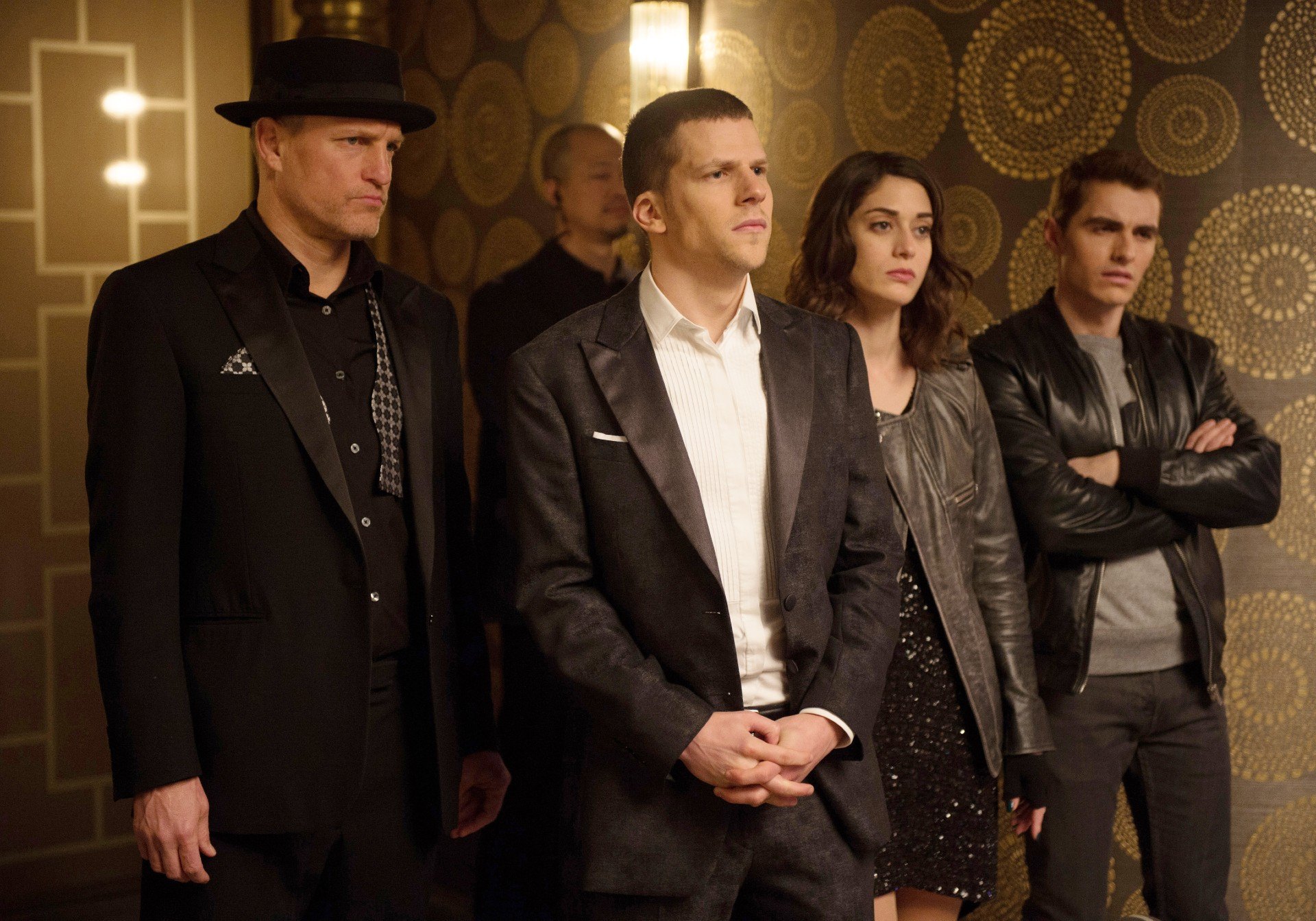
In the 2016 thriller sequel Now You See Me 2, Woody Harrelson plays dual roles as the charismatic mentalist Merritt McKinney and his estranged, tech-bro twin brother, Chase McKinney, utilizing clever cinematic framing, body doubles, and digital compositing to bring both characters to life on screen simultaneously.
Introduction to the Dual Role in Now You See Me 2
When Now You See Me 2 arrived in theaters, audiences familiar with the slick, illusion-heavy style of the original 2013 film were treated to a fresh narrative dynamic. Alongside the returning ensemble of illusionists known as the Four Horsemen, the plot introduces a deeper personal conflict for Merritt McKinney, played by Woody Harrelson. Rather than simply being the fast-talking, hypnotic mentalist of the group, Merritt finds himself forced to confront his past through his estranged twin brother, Chase McKinney.
This dual performance adds a layer of psychological tension and comedic friction to the sequel. Chase serves as a primary antagonist or foil, aligning himself with tech billionaire Walter Mabry (played by Daniel Radcliffe) to undermine the Horsemen. For viewers watching the film, the interaction between Merritt and Chase raises immediate technical questions about how modern Hollywood accomplishes these complex dual-character performances without disrupting the illusion of reality. Resolving the confusion around how Woody Harrelson played against himself requires looking past the magic tricks of the plot and examining the actual filmmaking techniques used on set.
Dissecting the Characters: Merritt vs. Chase McKinney
To understand the dynamic in Now You See Me 2, one must first examine how the two brothers differ not only in morality and allegiance, but also in physical styling and demeanor.
Merritt McKinney
Merritt is a founding member of the Four Horsemen. Characterized by his trademark floppy hat, long hair, flamboyant suits, and signature swagger, he relies heavily on psychological manipulation, cold reading, and hypnosis. He projects an aura of confident nonchalance, though the sequel reveals deep-seated vulnerabilities tied to his family history and his complicated relationship with his brother.
Chase McKinney
Chase stands in stark contrast to Merritt. While Merritt embraces a bohemian, theatrical aesthetic, Chase adopts a sleek, corporate-tech persona. He wears structured suits, sports a trimmed haircut, lacks facial hair, and carries an arrogant, condescending attitude. Chase is a master of tech-based manipulation and corporate espionage, utilizing his identical appearance to impersonate Merritt, extract secrets, and disrupt the Horsemen's plans.
| Feature / Trait | Merritt McKinney | Chase McKinney |
|---|---|---|
| Role | The Four Horsemen Mentalist | The Antagonist / Tech Foil |
| Hair Style | Long, flowing hair with a hat | Short, slicked-back haircut |
| Facial Hair | Full beard and mustache | Clean-shaven face |
| Wardrobe | Flashy, bohemian, layered suits | Sharp, modern corporate attire |
| Primary Skillset | Hypnosis, mentalism, cold reading | Cyber-surveillance, impersonation, tech manipulation |
| Allegiance | The Eye (Secret Magic Society) | Walter Mabry / Scientific extortion |
Behind the Scenes: How the Twin Effect Was Achieved
Creating a seamless interaction between two characters played by the same actor requires a combination of classic cinematic illusions and advanced digital technology. In Now You See Me 2, director Jon M. Chu and the visual effects teams employed several industry-standard techniques to make Woody Harrelson share the screen with himself.
1. Motion Control and Split-Screen Framing
The foundational method for shooting twin scenes involves locking down the camera on a motion-control rig. The actor performs a scene as the first character (Merritt), interacting with a stand-in or reading lines to an off-camera script supervisor. The camera records the exact same physical pan and zoom movements on a clean plate. The actor then changes wardrobe, makeup, and hair to become the second character (Chase) and performs the opposite side of the conversation. In post-production, a digital matte line splits the frame, combining the two performances into a single shot.
2. Body Doubles and Over-the-Shoulder Shots
When the camera needs to move freely around the actors—such as during dynamic action sequences or heated arguments—filmmakers rely on professional body doubles who share Harrelson's physical build and height. When shooting over Chase's shoulder toward Merritt, Harrelson plays Merritt, and a double stands in for Chase with his back to the camera or obscured by framing. The roles reverse for the opposing angle. Later, digital face-replacement technology is sometimes applied to the double's face, though careful lighting and wardrobe often make physical matching sufficient.
3. Eye-Line and Spatial Awareness
One of the primary challenges for an actor performing a dual role is maintaining natural eye contact. If Harrelson looks directly into the lens or at a piece of tape representing his twin's eyes, the resulting performance can feel stiff. On the set of Now You See Me 2, extensive rehearsal ensured that Harrelson calibrated his timing, pauses, and physical gestures so that when the two takes were stitched together, the conversational rhythm felt authentic and spontaneous.
Narrative Purpose of the Twin Subplot
The inclusion of Chase McKinney is not merely a technical showcase for visual effects; it serves a vital narrative function within the thematic framework of Now You See Me 2.
Throughout both films, the Four Horsemen deal with themes of identity, misdirection, and the masks people wear. By introducing a blood-related twin who represents a corrupted version of Merritt's skills, the script forces Merritt to confront his own past failures and personal accountability. The rivalry between the brothers underscores the film's broader exploration of trust. If a person cannot trust their own flesh and blood, how can a team of illusionists trust one another while surrounded by betrayal?
Furthermore, Chase acts as a narrative catalyst. His ability to pass as Merritt allows the antagonists to infiltrate the Horsemen's inner circle, setting up key plot twists during the movie's set-pieces in Macau and London. This twin impersonation trope—a staple of dramatic fiction—gives the heist genre a personal, high-stakes edge that elevates the conflict beyond simple corporate revenge.
Frequently Asked Questions
Does Woody Harrelson actually have a twin brother in real life?
No, Woody Harrelson does not have an identical twin brother in real life. While he does have two brothers (Jordan and Brett Harrelson), the twin dynamic in Now You See Me 2 is purely a fictional construct created by the writers and brought to life through acting, wardrobe changes, and visual effects.
How did they make Woody Harrelson look different as Chase McKinney?
The production team utilized distinct styling choices to separate the two characters. For Chase, Harrelson shaved his beard, cut his long hair into a short, modern style, and wore clean-cut, high-end corporate suits. Merritt maintained his signature long hair, full facial hair, and eccentric clothing.
Were CGI face replacements used for the twin scenes?
While digital compositing and split-screen techniques formed the backbone of the twin interactions, modern visual effects pipelines occasionally employ subtle face replacement or digital touch-ups on body doubles to ensure seamless continuity during complex camera movements. However, the majority of face-to-face dialogue relies on Harrelson performing both roles across separate takes.
Does Chase McKinney appear in the other Now You See Me films?
No, Chase McKinney is exclusive to Now You See Me 2. He does not appear in the original 2013 movie, nor is he a primary focus outside of the sequel's specific plot involving Walter Mabry and the tech-extortion narrative.
Conclusion and Next Actions
For fans revisiting Now You See Me 2, understanding the dual role of Woody Harrelson adds a new layer of appreciation for the technical craftsmanship behind the screen. If you plan to watch the film again, pay close attention to the framing, lighting, and camera cuts during scenes where Merritt and Chase share the screen. To dive deeper into the franchise, consider reading about the practical magic effects used by the cast or exploring production notes regarding the visual effects studios responsible for executing the seamless twin compositions.