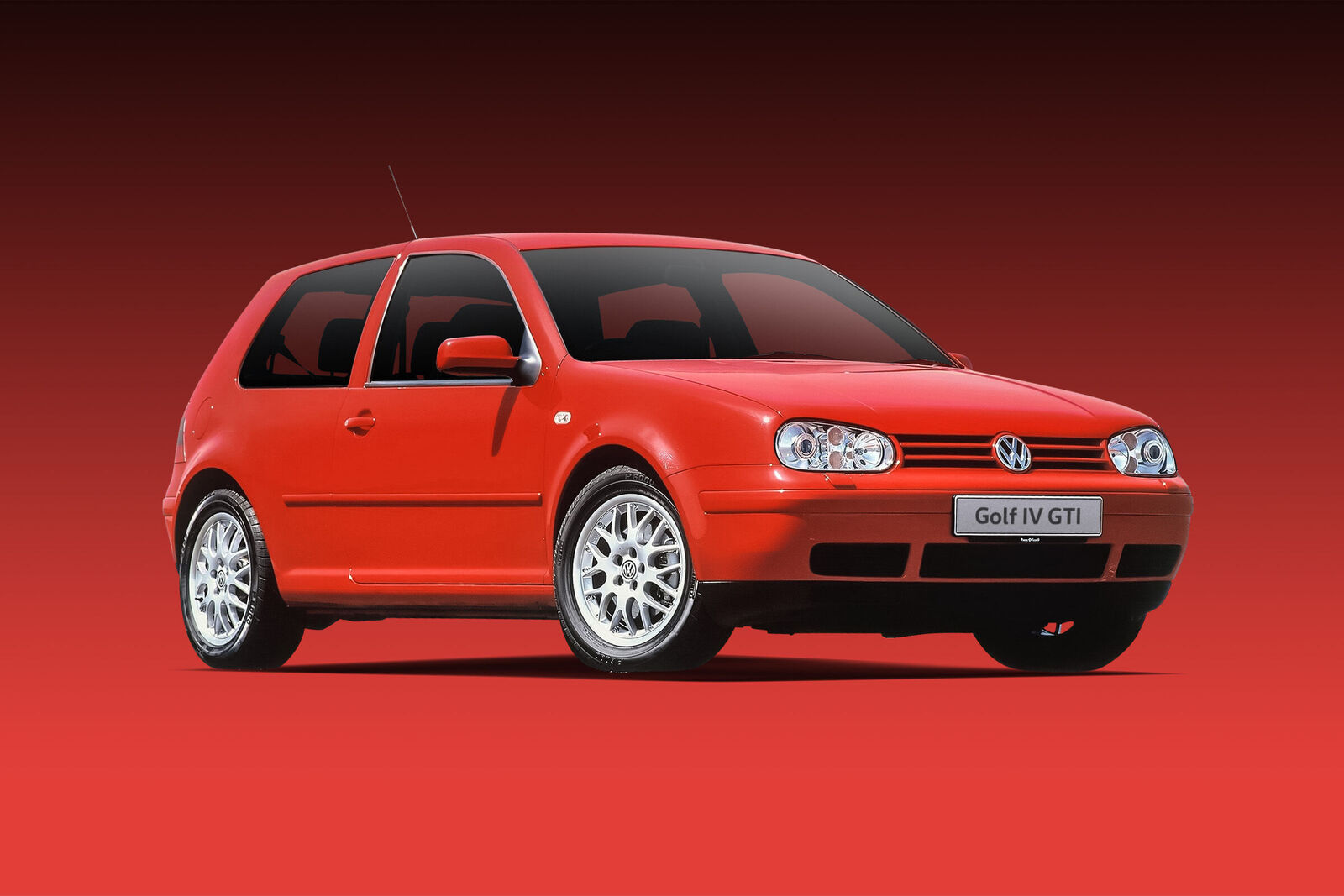
1998 was the pivotal year Volkswagen transitioned from a budget-friendly manufacturer to a premium global conglomerate. This evolution was defined by the launch of the New Beetle, the introduction of the sophisticated Mark 4 platform, and the strategic acquisition of luxury brands like Bentley and Lamborghini, forever altering the company's trajectory and engineering standards.
The Cultural Reset: Launch of the New Beetle
The year 1998 is perhaps most famously remembered in automotive history as the year the New Beetle (Type 9C) officially hit the streets. While the original air-cooled Beetle had defined the company for decades, its successor was a radical departure in every way except for its silhouette. Based on the PQ34 platform, the 1998 New Beetle moved the engine from the rear to the front and swapped air-cooling for water-cooling.
Designed by J Mays and Freeman Thomas, the New Beetle was a masterclass in retro-futurism. It was not merely a car; it was a marketing phenomenon that signaled Volkswagen’s intent to appeal to the emotional and lifestyle desires of the North American and European markets. In 1998, the car featured a 2.0-liter four-cylinder engine producing 115 horsepower, but its true value lay in its design language. The inclusion of a dashboard bud vase became an iconic symbol of the era's "Flower Power" revival, and the car's rounded fenders and circular lighting elements broke away from the boxy aesthetics of the early 1990s.
From a technical perspective, the 1998 New Beetle was significant because it proved that Volkswagen could successfully repurpose a standard chassis—the same one used for the Golf and Jetta—into a niche, high-margin product. This modular approach would later become the blueprint for the entire automotive industry’s platform-sharing strategies.
Engineering the Future: The A4 Platform (PQ34) Breakthrough
While the Beetle grabbed the headlines, the most important mechanical evolution of 1998 was the full-scale rollout of the A4 platform, also known as the PQ34. This architecture underpinned the Volkswagen Golf Mk4, the Jetta/Bora, and the Audi A3. In 1998, the Golf Mk4 reached its first full year of production in Europe and began its global expansion.
The A4 platform represented a massive leap in build quality. Under the leadership of then-CEO Ferdinand Piëch, Volkswagen aimed to close the gap between mass-market cars and luxury vehicles. The 1998 models featured:
- Laser-welded body panels: This allowed for much tighter panel gaps and significantly higher torsional rigidity.
- Fully galvanized bodies: VW offered a 12-year perforation warranty in 1998, a testament to their confidence in rust prevention.
- Interior Material Revolution: The 1998 Golf and Jetta introduced "soft-touch" plastics and blue-and-red instrument lighting, which created a premium cabin feel that competitors like Toyota or Ford could not match at the time.
The 1998 Golf Mk4 also saw the introduction of the Haldex-based 4Motion all-wheel-drive system in European markets. This was a sophisticated, electronically controlled system that could divert power to the rear wheels in milliseconds, a significant upgrade over the older, purely mechanical Syncro systems.
The 1998 Luxury Acquisition Binge: Bentley, Lamborghini, and Bugatti
In a single year, Volkswagen transformed itself from a single-brand powerhouse into a multi-tiered luxury empire. Ferdinand Piëch’s vision was to have a brand for every possible consumer, from the entry-level economy buyer to the billionaire collector.
- Bentley and Rolls-Royce: In July 1998, Volkswagen acquired the Rolls-Royce and Bentley group from Vickers. While a complex legal battle eventually saw the Rolls-Royce name go to BMW, Volkswagen retained the Crewe factory and the Bentley brand. This gave VW access to ultra-luxury craftsmanship and high-displacement engine technology.
- Lamborghini: Also in 1998, Volkswagen’s Audi division purchased Lamborghini from a Malaysian/Indonesian investment group. This acquisition allowed VW to enter the supercar arena, leading to the development of the Murciélago and later the Gallardo, utilizing VW's electronic systems and Audi's manufacturing discipline.
- Bugatti: To round out the year, VW purchased the rights to the Bugatti name. This set the stage for the W16 engine development and the eventual 2005 launch of the Veyron, which remains a pinnacle of 1990s-originated engineering ambition.
These acquisitions in 1998 meant that the technology being developed for a Golf would eventually share R&D resources with cars costing ten times as much, a concept known as "synergy" that Piëch championed.
The Passat B5: Bridging the Gap to Luxury
In 1998, the Passat B5 was in its second year of production and was dominating the mid-size sedan segment. Unlike its predecessor, the B5 was built on the PL45 platform, which it shared with the Audi A4 (B5). This meant the 1998 Passat used a longitudinal engine layout rather than the transverse layout common in most front-wheel-drive cars.
This architectural choice allowed for a sophisticated four-link front suspension setup, which virtually eliminated torque steer and provided a ride quality comparable to BMW and Mercedes-Benz. In 1998, the Passat was available with the 1.8T turbocharged engine and the 2.8-liter V6. The B5 Passat is often cited by historians as the car that forced other manufacturers to upgrade their interior materials, as the VW's cabin was far superior to the contemporary Honda Accord or Chevrolet Malibu.
Powerplant Innovations: 1.8T, VR6, and the Legendary TDI
The evolution of Volkswagen in 1998 was driven by its diverse engine lineup. This was the year that several legendary engines became mainstream across the VW fleet.
The 1.8T 20-Valve
The 1.8-liter turbocharged four-cylinder engine was a marvel of the era. Utilizing five valves per cylinder (three intake, two exhaust), it provided a flat torque curve and was highly tunable. In 1998, this engine (often found with the engine codes AGU or AEB) produced 150 horsepower, but it became the darling of the aftermarket tuning scene, as it could easily be modified to produce much higher output.
The VR6 (Narrow-Angle V6)
The 1998 models featured the 12-valve version of the VR6 engine. This unique design used a single cylinder head for both banks of cylinders, which were offset at a narrow 15-degree angle. This allowed a six-cylinder engine to fit into the space of a four-cylinder, giving the Golf GTI and Jetta GLX a unique exhaust note and smooth power delivery that defined VW performance in the late 90s.
The 1.9 TDI (ALH Code)
For many, 1998 represents the "golden era" of Volkswagen diesel technology. The 1.9-liter TDI engine (specifically the ALH code introduced around this time) is legendary in 2026 for its extreme longevity and fuel efficiency. Producing 90 horsepower and 155 lb-ft of torque, it was capable of achieving over 50 MPG on the highway. Its mechanical simplicity compared to modern common-rail diesels makes it a highly sought-after engine for enthusiasts today.
Comparison of Key 1998 Volkswagen Models
The following table compares the specifications of the three most influential models in the 1998 lineup.
| Feature | 1998 New Beetle (2.0L) | 1998 Golf GTI (VR6) | 1998 Passat (1.8T) |
|---|---|---|---|
| Platform | PQ34 (A4) | PQ34 (A4) | PL45 (B5) |
| Engine Configuration | Inline-4 (SOHC) | Narrow-angle V6 | Inline-4 Turbo (20v) |
| Horsepower | 115 hp @ 5,200 rpm | 172 hp @ 5,800 rpm | 150 hp @ 5,700 rpm |
| Torque | 122 lb-ft @ 2,600 rpm | 173 lb-ft @ 4,200 rpm | 155 lb-ft @ 1,750 rpm |
| Suspension (Front) | MacPherson Strut | MacPherson Strut | 4-Link Independent |
| Target Audience | Lifestyle/Nostalgia | Performance Enthusiasts | Families/Executives |
Safety and Manufacturing Standards in 1998
In 1998, Volkswagen made significant strides in occupant safety. This was the year that side-impact airbags became standard or widely available across most of the lineup. Volkswagen's commitment to safety was reflected in the New Beetle's crash test ratings, which were among the highest for small cars at the time.
Manufacturing also evolved with the increased use of CAN bus (Controller Area Network) systems. This allowed various electronic control units (ECUs) in the car to communicate with each other over a single pair of wires, reducing the complexity of the wiring harness while enabling features like the "Comfort Module," which controlled power windows, locks, and alarms through a centralized brain. While early CAN bus systems were prone to "electrical gremlins" that became famous in later years, in 1998, they represented the cutting edge of automotive electronics.
Legacy and Longevity from a 2026 Perspective
Looking back from 2026, the 1998 model year stands as the point where Volkswagen "grew up." The cars produced during this period are now considered "Youngtimers" or modern classics. The Mk4 Golf and the B5 Passat established a design language of clean lines and high-quality interiors that VW maintained for the next two decades.
In the current 2026 market, 1998 Volkswagens—particularly those with the 1.9 TDI or the VR6 engines—have seen a resurgence in value. Collectors prize the 1998 New Beetle for its historical significance as the first of the modern retro-reboots. Furthermore, the 1998 acquisitions of Bentley and Lamborghini proved to be the most successful brand-integration strategy in history, as both brands now utilize shared VW Group architectures to produce record-breaking profits.
Frequently Asked Questions
What was the most significant change for Volkswagen in 1998?
The most significant change was the move toward a premium market position. Through the introduction of the A4 (PQ34) platform and the acquisition of luxury brands like Bentley and Lamborghini, VW moved away from being just a "People's Car" and became a high-tech, multi-brand conglomerate.
Was the 1998 Volkswagen Golf Mk3 or Mk4?
1998 was a transition year. In Europe, the Mk4 was the primary model on sale. In North America, the Mk3 remained on sale for much of the 1998 calendar year as a "1998" model, while the Mk4 was introduced late in the year as a "1999" model. This creates frequent confusion in parts catalogs and enthusiast forums.
Is the 1998 Volkswagen Beetle a reliable car?
The 1.9 TDI and 2.0L gas engines found in the 1998 Beetle are considered very reliable. However, the 1998 models were known for interior issues, such as peeling soft-touch plastics and failing window regulators. From a mechanical standpoint, the engines and transmissions are robust if maintained.
What brands did Volkswagen buy in 1998?
In 1998, Volkswagen Group acquired Bentley, Lamborghini, and the rights to the Bugatti brand. They also initially purchased Rolls-Royce, but the rights to the name were later transferred to BMW in a complex settlement that allowed VW to keep the Bentley brand and the factory in Crewe, England.
Why is the 1998 TDI engine so highly regarded?
The 1998 1.9 TDI (ALH) engine is prized for its simplicity. It uses a rotary injection pump rather than the more complex "Unit Injector" (Pumpe Düse) or Common Rail systems that followed. This makes it exceptionally durable, easy to repair, and capable of running for 400,000 miles or more with proper timing belt maintenance.
Practical Recommendation for Owners and Buyers
If you are looking to purchase or restore a 1998 Volkswagen in 2026, prioritize vehicles with a documented service history regarding the timing belt and water pump. For the 1.8T and TDI engines, these components are critical; a failure usually results in catastrophic engine damage. Additionally, check the "drain cowl" area under the windshield for debris, as clogged drains in 1998-era Passats and Golfs can lead to water ingress that damages the sensitive Comfort Control Module (CCM) located under the carpet. For those seeking a collectible, a first-year 1998 New Beetle in a rare color or a VR6-equipped GTI offers the best long-term value potential.