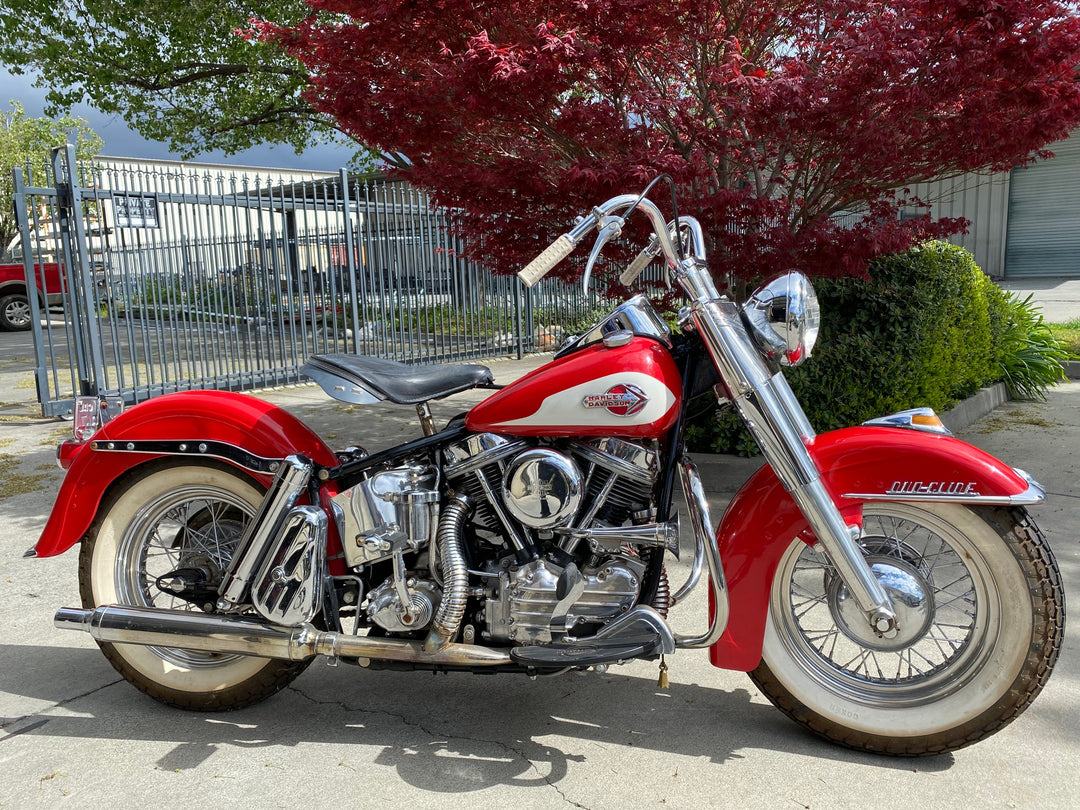
The 1959 Harley-Davidson lineup represents a defining transition era for American motorcycling, bridging classic postwar styling with late-fifties mechanical refinement, highlighted by the introduction of the hydraulic Duo-Glide rear suspension on big twins and the continued evolution of the Sportster.
Introduction to the 1959 Harley-Davidson Lineup
The year 1959 marked a pivotal chapter in the history of the Harley-Davidson Motor Company. Operating out of Milwaukee, Wisconsin, the manufacturer stood as the last remaining domestic survivor of the American motorcycle industry's early twentieth-century boom. By the late 1950s, the motorcycling landscape was shifting. British imports like Triumph and BSA were making inroads with lightweight, nimble machines, while American consumer culture embraced the open road, weekend touring, and customized styling.
For the 1959 model year, Harley-Davidson refined the innovations introduced just a year prior while maintaining the traditional heavy-duty architecture that define its brand. The most significant advancement of this era—the Duo-Glide frame, which brought rear swingarm suspension and coil-over shock absorbers to the big twin line—was now fully established, replacing the archaic rigid frames of the past. Meanwhile, the overhead-valve Sportster, introduced in 1957, was steadily winning over riders looking for sports-oriented performance. Examining the 1959 Harley-Davidson motorcycle overview requires exploring the engineering specifications, model variations, and cultural legacy of a fleet that laid the groundwork for modern American cruising.
Engineering and Mechanical Specifications of the Big Twins
At the heart of Harley-Davidson’s 1959 big twin lineup—comprising the FL and FLH Hydra-Glide and Duo-Glide models—was the steadfast 74-cubic-inch (1,200cc) Panhead engine. Named for its characteristic polished aluminum rocker boxes shaped like upside-down kitchen pans, this overhead-valve V-twin was a powerhouse of its era, delivering robust low-end torque essential for pulling heavy touring chassis and sidecars.
The Panhead Engine Architecture
The 1959 Panhead featured a bore and stroke of 3-7/16 inches by 3-13/16 inches, with a compression ratio typically around 8:1 on standard models, though higher-compression variations were available for performance-oriented riders. Feeding the engine was a single Linkert M-link carburetor, an intricate mechanical unit requiring careful adjustment of its high and low-speed needles to maintain optimal air-fuel mixtures.
Ignition was handled by a battery-and-coil setup housed in a distributor on the right side of the engine, a system that demanded periodic point gapping and timing checks. Lubrication relied on Harley-Davidson’s classic dry-sump recirculating oil system, utilizing an external oil tank situated beneath the seat post and a dual-gerotor pump to circulate oil through the engine internals.
Transmission and Primary Drive
Power was transferred from the engine via a primary chain enclosed in a stamped-steel or cast aluminum primary cover to a wet multi-plate clutch. The transmission was Harley-Davidson’s rugged four-speed constant-mesh gearbox, operated by a foot clutch (often called a "suicide clutch" when paired with a hand-shifted gate, though a foot-shift conversion was increasingly common among riders). The four-speed configuration provided flexible gearing for both highway cruising and low-speed maneuvering, a crucial requirement given the substantial weight of the motorcycle.
The Duo-Glide Revolution: Chassis and Suspension
The defining chassis characteristic of the 1959 big twins was the Duo-Glide suspension system, which had replaced the aging wishbone rigid frames in 1958. This system transformed the riding experience of Harley-Davidson’s heavy motorcycles.
| Chassis Feature | 1959 Specification / Detail |
|---|---|
| Frame Type | Tubular steel duplex cradle with rear swingarm |
| Front Suspension | Telescopic fork with hydraulic dampening |
| Rear Suspension | Dual hydraulic coil-over shock absorbers |
| Front Brake | Internal expanding mechanical drum |
| Rear Brake | Internal expanding mechanical drum |
| Wheel Size | 16-inch front and rear drop-center rims |
Front Fork and Rear Swingarm Design
Up front, the motorcycle utilized telescopic hydraulic forks that absorbed road irregularities far more effectively than the earlier spring-fork designs. At the rear, a swingarm controlled by dual enclosed coil-over shock absorbers allowed the rear wheel to track road contours independently of the frame. This combination of front and rear springing earned the model the "Duo-Glide" moniker, signifying dual suspension comfort. Despite these advancements, the braking system remained somewhat primitive by modern standards, relying on mechanical internal-expanding drum brakes on both the front and rear wheels. These brakes required significant hand and foot pressure to haul down a machine that weighed upwards of 650 pounds dry.
Flagship Models of the 1959 Fleet
Harley-Davidson’s 1959 catalog catered to a diverse clientele, ranging from long-distance highway tourists and police departments to weekend sportsmen.
FL and FLH Duo-Glide
The standard FL and the high-compression FLH were the undisputed kings of the highway. The FLH featured modified cylinder heads, higher-lift cams, and a higher compression ratio to extract maximum horsepower from the Panhead motor. These models were frequently outfitted with extensive touring accessories, including fiberglass or leather saddlebags, deep-skirted fenders, a wrap-around windshield, auxiliary driving lights, and dual "grandfather" exhaust fishtails or mufflers. For many riders, the FLH defined the archetype of the American interstate cruiser.
The Sportster KH and XL Line
Introduced in 1957 as the overhead-valve successor to the side-valve K-series, the Sportster was built for speed and agility. In 1959, the line included the 54-cubic-inch (883cc) XL (street) and XLH (high-compression) models. Featuring a unit-construction-style appearance (though the engine and transmission cases were still separate), a slim profile, lightweight fenders, and megaphone-style exhausts, the Sportster targeted younger riders who favored canyon carving and drag strip acceleration over cross-country touring.
Service Cars and Police Specials
Harley-Davidson maintained a firm grip on the municipal and police fleet market in 1959. The Servi-Car—a three-wheeled utility vehicle featuring a specialized rear axle, a large cargo box, and a flathead 45-cubic-inch engine—remained a staple for traffic enforcement and parking meter attendants across American cities. Meanwhile, specially prepared FL and FLH Duo-Glides equipped with sirens, radio boxes, and windshields served highway patrols nationwide.
Styling, Aesthetics, and Iconic Design Cues
The visual identity of a 1959 Harley-Davidson is instantly recognizable, characterized by abundant chrome, generous use of polished aluminum, and striking two-tone paint schemes.
Paint and Badging
Harley-Davidson offered distinctive color combinations for 1959, often pairing a primary body color with contrasting side panels on the fuel tank, separated by decorative chrome trim moldings. Popular hues included Skyline Blue, Hi-Fi Red, and Flight Red, complemented by classic cream or white accents. The fuel tanks proudly displayed the iconic "V-shaped" or die-cast metal medallions that bore the Harley-Davidson name and crest, moving away from simple water-slide decals of earlier decades.
Ergonomics and Operator Environment
The rider's cockpit on a 1959 Duo-Glide was designed for long-distance comfort. It featured a large, sprung Solo saddle (or optional Buddy Seat for two-up riding) covered in leather or textured vinyl, designed to isolate the rider from remaining high-frequency engine vibrations. The wide handlebars, often referred to as "cowhorn" bars, swept back toward the operator, creating an upright, relaxed riding posture. The instrument cluster was mounted directly atop the fuel tank, housing the speedometer, ignition switch, and oil pressure warning light, keeping the handlebar area uncluttered.
Ownership, Restoration, and Maintenance Realities in 2026
For modern collectors and vintage motorcycle enthusiasts evaluating a 1959 Harley-Davidson today, understanding the practical realities of ownership requires balancing historical appreciation with mechanical diligence.
Sourcing Parts and Mechanical Upkeep
Maintaining a Panhead engine or a Duo-Glide chassis in the current era is supported by a robust aftermarket supply network that reproduces nearly every component required for a faithful restoration. However, originality commands a premium. Buyers should inspect engine cases for matching numbers, check transmission housings for cracks, and verify the integrity of the original electrical generator and voltage regulator systems, which are common points of failure if neglected.
Preservation Versus Full Restoration
Original, unrestored "survivor" motorcycles from 1959 are increasingly rare and highly prized by collectors. When assessing a potential acquisition, expert advice emphasizes distinguishing between cosmetic patina and structural neglect. Frame modifications, chopped fenders, and aftermarket engine alterations—common during the chopper booms of the 1960s and 1970s—can significantly impact collector value unless executed with period-correct custom components.
Frequently Asked Questions
What is the main difference between a 1958 and a 1959 Harley-Davidson Duo-Glide?
Mechanically and structurally, 1958 and 1959 models are nearly identical, as 1958 marked the monumental introduction of the rear swingarm frame. Minor running changes in 1959 included updated electrical components, revised color offerings, and subtle trim refinements, but the core Duo-Glide chassis and Panhead engine architecture remained unchanged.
How much horsepower did a 1959 Harley-Davidson FLH produce?
The factory rating for the high-compression FLH Panhead in 1959 was approximately 60 horsepower. While modest by modern standards, this output provided ample low-end grunt to propel the heavy touring chassis past highway speeds of the era.
Can a 1959 Harley-Davidson be ridden on modern highways safely?
Yes, but with significant caveats regarding modern traffic speeds and braking distances. While a well-tuned Panhead can cruise comfortably at 55 to 65 miles per hour, its mechanical drum brakes require vastly increased stopping distances compared to modern hydraulic disc brake systems.
What kind of electrical system does a 1959 Harley-Davidson use?
The 1959 lineup utilizes a 6-volt electrical system powered by a direct-current generator. Many modern owners convert these systems to 12 volts using aftermarket kits to improve headlight brightness, starting reliability, and accessory compatibility.
Are replacement parts difficult to find for a 1959 Panhead?
No. Thanks to dedicated vintage motorcycle specialists and reproduction parts manufacturers, engine internals, chassis components, sheet metal, and hardware for 1959 Harley-Davidsons are readily available worldwide.
Conclusion and Next Actions
The 1959 Harley-Davidson motorcycle lineup stands as an enduring monument to American engineering and design, marking the mature refinement of the Panhead engine and the revolutionary comfort of the Duo-Glide chassis. Whether you are researching for historical preservation, evaluating a potential vintage purchase, or planning a concours-quality restoration, verifying matching numbers, inspecting frame integrity, and sourcing reliable mechanical documentation are essential next steps for engaging with this golden era of motorcycling heritage.