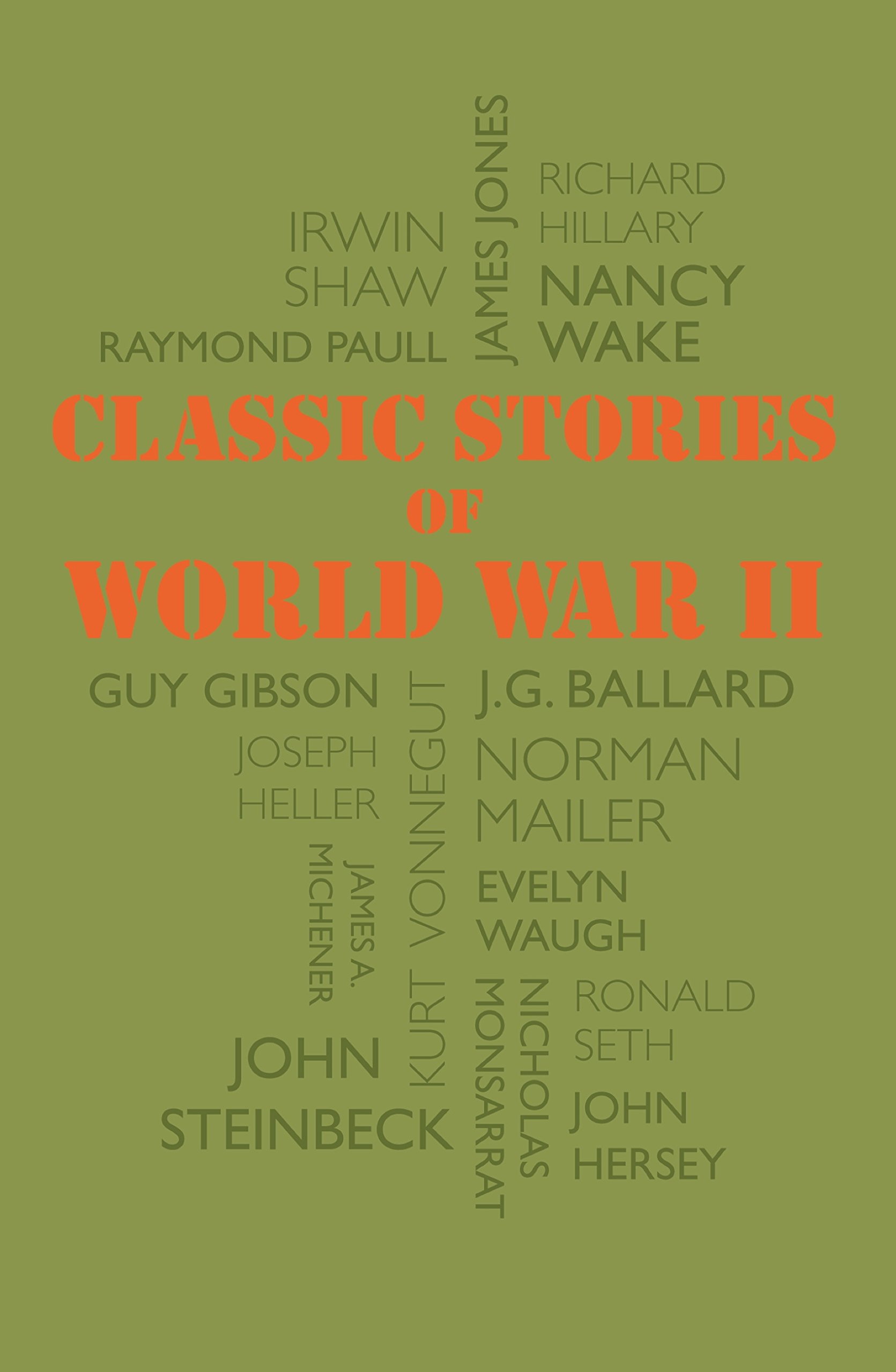
World War II was defined not only by its industrial scale and strategic maneuvering but by individual and collective acts of bravery that altered the course of global events. These stories serve as fundamental touchstones for understanding how tactical risks, personal integrity, and singular moments of defiance dismantled the momentum of the Axis powers. By examining these accounts, we gain perspective on the human element that underpinned the logistical and geopolitical shifts of the 1940s.
1. Witold Pilecki: The Man Who Volunteered for Auschwitz
In 1940, Polish cavalry officer Witold Pilecki executed one of the most daring intelligence missions in history. He intentionally allowed himself to be arrested by the Gestapo to infiltrate Auschwitz. His objective was to gather intelligence on the conditions of the camp and organize an underground resistance movement among the inmates. Pilecki successfully authored the "Witold's Report," the first comprehensive Allied intelligence regarding the Holocaust. His work provided the Polish government-in-exile and the British with concrete evidence of the atrocities occurring behind the barbed wire, fundamentally changing the Allied perception of German operations in occupied Poland.
2. The Norwegian Heavy Water Sabotage
The survival of the Allied effort to develop an atomic weapon depended heavily on preventing the Germans from acquiring "heavy water" (deuterium oxide). Located at the Vemork hydroelectric plant in Norway, the Norsk Hydro facility was the only site capable of mass-producing the substance needed for nuclear research. In Operation Gunnerside, a team of Norwegian commandos—trained by the British Special Operations Executive—infiltrated the facility. By successfully destroying the heavy water production cells, they deprived the Nazi regime of the material necessary to jumpstart their atomic reactor experiments, thereby stalling their nuclear ambitions indefinitely.
3. The Codebreakers of Bletchley Park
While often viewed as a collective, the heroic mental endurance displayed by the cryptanalysts at Bletchley Park changed the war's timeline. Led by figures like Alan Turing and Gordon Welchman, the team developed the Bombe machine to decipher the Enigma code. This victory in intelligence provided the Allies with "Ultra," a constant stream of high-level German communications. Access to this data allowed the British to anticipate U-boat movements in the Atlantic and prepare for German advances, effectively shortening the war by an estimated two to four years.
4. The Siege of Bastogne and the 101st Airborne
During the Battle of the Bulge in December 1944, the 101st Airborne Division found itself surrounded in the town of Bastogne. When Brigadier General Anthony McAuliffe was presented with a German demand for surrender, his one-word response—"Nuts!"—became legendary. The division held the vital road hub despite a lack of winter clothing, dwindling ammunition, and constant artillery fire. Their refusal to yield prevented the German Panzers from reaching the Meuse River and buying the time necessary for General George Patton’s Third Army to break the siege, ultimately halting the final major German offensive of the war.
5. The USS Johnston at Leyte Gulf
In the Battle off Samar, the USS Johnston faced an overwhelming force consisting of four Japanese battleships and eight cruisers. Rather than retreating, Commander Ernest E. Evans ordered the Johnston to charge the Japanese line, creating a smokescreen and launching torpedoes to protect the vulnerable American escort carriers. The ship's sacrifice disrupted the Japanese formation, leading them to believe they were facing a much larger naval force. The Johnston eventually sank, but the delay it caused allowed the American fleet to regroup, preventing a potential catastrophe for the U.S. landings in the Philippines.
6. The Warsaw Uprising
The Warsaw Uprising of 1944 remains a monumental example of civic defiance. The Polish Home Army (Armia Krajowa) launched a 63-day insurrection to liberate the capital from German occupation. While the uprising ultimately faced tactical defeat, the sheer scale of the operation forced the German command to divert massive resources, divisions, and equipment away from the Eastern Front. The moral impact of the resistance served to maintain Polish sovereignty aspirations and signaled to the world that the occupation was fundamentally unstable.
7. The Doolittle Raid on Tokyo
Following the attack on Pearl Harbor, American morale was at an all-time low. In April 1942, Lieutenant Colonel James Doolittle led 16 B-25 Mitchell bombers on a daring, one-way mission to bomb the Japanese mainland. Launching from the USS Hornet, the raid caused minimal physical damage but massive psychological shock to the Japanese leadership. It demonstrated that Japan was vulnerable to aerial attack, compelling the Imperial Japanese Navy to reorganize its defensive perimeters and leading directly to the pivotal Battle of Midway.
8. Operation Mincemeat: The Deception That Saved Sicily
Strategic deception was a hallmark of the Allied victory. In 1943, British intelligence officers planted the body of a man disguised as an officer carrying fake documents off the coast of Spain. The documents, which claimed the Allies were planning to invade Greece and Sardinia rather than Sicily, were recovered by German intelligence. Adolf Hitler fell for the deception, shifting critical defensive forces away from Sicily. This allowed the Allied invasion of Sicily to proceed with significantly less resistance than anticipated, opening the door for the eventual collapse of the Mussolini government.
9. The Survival of the "Night Witches"
The 588th Night Bomber Regiment of the Soviet Air Force, composed entirely of female pilots and mechanics, flew antiquated Polikarpov Po-2 biplanes against the German Wehrmacht. Operating at night, they would idle their engines to glide silently toward their targets, earning them the nickname "Night Witches" from German soldiers. Their persistence and ability to operate under extreme danger provided critical tactical support on the Eastern Front, proving the effectiveness of all-female combat units in a theater of war where they were initially met with deep skepticism.
10. The White Rose Resistance
In the heart of Nazi Germany, a small group of students at the University of Munich, led by Hans and Sophie Scholl, formed "The White Rose." They used literature, pamphlets, and graffiti to urge the German public to resist the Nazi regime’s morality and participate in sabotage. Though the members were executed in 1943, their defiance challenged the perception of monolithic support for the regime. Their intellectual resistance remains a symbol of the courage required to uphold humanity in the face of totalitarian control.
Comparative Analysis of Heroic Actions
The following table outlines the different theaters of war and the strategic outcomes achieved through these specific acts of bravery.
| Story | Theater | Primary Strategic Impact |
|---|---|---|
| Witold Pilecki | Occupied Poland | Exposed Holocaust realities |
| Heavy Water Sabotage | Norway | Prevented Axis atomic weapons |
| Bletchley Park | Atlantic/Europe | Shortened war through intelligence |
| Siege of Bastogne | Western Front | Halted final German offensive |
| USS Johnston | Pacific | Protected landing operations |
| Warsaw Uprising | Eastern Front | Forced German resource diversion |
| Doolittle Raid | Pacific | Shifted Japanese defensive strategy |
| Operation Mincemeat | Mediterranean | Enabled successful Sicilian invasion |
| Night Witches | Eastern Front | Provided critical tactical support |
| The White Rose | Germany | Challenged internal Nazi ideology |
Frequently Asked Questions
1. What made the Enigma code so difficult for the Allies to break? The Enigma machine used a series of rotating rotors to scramble messages in billions of possible combinations. Because the setting for these rotors changed daily, the code was considered unbreakable by traditional cryptanalysis until the development of automated computing aids at Bletchley Park.
2. How did the Norsk Hydro raid prevent the German atomic bomb? The German nuclear program relied on heavy water to moderate their research reactors. Without this specific material, their scientists could not successfully sustain a nuclear chain reaction, effectively ending their ability to weaponize atomic research during the conflict.
3. Why was the Doolittle Raid significant for the Pacific War? Beyond morale, the raid forced the Japanese navy to bring its carriers back to the home islands for defense. This shifted the balance of power and set the stage for the American victory at the Battle of Midway, which turned the tide in the Pacific.
4. Were these heroic stories part of official military planning? While some, like the Doolittle Raid and Operation Mincemeat, were planned operations, many others—like the Warsaw Uprising or the formation of the Night Witches—emerged from local initiative, individual bravery, or underground movements working in tandem with the broader Allied war effort.
5. How do historians verify these accounts in 2026? Verification involves comparing primary source documentation, such as mission logs, intercepted communications, and captured Axis records, with post-war testimonials and verified journals from participants. In 2026, digital archival access has made cross-referencing these documents more efficient than ever.
Next Steps for Historical Inquiry
To deepen your understanding of these events, consult the official archives of the Imperial War Museum or the National Archives and Records Administration (NARA). These institutions offer digitized access to original intelligence reports, tactical maps, and personal accounts that provide the context necessary to evaluate the long-term impact of these specific heroic interventions.