The N-400 naturalization process in 2026 typically takes between 7 to 14 months from the initial filing date to the Oath of Allegiance. Individual timelines vary significantly based on the specific USCIS field office's caseload, the applicant’s background complexity, and whether the application was submitted through the online portal or via traditional mail.
The journey to United States citizenship is a multi-stage legal process governed by the U.S. Citizenship and Immigration Services (USCIS). For many, the N-400, Application for Naturalization, represents the final hurdle in a years-long immigration story. Understanding the "status timeline" is crucial for managing expectations and planning life events, such as international travel or family petitions. As of 2026, USCIS has further integrated digital processing tools to streamline these stages, yet the physical requirements—such as the interview and biometrics—remain fixed points in the schedule.
Phase 1: Application Submission and Receipt (Weeks 1–3)
The timeline begins the moment USCIS receives your Form N-400. In 2026, most applicants prefer the online filing system because it provides immediate confirmation and reduces the risk of data entry errors. When you file online, you receive a digital receipt notice (Form I-797C, Notice of Action) almost instantaneously in your USCIS online account.
For those who choose to file a paper application via mail, the process takes slightly longer. The application must be sent to the correct Lockbox facility based on the applicant's state of residence. Once the Lockbox receives the package, it typically takes 1 to 3 weeks for the staff to scan the documents, process the payment, and issue a physical receipt notice via the U.S. Postal Service.
The Importance of the Receipt Number
Your receipt notice contains a unique 13-character identifier (e.g., IOE, MSC, or NBC followed by 10 digits). This number is the key to tracking your status throughout the year. In 2026, the "IOE" prefix is the most common, indicating that the case is being processed electronically, regardless of whether it was filed on paper or online. During this initial phase, your status will reflect "Case Was Received and A Receipt Notice Was Sent."
Phase 2: Biometrics Appointment (Weeks 4–8)
Approximately 4 to 8 weeks after filing, USCIS will schedule a biometrics appointment at a local Application Support Center (ASC). This step is essential for conducting mandatory criminal background and security checks through the FBI and other federal databases.
Biometrics Reuse
One development that has significantly accelerated the 2026 timeline for many is the "biometrics reuse" policy. If USCIS already has your fingerprints and photographs on file from a previous application (such as a Green Card renewal or a DACA filing), they may waive the new appointment. If your biometrics are reused, you will receive a notice stating such, and your timeline effectively jumps forward by several weeks.
At the ASC
If an appointment is required, you must bring your appointment notice and a valid government-issued photo ID. The technician will take your digital fingerprints, a photograph, and your signature. This information is used to confirm your identity and ensure you meet the "good moral character" requirement for citizenship. Your status will update to "Case is Being Actively Reviewed by USCIS" shortly after this appointment.
Phase 3: The Interview and Examination (Months 5–10)
The longest wait in the N-400 status timeline occurs between the biometrics appointment and the scheduling of the naturalization interview. This interval is where regional differences become most apparent. A field office in a high-volume metropolitan area like New York City or Los Angeles may have a longer queue than an office in a less populated region.
The Interview Notice
When a slot becomes available, USCIS will update your status to "Interview Was Scheduled." You will receive a physical notice in the mail (and a digital copy in your online portal) detailing the date, time, and location of your interview. This notice is usually sent 4 to 6 weeks before the actual appointment date.
Components of the Interview
The interview is a two-fold process:
- The English and Civics Test: You will be tested on your ability to read, write, and speak basic English. You will also be asked 10 civics questions from a standard list of 100; you must answer 6 correctly to pass.
- The Form Review: An officer will go over your entire N-400 application under oath. They will verify your personal history, travel records, and loyalty to the United States. They will also look for any inconsistencies or legal issues that might have arisen since you became a Lawful Permanent Resident.
Phase 4: The Decision (Immediate to 120 Days)
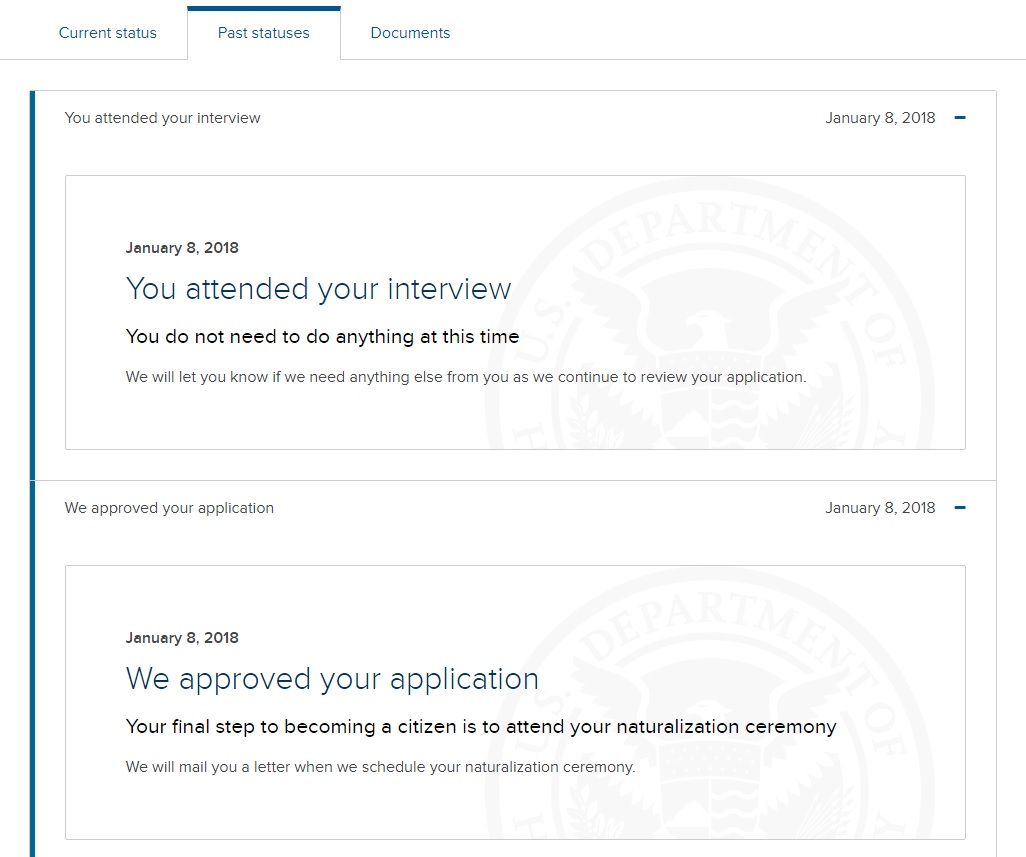
In many cases, the USCIS officer will inform you of the results immediately following the interview. They will give you a Form N-652, Naturalization Interview Results, which will indicate one of three outcomes:
- Granted: Your application is approved, and you are cleared for the Oath Ceremony.
- Continued: Your case is placed on hold. This usually happens if you failed the English or civics test (allowing for a second attempt) or if the officer needs additional evidence (RFE).
- Denied: The officer has determined you are ineligible for naturalization.
By law, USCIS has 120 days from the date of your interview to make a final decision. If 120 days pass without an update, you have the right to seek judicial review in a U.S. District Court, though this is a rare and complex step.
Phase 5: The Oath of Allegiance (Months 11–14)
The final step in the timeline is the Oath of Allegiance. You are not a U.S. citizen until you have taken this oath. In 2026, many field offices attempt to conduct "same-day" oath ceremonies if the interview is successful and administrative staff are available. If a same-day ceremony is not possible, you will be scheduled for a ceremony within 1 to 3 months.
During the ceremony, you will surrender your Permanent Resident Card (Green Card), take the Oath of Allegiance, and receive your Certificate of Naturalization. This certificate is the primary evidence of your U.S. citizenship and is required to apply for a U.S. passport.
Factors Influencing the 2026 Timeline
Several variables can either expedite or delay your N-400 status. Understanding these can help you better estimate your specific completion date.
| Stage | Estimated Duration | Influencing Factors |
|---|---|---|
| Filing to Receipt | 1–3 Weeks | Filing method (Online is faster); Mail carrier delays. |
| Biometrics | 4–8 Weeks | ASC availability; Eligibility for biometrics reuse. |
| Wait for Interview | 4–10 Months | Field office caseload; Background check complexity. |
| Interview to Oath | 0–3 Months | Same-day ceremony availability; Name change requests. |
| Total Timeline | 7–14 Months | Individual case details and regional variances. |
Regional Caseloads
The "1 n 400 status timeline" is heavily dependent on geography. USCIS distributes applications to field offices based on the applicant's ZIP code. While the agency strives for national uniformity, local staffing levels and the volume of applications in a particular jurisdiction remain the primary drivers of delay.
Requests for Evidence (RFE)
If your application is missing critical documentation—such as tax transcripts, proof of child support, or records of past arrests—USCIS will issue an RFE. This pauses the clock on your timeline until the agency receives and reviews your response. In 2026, responding to an RFE through the online portal is the most efficient way to get your case back on track.
Name Change Requests
If you request a legal name change as part of your naturalization, your oath ceremony must be conducted in a judicial forum (in front of a judge) rather than an administrative one (in a USCIS office). Because judicial ceremonies are scheduled less frequently, this can add several weeks or even months to the final stage of your timeline.
How to Monitor Your N-400 Status
In 2026, applicants have several robust tools for tracking their progress. It is recommended to check your status at least once a month to ensure you haven't missed any vital notices.
- USCIS Online Account: This is the most comprehensive tool. It shows your case history, copies of all notices sent to you, and estimated processing times based on your specific field office.
- Case Status Online: By entering your receipt number at the official USCIS Case Status Tool, you can see the most recent action taken on your file.
- Processing Times Tool: The USCIS Check Case Processing Times page allows you to see the average wait times for N-400 applications at your specific field office.
- Inquiry Management: If your case is outside the posted "normal processing times," you can submit an e-Request online to ask for an update.
Frequently Asked Questions
Can I travel outside the U.S. while my N-400 is pending?
Yes, you can travel abroad while your application is pending, provided you maintain your continuous residence and physical presence requirements. However, you must be present for your biometrics, interview, and oath ceremony. You must also report any new international travel during your interview, as the officer will update your file to reflect these trips.
What should I do if my case is taking longer than the posted timeline?
If your case exceeds the "normal processing time" listed on the USCIS website, you should first submit an online inquiry. If you do not receive a satisfactory response, you may contact the USCIS Contact Center or seek assistance from the CIS Ombudsman. In extreme cases of delay, an immigration attorney may suggest a Writ of Mandamus.
Does filing online actually make the process faster?
While filing online does not change the background check or interview queue, it eliminates mailing time and reduces the risk of the application being rejected due to missing signatures or incorrect fees. Online filers also receive notices instantly, which can shave several days off the "wait time" for information.
What happens if I move while my N-400 is processing?
You are legally required to notify USCIS of a change of address within 10 days of moving (using Form AR-11). If you move to a region covered by a different field office, your file will be transferred. This transfer can sometimes cause a delay of 1 to 2 months as the new office integrates your file into their queue.
What are the fees for the N-400 in 2026?
As of 2026, the standard filing fee for the N-400 is $760 (subject to inflation adjustments). This fee generally includes the biometrics service. Reduced fees are available for applicants with a household income between 150% and 400% of the Federal Poverty Guidelines, and full fee waivers (Form I-912) are available for those who meet specific low-income criteria.
Practical Recommendations for Applicants
To ensure your N-400 status timeline remains as short as possible, follow these proactive steps:
- File Online: Utilize the USCIS portal for faster submission and real-time updates.
- Prepare Your Documents Early: Have certified copies of marriage certificates, divorce decrees, tax transcripts, and court records ready before you file.
- Review for Accuracy: Ensure every date and detail on your N-400 matches your previous immigration filings (like your I-485). Discrepancies often trigger background check delays.
- Study for the Test Immediately: Don't wait for the interview notice to start studying. Being fully prepared ensures you won't need a second appointment, which would add months to your timeline.
- Update Your Address Promptly: A missing interview notice due to an old address is one of the most common reasons for case denial (due to abandonment).
By staying informed and organized, you can navigate the 2026 naturalization timeline with confidence, moving steadily toward your goal of U.S. citizenship.