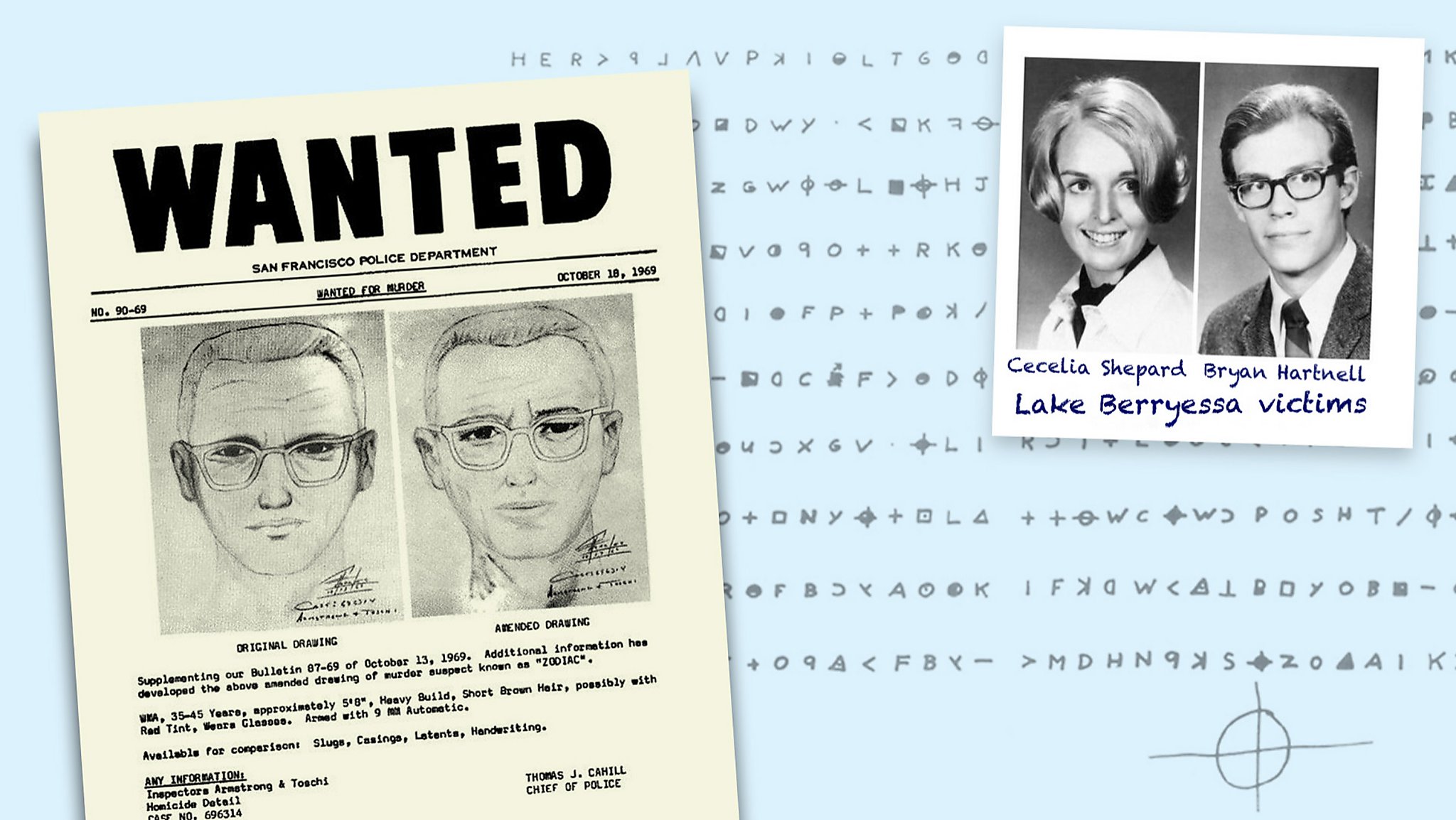
The Zodiac Killer case remains officially open. Law enforcement agencies in jurisdictions where the serial killer operated, alongside federal partners such as the Federal Bureau of Investigation, maintain active investigative files, meaning the case will not be formally closed until a definitive identification and apprehension or proof of death is officially established.
The Enduring Mystery of the Zodiac Murders
The Zodiac Killer terrorized Northern California during the late 1960s and early 1970s, leaving behind a trail of confirmed and suspected homicides, taunting letters, and complex cryptographic ciphers sent to local newspapers. Decades after the final confirmed attacks, the question of whether authorities are still investigating the Zodiac Killer case remains a point of intense public and legal interest. The short answer is yes: the case is officially open. Because murder investigations do not expire under a statute of limitations in California, local police departments and federal law enforcement agencies retain open case files.
However, the nature of an open cold case differs significantly from an active, day-to-day police investigation. Law enforcement agencies do not assign full-time detectives to search for the Zodiac Killer anymore. Instead, the case sits in cold case divisions, where it is periodically reviewed as new forensic technologies emerge, genealogical databases expand, or credible tips are submitted by the public. Understanding the current status of the investigation requires looking at the specific jurisdictions involved, the types of evidence still preserved, the challenges of modern genetic genealogy, and the distinction between official police work and independent civilian sleuthing.
Jurisdictional Breakdown of Active Cold Case Files
The Zodiac Killer's confirmed crimes spanned multiple municipal and county jurisdictions across Northern California. Because American law enforcement operates on a fragmented, local level, multiple police departments and sheriff's offices maintain independent open files regarding the case.
| Jurisdiction | Status of File | Primary Incident | Key Evidence Held |
|---|---|---|---|
| San Francisco Police Department (SFPD) | Open / Inactive Cold Case | St. Paul's / Paul Stine murder (1969) | Fingerprints, partial DNA profiles, letters, cab interior evidence |
| Vallejo Police Department | Open / Inactive Cold Case | Lake Herman Road (1968), Blue Rock Springs (1969) | Ammunition casings, witness descriptions, vehicle details |
| Napa County Sheriff's Office | Open / Inactive Cold Case | Lake Berryessa attack (1969) | Vehicle door inscriptions, knife, hood, rope |
| Federal Bureau of Investigation (FBI) | Open / Historical File | Interstate communications / Multiple jurisdictions | Ciphers, handwriting analysis, federal threat records |
San Francisco Police Department
The SFPD held primary jurisdiction over the murder of cab driver Paul Stine on October 11, 1969, in the Presidio Heights neighborhood. This crime represents the only confirmed Zodiac murder within San Francisco proper. The department officially classified the case as inactive in 2004, but "inactive" in law enforcement terminology does not mean closed. The physical evidence locker continues to secure items retrieved from the crime scene, and SFPD officials have repeatedly stated that any credible lead or breakthrough in DNA technology will prompt a re-examination of the files.
Vallejo Police Department and Napa County Sheriff
The Vallejo Police Department investigated the first two confirmed attacks at Lake Herman Road and Blue Rock Springs Park, while the Napa County Sheriff's Office handled the brutal stabbing at Lake Berryessa. These agencies coordinate periodically with the California Department of Justice and the FBI. Because these smaller departments have limited staffing and constrained budgets, deep forensic testing relies heavily on state and federal grant funding or external accredited laboratories capable of handling degraded historical evidence.
The Federal Bureau of Investigation
The FBI became involved early in the investigation due to the killer mailing threatening letters across county and state lines. While local police agencies hold primary jurisdiction over the murders, the FBI retains an extensive historical file on the Zodiac case. The bureau's San Francisco field office continues to list the case as an open investigation on its official public outreach portals, welcoming tips from the public while acknowledging that identifying the perpetrator after more than half a century presents monumental hurdles.
The Role of Modern Forensic Technology and DNA
For decades, investigators relied primarily on eyewitness accounts, handwriting comparisons, latent fingerprints, and palm prints lifted from stamps and envelopes. Unfortunately, many of the envelopes and stamps sent by the Zodiac Killer were mishandled by postal workers, journalists, and police officers in the era before modern DNA collection protocols were established, leading to severe contamination or a lack of viable cellular material.
In recent years, forensic scientists have attempted to extract DNA profiles from the adhesive flaps and under-flaps of the letters, where saliva might have been trapped.
- Touch DNA: Investigators have utilized advanced swabbing techniques to recover trace amounts of skin cells left by whoever handled the paper.
- STR Testing: Traditional Short Tandem Repeat (STR) profiling has yielded partial profiles from certain items, though many lack sufficient quality to match against the FBI's Combined DNA Index System (CODIS) for a direct conviction-level comparison.
- Investigative Genetic Genealogy (IGG): The same forensic genealogy techniques used to solve the Golden State Killer case and other decades-old cold cases have been applied to the Zodiac files. By uploading partial DNA profiles to public genealogical databases, geneticists can construct family trees to identify potential suspects. However, degraded samples and the risk of contamination from decades of handling complicate these efforts.
Obstacles Facing Current Investigators
Solving a historical serial killer case from the late 1960s presents extreme operational obstacles that compound over time. Law enforcement agencies must navigate reality-based limitations that prevent many cold cases from ever reaching a definitive resolution.
- Deceased Suspects and Witnesses: Nearly every primary suspect named by law enforcement or amateur sleuters over the decades—such as Arthur Leigh Allen, Richard Gaikowski, or Lawrence Kane—is now deceased. Without a living suspect, even a definitive DNA match or confession cannot result in a criminal trial or a formal conviction in a court of law.
- Evidence Degradation and Chain of Custody: Over fifty years, police evidence rooms have undergone moves, reorganizations, and personnel changes. While critical items remain secured, some physical evidence has degraded chemically or been lost entirely to history, weakening the evidentiary chain needed for prosecution.
- Contamination Risks: In the 1960s and 1970s, forensic science was in its infancy. Police officers did not wear modern personal protective equipment such as gloves, masks, and full body suits at crime scenes, meaning the DNA of investigators, journalists, and curious citizens is frequently intermingled with any trace DNA left by the perpetrator.
- Resource Allocation: Modern police departments operate under severe staffing shortages and must prioritize active violent crimes, missing persons cases, and immediate public safety threats over historical cold cases requiring specialized, expensive forensic testing.
Amateur Sleuths, Independent Theories, and Official Police Stances
The internet age transformed the Zodiac Killer case into a global phenomenon, spawning thousands of independent researchers, documentary filmmakers, and online forums dedicated to unmasking the killer. While public interest keeps the case in the cultural spotlight, it creates distinct challenges for law enforcement agencies.
Police departments across Northern California routinely receive hundreds of tips every year from amateur investigators convinced they have identified the killer. Many of these theories rely on circumstantial connections, tortured anagrams, or forced handwriting matches. Law enforcement agencies must review credible tips that contain verifiable physical evidence, but they must also dismiss speculative submissions that drain departmental time and resources.
Law enforcement officials consistently emphasize that while public tips are welcome, reliable breakthroughs come from verifiable physical evidence, forensic science, and corroborated witness testimony rather than speculative internet theories. When independent groups—such as the "Case Breakers," a team of retired law enforcement officers and intelligence professionals—announce alternative suspects (such as Gary Francis Poste in 2021), the FBI and local police departments are forced to publicly clarify that the case remains open and that no suspect has been officially cleared or charged.
Frequently Asked Questions
Is the Zodiac Killer case officially closed?
No, the case is officially open. Because there is no statute of limitations on murder in California, the San Francisco Police Department, Vallejo Police Department, Napa County Sheriff's Office, and the FBI keep their investigative files open.
Are detectives actively working on the case every day?
No. The case is classified as an inactive cold case. Detectives do not work on it on a daily basis, but the files are reviewed when new forensic technology emerges or when credible, verifiable tips are submitted to law enforcement.
Has DNA ever been successfully extracted from the Zodiac letters?
Law enforcement has retrieved partial DNA profiles and touch DNA samples from various letters and stamps. However, due to severe contamination from decades of handling and environmental degradation, obtaining a complete, uncompromised profile suitable for a definitive match has proven exceptionally difficult.
Who was the primary suspect in the investigation?
The most widely known suspect investigated by police during the active years of the case was Arthur Leigh Allen. However, search warrants executed on his home did not yield conclusive physical or forensic evidence linking him directly to the crimes, and his DNA did not match partial profiles recovered from the case files.
Can the case still be solved if the suspect is dead?
From a criminal prosecution standpoint, a case cannot be tried in court if the accused is deceased, as the constitutional right to a trial requires a living defendant. However, law enforcement can still formally close an investigation by presenting definitive forensic proof that establishes the identity of the perpetrator beyond a reasonable doubt.
Conclusion and Next Actions
The investigation into the Zodiac Killer remains open across multiple Northern California police agencies and federal offices, maintained as a persistent cold case rather than an active daily pursuit. For those following the case or researching its historical record, the most reliable updates come directly from official press releases issued by the San Francisco Police Department or the FBI's San Francisco field office. Anyone possessing physical evidence, historical documents, or verifiable information regarding the crimes should contact their local law enforcement agency or submit a tip directly through the FBI's official public reporting portals.