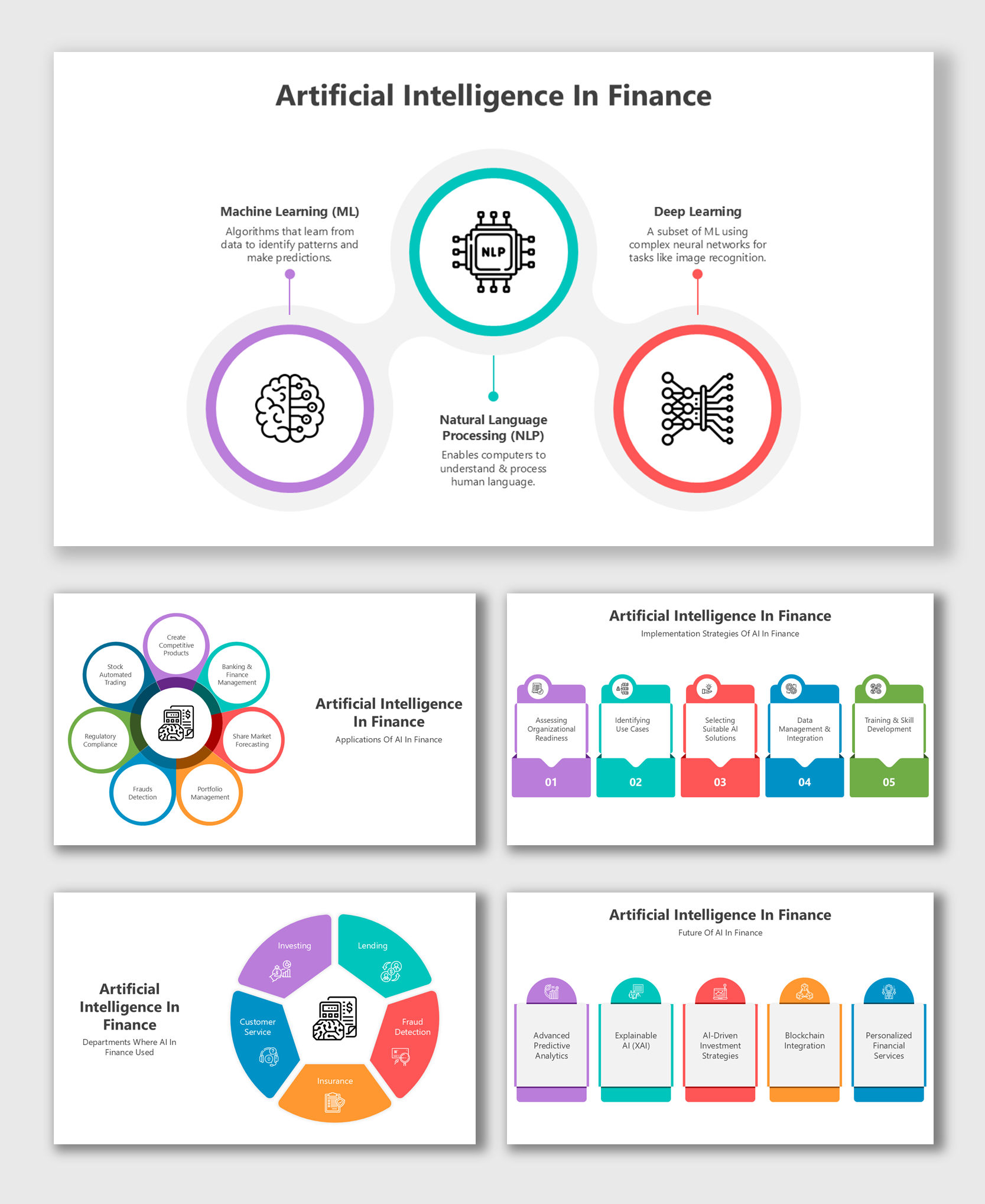
Artificial intelligence data analytics in finance utilizes machine learning algorithms, deep learning, and natural language processing to extract actionable insights from vast, complex datasets. In 2026, these technologies empower financial institutions to automate risk assessment, detect sophisticated fraud in real-time, personalize retail banking at scale, and execute high-frequency trading strategies with precision that exceeds human capability.
The Transformation of Financial Data Ecosystems
The financial sector has transitioned from descriptive analytics—which merely explained what happened in the past—to prescriptive and autonomous AI systems. As of 2026, the integration of artificial intelligence data analytics in finance is no longer a competitive advantage but a baseline requirement for institutional viability. This evolution is driven by the sheer volume of data generated by digital transactions, IoT-connected devices, and global market feeds.
Traditional data processing methods relied on structured data housed in relational databases. However, modern financial AI thrives on unstructured data, including social media sentiment, satellite imagery for supply chain monitoring, and voice-to-text transcripts from earnings calls. By leveraging advanced data engineering, institutions can now ingest these disparate sources into unified "data fabrics" where AI models can identify non-linear correlations that were previously invisible to statistical models.
The primary goal of this integration is to reduce the "latency to insight." In a 2026 market environment, a delay of seconds in identifying a credit risk or a market shift can result in significant capital loss. AI analytics provides the processing speed necessary to convert raw data into strategic decisions almost instantaneously.
Core Technologies Powering AI Analytics in 2026
To understand how AI functions within finance, one must look at the specific subsets of technology that handle different analytical tasks. These technologies do not operate in isolation but form a stack that supports the entire financial lifecycle.
Machine Learning and Predictive Modeling
Machine learning (ML) remains the workhorse of financial analytics. Supervised learning models, such as Gradient Boosting Machines (GBM) and Random Forests, are extensively used for credit scoring and loan default prediction. These models analyze historical borrower behavior to assign risk scores with high accuracy. Unsupervised learning, particularly clustering algorithms, allows banks to segment customers into micro-cohorts based on spending patterns, enabling more effective marketing and product development.
Natural Language Processing (NLP) and Generative AI
By 2026, NLP has moved beyond simple keyword recognition. Financial institutions use Large Language Models (LLMs) specialized for finance (often referred to as FinLLMs) to perform automated "document intelligence." This involves parsing thousands of pages of regulatory filings, legal contracts, and economic reports to summarize risks. Generative AI also assists in synthetic data generation, creating realistic but anonymous datasets to train models without compromising customer privacy or violating GDPR and CCPA regulations.
Deep Learning and Neural Networks
Deep learning is particularly effective in identifying patterns in time-series data, which is essential for stock market forecasting and algorithmic trading. Recurrent Neural Networks (RNNs) and Long Short-Term Memory (LSTM) networks are designed to remember previous inputs in a sequence, making them ideal for predicting price movements based on historical trends and current volatility.
Strategic Applications in the Financial Sector
The application of AI data analytics spans every department of a modern financial institution, from the front office to back-office operations.
Real-Time Fraud Detection and Prevention
In 2026, fraud has become highly automated, with bad actors using AI to generate deepfakes and sophisticated phishing schemes. Financial institutions counter this by using Graph Neural Networks (GNNs) to visualize and analyze the relationships between accounts, IP addresses, and transaction locations. Unlike older rule-based systems that might flag any large transaction, AI looks at "behavioral biometrics"—how a user typically types, swipes, or navigates an app—to verify identity. If a transaction deviates from the established pattern, the system can challenge the user or block the movement of funds in milliseconds.
Advanced Risk Management and Stress Testing
Risk management has shifted from periodic reporting to continuous monitoring. AI systems perform real-time stress testing by simulating millions of economic scenarios, ranging from geopolitical shifts to sudden interest rate hikes. This allows Chief Risk Officers to understand the bank's liquidity position at any given moment. Furthermore, Explainable AI (XAI) techniques are now mandatory, ensuring that when a model identifies a risk, it provides a transparent "reasoning" path that human auditors and regulators can verify, as outlined in the NIST AI Risk Management Framework.
Hyper-Personalized Wealth Management
The concept of a "one-size-fits-all" financial product is obsolete. Artificial intelligence data analytics enables "segments of one," where a retail bank's mobile app functions as a private wealth manager for every customer. By analyzing cash flow patterns, the AI can proactively suggest moving idle funds into high-yield accounts or offer a personalized loan rate exactly when a customer is likely to need it. This level of personalization increases customer lifetime value and reduces churn.
Operational Requirements and Implementation Steps
Transitioning to an AI-first analytical framework requires a structured approach. It is not merely a software upgrade but a fundamental shift in data architecture and institutional culture.
- Data Governance and Hygiene: Before deploying AI, data must be cleaned, deduplicated, and standardized. Fragmented "data silos" between departments are the most significant barrier to success. Institutions must implement a centralized data lake or mesh.
- Infrastructure Selection: High-performance computing (HPC) is necessary for training deep learning models. Many firms utilize hybrid cloud environments to balance the scalability of public clouds with the security of private on-premise servers.
- Model Validation and Testing: Before a model goes live, it must undergo rigorous back-testing using historical data and "forward-testing" in a sandbox environment. This ensures the model is robust and does not exhibit bias against protected groups.
- Regulatory Alignment: Compliance teams must ensure that AI applications adhere to the OECD AI Principles and local regulations such as the EU AI Act. This includes maintaining detailed documentation of model training data and decision-making logic.
- Continuous Monitoring (MLOps): Once deployed, models can "drift" as market conditions change. MLOps (Machine Learning Operations) teams monitor performance in real-time, retraining models when their predictive accuracy falls below a certain threshold.
Comparison: Traditional Analytics vs. AI Data Analytics (2026)
The following table highlights the fundamental differences between legacy financial analysis and the AI-driven approaches prevalent in 2026.
| Feature | Traditional Financial Analytics | AI Data Analytics (2026) |
|---|---|---|
| Data Source Type | Primarily structured (SQL, CSV) | Multimodal (Voice, Text, Image, IoT) |
| Processing Speed | Batch processing (End-of-day/month) | Real-time stream processing |
| Methodology | Static statistical formulas | Dynamic, self-learning algorithms |
| User Interaction | Static dashboards and reports | Natural language queries and autonomous agents |
| Scalability | Linear (Requires more analysts) | Exponential (Automated scaling) |
| Risk Identification | Reactive (Based on past failures) | Proactive (Predictive and prescriptive) |
| Cost Structure | High variable cost (Labor intensive) | High fixed cost (Infrastructure/Compute) |
Addressing the Challenges of AI in Finance
Despite the benefits, the integration of artificial intelligence data analytics in finance introduces new risks that must be managed.
The "Black Box" Problem
One of the primary concerns for regulators is the "black box" nature of deep learning models. If a bank denies a mortgage application based on an AI's decision, the bank must be able to explain why. To mitigate this, firms are adopting LIME (Local Interpretable Model-agnostic Explanations) and SHAP (SHapley Additive exPlanations) values to quantify the contribution of each variable to a specific outcome.
Data Privacy and Security
In 2026, data is a high-value target for cybercriminals. Financial AI systems must be protected by "adversarial defense" mechanisms to prevent "data poisoning," where attackers feed malicious data into a model to skew its results. Furthermore, the use of Federated Learning is increasing, allowing models to learn from decentralized data sources without the sensitive data ever leaving its original location.
Ethical Bias and Fairness
AI models can inadvertently learn societal biases present in historical data. For example, if past lending practices were biased against a specific demographic, the AI might perpetuate that bias. Financial institutions now employ "ethics boards" and automated bias-detection tools to audit models for fairness before, during, and after deployment. The ISO/IEC 42001 standard provides a framework for managing these ethical and operational risks in AI.
The Future: Autonomous Finance
As we progress through 2026, the industry is moving toward "autonomous finance." In this state, the AI does not just provide a recommendation to a human; it executes the action within pre-defined boundaries. For a corporate treasury department, this might mean an AI automatically hedging currency risk based on real-time geopolitical news. For a retail consumer, it might mean an AI automatically negotiating a lower interest rate on a credit card or switching utility providers to save money.
This level of autonomy requires a high degree of trust and sophisticated "guardrails." The role of the financial professional is shifting from data entry and basic analysis to "model oversight" and "strategic orchestration," focusing on the high-level goals that the AI is tasked with achieving.
FAQs about AI Data Analytics in Finance
Does AI data analytics replace human financial advisors? AI does not replace the need for human judgment; rather, it augments the advisor's capabilities. While AI can process data and identify trends much faster than a human, it lacks the emotional intelligence and contextual understanding required for complex life planning and high-stakes relationship management. In 2026, the most successful firms use a "bionic" model that combines AI-driven insights with human empathy.
What are the primary costs associated with implementing financial AI? The costs are divided into three main categories: talent, infrastructure, and data. Hiring specialized data scientists and AI engineers is a significant investment. Additionally, the compute power required to train and run large-scale models, particularly in the cloud, carries ongoing operational expenses. Finally, purchasing high-quality third-party data to enrich internal datasets adds to the total cost of ownership.
How is the security of AI models maintained in 2026? Security is maintained through a "Zero Trust" architecture applied to the AI pipeline. This includes encrypting data at rest and in transit, using hardware security modules (HSMs) for model keys, and conducting regular "red team" exercises where security experts attempt to trick the AI. Institutions also follow the guidelines established by the Financial Stability Board (FSB) regarding the resilience of AI systems in the financial sector.
Can small and medium-sized banks afford AI analytics? Yes, primarily through "AI-as-a-Service" (AIaaS) platforms. By 2026, many fintech vendors provide pre-trained, compliant models that smaller institutions can access via APIs. This allows smaller banks to benefit from advanced analytics without the need for a massive in-house data science team or expensive proprietary infrastructure.
What is the impact of AI on financial market volatility? There is an ongoing debate regarding AI's impact on market stability. While AI can provide liquidity and price efficiency, the proliferation of "crowded trades"—where many AI models react to the same signal simultaneously—can lead to "flash crashes." Regulators like the SEC have implemented sophisticated monitoring tools to detect and mitigate these AI-driven systemic risks.
Practical Recommendation for Implementation
For financial institutions looking to refine their artificial intelligence data analytics strategy in 2026, the most effective next step is to prioritize Data Interoperability. Technology is often less of a bottleneck than the legal and structural "silos" that prevent data from flowing between the insurance, banking, and investment arms of a business.
Begin by establishing a Center of Excellence (CoE) for AI that includes representatives from IT, Legal, Compliance, and Business Units. This CoE should focus on a "high-value, low-complexity" pilot project—such as automating the categorization of commercial loan documents or improving the accuracy of an existing churn-prediction model—before attempting a full-scale autonomous rollout. Success in these smaller projects builds the necessary internal buy-in and technical foundation for more ambitious AI-driven transformations.