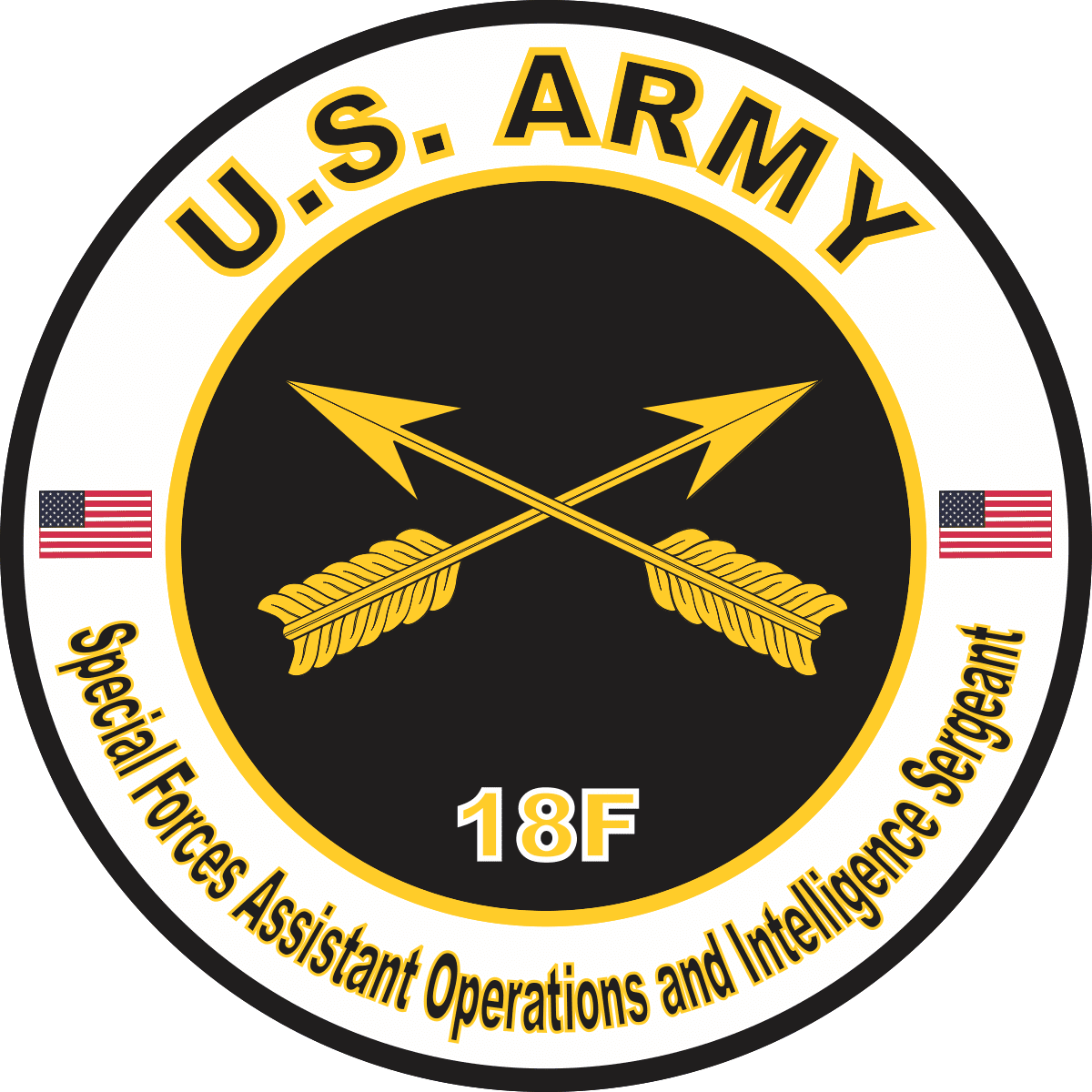
In the United States Army, the 18F designation refers specifically to the Special Forces Intelligence Sergeant, a senior Non-Commissioned Officer (NCO) role within a Special Forces Operational Detachment Alpha (ODA). While 18F is an enlisted Military Occupational Specialty (MOS), many personnel in this role eventually transition into "officer" status by becoming Special Forces Warrant Officers (180A) or commissioned officers (18A) to leverage their deep tactical intelligence expertise at higher echelons of command.
As of 2026, the landscape of unconventional warfare has shifted toward multi-domain operations, placing the 18F at the center of the Green Berets' ability to navigate complex human and digital terrains. Whether you are looking to enter the Special Forces pipeline or are an active-duty Green Beret considering the transition from an 18F NCO to a warrant officer, understanding the nuances of this "intel centric" career path is essential for long-term success in the Special Operations community.
Clarifying the "18F Officer" Ambiguity
There is often confusion regarding the term "18F officer." Technically, an 18F is a Non-Commissioned Officer, typically holding the rank of Sergeant First Class (E-7) or occasionally Staff Sergeant (E-6). However, the search for "18F officer" usually stems from two distinct perspectives:
- The Intelligence Specialist on the Team: The 18F is the "intelligence officer" for the ODA in a functional sense, even if they are not a commissioned officer. They manage the intelligence cycle for the team, advising the Team Commander (18A) and the Assistant Team Sergeant on all threats and environmental factors.
- The Transition to Warrant Officer: Many 18Fs reach a point in their career where they seek to become a Special Forces Warrant Officer (180A). These individuals are "Officers" by rank (specifically technical experts) and are often the natural evolution for a seasoned 18F who wants to remain tactical but operate with the authority of the warrant officer corps.
To understand the 18F role, one must first understand that no one joins the Army as an 18F. It is a "lateral" or "promotional" MOS that is earned only after a soldier has already qualified as a Green Beret in one of the other specialties: 18B (Weapons), 18C (Engineer), 18D (Medical), or 18E (Communications).
The Core Responsibilities of an 18F in 2026
The 18F is the primary advisor to the ODA Commander on all matters relating to intelligence, counterintelligence, and operational security. In the current 2026 operational environment, this includes traditional human intelligence (HUMINT) and newer requirements for cyber-intelligence and electronic warfare integration.
Intelligence Fusion and Analysis
The 18F is responsible for "fusing" data from various sources—signals intelligence (SIGINT), geospatial intelligence (GEOINT), and open-source intelligence (OSINT)—into a coherent tactical picture. They take high-level intelligence from a Special Forces Group or Battalion and "tailor" it so it is relevant to the 12-man ODA operating in a specific village or region.
Human Terrain and Social Mapping
In unconventional warfare, the "human terrain" is more important than the physical terrain. The 18F maps tribal affiliations, political power structures, and local grievances. By 2026, this involves sophisticated software tools that track social connections and sentiment analysis, allowing the ODA to identify who to trust and who to monitor within a local population.
Advanced Special Operations Techniques (ASOT)
A significant portion of an 18F’s training involves ASOT. This includes specialized skills in clandestine communication, surveillance, and the management of local informants. The 18F ensures that the ODA’s operations remain undetected by the enemy while maintaining a network of "human sensors" across their area of responsibility.
The Path to Becoming an 18F
Because 18F is a senior NCO role, the prerequisites are more stringent than the initial Special Forces Qualification Course (SFQC).
1. Initial Qualification
You must first be an MOS-qualified Green Beret (18B, C, D, or E). This means completing Basic Training, Airborne School, and the grueling SFQC at Fort Liberty (formerly Fort Bragg). Typically, a soldier will serve on an ODA for several years in their primary MOS before they are eligible to "re-class" to 18F.
2. Rank and Experience Requirements
To attend the Special Forces Intelligence Sergeant Course (SFISC), a soldier generally needs to be a Staff Sergeant (E-6) or Sergeant First Class (E-7). The selection process is often internal to the Special Forces Group, where leadership identifies NCOs with the intellectual aptitude and "quiet professional" demeanor required for high-stakes intelligence work.
3. The Special Forces Intelligence Sergeant Course (SFISC)
The SFISC is the gateway to the 18F MOS. It is a rigorous, multi-month course that covers:
- Targeting: Identifying and analyzing high-value targets.
- Interrogation and Debriefing: Legal and effective methods for extracting information.
- Unconventional Warfare (UW): How to support a resistance movement through intelligence.
- Intelligence Law: Navigating the legalities of intelligence collection in foreign environments.
Comparison: 18F vs. 18A vs. 180A
Understanding the hierarchy is vital for those aiming for an "officer" trajectory. While the 18F handles the "how" of intelligence, the 18A (Commissioned Officer) and 180A (Warrant Officer) handle the "why" and the technical integration of the team.
| Feature | 18F (Intelligence Sergeant) | 180A (SF Warrant Officer) | 18A (SF Officer) |
|---|---|---|---|
| Rank | Enlisted (SSG to SFC) | Warrant Officer (WO1 to CW5) | Commissioned (CPT to COL) |
| Primary Focus | Tactical Intelligence & ASOT | Technical Expert & Team Continuity | Mission Command & Planning |
| Authority | Team NCO Leadership | Assistant Team Leader | Team Commander |
| Entry Path | Promotion/Lateral from 18B/C/D/E | 18-Series NCO with 8+ years exp | OCS/ROTC/West Point + SFQC |
| Role in 2026 | Data Fusion & Informant Management | Systems Integration & Tech Advisor | Diplomatic Liaison & Strategy |
Transitioning from 18F to the "Officer" Side
For many 18Fs, the ultimate goal is to transition into the 180A Special Forces Warrant Officer role. This is the most common way an 18F becomes a "technical officer."
Why 18Fs Make Excellent Warrant Officers
A Warrant Officer is a technical expert who provides continuity to the ODA. While the commissioned officer (18A) might change every 18 to 24 months, the Warrant Officer often stays with the team or the company for a longer duration. An 18F’s background in intelligence makes them uniquely suited for the 180A role because they already understand the complexities of the operational environment.
The Application Process for 180A
To move from 18F to 180A in 2026, an NCO must meet the following criteria:
- Time in Service: Usually a minimum of 8 years in the Special Forces.
- Rank: Must be at least a Staff Sergeant (promotable).
- Evaluation: Exceptional "Non-Commissioned Officer Evaluation Reports" (NCOERs) that demonstrate leadership and technical mastery.
- Warrant Officer Candidate School (WOCS): Candidates must complete WOCS followed by the Special Forces Warrant Officer Technical and Tactical Instructor Course.
Transitioning to Commissioned Officer (18A)
While less common, some 18Fs choose to become commissioned officers through Officer Candidate School (OCS). This requires a bachelor's degree. Once commissioned, they must typically serve in a "regular" Army branch (like Infantry or Intelligence) before attending the Special Forces Officer Course to become an 18A. This path is generally taken by younger 18-series NCOs who want to pursue a career in high-level military command (Major, Lieutenant Colonel, and beyond).
18F Operations in the 2026 Multi-Domain Environment
By 2026, the 18F’s role has expanded beyond simple map reading and informant interviews. The modern Intelligence Sergeant is a "digital warrior."
Cyber-Electromagnetic Activities (CEMA)
The 18F now coordinates with CEMA teams to protect the ODA’s electronic signature. In 2026, the enemy's ability to track Green Berets via cell phone signals or radio emissions is a constant threat. The 18F manages "emission control" (EMCON) and uses signals intelligence to locate enemy combatants.
AI-Assisted Intelligence
Artificial Intelligence has become a standard tool for the 18F. In 2026, software can ingest thousands of hours of drone footage and social media data to identify patterns of movement that a human might miss. The 18F acts as the "human in the loop," verifying AI suggestions before they are turned into actionable mission plans.
Counter-Disinformation
Special Forces often operate in environments rife with propaganda. The 18F monitors local media and social platforms to identify "information operations" directed against the ODA or the partner force. They work closely with Psychological Operations (PSYOP) teams to craft "counter-narratives" that stabilize the region.
Training and Educational Requirements
Maintaining the 18F MOS requires constant learning. In 2026, the Army emphasizes "lifelong learning" for its special operators.
- Language Proficiency: All 18Fs must maintain high levels of proficiency in their assigned regional language (e.g., Arabic, Russian, Mandarin, or Spanish). Intelligence collection is impossible without the ability to speak the local tongue.
- Advanced ASOT: 18Fs frequently return to school for advanced courses in specialized surveillance and clandestine activities.
- Technical Certifications: Many 18Fs now pursue civilian certifications in data science, cybersecurity (CompTIA Security+, CISSP), or intelligence analysis to stay ahead of peer adversaries.
Life After the Teams: Career Progression
The skills developed as an 18F are highly sought after both inside and outside the military.
Within the Military: An 18F can progress to become a Company Intelligence Sergeant or a Battalion S-2 NCOIC (Non-Commissioned Officer in Charge). They may also serve as instructors at the John F. Kennedy Special Warfare Center and School (USAJFKSWCS), training the next generation of Green Berets.
In the Civilian World: The transition for an 18F is often seamless into agencies like the CIA, FBI, or DIA. Their experience in "high-threat" intelligence collection is unique. In the private sector, 18Fs often find high-paying roles in corporate security, risk assessment for multi-national corporations, or as consultants for defense technology firms.
Frequently Asked Questions
Can I join the Army specifically to be an 18F?
No. You must first join the Army and qualify for Special Forces (18X program or internal transfer). You will then be assigned an initial MOS (18B, C, D, or E). After serving on a team and showing aptitude for intelligence work, you can apply for the 18F course.
Is an 18F considered an "Officer"?
In the strict sense of the word, no; they are senior Enlisted NCOs. However, in tactical environments, they function as the "Intelligence Officer" for the ODA. To become an "Officer" by rank, an 18F must apply to become a Warrant Officer (180A) or a Commissioned Officer (18A).
What is the most difficult part of 18F training?
Most graduates cite the "Intelligence Fusion" and "Targeting" portions of the SFISC as the most challenging. It requires a shift from a purely tactical mindset to a strategic one, where you must synthesize vast amounts of conflicting information into a single, accurate recommendation.
Do 18Fs go on combat missions?
Yes. Unlike traditional intelligence analysts who may stay at a headquarters, the 18F is a fully qualified Green Beret. They move with the team, engage in direct action when necessary, and conduct intelligence collection "at the edge" of the battlefield.
What rank do most 18Fs hold?
The majority of 18Fs are Sergeants First Class (E-7). This is because the level of maturity and experience required to manage a team's intelligence operations usually takes 8 to 12 years of total service to acquire.
Strategic Recommendations for Aspiring 18Fs
If your goal is to reach the 18F level and eventually transition into an officer role, focus on three pillars:
- Technical Mastery: Do not just learn your current MOS; learn how it fits into the broader intelligence picture. If you are an 18E (Comms), learn the signals intelligence side of your equipment.
- Education: Complete your bachelor's degree early. This is a requirement for the 180A warrant officer path and is vital for anyone looking to become a commissioned officer or a civilian intelligence agent later.
- Language and Culture: Intelligence is 10% tech and 90% people. The better you understand the culture and language of your assigned region, the more valuable you will be to the ODA as an 18F.
The 18F Special Forces Intelligence Sergeant remains one of the most intellectually demanding and operationally significant roles in the U.S. Army. As we move through 2026, the ability of these NCOs to master the "gray zone" between peace and conflict will continue to be the deciding factor in the success of American Special Operations.