Argentine asado is the nation’s traditional barbecue, representing a deep-seated cultural ritual that centers on slow-cooking various cuts of beef, sausages, and offal over an open wood fire or charcoal embers. More than just a meal, it is a social cornerstone of Argentine identity.
To understand Argentina is to understand the asado. While many cultures have traditions of grilling meat, the Argentine asado is distinct in its technique, its specific cuts of beef, and its role as a mandatory weekly social gathering. Whether in the high-rise balconies of Buenos Aires or the vast expanses of the Patagonian steppe, the smell of woodsmoke and roasting beef is the ubiquitous scent of the Argentine weekend. As of 2026, the asado remains the undisputed national dish, surviving economic shifts and evolving culinary trends to remain the heart of the country's gastronomic heritage.
The Cultural Significance: More Than Just a Barbecue
The asado is not a quick Tuesday night dinner; it is a marathon of patience and community. Rooted in the history of the gaucho (the Argentine cowboy), the asado began as a necessity of life on the Pampa—the fertile South American lowlands. In the 18th and 19th centuries, feral cattle roamed these plains by the millions. The gauchos developed a method of cooking meat that required nothing more than a knife, a fire, and a wooden or iron spit.
In 2026, this heritage manifests in the "Sunday Asado." Families and friends gather for hours, often starting in the late morning and stretching well into the evening. The ritual dictates a specific hierarchy: the Asador (the grill master) takes full responsibility for the fire and the meat, while the guests provide the conversation and the "aplauso para el asador"—the traditional round of applause given when the first plate of meat reaches the table.
The social contract of the asado is built on the idea of the sobremesa—the time spent talking around the table after the food has been consumed. To rush an asado is considered a breach of etiquette. It is a slow-motion performance where the crackle of the wood and the steady drip of fat onto coals provide the soundtrack to political debates, football discussions, and family updates.
The Essential Equipment: Parrilla and Cruz
The technical soul of the asado lies in the equipment used to harness the heat. Unlike American-style smokers or gas grills, the Argentine method relies almost exclusively on heat radiation from embers, rather than direct flame or enclosed smoke.
The Parrilla
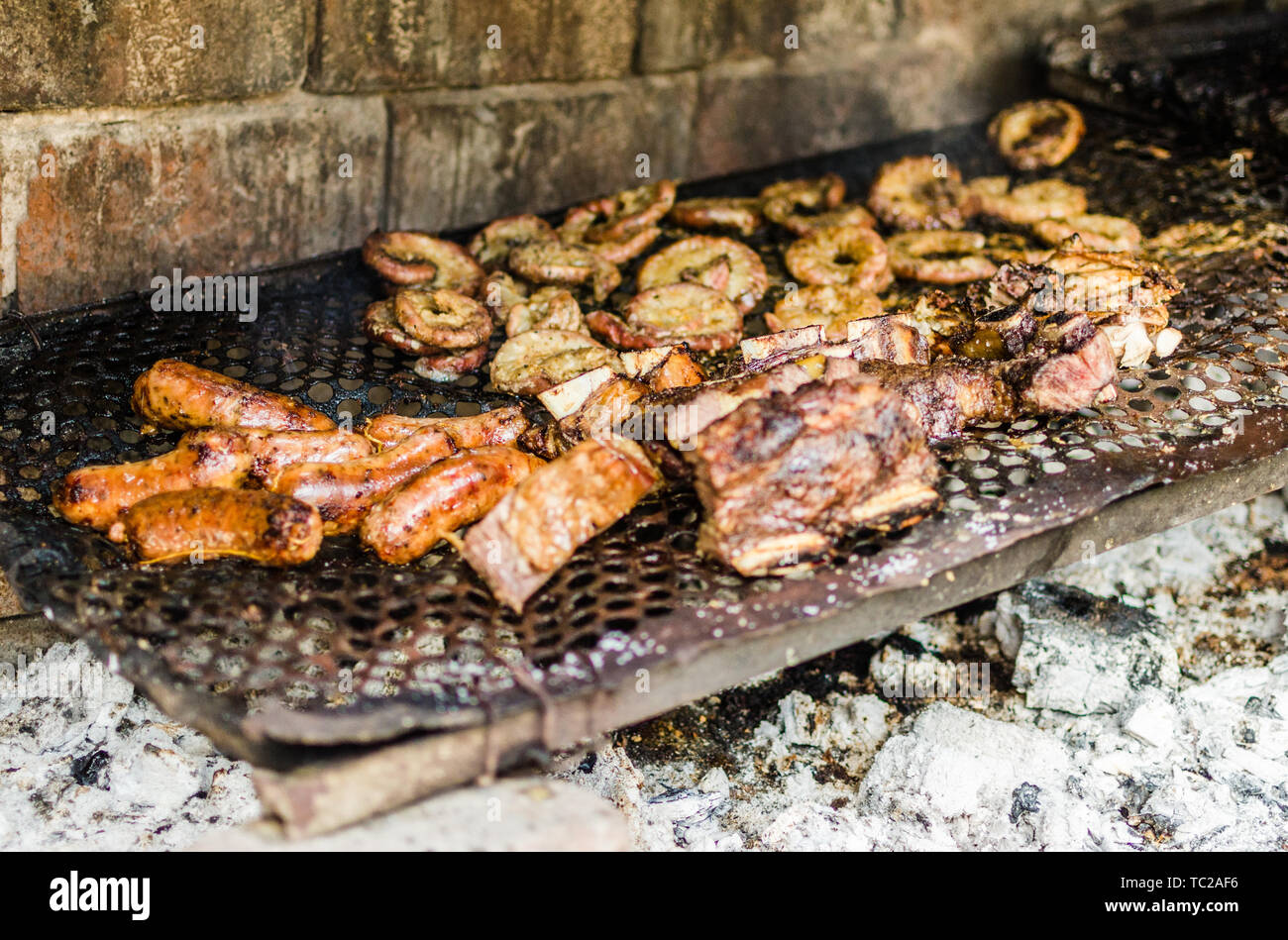
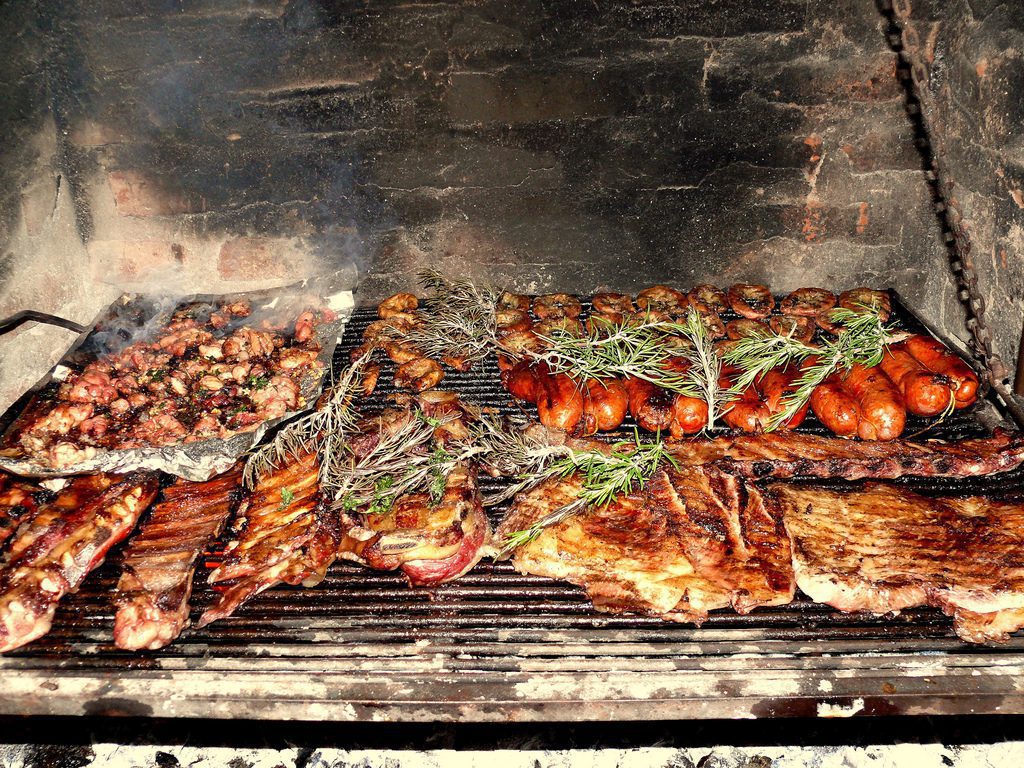
The parrilla is the standard horizontal grill found in almost every Argentine home. A true parrilla is often height-adjustable, allowing the asador to move the meat closer to or further from the heat source as the cooking progresses. The grates are typically V-shaped to catch excess fat and channel it away, preventing flare-ups that would char the meat or impart a bitter, acrid flavor.
Asado a la Cruz
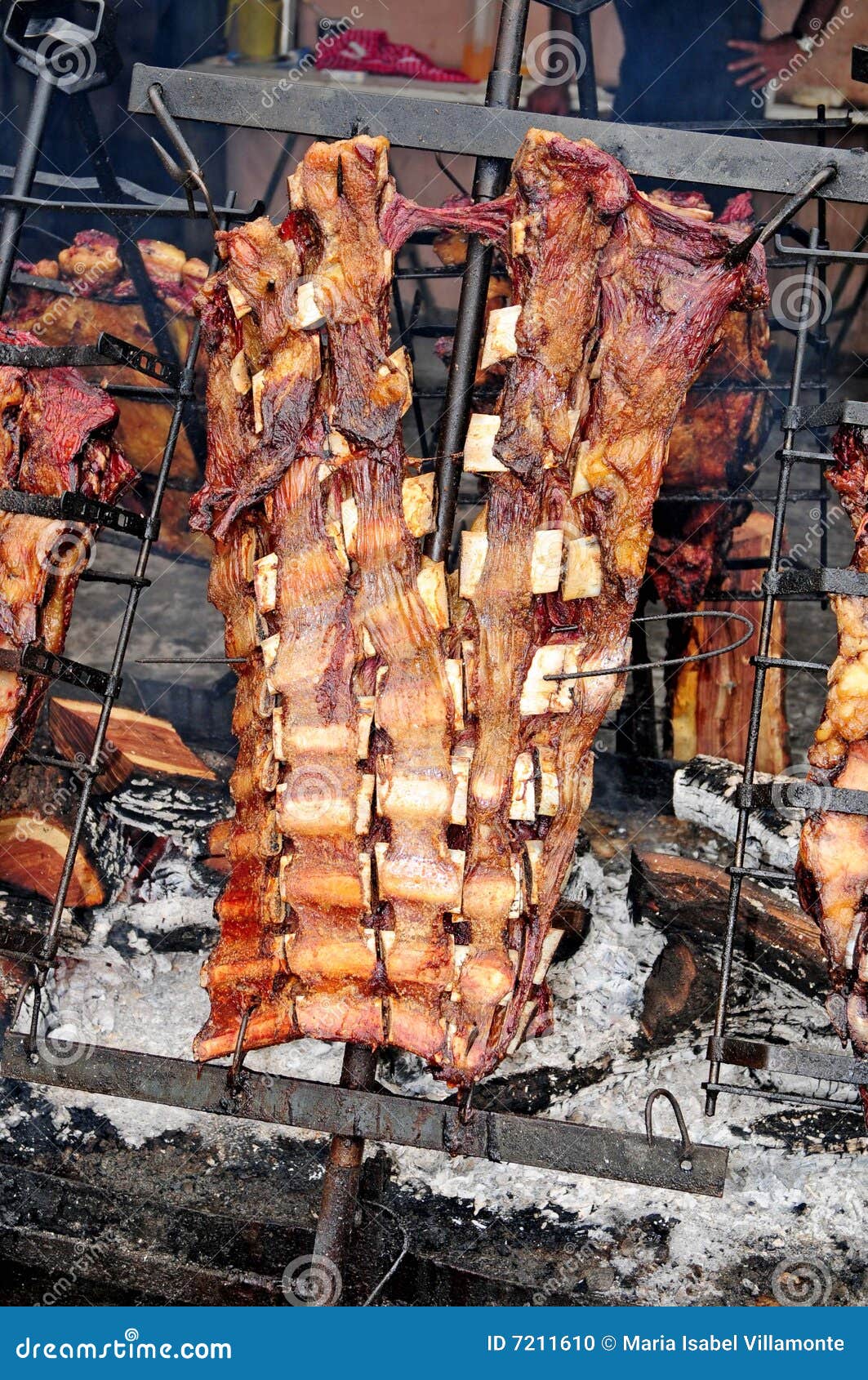
For larger gatherings or rural celebrations, the asado a la cruz (asado on the cross) is employed. A whole animal—usually a lamb or a pig, or a large side of beef—is splayed onto a metal cross and hammered into the ground at an angle over an open fire. The heat is kept low and the distance significant, sometimes requiring 6 to 8 hours of cooking. This method results in incredibly tender meat with a distinctively crispy skin, often seen in the Patagonia region.
The Brasero
The brasero is a side basket or grate where the fire is actually built. The asador starts a fire with wood (usually quebracho for its density and heat) or charcoal. As the wood burns down into glowing embers (brasas), the asador slides them under the main cooking grate. This allows for precise temperature control; if a specific cut needs more heat, more embers are pushed under that section of the grill.
The Master of the Embers: Techniques of the Asador
Being an asador is a position of high social standing. The primary skill is not in "grilling," but in fire management. A common mistake made by novices is using too much heat, which sears the outside while leaving the inside raw.
The asador follows several non-negotiable rules:
- No Gas: Using a gas grill is generally looked down upon in traditional circles. The flavor of the woodsmoke is considered a fundamental ingredient.
- The Salt Only Rule: Traditionally, Argentine beef is seasoned with only one thing: sal parrillera. This is a medium-grain salt that is coarser than table salt but finer than rock salt. It draws out just enough moisture to create a crust without overwhelming the natural flavor of the grass-fed beef.
- No Marinating: Unlike Brazilian or American barbecue, the meat is never marinated. The quality of the Argentine beef is expected to stand on its own.
- The "Hand Test": To check the temperature, an asador places their hand just above the grate. If they can hold it there for 7 to 10 seconds, the heat is "moderate"—perfect for the slow-cooking process required for thick cuts like vacío.
A Deep Dive into Argentine Beef Cuts
The anatomy of an Argentine asado is specific. The cattle in Argentina are historically grass-fed on the Pampa, leading to leaner meat with a different fat profile than grain-fed varieties. The way the meat is butchered also differs from US or UK standards.
Tira de Asado (Short Ribs)
This is the "king" of the asado. Unlike American short ribs which are often braised or cut into individual bone-in chunks, tira de asado is flanken-cut across the bone into long, thin strips. This exposes the marrow and allows the meat to cook relatively quickly while maintaining a rich, fatty flavor.
Vacío (Flank/Flap Steak)
The vacío is a large, hanging cut from the belly of the cow. It is prized for its thin layer of external fat which becomes incredibly crispy when slow-cooked. Inside, the meat is fibrous but extremely juicy. It is a large cut that often takes 60 to 90 minutes to reach the desired medium-rare to medium temperature.
Matambre (Flank Steak / Rose Meat)
Matambre translates literally to "hunger killer," as it is often one of the first thin cuts to come off the grill. It can be served "pizza-style" (matambre a la pizza), topped with tomato sauce and mozzarella, or simply grilled with lemon juice.
Ojo de Bife (Ribeye)
While the bone-in cuts are more traditional for an asado, the ojo de bife is the preferred choice for those seeking a premium, tender steak. In 2026, many high-end "parrillas" in Buenos Aires specialize in dry-aged versions of this cut.
Beyond the Beef: Achuras and Sausages
An asado is served in stages. The main beef cuts are preceded by a series of appetizers known as achuras (offal) and sausages.
- Chorizo: A pork or beef-and-pork sausage seasoned with paprika and garlic. When served in a crusty bread roll, it becomes the famous street food known as choripán.
- Morcilla: Blood sausage. There are two main types: común (savory) and dulce (which contains raisins or nuts). It is usually pre-cooked and only needs to be warmed through on the grill.
- Mollejas (Sweetbreads): Often considered the delicacy of the asado. These are the thymus glands, which, when grilled with plenty of lemon juice and salt, become crispy on the outside and buttery on the inside.
- Chinchulines (Chitterlings): Small intestines that are grilled until they are very crunchy. They are an acquired taste for some but a staple for locals.
The Supporting Cast: Sides and Sauces
While the meat is the protagonist, several side dishes are mandatory to balance the richness of the fats.
Chimichurri
Argentina's most famous export, chimichurri, is a cold sauce made of parsley, minced garlic, oregano, vegetable oil, vinegar, and red pepper flakes. Authentic chimichurri is rarely spicy; it is intended to provide an acidic brightness to the palate. According to tradition, it is best made a day in advance to allow the flavors to meld.
Salsa Criolla
A relish-like sauce made from finely diced onions, red and green bell peppers, and tomatoes, marinated in vinegar and oil. It provides a crunch and a fresh contrast to the heavy meat.
Provoleta
This is a thick disc of provolone-type cheese specifically formulated to be grilled. It is placed directly on the grate (often in a small cast-iron pan) until the bottom is charred and crispy while the top is melted and bubbling. It is usually seasoned with oregano and chili flakes.
Ensalada Mixta
The most common side dish is a simple "mixed salad" consisting of lettuce, tomato, and onion, dressed with oil and vinegar. It serves a functional purpose: the acidity of the vinegar cuts through the fat of the beef.
Comparing BBQ Traditions
| Feature | Argentine Asado | American BBQ (Texas Style) | Brazilian Churrasco |
|---|---|---|---|
| Heat Source | Wood or Charcoal Embers | Indirect Wood Smoke | Charcoal or Open Flame |
| Primary Seasoning | Sal Parrillera (Coarse Salt) | Dry Rubs (Sugar, Spices) | Sal Grosso (Rock Salt) |
| Cooking Time | 2–5 Hours | 8–16 Hours | 20–60 Minutes |
| Meat Style | Large cuts, slow-grilled | Low and slow smoking | Skewered, rotisserie or direct |
| Key Sauce | Chimichurri | Tomato/Vinegar-based BBQ Sauce | Pimenta or Vinagrete |
| Social Focus | Sunday family ritual | Competition/Regional pride | Rodizio (All-you-can-eat) |
The Asado Timeline: A Practical Guide
To execute a traditional asado as it is done in 2026, one must follow a strict temporal sequence.
- The Fire (11:30 AM): The asador starts the fire in the brasero. This takes about 45 to 60 minutes to produce enough embers to begin cooking.
- The Preparation (12:00 PM): The meat is brought to room temperature and salted. The chimney or flue is checked.
- The Thick Cuts (12:30 PM): Cuts like vacío and tira de asado are placed on the grill. They require a slow, steady heat.
- The Achuras and Sausages (1:15 PM): The chorizo, morcilla, and mollejas are added. They cook faster and will be the first things served.
- The First Course (1:45 PM): The asador serves the sausages and offal. This is usually eaten with bread while everyone is still standing or just sitting down.
- The Main Event (2:15 PM): The primary beef cuts are sliced and served.
- The Sobremesa (3:00 PM onwards): The grill is cleared, but the guests remain at the table for hours.
Frequently Asked Questions
Can you use a gas grill for an authentic asado?
Technically, you can cook meat on a gas grill, but it would not be considered an "asado" in the traditional Argentine sense. The flavor profile of an asado is inextricably linked to the smoke of the wood or charcoal. In Argentina, using a gas grill is often seen as a compromise of convenience that sacrifices the soul of the dish.
What is the best wine to pair with an asado?
Malbec is the quintessential pairing. The tannins in Malbec, particularly those from the high-altitude vineyards of Mendoza, interact with the proteins and fats in the beef to cleanse the palate. Cabernet Sauvignon is also a popular choice for its structure and ability to stand up to the richness of the meat.
Is Argentine asado always beef?
While beef is the primary focus, especially in the central provinces, regional asados vary. In Patagonia, cordero al palo (lamb on the spit) is more common. In the north, goat (cabrito) is often the centerpiece. However, beef remains the national standard for the weekly asado.
How do Argentines like their meat cooked?
Traditionally, Argentines prefer their meat "a punto" (medium) or "jugoso" (medium-rare). Because many of the cuts like vacío and tira de asado have significant connective tissue and fat, they benefit from being cooked long enough for the fat to render, which usually means they are not served "blue" or very rare.
What is "Asado de Obra"?
This is a unique cultural phenomenon where construction workers (albañiles) cook an asado at the construction site on Fridays. They use scrap wood from the building project and a makeshift grill. It is a testament to how deeply the asado is ingrained in the working-class culture of the country.
Recommendation for Travelers
If you are visiting Argentina in 2026, the best way to experience an asado is not at a high-end restaurant, but through an invitation to a private home. If that is not possible, look for a "parrilla de barrio" (neighborhood grill) rather than a tourist-oriented steakhouse. For the most authentic experience, order the "Parrillada," which is a sampler platter that includes chorizo, morcilla, achuras, and several cuts of beef, allowing you to experience the full spectrum of the Argentine grill.