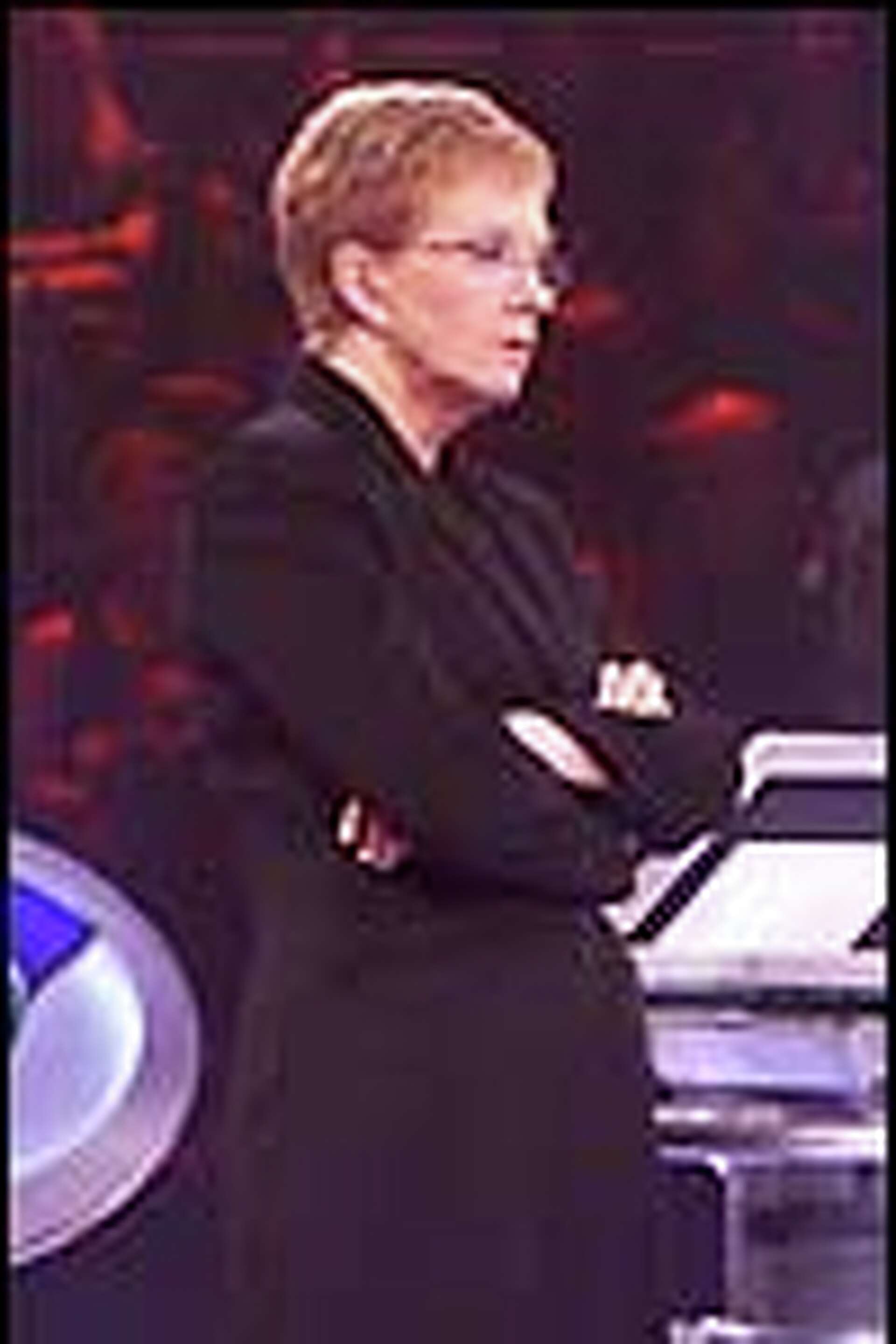
Anne Robinson hosted the original BBC television game show The Weakest Link from 2000 to 2012, as well as its high-profile American adaptation on NBC. Renowned for her icy demeanor, sharp sartorial style, and iconic catchphrase "You are the weakest link. Goodbye!", she redefined game show hosting and transformed the series into a global pop-culture phenomenon.
The Origin of The Weakest Link and Anne Robinson’s Casting
When The Weakest Link debuted on BBC Two on August 14, 2000, British television quiz shows were traditionally warm, encouraging, and host-centric. Programmers favored approachable personalities who celebrated contestant victories and softened their failures. The Weakest Link, conceived by BBC format creators Fintan Coyle and Cathy Duncum, challenged this model by introducing high-tension mechanics, psychological strategy, and an openly antagonistic host.
EVOLUTION OF THE SHOW
- 2000: BBC Two Debut (UK)
- 2001: NBC Debut (US)
- 2012: Original Run Ends
- 2020s: Contemporary Format Revivals
The decision to cast Anne Robinson was pivotal to the show's breakthrough. Before taking the helm of The Weakest Link, Robinson was already a household name in the United Kingdom as an investigative journalist and the formidable presenter of the BBC’s consumer champion program Watchdog, alongside her work on Points of View. Her television background was grounded in holding corporations accountable, delivering incisive commentary, and refusing to humor evasive interviewees.
BBC producers recognized that Robinson’s natural sharpness could ground the game show's stark, theatrical format. Rather than comforting contestants who stumbled over straightforward general knowledge questions, Robinson delivered dry scolding, cutting retorts, and deadpan observations. Her casting shifted the tone of evening quiz shows from lighthearted entertainment to a high-stakes arena where failure carried immediate, public embarrassment. The formula resonated with audiences immediately, propelling the show from a BBC Two daytime slot to BBC One primetime broadcasts and rapidly expanding into an international franchise.
Gameplay Mechanics and the Dynamics of "Banking"
Beyond Robinson's commanding presence, The Weakest Link succeeded due to its structured gameplay and psychological voting mechanics. The game begins with a team of nine contestants (reduced to eight in certain short-form or celebrity editions) who are strangers to one another. They must work as a collective unit to build a target chain of correct answers within a strict time limit, typically set at two minutes and fifteen seconds for the opening round, with ten seconds deducted in each subsequent round.
- Question 1: Correct
- Chain: £20
- Question 2: Correct
- Chain: £50
- Question 3: Correct
- Chain: £100
- Contestant Says: "BANK!"
- £100 Secured in Bank
- Chain Resets to £0
The core mechanic centers on the decision to "Bank." Before a question is read to them, a contestant can call out "Bank!" to preserve the money accumulated by previous consecutive correct answers. If a contestant answers incorrectly before banking, the accumulated money chain in that round breaks, resetting the target ladder to zero.
The financial structure relies heavily on risk management:
- Maximum Target: Each round carries a maximum financial cap (e.g., £1,000 in daytime UK broadcasts, scaling up to £10,000 or £50,000+ in primetime and celebrity specials).
- The Chain Dilemma: Banking early secures small, reliable amounts of money but prevents the team from reaching the lucrative upper rungs of the chain ladder. Delaying a bank allows the total to grow rapidly, but a single incorrect answer wipes out all unbanked funds.
- Time Constraints: The countdown clock creates immense psychological pressure, increasing the frequency of memory lapses and strategic mistakes.
At the conclusion of each round, the accumulated bank total is locked away permanently, and contestants face the voting phase. Each player secretly writes down the name of the peer they wish to eliminate. While the statistically "weakest link"—the player who answered the lowest percentage of questions correctly or broke the most money chains—is highlighted for the audience by off-screen voiceover commentary (originally provided by Phillip Multi-Choice/Jon Briggs), contestants are free to vote based on any criteria.
This design introduces complex game theory. In early rounds, players generally vote out weak performers to protect the group’s financial potential. However, as the final round approaches, stronger players often become targets of strategic elimination, as weaker competitors attempt to remove their primary rivals before the final head-to-head showdown.
Defining the "Queen of Mean": Persona, Style, and Cultural Impact
Anne Robinson’s character on The Weakest Link earned her the moniker "Queen of Mean." Her presentation was meticulously styled to contrast with standard television hosts of the era. Wearing tailored black suits, standing behind an elevated podium, and speaking with crisp, unyielding diction, Robinson projected total authority over the studio floor.
THE "QUEEN OF MEAN" FORMULA
- Dark Tailored Attire + Severe Lighting + Deadpan Wit
- "You are the weakest link. Goodbye!"
The interaction between Robinson and the contestants during the voting breaks became the show's signature segment. Rather than moving quickly past eliminated players, Robinson conducted sharp interviews, probing their occupations, educational backgrounds, hobbies, and performance in the round. Her interrogations were famous for exposing comedic lapses in logic and highlighting absurd answers delivered under pressure.
Key components of her hosting persona included:
- The Monolithic Stance: Robinson rarely smiled during gameplay, maintaining an icy gaze that added to the psychological pressure on contestants.
- Biting Interrogations: She frequently targeted contestants’ excuses, delivering quick-witted retorts that highlighted lack of preparation or basic knowledge.
- The Signature Farewell: After tallying the votes, Robinson delivered the final verdict to the eliminated contestant: "You are the weakest link. Goodbye!" She accompanied the statement with a sharp turn away from the player, punctuated at the end of each episode by her trademark wink to the camera before the set lights dimmed.
This style marked a shift in global television production. The success of The Weakest Link proved that audiences enjoyed satirical, confrontation-driven entertainment, paving the way for similar host dynamics across talent competitions and reality television throughout the 2000s.
Transatlantic Success: Crossing Over to American Television
Following the overwhelming ratings of the original UK broadcast, American network NBC licensed the format, bringing Anne Robinson across the Atlantic to host the US primetime edition, which debuted in April 2001.
American network game shows had long relied on enthusiastic host personalities. Robinson’s arrival in the United States caused an immediate sensation. The American version featured higher production values, dramatic orchestral stings, elevated cash prizes (up to $1,000,000 per episode), and Robinson's unedited British biting humor directed at American contestants.
The US adaptation became a cultural phenomenon during its initial run:
- Ratings Impact: The premiere episodes drew tens of millions of viewers, quickly making Robinson a prominent figure on American late-night talk shows and morning media circuits.
- Pop-Culture Satire: Catchphrases from the show were parodied across American media, including sketch comedy shows like Saturday Night Live, animated series such as Family Guy, and various sitcoms.
- Syndication Expansion: Following the success of the NBC primetime run, a daily syndicated version was produced for American domestic television, later hosted by George Gray.
Robinson’s dual dominance of both British and American television schedules highlighted the global appeal of the format. The Weakest Link was ultimately adapted in over 40 countries, including France, Germany, Russia, Australia, and Japan, with local hosts adopting variations of Robinson’s strict persona and dark visual aesthetics.
Comparing Hosts Across Eras and Editions
While Anne Robinson established the definitive framework for The Weakest Link, the franchise has evolved over time. Contemporary revivals have adjusted the tone to reflect changing audience expectations, balancing competitive game show mechanics with modern comedic styles.
| Feature / Dimension | Anne Robinson Era (UK/US Original: 2000–2012) | Jane Lynch Era (US NBC Revival: 2020–Present) | Romesh Ranganathan Era (UK BBC Revival: 2021–Present) |
|---|---|---|---|
| Primary Tone | Severe, satirical, high-tension, authoritative | Sarcastic, theatrical, comedic timing | Self-deprecating, observant, conversational humor |
| Host Interaction | Direct confrontation; strict roasting of errors | Deadpan sarcasm mixed with pop-culture references | Relatable humor; teasing without harsh condemnation |
| Visual Atmosphere | Dark, minimalist, intense spot lighting | Sleek modern LED studio, vibrant dramatic lighting | High-tech presentation, updated colorful lighting grid |
| Catchphrase Delivery | Stern, uncompromising, abrupt dismissal | Deadpan, satirical, theatrical emphasis | Warm yet dramatic, balancing tradition with humor |
| Primary Format Focus | General public contestants & high-profile specials | Celebrity charity events & themed public episodes | Primetime celebrity charity specials & public runs |
This shift demonstrates the versatility of the original show format. While Robinson's severe approach defined the early 2000s aesthetic, modern iterations hosted by comedians like Jane Lynch and Romesh Ranganathan retain the core voting and banking mechanics while adopting a lighter, more lighthearted host dynamic.
Departure, Legacy, and Broadcasting History
After hosting over 1,000 daytime episodes and hundreds of primetime and celebrity specials in the UK—alongside her international work—Anne Robinson announced her departure from The Weakest Link in 2011. The BBC subsequently concluded the original series run, airing the final episode on March 31, 2012.
ANNE ROBINSON BROADCAST TIMELINE
- 2000: Debuts on BBC Two daytime schedules.
- 2001: Launches NBC primetime edition in the United States.
- 2006: Reaches milestone 1,000th UK episode.
- 2012: Concludes 12-year original BBC hosting tenure.
- Post-2012: Remains an iconic standard for TV quiz presenters.
Robinson’s tenure on the show achieved several milestones:
- Enduring Quotability: "You are the weakest link. Goodbye!" remains one of the most recognized catchphrases in British broadcasting history.
- Format Longevity: The original run maintained strong viewership across more than a decade, proving that non-traditional, host-led quiz formats could command sustained daily ratings.
- Career Transformation: The show redefined Robinson’s broad media career, transforming her from a respected journalist and consumer advocate into an internationally recognized television personality.
Following her departure from The Weakest Link, Robinson continued her broadcasting career, notably becoming the first female host of the long-running Channel 4 daytime puzzle show Countdown in 2021, further cementing her standing in UK television history.
Frequently Asked Questions
Why did Anne Robinson leave The Weakest Link?
Anne Robinson decided to step down from The Weakest Link in 2011 after her contract ended, noting that she felt twelve years at the helm was a natural point to finish. She expressed a desire to pursue new broadcasting opportunities and recognized that the show had completed an extraordinary, comprehensive run across both daytime and primetime schedules.
Was the catchphrase "You are the weakest link. Goodbye!" scripted from the beginning?
The catchphrase was developed during the show's pre-production and pilot testing phase. Designed to give each round a definitive ending, the line was crafted to reflect the uncompromising nature of the competition. Anne Robinson's deliberate pause and sharp delivery transformed the line into an instant cultural trademark.
How much money could contestants win on Anne Robinson's version of the show?
Prize money varied depending on the edition and broadcast slot. The UK daytime series typically offered a maximum potential total of £10,000 per episode, though actual winnings depended on how effectively contestants banked. UK primetime and celebrity editions featured targets up to £20,000 or £50,000, while the US NBC primetime version boasted a maximum potential jackpot of $1,000,000.
Did Anne Robinson host The Weakest Link in countries other than the UK?
Yes. Beyond her primary role on the BBC original in the United Kingdom, Anne Robinson was hired by the American network NBC to host the main US primetime version in 2001 and 2002. Her crossover made her one of the few British television presenters to front a major American network primetime game show.
How did the strategic voting work in later rounds of the game?
In early rounds, contestants typically voted off poor performers to maximize the total money banked. However, as the game progressed toward the penultimate round, tactical voting often shifted. Competitors would frequently vote out the strongest remaining player to eliminate their primary opposition and increase their own chances of winning the final head-to-head round.
Conclusion and Viewing Guide
Anne Robinson’s era on The Weakest Link stands as a defining chapter in game show history. Her sharp hosting style transformed a simple general-knowledge quiz into a high-stakes psychological battle, demonstrating the power of strong visual branding and assertive presentation.
For viewers interested in exploring this era of television history:
- Archival Broadcasts: Archived episodes of the original UK daytime and primetime series, as well as the 2001 US NBC series, frequently feature in television retrospectives and official digital broadcast archives.
- Comparative Viewing: Watching episodes from Robinson's original run alongside modern revivals offers a clear look at how game show hosting styles, studio lighting, and audience interaction have evolved over the past two decades.
- Format Analysis: Studying the strategic shifts between early-round banking efficiency and late-round vote management provides an engaging case study in practical game theory under time pressure.