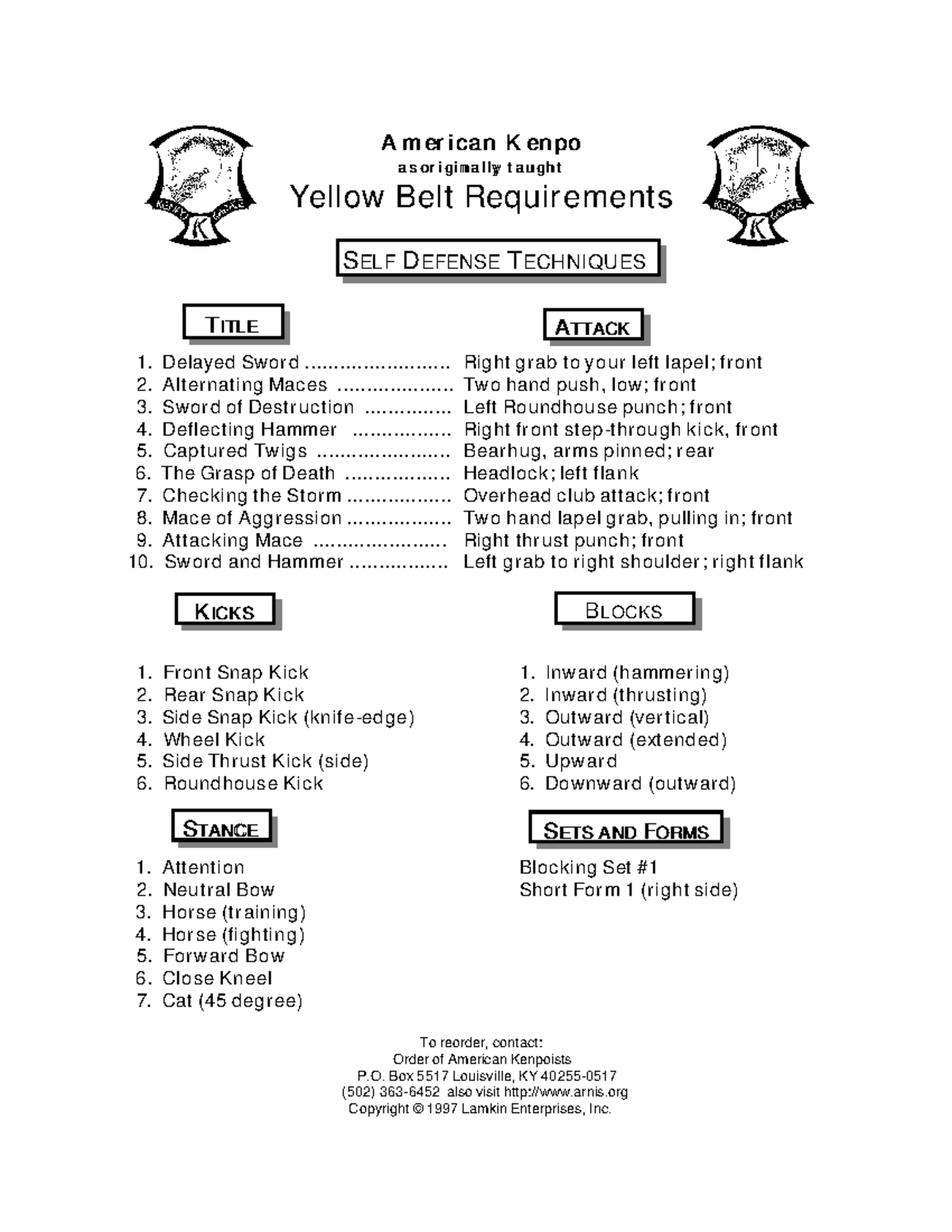
American Kenpo is highly effective for civilian self-defense when practiced with an emphasis on pressure testing and live application. Its strengths lie in its scientific approach to body mechanics, rapid-fire hand strikes, and "overkill" philosophy designed to overwhelm attackers. However, its real-world utility depends heavily on the specific school's training intensity.
The Evolution and Philosophy of American Kenpo
To understand if American Kenpo is effective, one must first understand its origins and the intent behind its design. Developed by Ed Parker in the mid-20th century, American Kenpo was never intended to be a sport. Unlike Judo or Taekwondo, which evolved toward Olympic competition, Parker’s system was built specifically for the "urban street" environment of the United States.
By 2026, the system has seen several waves of modernization. While the core "Parker System" remains the foundation, many contemporary practitioners have integrated insights from modern combat sports to fill historical gaps in ground fighting and clinch work. At its heart, American Kenpo is a system of "Martial Science." It utilizes principles of physics, geometry, and physiology to maximize the efficiency of human movement.
The system is famous for its Rules of Motion. These are not just choreographed movements; they are a set of principles that dictate how a practitioner should move to achieve maximum impact with minimum effort. When critics question the effectiveness of Kenpo, they often point to the complex, dance-like sequences called "techniques." However, in a high-quality lineage, these techniques are merely "blueprints" or "templates" used to teach the application of principles like Marriage of Gravity, Backing Mass, and Torque.
The Scientific Principles of Effectiveness
The effectiveness of American Kenpo is rooted in its technical depth. It is often referred to as the "dictionary of motion." For a student in 2026, learning Kenpo involves a deep dive into how the body generates power and how to disrupt an opponent's balance (the "Center of Gravity").
Marriage of Gravity and Backing Mass
One of the primary ways Kenpo generates power is through the Marriage of Gravity. This involves timing a strike so that the practitioner’s body weight is dropping at the exact moment of impact. Instead of relying solely on muscle strength, the practitioner uses their entire body mass. Backing Mass is a related concept where the body is positioned directly behind the strike, ensuring that the force isn't "leaked" through poor alignment.
The Economy of Motion
In a real-life confrontation, speed is often more critical than raw power. American Kenpo prioritizes the Economy of Motion, which focuses on eliminating "telegraphing" (warning the opponent of an incoming strike) and using the shortest path to the target. This includes the use of "circular" and "linear" motions in tandem to keep the opponent off-balance and unable to reset their defense.
The Theory of Overkill
One of the most controversial yet effective aspects of Kenpo is the "Overkill" or "Sequential Striking" philosophy. In many martial arts, a student learns to throw a single punch or kick and then reset. In American Kenpo, a single defensive move is immediately followed by a rapid barrage of 5 to 10 strikes targeting various vital areas. The goal is to overwhelm the attacker’s nervous system, making it impossible for them to mount a counter-attack.
Practicality in Self-Defense Scenarios
When evaluating if American Kenpo is effective for self-defense, we must look at the specific scenarios civilian practitioners are likely to face. American Kenpo excels in three specific areas:
- Close-Quarter Combat (CQC): Most street fights occur at a very close range, often involving grabbing or shoving. Kenpo’s heavy reliance on hand strikes, elbows, and knees makes it exceptionally potent in "the pocket."
- Multiple Attackers: The system includes specific footwork patterns (such as the "Universal Pattern") designed to help a practitioner transition between multiple targets without losing balance or becoming trapped.
- Environmental Awareness: Traditional Kenpo training often includes "Environmental Awareness," teaching students to use their surroundings and remain cognizant of exits and potential weapons.
However, the effectiveness of the system is often criticized due to the "compliance" found in many dojos. In a "compliant" environment, the partner (the "Uke") stands still while the practitioner performs a long string of strikes. For American Kenpo to be truly effective in 2026, schools must move beyond these stationary drills and incorporate Dynamic Resistance. Without a partner who is actively trying to hit back or resist the technique, the practitioner may develop a false sense of security.
Comparing American Kenpo to Other Martial Arts
To provide a clear picture of where American Kenpo stands in the 2026 martial arts landscape, it is helpful to compare it to other popular disciplines.
| Feature | American Kenpo | Brazilian Jiu-Jitsu (BJJ) | Muay Thai | Krav Maga |
|---|---|---|---|---|
| Primary Range | Mid-to-Close Range | Ground/Clinch | Stand-up (Striking) | All Ranges |
| Complexity | Very High (300+ techniques) | Moderate (Positional focus) | Low (Focus on 8 limbs) | Moderate (Scenario-based) |
| Learning Curve | Steep (Years to master) | Moderate | Fast (Basic proficiency) | Very Fast |
| Sparring Style | Point/Continuous/Contact | Live Rolling (Grappling) | Full Contact Sparring | Scenario/Pressure Drills |
| Self-Defense Focus | High (Striking/Escapes) | High (1-on-1 survival) | Moderate (Sport-leaning) | Very High (Survival) |
| Philosophy | Martial Science | Leverage & Submission | Conditioning & Power | Aggression & Neutralization |
As the table illustrates, American Kenpo offers a level of technical complexity that few other arts can match. While this makes it fascinating for those who enjoy the "academic" side of martial arts, it also means it takes longer to become "combat effective" compared to a streamlined system like Muay Thai or Krav Maga.
The Role of Training Methodology
The question "Is American Kenpo effective?" cannot be answered with a simple yes or no because the quality of instruction varies significantly. In the martial arts community, American Kenpo has sometimes been labeled as a "McDojo" art because some schools prioritize belt rankings and "kata" (forms) over actual fighting ability.
For Kenpo to be effective, the following elements must be present in the training:
- Pressure Testing: Students must regularly test their techniques against an opponent who is providing 50% to 100% resistance.
- Sparring (Kumite): While Kenpo is known for "point sparring," effective schools also incorporate "continuous sparring" where students learn to take a hit and keep moving.
- Integration of Modern Tactics: By 2026, most effective Kenpo instructors have acknowledged the importance of the "Ground Game." A school that claims Kenpo is "too dangerous for the ground" is likely ignoring a significant vulnerability. Effective Kenpo should include basic grappling defense and "stand-up" transitions.
- Application over Choreography: The "ideal" version of a technique rarely happens in a real fight. Effectiveness comes from the ability to "sub-set" or "extemporize"—taking parts of different techniques and blending them together based on the chaotic reality of a fight.
Common Criticisms and Rebuttals
Criticism: "The techniques are too long and complicated."
Critics argue that in a high-stress situation, fine motor skills disappear, and a practitioner will not remember a 12-step technique. Rebuttal: In 2026, high-level Kenpo practitioners view techniques as "brain training." The goal isn't to perform the entire 12-step sequence in a fight; the goal is to have trained the body's reflexes so that the first three or four movements happen automatically. The complexity builds "muscle memory" and "spatial awareness" that transcends any individual technique.
Criticism: "It lacks a ground game."
Because Ed Parker focused primarily on stand-up defense, many early Kenpo curriculums were weak in grappling. Rebuttal: Modern American Kenpo (often called "Kenpo 5.0" or "Integrated Kenpo") has addressed this. Many lineages have added specialized grappling defenses that use Kenpo's striking principles on the ground. However, if effectiveness is the goal, a Kenpo student should still seek out basic BJJ or wrestling fundamentals.
Criticism: "It’s too much like a dance."
The fluid, rapid hand movements of Kenpo can look "theatrical" to the untrained eye. Rebuttal: This "fluidity" is actually the application of Continuous Motion. By not stopping between strikes, the practitioner maintains momentum and keeps the attacker in a state of "defensive reactivity." When executed with full power and intent, these movements are far from a dance; they are a devastating barrage of kinetic energy.
Determining Effectiveness for the Individual
Whether American Kenpo is effective for you depends on your personal goals and the specific school you choose. If you are looking for a system that provides a lifetime of study, deep philosophical roots, and a logical approach to self-defense, Kenpo is an excellent choice.
If your goal is to be able to defend yourself in the shortest time possible (e.g., within 3 to 6 months), you may find the Kenpo curriculum overwhelming. In that case, a more streamlined system might be preferable. However, for the dedicated student, the "scientific" nature of Kenpo provides a toolkit that remains effective even as the practitioner ages, as it relies on body mechanics rather than raw athleticism or "toughing it out."
Checklist for Finding an Effective Kenpo School in 2026:
- Observe a Sparring Class: Does the sparring look like a game of tag, or does it look like controlled combat?
- Ask About Lineage: Who did the head instructor train under? Respected lineages (such as those through the IKKA, UKASKO, or WKKA) usually maintain higher standards.
- Check for Modernization: Does the school teach clinch work and ground defense?
- Evaluate the "Uke": When instructors demonstrate, does the "attacker" fall down from a light tap, or do they provide realistic energy?
Frequently Asked Questions
Is American Kenpo better than Krav Maga for self-defense?
Krav Maga is generally faster to learn because it focuses on a smaller set of high-probability techniques and aggressive mindsets. American Kenpo is more comprehensive and offers better long-term development of body mechanics. For immediate "survival," Krav Maga often wins; for "mastery" of self-defense and technical skill, Kenpo is often superior.
Can American Kenpo be used in MMA?
While "pure" American Kenpo is rarely seen in the UFC, many elite fighters have used its principles. Chuck Liddell, for example, had a significant Kenpo background, which contributed to his unique striking angles and "sprawl and brawl" style. Stephen "Wonderboy" Thompson also utilizes movement patterns that share DNA with Kenpo and American Kickboxing.
Does American Kenpo involve weapons training?
Yes. Most American Kenpo curriculums include defense against knives and clubs. Advanced students also learn how to use the "short staff" (escrima/kali sticks) and the knife. The system teaches that the principles of motion are "universal," meaning a hand strike, a stick strike, and a knife strike should all follow the same mechanical logic.
Why are there so many different versions of American Kenpo?
After Ed Parker passed away in 1990, his senior students branched off to form their own associations. This led to variations like Kenpo 5.0 (Jeff Speakman), Chinese Kara-Ho, and various "Traditional" Parker systems. While the "flavor" of the training may change, the foundational principles of motion usually remain consistent across these groups.
Is American Kenpo suitable for older adults?
One of Kenpo's greatest strengths is its focus on tailoring. The system is designed to be adapted to the individual’s body type and physical limitations. Because it relies on geometry and "borrowing force" rather than high-flying kicks or extreme flexibility, it is an exceptionally effective martial art for older adults concerned about self-protection.
Final Recommendation
To maximize the effectiveness of American Kenpo, approach it as a logical framework for combat rather than a collection of rigid moves. Seek out a "combat-oriented" school that prioritizes "aliveness" and pressure testing. In 2026, the most effective martial artists are those who can bridge the gap between traditional wisdom and modern tactical reality. If you find an instructor who understands this balance, American Kenpo will provide you with a sophisticated and devastatingly effective self-defense skill set.