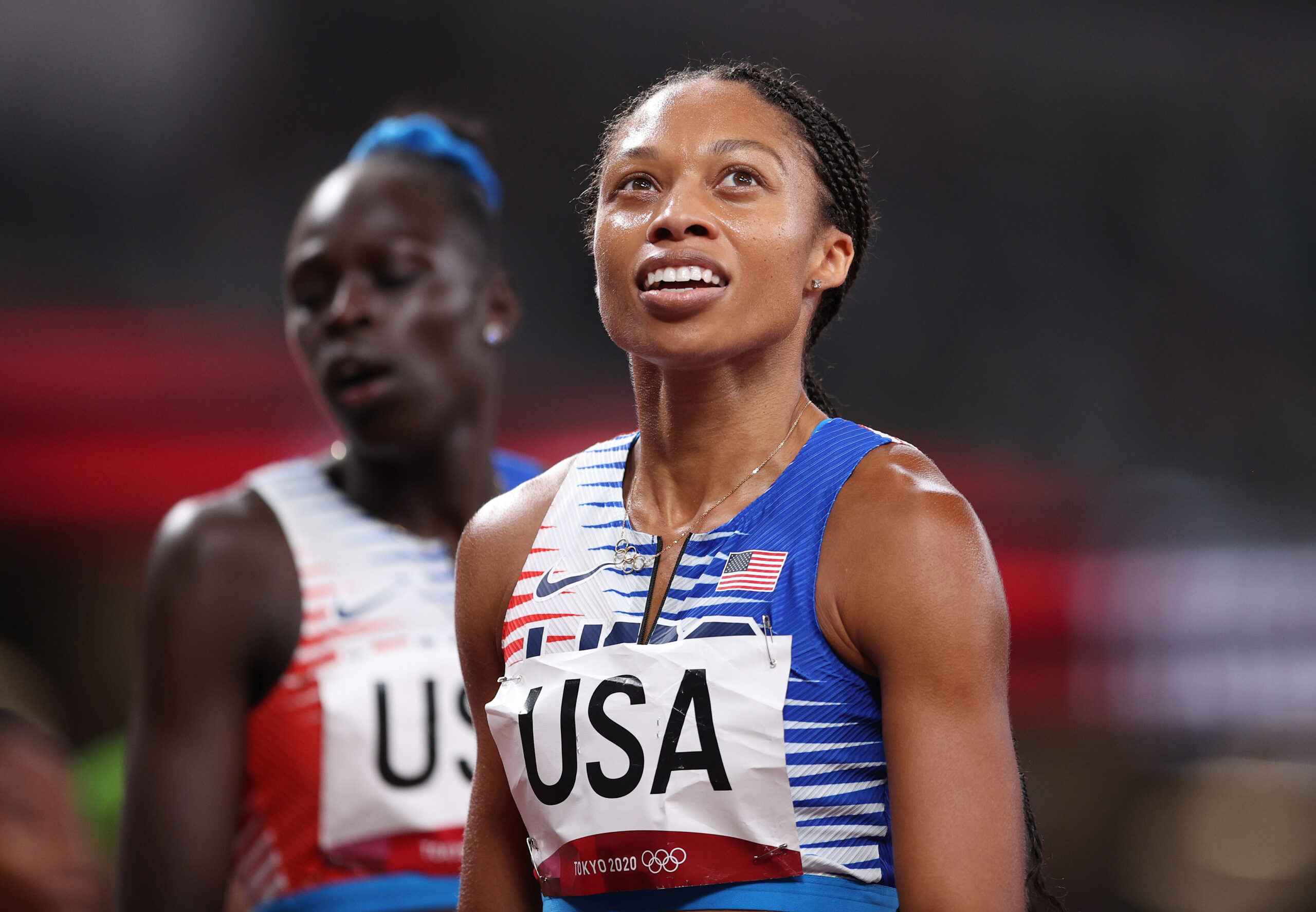
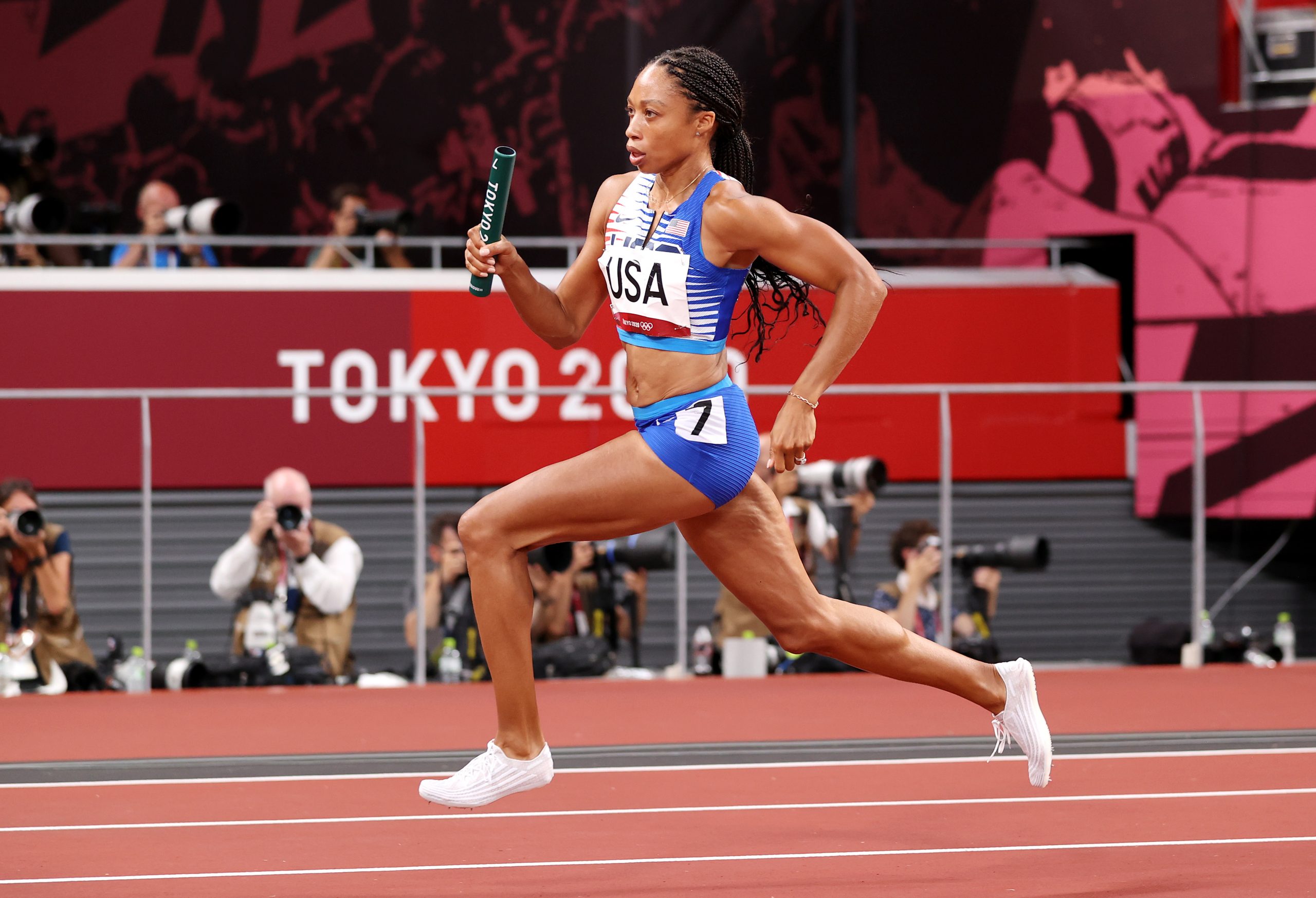
Allyson Felix stands 5 feet 6 inches (168 cm) tall, a stature that provided her with a unique mechanical advantage in both the 200m and 400m sprints. As the most decorated American track and field athlete in Olympic history, her profile combines elite physical biometrics with unparalleled longevity and social advocacy.
Physical Attributes and Biometric Analysis
In the world of elite sprinting, height and limb length are critical factors that determine stride frequency and stride length. Allyson Felix’s height of 5'6" (168 cm) placed her in a "sweet spot" for versatile sprinting. While taller sprinters often struggle with the explosive start required for the 100m, and shorter sprinters may lack the top-end stride length for the 400m, Felix’s proportions allowed her to master the transition between explosive power and sustained speed.
During her peak competitive years, Felix maintained a racing weight of approximately 121 lbs (55 kg). This lean physique resulted in an exceptional power-to-weight ratio, which is the primary driver of acceleration in track events. Her physical profile was often described by coaches as "graceful" or "fluid," a byproduct of her high center of gravity relative to her weight, which allowed for efficient energy transfer through her hips and into the track surface.
The Mechanics of the "Chicken Legs" Moniker
Early in her career, Felix was affectionately nicknamed "Chicken Legs" because of her slender lower limbs. From a physiological standpoint, however, these slender legs were an asset. Reduced mass in the extremities (the feet and lower calves) lowers the "moment of inertia," meaning it takes less muscular energy to swing the leg forward during each stride. This efficiency was a cornerstone of her ability to maintain speed in the final 50 meters of a 400m race, where many competitors succumb to lactic acid buildup and mechanical breakdown.
Career Evolution: From High School Phenom to Global Icon
Allyson Felix’s athlete profile is defined by a career that spanned two decades, a rarity in a sport where peak performance is typically measured in four-year windows. Her journey began at Los Angeles Baptist High School, where she broke world-class records before she even graduated.
The Rise and the 200m Specialization
Felix first gained international prominence at the 2004 Athens Olympics, where she secured a silver medal in the 200m at just 18 years old. This event would become her signature. Her 5'6" frame was perfectly suited for the 200m, as she possessed the agility to navigate the curve and the stride efficiency to dominate the straightaway.
By the 2012 London Games, Felix had solidified her status, winning her first individual Olympic gold in the 200m. This victory was a culmination of years of refining her block starts—a technical area where her height required precise foot placement to ensure her center of mass was pushed forward efficiently without stumbling.
Transitioning to the 400m
As athletes age, many sprinters move up in distance to leverage their aerobic base and experience over raw twitch speed. Felix’s transition to the 400m was a masterclass in athletic adaptation. The 400m requires a different biometric focus: endurance and rhythm. Her height allowed her to maintain a consistent stride pattern of approximately 2.2 to 2.4 meters per step. By maintaining this rhythm, she could cover the 400m distance with fewer strides than shorter competitors, conserving energy for the "kick" in the final straightaway.
Record-Breaking Statistics and Medal Totals
By the time of her retirement following the 2022 season, Felix had amassed a resume that remains the gold standard in track and field. As we look back from 2026, her records continue to serve as the benchmark for upcoming generations of sprinters like Sydney McLaughlin-Levrone and Gabby Thomas.
| Metric/Achievement | Statistic | Significance |
|---|---|---|
| Height | 5 ft 6 in (168 cm) | Optimal for 200m/400m versatility. |
| Olympic Gold Medals | 7 | Most by any female track athlete. |
| Total Olympic Medals | 11 | Surpassed Carl Lewis for the U.S. record. |
| World Championship Medals | 20 | The most of any athlete in history. |
| Personal Best (200m) | 21.69s | Set at the 2012 Olympic Trials. |
| Personal Best (400m) | 49.26s | Set at the 2015 World Championships. |
| Career Longevity | 2003–2022 | Spanned five Olympic Games. |
Beyond the Track: Advocacy and Maternal Health
An athlete profile of Allyson Felix is incomplete without discussing her impact on sports policy and maternal health. In 2018, Felix gave birth to her daughter, Camryn, via an emergency C-section at 32 weeks due to preeclampsia. This life-threatening experience transformed her from a quiet competitor into a vocal advocate for Black maternal health and athletes' rights.
The Nike Controversy and Contractual Reform
Following her pregnancy, Felix revealed that her primary sponsor, Nike, offered her a 70% pay cut and refused to provide contractual guarantees for performance during the months surrounding childbirth. Her op-ed in The New York Times sparked a global conversation about how the sports industry treats female athletes.
The result was a systemic shift. Nike and several other major athletic brands updated their policies to include formal maternity protections, ensuring that female athletes would not be financially penalized for starting a family. From our vantage point in 2026, this remains one of her most significant "wins," impacting thousands of professional women across all sporting disciplines.
The Business of Track: Saysh and Post-Retirement Ventures
In response to her contract disputes, Felix took a radical step by launching her own footwear and lifestyle brand, Saysh. This move redefined the modern athlete profile, shifting the narrative from "endorser" to "founder."
Saysh and Specialized Footwear
Saysh was built on the premise that most athletic shoes are designed based on male foot morphology (the "last") and simply scaled down for women. Felix’s brand focused on creating shoes specifically for the narrower heel and higher arch common in female anatomy. In 2021, she became the first athlete to win Olympic medals wearing spikes she had designed and manufactured herself.
By 2026, Saysh has expanded into a comprehensive lifestyle brand, continuing Felix's mission of empowering women. Her business model serves as a blueprint for athletes seeking independence from traditional corporate sponsorships.
Training and Nutrition Philosophy
Felix’s ability to remain competitive into her late 30s was largely due to a meticulous approach to training and recovery. Her height and lean muscle mass required a diet high in clean protein and complex carbohydrates to sustain the high caloric burn of 400m training.
- Functional Strength: Unlike some power sprinters who focus on heavy bulk, Felix’s gym sessions prioritized functional strength. Exercises like single-leg squats and plyometric box jumps were used to maintain the explosive "pop" in her stride without adding unnecessary weight that would hinder her endurance.
- Recovery Focus: In the latter half of her career, Felix became a proponent of active recovery, utilizing physical therapy, massage, and cryotherapy to manage the wear and tear on her joints.
- The "Graceful" Stride Training: Coaches worked with her to ensure her height was utilized through high knee drives. This maximized her "air time" per stride, allowing her to cover more ground with less effort.
Comparative Analysis: Felix vs. The Field
To understand Felix’s profile, it is helpful to compare her to other legendary figures in sprinting. While Usain Bolt (6'5") used massive stride length to dominate the men's side, and Shelly-Ann Fraser-Pryce (5'0") used rapid turnover to dominate the 100m, Felix occupied the middle ground.
- Versus Florence Griffith-Joyner (Flo-Jo): Flo-Jo (5'7") had a similar height to Felix but focused more on the raw power required for the 100m/200m double. Felix had greater range, successfully competing in the 400m at the highest levels.
- Versus Sha'Carri Richardson: Richardson (5'1") relies on extreme stride frequency (cadence). Felix, being five inches taller, relied more on a balanced cadence and stride length, making her more suited for the longer duration of the 400m sprint.
Frequently Asked Questions
How many Olympic Games did Allyson Felix compete in?
Allyson Felix competed in five consecutive Olympic Games: Athens 2004, Beijing 2008, London 2012, Rio 2016, and Tokyo 2020 (held in 2021). Her ability to qualify for and medal in five different Olympics is a testament to her disciplined training and physiological resilience.
What is Allyson Felix's most successful event?
Statistically, the 200m was her most successful individual event, earning her an Olympic gold and three consecutive World Championship titles (2005, 2007, 2009). However, her contributions to the U.S. relay teams (4x100m and 4x400m) are equally significant, as she was a staple in those winning squads for nearly two decades.
Why did Allyson Felix leave Nike?
Felix left Nike after the brand refused to offer her guaranteed protections in her contract during and after pregnancy. She sought to change the industry standard for how pregnant athletes are treated. After her contract expired, she signed with Athleta and eventually founded her own shoe company, Saysh.
Did Allyson Felix retire in 2022?
Yes, Allyson Felix officially retired from professional track and field after the 2022 season. Her final major competition was the 2022 World Athletics Championships in Eugene, Oregon, where she earned a gold and a bronze medal, bringing her total World Championship medal count to 20.
What is Allyson Felix doing in 2026?
As of 2026, Allyson Felix is primarily focused on her business, Saysh, and her work as an advocate for maternal health. She also remains active within the International Olympic Committee (IOC) Athletes' Commission, where she works to improve conditions and representation for athletes globally.
Summary of Impact
Allyson Felix’s profile is defined by more than just her height of 5'6" or her record-breaking medal count. She represents a shift in the archetype of the professional athlete—one who balances elite performance with entrepreneurship and social responsibility. For young athletes looking to emulate her success, the lesson lies in her adaptability: utilizing her physical frame to master multiple distances while leveraging her platform to create lasting structural change in the sports world.
Whether analyzing her stride mechanics or her business acumen, Felix remains a central figure in the history of American sports. Her legacy in 2026 is firmly established not just in the record books, but in the improved contracts and health outcomes for women athletes everywhere.