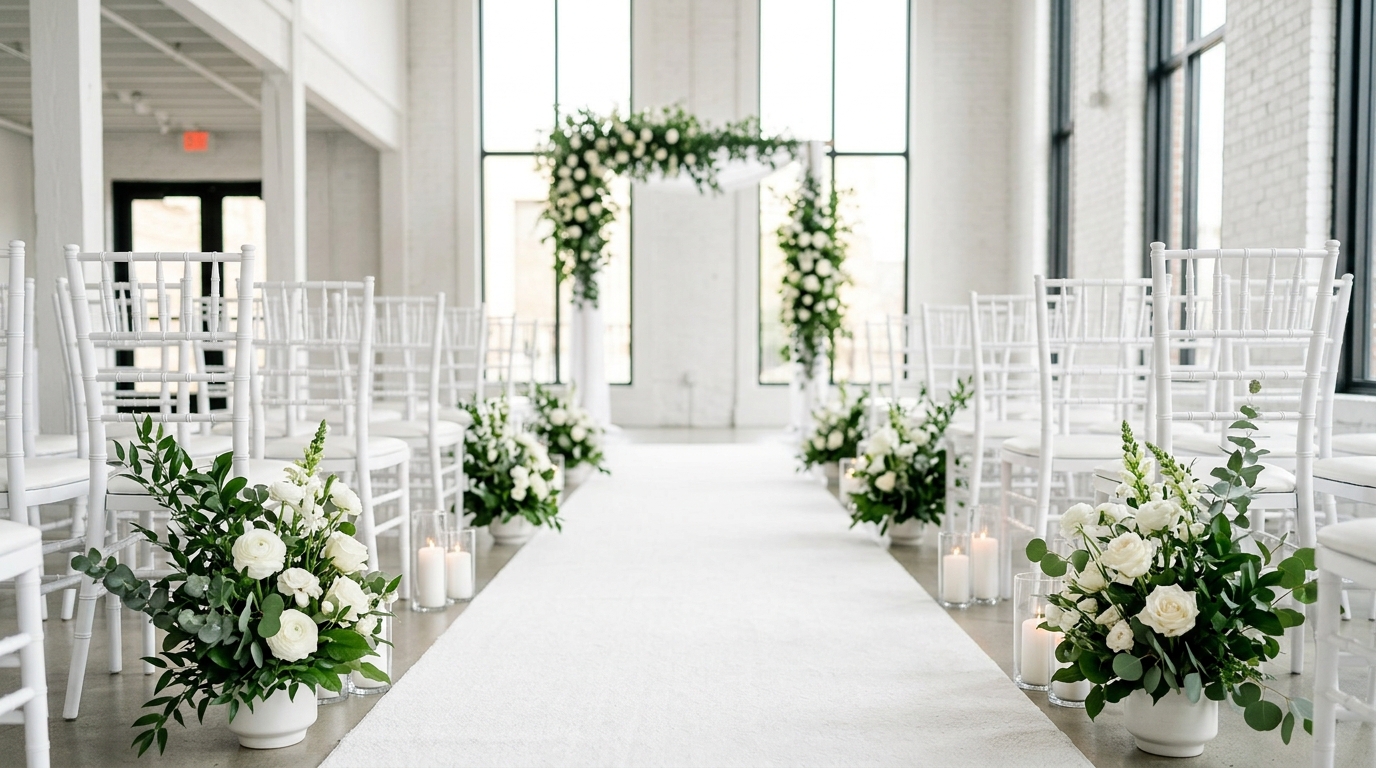
All white weddings have evolved from traditional symbols of purity into a contemporary design movement defined by texture, architectural minimalism, and intentional restraint. Far from feeling sterile or old-fashioned, today’s monochrome celebrations blend high fashion, organic botany, and atmospheric lighting to create a modern aesthetic that prioritizes visual depth over color multiplicity.
The Evolution of Monochrome Celebrations
The concept of wearing and decorating in solid white has deep historical roots, famously popularized by Queen Victoria in 1840 when she wore a white Honiton lace gown to challenge royal protocol and highlight British textile manufacturing. For generations, white served primarily as a rigid standard of bridal innocence, compliance, and formality.
In contemporary wedding design, however, the all-white palette has undergone a complete philosophical reinvention. Modern couples do not choose white out of adherence to Victorian expectations; instead, they treat it as an intentional design choice. By stripping away a multi-colored palette, planners and designers can focus entirely on form, shadow, movement, and material quality. The contemporary tradition shifts the spotlight from what a color means to how light interacts with texture, transforming a traditional trope into a minimalist masterclass.
| Feature | Traditional Approach | Contemporary Approach |
|---|---|---|
| Core Motivation | Compliance with formality and purity | Minimalist design and textural depth |
| Palette Execution | Flat, uniform bright white | Monochromatic layering (ivory, cream, ecru) |
| Floral Selection | Standard roses and carnations | Organic, foraged, and sculptural blooms |
| Lighting | Standard ambient venue lighting | Shadow play, warm pin-spotting, candles |
Mastering Texture and Tone: The Anatomy of a Modern White Palette
Executing an all-white wedding successfully requires avoiding the trap of visual flatness. A common mistake is using a single shade of stark, optical white across every element, which can make a venue feel cold, clinical, or reminiscent of a corporate event.
Layering Neutral Hues
Professional designers achieve depth by incorporating a diverse spectrum of neutral undertones. By mixing crisp optic white with softer variations such as ivory, cream, alabaster, ecru, and subtle champagne, the eye finds natural resting points. This tonal layering creates warmth and dimension without introducing external pigments.
Incorporating Material Contrast
Because color is restricted, texture becomes the primary design vehicle. Modern all-white weddings rely heavily on tactile variety to create luxury:
- Textiles: Combining raw linen table runners with heavy velvet napkins, ribbed silk ribbons, and sheer chiffon drapery.
- Hard Surfaces: Pairing polished concrete or mirrored tabletops with matte ceramics, brushed brass accents, and clear crystal glassware.
- Architectural Elements: Utilizing limewash walls, stone pillars, and organic plaster elements to catch natural light throughout the day and evening.
Botanical Design in a Colorless Space
Flowers remain the cornerstone of wedding decor, but curating an all-white floral program demands a sophisticated botanical approach. Rather than relying on uniform rows of standard white roses or carnations, contemporary florists use texture, scale, and organic movement to bring arrangements to life.
Sculptural and Foraged Elements
Modern floral installations feature asymmetrical, garden-inspired designs that mimic natural growth patterns. Designers incorporate varied textures by combining smooth petals with feathery, architectural, and woody elements:
- Lush Blooms: Phalaenopsis orchids, garden roses, ranunculus, and heavy-headed hydrangeas.
- Textural Accents: White astilbe, sweet peas with delicate tendrils, and dried bleached lunaria.
- Greenery Alternatives: While strict all-white palettes often eliminate green entirely, contemporary versions frequently incorporate silver-toned foliage such as dusty miller, olive branches, or sprayed eucalyptus to soften the edges.
Large-Scale Installations
Monochrome floral design shines brightest in large installations. Hanging cloud-like floral arrangements suspended over reception tables, overgrown ceremony arches built directly into natural landscapes, and ground-level meadows lining the aisle create immersive environments that command attention through sheer volume and form.
Lighting as an Invisible Medium
In a celebration devoid of vibrant color, lighting is no longer just a functional utility—it becomes the primary design medium. The success of an all-white wedding depends almost entirely on how light sculpts the space as day turns to night.
Warmth Versus Sterility
Avoid cool-toned LED lighting, which can render white decor looking harsh and sterile. Instead, designers rely on warm color temperatures (ranging from 2,400K to 2,700K) to impart a welcoming, buttery glow.
Atmospheric Techniques
- Candlelight: Multiplying candle flames across taper candles, pillar candles, and floating vessels introduces dynamic movement and casts soft, romantic shadows.
- Pin-Spotting: Utilizing narrow-beam spotlights to highlight specific floral centerpieces or wedding cake tiers makes them pop against a darkened room.
- Gobo Projection: Projecting subtle, organic patterns—such as dappled sunlight filtering through tree leaves—onto white dance floors or linen-draped walls adds unexpected movement.
Wardrobe and Dress Code Considerations
The all-white aesthetic frequently extends beyond the decor to encompass the attire of the couple and, in some cases, the entire guest list.
Modern Bridal and Partner Attire
While traditional white gowns remain popular, contemporary silhouettes embrace clean architectural lines, minimalist crepe fabrics, detachable overskirts, and dramatic capes. For partners opting for suits, ivory or cream dinner jackets paired with black trousers, or entirely monochrome white tuxedos, offer a high-fashion edge that disrupts traditional formal wear norms.
The All-White Guest Dress Code
When couples request an all-white dress code for attendees, clear communication is essential on invitations. To ensure success without frustrating guests, provide specific guidance regarding acceptable shades (including cream and beige) and establish clear parameters to avoid the common pitfall of guests wearing off-white shades that might clash or unintentionally mimic the principal attire.
Common Mistakes and How to Avoid Them
Designing a completely monochrome celebration presents unique operational hurdles. Avoiding these common pitfalls ensures the event feels elevated rather than unfinished.
- Neglecting Lighting Design: Relying on standard overhead venue lighting flattens the room. Always invest in supplemental warm lighting and professional candle placement.
- Overusing Plastic or Shiny Synthetics: Cheap satin fabrics and stark white plastics can look artificial under flash photography. Prioritize natural fibers, matte finishes, and organic textures.
- Ignoring the Venue Background: Dropping white decor into a venue with conflicting permanent elements—such as bright red carpeting or rustic wood paneling that clashes with the desired mood—creates visual discord. Select spaces that feature neutral architectural backdrops like industrial brick, modern galleries, or open glass greenhouses.
Practical Recommendations for Planning
If you are planning an all-white wedding, begin by auditing your prospective venues for neutral, adaptable spaces. Work closely with floral designers and rental coordinators to touch physical fabric and flower samples side-by-side under varied lighting conditions to catch tonal clashes before lock-in. Finally, treat texture as your primary color palette, ensuring every tactile surface works in harmony to build a timeless, sophisticated environment.