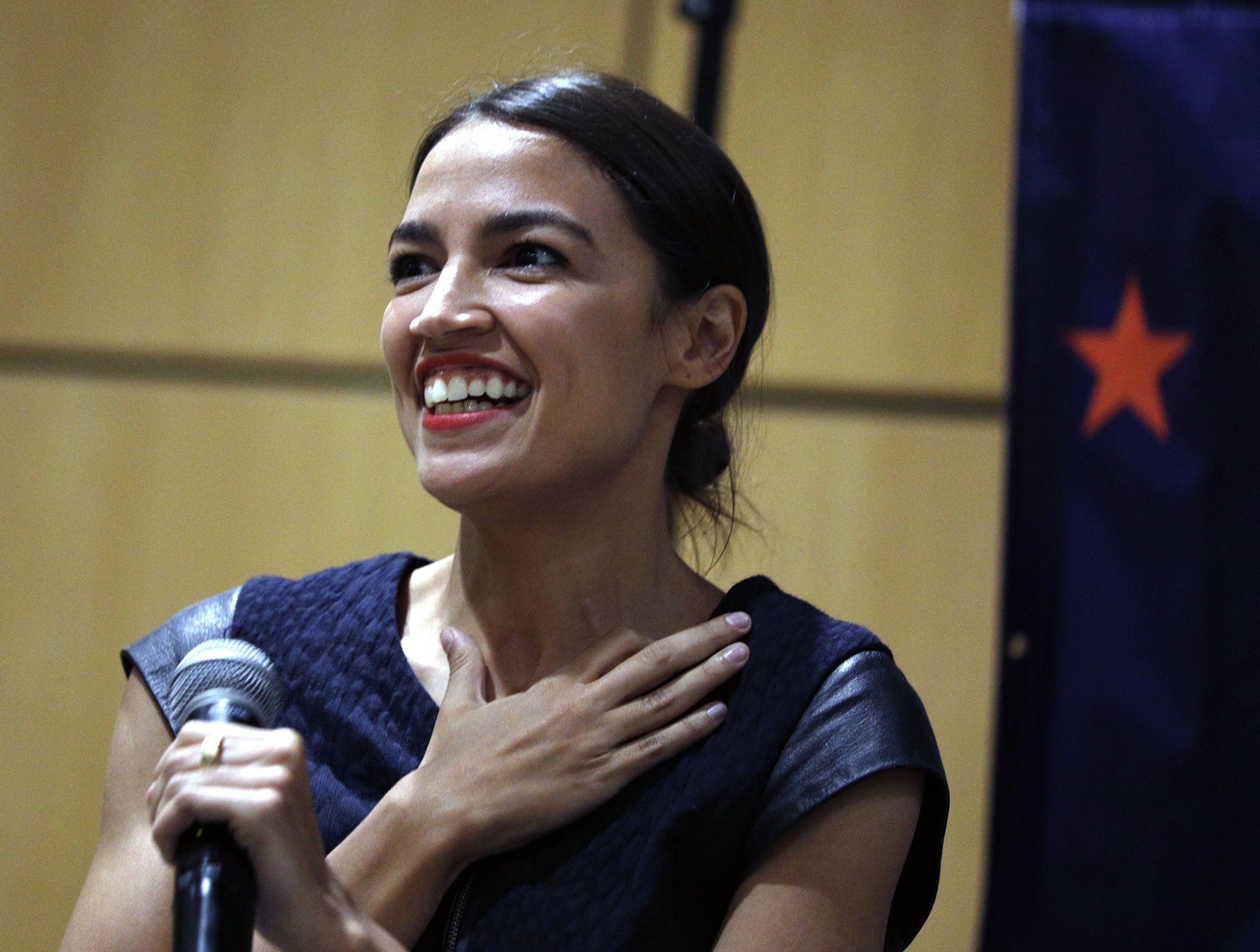
Alexandria Ocasio-Cortez (AOC) was 29 years old when she was elected to the United States House of Representatives on November 6, 2018. Born on October 13, 1989, she officially became the youngest woman ever elected to Congress at that time, shattering a record previously held by Representative Elise Stefanik.
The election of Alexandria Ocasio-Cortez to New York's 14th congressional district remains one of the most significant moments in modern American political history. As we look back from the vantage point of 2026, her 2018 victory is viewed not just as a statistical anomaly regarding age, but as a paradigm shift in how grassroots campaigns utilize digital media and generational identity to challenge established political structures. Understanding her age when elected requires a look at the constitutional requirements, the timeline of her specific campaign, and the historical context of youth in the United States legislature.
The Significance of the "Youngest Woman" Record
When Alexandria Ocasio-Cortez won the general election in 2018 at the age of 29, she took the title of the youngest woman ever elected to Congress. Before AOC, the record was held by Republican Elise Stefanik of New York, who was 30 years old when she was elected in 2014.
The distinction of "youngest woman" is a specific historical category. While men had been elected at younger ages in the early history of the republic—sometimes even in violation of constitutional age minimums—the barriers to entry for women in politics historically resulted in female candidates entering the fray much later in their careers. Ocasio-Cortez’s victory signaled a change in the recruitment and viability of young female candidates, demonstrating that a lack of "seniority" or a decades-long political resume was no longer an insurmountable hurdle.
This record stood until the subsequent election cycles, where the barrier for the youngest member of Congress shifted again with the election of Maxwell Frost in 2022, who was 25—the absolute constitutional minimum. However, Ocasio-Cortez remains a landmark figure for the specific demographic of young women entering federal service.
A Timeline of the 2018 Election and AOC’s Age
To understand her age at the time of her election, it is helpful to look at the specific chronology of the 2018 midterm cycle.
The Primary Victory (Age 28)
On June 26, 2018, Alexandria Ocasio-Cortez defeated the incumbent, Joe Crowley, in the Democratic primary. Crowley was a high-ranking member of the House Democratic Caucus and had not faced a primary challenger in 14 years. At the time of this massive political upset, Ocasio-Cortez was 28 years old. This victory was the actual moment of her political "arrival," as the 14th district is heavily Democratic, making the primary winner the presumptive winner of the general election.
The 29th Birthday
Between the primary and the general election, Ocasio-Cortez celebrated her 29th birthday on October 13, 2018. This birthday was notable because it solidified her status; even as her 30s approached, she was still well within the "under 30" category that defined her media narrative during that cycle.
The General Election (Age 29)
On November 6, 2018, she officially won the general election against Republican Anthony Pappas. She secured roughly 78% of the vote. On this day, her age was 29 years and 24 days.
The Swearing-In (Age 29)
Members of the 116th Congress were sworn in on January 3, 2019. Ocasio-Cortez was still 29 years old when she took the oath of office. This is an important distinction, as some representatives are elected at one age but reach a new birthday before they are actually seated in the House.
Constitutional Requirements for the House of Representatives
The age of a candidate is not merely a point of trivia; it is a matter of constitutional law. Article I, Section 2 of the United States Constitution outlines three primary requirements for anyone seeking a seat in the House of Representatives:
- Age: The candidate must be at least 25 years old.
- Citizenship: The candidate must have been a citizen of the United States for at least seven years.
- Residency: The candidate must be an inhabitant of the state they represent at the time of the election.
Ocasio-Cortez met these requirements comfortably. However, the 25-year-old minimum has been a subject of debate throughout history. The Founders established this minimum to ensure a degree of maturity and "stability of character," though they set the age lower for the House than for the Senate (30 years) or the Presidency (35 years). Ocasio-Cortez’s election at 29 placed her in the top percentile of young representatives, but she was still four years older than the minimum requirement.
Historical Comparison of Youngest Members
To provide context for AOC’s age, it is useful to compare her to other "youngest" members across different eras of American history.
| Representative | Party | State | Age When Elected | Year Elected |
|---|---|---|---|---|
| William C.C. Claiborne | Democratic-Republican | TN | 22* | 1797 |
| Alexandria Ocasio-Cortez | Democratic | NY | 29 | 2018 |
| Elise Stefanik | Republican | NY | 30 | 2014 |
| Maxwell Frost | Democratic | FL | 25 | 2022 |
| Madison Cawthorn | Republican | NC | 25 | 2020 |
| John Quincy Adams VI | Whig (historical) | MA | 28 | 1823 |
*Note: William Claiborne was technically under the constitutional age limit of 25 when he was elected and seated, a feat rarely repeated in modern history as age verification has become strictly standardized.
As the table demonstrates, while 25 is the legal floor, the average age of a Member of Congress usually hovers in the high 50s. Being elected in one's 20s remains a rare feat, occurring usually less than once per decade for women until the late 2010s.
The Strategy Behind a Youth-Led Campaign
The fact that Ocasio-Cortez was 29 when elected was not just a biographical detail; it was a core component of her campaign strategy. Her age allowed her to frame the election as a choice between the "old guard" and a new generation of leadership.
Digital Native Advantage
Being a "digital native" meant Ocasio-Cortez understood social media platforms like Instagram and Twitter (now X) in a way that her 56-year-old opponent did not. During her 2018 run, she used livestreaming to show the "behind-the-scenes" of a campaign—cooking dinner while discussing policy, or explaining the complexities of the Green New Deal in real-time. This transparency resonated with younger voters who felt alienated by traditional, highly-produced political advertisements.
Economic Relatability
At 28 and 29, Ocasio-Cortez was still dealing with the economic realities of many Millennials. She famously spoke about her time working as a bartender and waitress at Flats Fix in Union Square shortly before her campaign took off. Her age made her advocacy for student debt cancellation and a higher minimum wage feel authentic rather than academic. She was a member of the generation most impacted by the 2008 financial crisis and the subsequent stagnation of wages, and she used that shared experience to build a coalition of working-class voters in the Bronx and Queens.
Challenges Faced Due to Age
Despite her success, Ocasio-Cortez's age when elected brought significant scrutiny and unique challenges that older freshmen often do not encounter.
The "Experience" Argument
Critics frequently pointed to her age as evidence of a lack of "seriousness" or "experience." This is a common hurdle for young candidates, particularly women. In the political sphere, "experience" is often used as a proxy for "tenure," and by being 29, Ocasio-Cortez had only a few years of professional experience outside of education and service work. She countered this by arguing that her experience as a worker was more relevant to her constituents than her opponent’s experience as a career politician.
Media Scrutiny and "Birtherism" of Background
Because of her youth and rapid rise, media outlets delved into her past with an intensity rarely seen for a freshman House member. There were attempts to "expose" her for having lived in Yorktown Heights during her adolescence, suggesting she was not "from the Bronx" enough. This scrutiny was largely driven by her age and the perceived "threat" her victory posed to the political establishment.
Legislative Learning Curve
Every new member of Congress faces a learning curve regarding parliamentary procedure and committee assignments. For a 29-year-old, this curve is often steeper because they are entering an environment that prizes seniority. Ocasio-Cortez addressed this by joining the Financial Services Committee and the Oversight and Reform Committee, where she used her questioning time to go viral, demonstrating that her age did not preclude her from being an effective interrogator of powerful figures.
The "AOC Effect" on Future Elections
The election of a 29-year-old to Congress had a measurable impact on the political pipeline. Known as the "AOC Effect," her victory encouraged a wave of younger, more diverse candidates to run for local, state, and federal offices.
Before 2018, many young people viewed a run for Congress as something to be done in their 40s or 50s after "paying their dues." Ocasio-Cortez’s success at 29 proved that a well-organized grassroots campaign could bypass traditional party gatekeepers. This paved the way for other young leaders, such as the members of "The Squad" and subsequent Gen Z representatives like Maxwell Frost.
Furthermore, her election forced both major parties to reconsider their outreach to younger demographics. It highlighted a growing rift within the electorate where age was becoming as much of a predictor of voting behavior as geography or income.
Common Misconceptions About Her Election Age
Several myths have persisted regarding Ocasio-Cortez's age and her eligibility. It is important to clarify these points with factual evidence:
- Misconception: She was too young to be legally seated.
- Fact: She was 29 at the time of the election and swearing-in, which is four years older than the constitutional requirement of 25.
- Misconception: She was the youngest person ever in Congress.
- Fact: She was the youngest woman ever at the time. Several men in the 18th and 19th centuries were younger, and Maxwell Frost (elected in 2022) was younger at 25.
- Misconception: She turned 30 before the election.
- Fact: She was 29 on Election Day 2018. She did not turn 30 until October 2019, well into her first term.
Frequently Asked Questions
What year was Alexandria Ocasio-Cortez elected?
She was first elected to the U.S. House of Representatives in 2018. She won her primary in June 2018 and the general election in November 2018. She has since been re-elected in 2020, 2022, and 2024.
Who was the previous record-holder for the youngest woman in Congress?
Elise Stefanik, a Republican from New York’s 21st district, held the record before AOC. Stefanik was 30 years old when she was elected in 2014.
How old do you have to be to run for the House of Representatives?
According to the U.S. Constitution, you must be at least 25 years old. You must also be a U.S. citizen for at least seven years and live in the state you seek to represent.
Was AOC the youngest member of the 116th Congress?
Yes, in the 116th Congress (which ran from 2019 to 2021), Alexandria Ocasio-Cortez was the youngest serving member.
What was AOC's job before being elected at 29?
Before her election, she worked as an educator at the National Hispanic Institute and as a bartender and waitress. She also worked as an organizer for Bernie Sanders’ 2016 presidential campaign.
Final Guidance for Researching Congressional Demographics
For those interested in the changing demographics of the U.S. Congress, age remains one of the most dynamic factors. While Alexandria Ocasio-Cortez’s election at 29 was a milestone for women in politics, the trend toward younger representation continues to evolve.
To verify ages and records of current or historical members, the most authoritative source is the Biographical Directory of the United States Congress. Additionally, the House of Representatives Press Gallery provides real-time data on the makeup of each new session. When analyzing these statistics, always distinguish between the age at the time of the primary, the general election, and the swearing-in, as these can often span different years in a candidate's life.