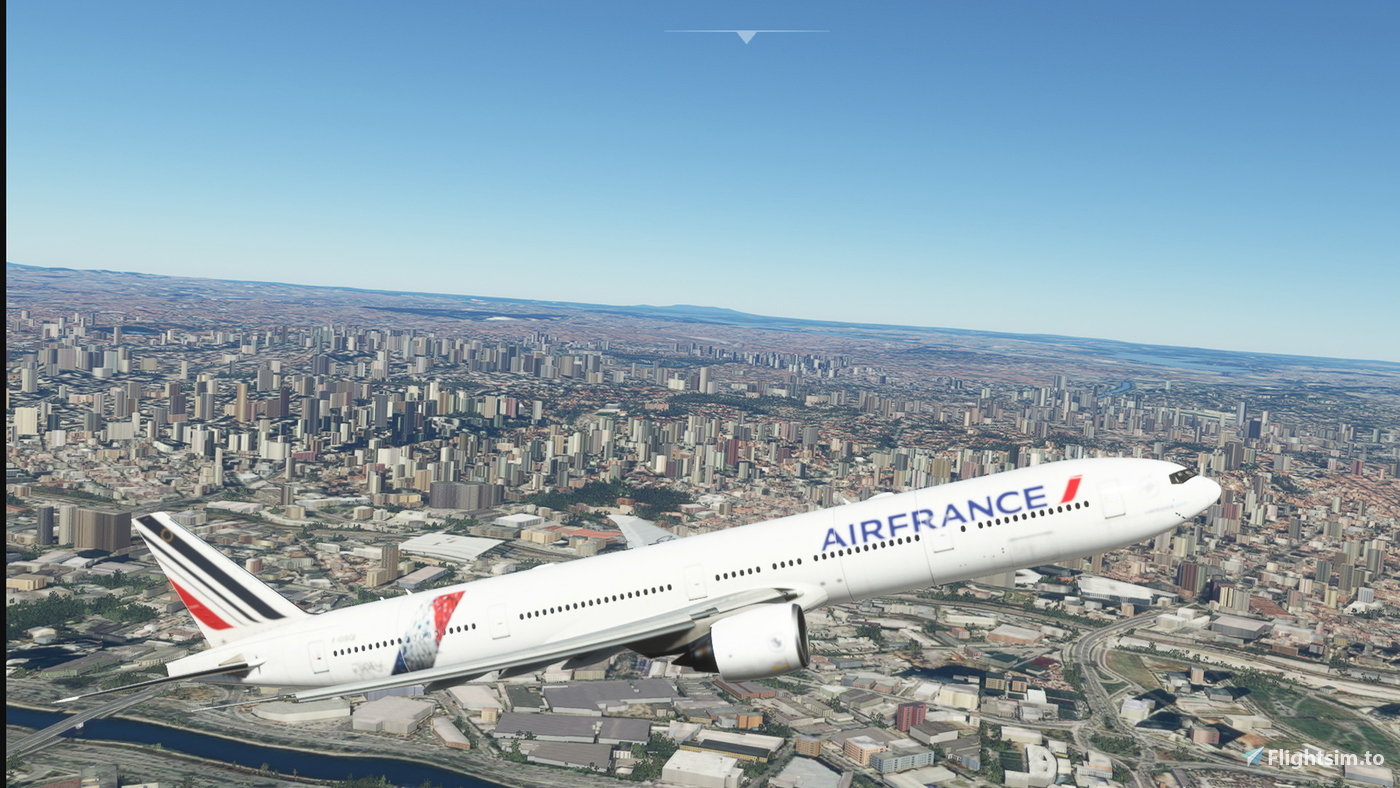
When an Air France Boeing 777-300ER declares a Mayday and turns back, the flight crew is responding to a condition of "distress" implying immediate danger to the aircraft. This protocol triggers priority air traffic control handling, the activation of emergency services on the ground, and often necessitates a technical fuel jettison process to reach safe landing weights.
Understanding the Mayday Declaration in Long-Haul Operations
In the context of international aviation, a Mayday call is the highest level of emergency declaration, used only when a vessel or aircraft is threatened by grave and imminent danger and requires immediate assistance. For an Air France Boeing 777-300ER—a cornerstone of the airline’s long-haul fleet—this declaration is not made lightly. It differs from a "Pan-Pan" call, which indicates an urgent situation that is not yet life-threatening or an immediate threat to the aircraft's integrity.
When the pilots of an Air France flight broadcast "Mayday, Mayday, Mayday," they are effectively taking "command of the air." Every other aircraft in the vicinity is expected to maintain radio silence or yield their path. The primary goal of a turn-back under Mayday conditions is to get the aircraft on the ground at the nearest suitable airport (often the departure airport or a designated "en route" alternate) as quickly as safety allows.
As of 2026, the protocols for Air France crews involve a high degree of integration between the cockpit, the company’s Center for Command of Operations (CCO) in Paris, and local Air Traffic Control (ATC). The decision to turn back involves a rapid assessment of whether the issue is "time-critical" (such as an uncontained fire) or "managed" (such as a single engine failure or hydraulic loss).
Technical Profile of the Boeing 777-300ER
The Boeing 777-300ER (Extended Range) is a sophisticated twin-engine wide-body aircraft. Its performance characteristics significantly influence how a turn-back is handled.
Propulsion and Power
The aircraft is powered by two General Electric GE90-115B engines, which are among the most powerful jet engines in the world. While the 777 is designed to fly safely on a single engine (ETOPS—Extended-range Twin-engine Operational Performance Standards), a "Mayday" is often declared if the engine failure is accompanied by secondary complications, such as a fire that cannot be extinguished or severe vibration that threatens the airframe.
Flight Control Systems
The 777 utilizes a Fly-By-Wire (FBW) system. Unlike older aircraft with direct mechanical links, the 777's pilot inputs are processed by computers that then move the control surfaces. In rare incidents, such as the widely documented Air France Flight AF011 incident in April 2022, "flight control anomalies" were reported where the aircraft appeared to react independently of pilot input during the approach. In such technical scenarios, a turn-back or immediate diversion is the only course of action to ensure the safety of the 400+ passengers usually on board.
Common Triggers for a 777-300ER Turn-Back
An Air France 777-300ER might be forced to turn back for several critical reasons. Understanding these triggers provides insight into the complexity of modern wide-body operations.
1. Engine Surge or Uncontained Failure
If a GE90 engine experiences a "stall" or "surge," it can result in loud bangs and flames visible from the exhaust. While the engine is designed to contain its internal parts, the loss of half the aircraft's thrust during a critical phase of flight (like the initial climb over the Atlantic) usually results in a decision to return to the departure airport rather than continuing a 10-hour flight.
2. Smoke, Fire, or Fumes (SFF)
Smoke in the cockpit or cabin is an automatic justification for an immediate landing. On a large aircraft like the 777-300ER, locating the source of smoke—whether it is an electrical fault in the IFE (In-Flight Entertainment) system or a galley oven—can be difficult. Pilots follow a strict "SFF" checklist which often leads to a Mayday declaration to ensure the aircraft receives priority for the shortest possible approach path.
3. Flight Control System Degradation
The 777 has three flight control "modes": Normal, Secondary, and Direct. If the system drops into "Direct Mode," many of the automatic protections (like stall protection and bank angle limits) are lost. Handling a 777-300ER in Direct Mode requires high pilot concentration and is considered an emergency condition justifying a turn-back.
The Physics and Logistics of Turning Back: Fuel Jettisoning
One of the most complex aspects of an early turn-back for a Boeing 777-300ER is the Maximum Landing Weight (MLW) versus the Maximum Takeoff Weight (MTOW).
A 777-300ER departing from Paris-Charles de Gaulle (CDG) for a destination like Los Angeles or Singapore carries a massive fuel load. The MTOW can be as high as 351,533 kg (approx. 775,000 lbs), while the MLW is significantly lower, typically around 251,290 kg (approx. 554,000 lbs).
If a Mayday occurs shortly after takeoff, the aircraft is "overweight" for landing. Landing an aircraft above its MLW can cause structural damage to the landing gear, wings, and fuselage. To mitigate this, the 777-300ER is equipped with a fuel jettison (fuel dump) system.
The Jettison Process
- Activation: The pilots select the "Fuel Jettison" arming switch on the overhead panel.
- Rate: The 777 can dump fuel at a rate of approximately 2,500 kg (5,500 lbs) per minute.
- Safety Altitudes: ATC usually directs the aircraft to a specific "dumping area" over water or at a high altitude (usually above 6,000 feet) to ensure the fuel atomizes and evaporates before reaching the ground.
- Time Factor: In a "True Mayday" (e.g., an active fire), the crew may bypass the fuel dump and perform an Overweight Landing. This requires a specific inspection by maintenance crews after landing and involves higher approach speeds, increasing the risk of tire bursts or brake fires due to the kinetic energy involved in stopping the heavy aircraft.
Pilot Workload and Cockpit Management
When a Mayday is declared, the division of labor in the cockpit is governed by Multi-Crew Coordination (MCC) and Crew Resource Management (CRM). Air France pilots are trained to follow the "Aviate, Navigate, Communicate" hierarchy.
- Aviate: The Pilot Flying (PF) ensures the aircraft remains stable and handles the immediate technical handling.
- Navigate: The Pilot Monitoring (PM) handles the charts, programs the Flight Management Computer (FMC) for the return, and monitors the aircraft's position relative to terrain.
- Communicate: The PM also handles the radio, speaking to ATC and the Air France CCO.
The use of the Quick Reference Handbook (QRH) is vital. The QRH contains "Non-Normal Checklists" for every conceivable failure. In a turn-back scenario, the crew must complete the checklist for the failure itself (e.g., "ENGINE FIRE") and then the "In-flight Start/Landing" checklist, which covers the specific configurations needed for an emergency return.
Comparison of Emergency States
To understand the severity of an Air France 777 turn-back, it is helpful to compare the two primary emergency signals used in aviation.
| Feature | Mayday (Distress) | Pan-Pan (Urgency) |
|---|---|---|
| Urgency Level | Critical/Imminent Danger | Serious/Non-Imminent Danger |
| ATC Priority | Absolute Priority over all traffic | Priority over routine traffic |
| Common Scenarios | Engine fire, structural failure, loss of control | Medical emergency, single hydraulic loss, navigation failure |
| Ground Support | Fire trucks/Ambulances staged on runway | Emergency services on standby/alert |
| Fuel Jettison | Often bypassed if landing is time-critical | Usually completed to reach safe landing weight |
| Radio Prefix | "Mayday, Mayday, Mayday" | "Pan-Pan, Pan-Pan, Pan-Pan" |
The Role of Air Traffic Control (ATC)
When an Air France 777 declares a Mayday, the ATC controller’s role shifts from "manager" to "facilitator." The controller will clear a "corridor" for the aircraft to return. This often involves:
- Vectoring: Giving the pilot the most direct heading to the runway.
- Information Gathering: Asking the "souls on board" (SOB) count and the remaining fuel (in time/weight) to inform ground rescue teams.
- Hazard Mitigation: Coordinating with other sectors to ensure the fuel dumping area is clear of other aircraft.
- Runway Selection: Providing the longest available runway to accommodate the higher speeds of a potentially overweight 777-300ER.
Air France Safety Protocols and Post-Incident Analysis
In 2026, Air France continues to operate under some of the most stringent safety oversight in the world, governed by EASA (European Union Aviation Safety Agency). Following any Mayday event and turn-back, a mandatory investigation is launched.
The BEA (Bureau d'Enquêtes et d'Analyses pour la sécurité de l'aviation civile) is the French authority responsible for these investigations. They analyze the Flight Data Recorder (FDR) and Cockpit Voice Recorder (CVR) to determine the root cause. For instance, if a turn-back was caused by a technical glitch in the GE90 engines, the BEA works with Boeing and General Electric to issue "Service Bulletins" or "Airworthiness Directives" to prevent recurrence across the global 777 fleet.
For the passengers, an emergency turn-back is a stressful event. Air France protocols include "Cabin Preparedness," where flight attendants demonstrate the brace position and ensure all loose items are stowed. Upon landing, depending on the severity, an evacuation via slides might be ordered, though most turn-backs result in a "taxi to gate" once the fire services have inspected the landing gear for heat or leaks.
Frequently Asked Questions
Why does an Air France flight turn back instead of landing at the nearest airport?
A "turn-back" to the departure airport (like CDG) is often preferred if the aircraft is still relatively close to its base. This is because Air France has its primary maintenance facilities, spare parts, and replacement aircraft there. However, if the Mayday involves a "Land as soon as possible" instruction in the QRH, the crew will choose the absolute nearest suitable airport, regardless of whether it is an Air France hub.
How safe is a Boeing 777-300ER after an engine failure?
The Boeing 777-300ER is exceptionally safe during a single-engine failure. It is certified for ETOPS-330, meaning it can fly for five and a half hours on a single engine to reach an airport. A Mayday is declared primarily to ensure priority handling and ground support, not because the aircraft is incapable of staying airborne.
What happens to the fuel that is dumped during a Mayday?
When fuel is jettisoned at high altitudes (usually above 6,000 feet), it does not fall as liquid rain. The high-speed airflow and atmospheric pressure cause the fuel to atomize into a fine mist which evaporates. While there are environmental concerns, it is a necessary safety procedure to prevent a high-energy crash or structural failure during an emergency landing.
Can a Boeing 777-300ER land safely while overweight?
Yes. The 777-300ER is designed to handle "Overweight Landings" in emergencies. The landing gear is robust, but the descent rate must be carefully managed to avoid a "hard landing." After such an event, the aircraft must undergo a "Phase 1" and potentially "Phase 2" structural inspection before it is allowed to fly again.
What was the cause of the Air France Flight 011 "Mayday" incident?
In the 2022 incident involving a 777-300ER, the investigation focused on pilot inputs and the flight control system. The BEA concluded that the aircraft was responding to conflicting inputs from both pilots during a stressful approach, rather than a systemic failure of the Boeing flight computers. This highlighted the importance of clear cockpit communication during emergency maneuvers.
Practical Recommendation for Travelers
If you are on an Air France flight that declares a Mayday and turns back, the most important action is to follow the instructions of the cabin crew immediately and without question. They are trained specifically for these high-stress technical events. Ensure your seatbelt is low and tight, familiarize yourself with the nearest exit (counting rows), and remain calm; the Boeing 777-300ER is one of the most redundant and well-engineered machines in history, and Air France pilots are among the most rigorously trained in the industry to handle these exact scenarios.