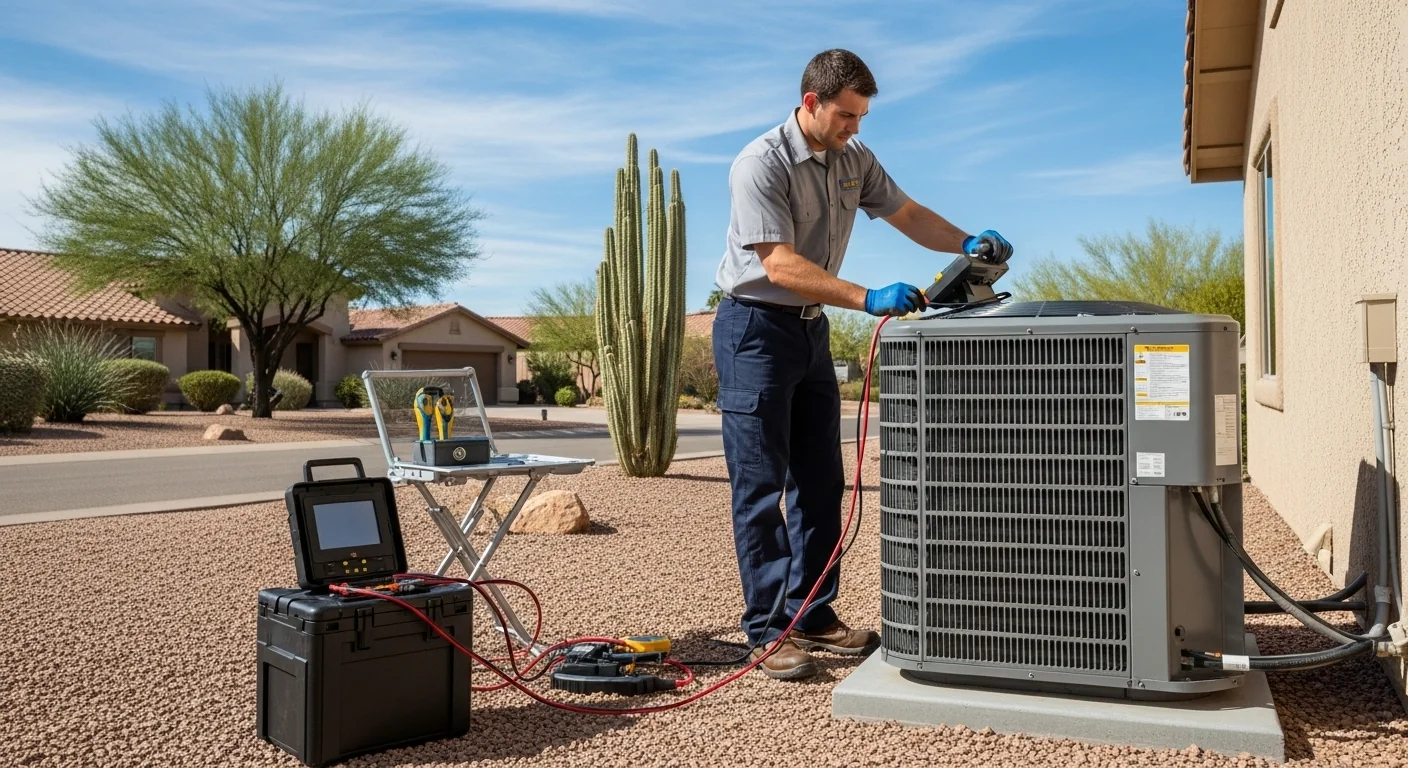
Air conditioning service in Tucson, AZ, encompasses emergency repairs, routine preventative maintenance, and full system installations designed to withstand the Sonoran Desert’s extreme heat. With summer temperatures frequently exceeding 100°F, professional HVAC care ensures system reliability, energy efficiency, and indoor air quality through technical inspections, refrigerant management, and component optimization tailored to Arizona's climate.
The Critical Role of AC Service in the Sonoran Desert
In Tucson, air conditioning is not a luxury but a fundamental requirement for health and safety. The unique climate of Southern Arizona, characterized by intense ultraviolet (UV) radiation, extreme dry heat in the early summer, and high humidity during the monsoon season, places extraordinary stress on mechanical cooling systems. A standard HVAC system in Tucson operates significantly more hours per year than systems in temperate regions, leading to accelerated wear on compressors, fan motors, and capacitors.
Professional air conditioning service ensures that these systems can handle the "heat load" of a desert home. Heat load refers to the amount of heat energy that must be removed from a space to maintain a specific temperature. In Tucson, where high-noon temperatures can reach 110°F, the delta-T (the difference between outdoor and indoor temperature) is substantial. Maintaining this gap requires a system that is precisely calibrated and free of mechanical friction or electrical resistance.
Core Components of Professional AC Maintenance
Preventative maintenance, often referred to as a "tune-up," is the most effective way to prevent catastrophic system failure during a Tucson July. In 2026, modern HVAC maintenance involves a combination of mechanical cleaning, electrical testing, and performance data analysis.
Electrical Component Testing
The extreme heat in Arizona is the primary enemy of electrical components. During a service visit, technicians use multimeters to measure the "capacitance" of the start and run capacitors. Capacitors are responsible for giving the motors the torque needed to start and stay running. In Tucson, heat causes the internal fluids of these components to degrade. If a capacitor falls outside 5% to 10% of its rated microfarads, it is replaced to prevent the compressor or fan motor from overheating and burning out.
Coil Cleaning and Heat Exchange
The efficiency of an air conditioner relies on the transfer of heat. The outdoor condenser coil disperses heat pulled from inside the home. In Tucson, dust and debris from "haboobs" (large dust storms) can coat these coils, creating an insulating layer that traps heat. This forces the compressor to work harder and run longer, increasing energy bills and shortening the equipment's lifespan. Professional service includes a chemical or high-pressure water cleaning of these coils to restore optimal heat exchange.
Refrigerant Level Verification
Air conditioners use a closed-loop system of refrigerant to move heat. As of 2026, the industry has largely transitioned to newer, low-GWP (Global Warming Potential) refrigerants such as R-454B or R-32, following the phase-down of R-410A. Technicians must check for "subcooling" and "superheat" levels to ensure the charge is exact. An overcharged or undercharged system can lead to liquid refrigerant entering the compressor, causing "slugging" and permanent mechanical damage.
Common Air Conditioning Repairs for Tucson Homeowners
Despite regular maintenance, the high-demand environment of Southern Arizona leads to specific common repair needs. Understanding these issues helps homeowners identify when to call for service before a total breakdown occurs.
- Failed Capacitors: As mentioned, this is the #1 repair in Tucson. Symptoms include a humming sound from the outdoor unit but no fan movement, or the AC "struggling" to start.
- Clogged Condensate Lines: In the late summer, as humidity rises during the monsoons, air conditioners pull gallons of water from the air. This moisture drains through a small pipe. Dust and algae can clog these lines, leading to water backups that can damage drywall or trigger safety float switches that shut down the system.
- Worn Contactor Points: The contactor is a switch that tells the outdoor unit to turn on. The high frequency of cycles in Arizona causes the silver coating on these switches to "pit" or "arc," eventually preventing the unit from receiving power.
- Blower Motor Failure: The indoor blower motor runs almost constantly during Tucson summers. If the air filter is not changed regularly, the motor must work against higher static pressure, leading to premature bearing failure.
Understanding SEER2 and Efficiency Standards in 2026
When considering a system replacement or major service, efficiency ratings are a primary concern for Tucson residents facing high Tucson Electric Power (TEP) or TRICO bills.
The industry currently utilizes the SEER2 (Seasonal Energy Efficiency Ratio 2) standard, which was implemented to provide a more accurate representation of how systems perform under real-world external static pressure. In the Southwest region (including Arizona), the minimum requirement for new split-system air conditioners is 14.3 SEER2.
For Tucson homeowners, investing in a higher SEER2 rating (such as 18 or 20) often results in a significant return on investment through lower monthly utility costs. Variable-speed technology is particularly effective in the desert; these systems can ramp down to a lower speed when the temperature is 85°F and ramp up to full capacity only when it hits 105°F, providing more consistent dehumidification and comfort.
Comparative Overview of AC Service Types
| Service Category | Primary Goal | Recommended Frequency | Estimated Cost Range (2026) | Urgency |
|---|---|---|---|---|
| Routine Maintenance | Preventative care and efficiency | Bi-annually (Spring/Fall) | $89 – $180 | Low/Scheduled |
| Diagnostic/Service Call | Identify specific failure | As needed | $75 – $150 | High |
| Refrigerant Recharge | Restore cooling capacity | Only if leak is present | $200 – $800+ | Moderate |
| Component Replacement | Fix specific part (e.g., motor) | As needed | $300 – $1,200 | High |
| Full System Install | Total cooling solution | Every 10–15 years | $8,000 – $18,000+ | Critical |
The Impact of Monsoons on HVAC Systems
The Tucson monsoon season (typically June 15 through September 30) presents unique challenges for air conditioning systems. High winds can blow desert sand and organic debris into the outdoor condenser, while lightning strikes can cause power surges that fry sensitive inverter boards in modern high-efficiency units.
Furthermore, the increase in humidity changes the way an AC operates. In the "dry heat" of June, the AC primarily performs "sensible cooling" (lowering the temperature). In the "humid heat" of August, the AC must also perform "latent cooling" (removing moisture). If a system is oversized—a common issue in older Tucson homes—it will "short cycle," cooling the air quickly but failing to run long enough to remove humidity, leaving the home feeling "clammy." Professional AC service in the monsoon season often focuses on optimizing airflow and ensuring the evaporator coil is clean enough to facilitate maximum dehumidification.
Selecting a Qualified HVAC Contractor in Southern Arizona
Choosing the right provider for air conditioning service in Tucson requires verifying specific credentials to ensure safety and compliance with state law.
Licensing and Insurance
In Arizona, HVAC contractors must be licensed by the Arizona Registrar of Contractors (ROC). There are different license types, such as the CR-39 (Air Conditioning, Refrigeration, and Heating), which allows for both residential and commercial work. Homeowners should always verify a contractor's license status and "bond" to ensure they are protected in the event of poor workmanship or property damage.
Technical Certifications
Beyond state licensing, look for technicians certified by NATE (North American Technician Excellence). NATE certification is the industry gold standard and indicates that the technician has passed rigorous testing on real-world HVAC knowledge. Given the complexity of 2026 systems, which include complex sensors and communicating thermostats, advanced technical training is vital.
Local Expertise
Tucson's soil and water conditions can even affect HVAC longevity. For example, highly mineralized water in the Santa Cruz Valley can cause rapid scale buildup in evaporative (swamp) coolers, which some Tucsonans still use as a secondary or primary cooling source. A local expert will understand the balance between refrigerated air and evaporative cooling in this specific geography.
Energy Efficiency Incentives and Rebates
In 2026, there are numerous financial incentives available for Tucson residents to upgrade their AC services to more efficient models. The federal government continues to provide tax credits under various energy acts for systems that meet certain SEER2 thresholds.
Locally, Tucson Electric Power (TEP) often provides rebates for:
- High-efficiency AC and Heat Pump installations.
- Smart thermostat installations.
- Duct sealing and insulation improvements.
Duct sealing is a frequently overlooked aspect of AC service. In many Tucson homes, the ductwork runs through a vented attic where temperatures can reach 150°F. If there are leaks in the return ducting, the system will suck in that 150-degree air, drastically reducing the efficiency of the air conditioner. A comprehensive service visit should include a visual inspection of the plenum and accessible duct joints.
Frequently Asked Questions
How often should I change my air filter in Tucson?
In Tucson, you should check your filter every 30 days. During the windy spring months and the summer monsoon season, dust levels are significantly higher. A clogged filter restricts airflow, which can cause the evaporator coil to freeze into a block of ice, potentially damaging the compressor. Use a filter with a MERV 8 to MERV 11 rating for the best balance of filtration and airflow.
Why is my AC unit leaking water inside the house?
This is usually caused by a clogged primary condensate drain line. As the AC removes humidity, the water collects in a pan and flows outside. In the desert, dust and "sludge" can build up in the line. If you see water, turn off the system immediately to prevent water damage and call for professional service to clear the blockage and treat the pan for algae.
Is a heat pump better than a central AC for Tucson?
In 2026, heat pumps are highly recommended for the Tucson climate. Modern "cold-climate" heat pumps are incredibly efficient at cooling in 110°F heat and can provide all the necessary warmth during Tucson's chilly winter nights without the need for a gas furnace. They are often eligible for higher rebates than standard AC units.
My AC is running, but the air coming out isn't cold. What’s wrong?
This is often a sign of a failed capacitor or a refrigerant leak. If the outdoor fan is running but the compressor is not, the air will not be cooled. Alternatively, if the refrigerant charge is low, the system cannot move enough heat. Turn the system off at the thermostat to prevent the motor from overheating while you wait for a technician.
How long does an air conditioner typically last in Arizona?
The average lifespan of an AC unit in Tucson is 10 to 12 years. While systems in other states might last 15 to 20 years, the extreme heat and high run-time in Arizona cause faster mechanical degradation. Regular bi-annual maintenance is the only way to push a system toward the 15-year mark.
Strategic Recommendation for Homeowners
For those living in the Greater Tucson area, the most cost-effective strategy for air conditioning service is a proactive maintenance agreement. Waiting for a system failure during a heatwave often results in longer wait times for repairs and higher "emergency" service fees. By scheduling a spring "Ready-for-Summer" check-up in March or April, homeowners can identify failing capacitors or low refrigerant levels before the peak season begins. Additionally, ensure your outdoor condenser unit has at least two feet of clear space around it—remove any desert broom, encroaching cacti, or stored items to allow for the unobstructed airflow necessary for your system to breathe in the Arizona heat.