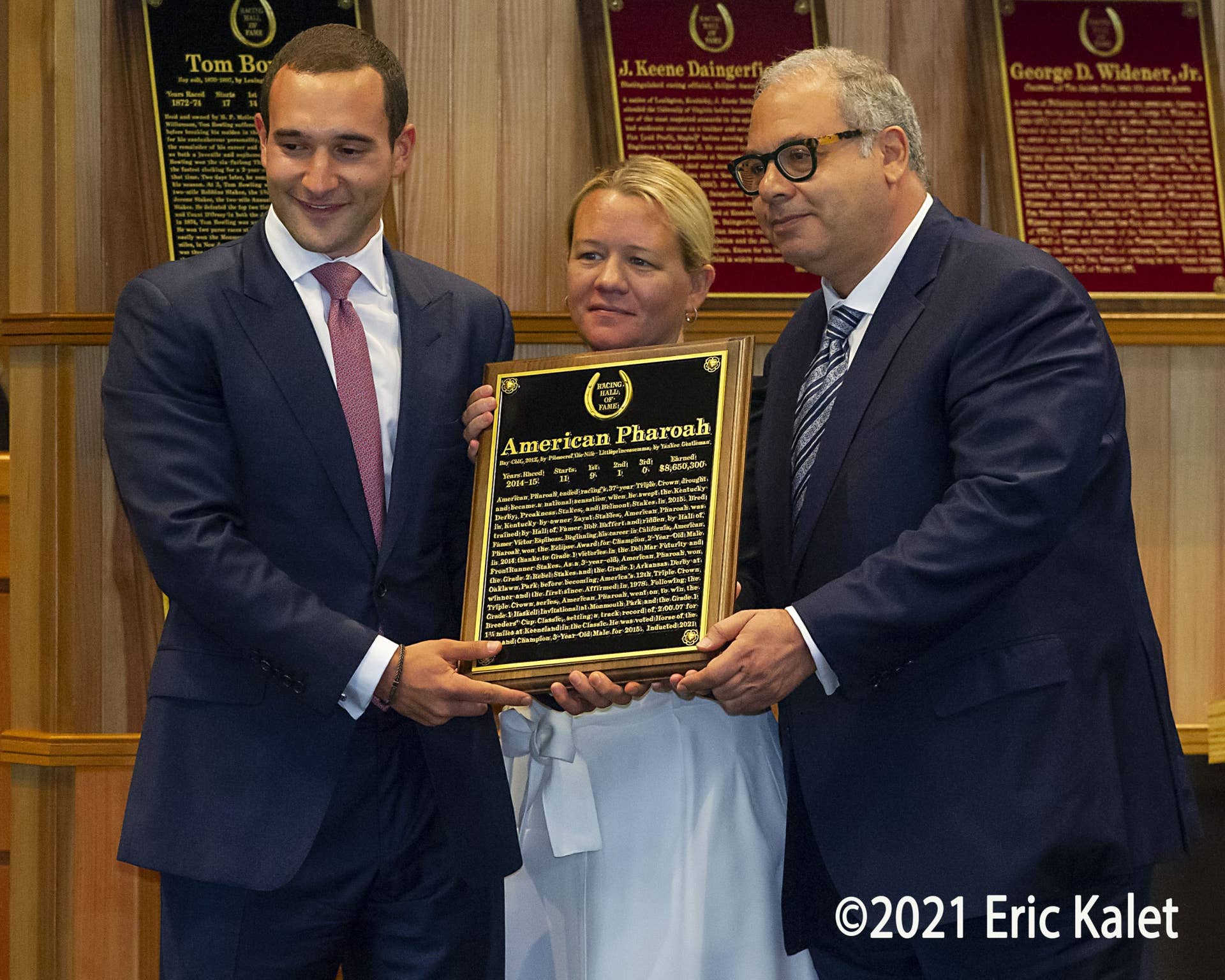
The partnership between Ahmed Zayat and the thoroughbred racehorse American Pharoah represents one of the most significant chapters in modern horse racing history. In 2015, this alliance achieved the first American Triple Crown victory in 37 years, a feat that transformed the sport’s profile, established a historic breeding valuation, and solidified Zayat’s position as a polarizing yet undeniably impactful figure in the thoroughbred industry.
The Path to the Triple Crown
To understand the significance of the Zayat-Pharoah partnership, one must first recognize the drought that preceded it. Before 2015, the American Triple Crown—comprising the Kentucky Derby, the Preakness Stakes, and the Belmont Stakes—was widely considered one of the most difficult challenges in sports. Following Affirmed’s 1978 win, decades of "near misses" left the racing community skeptical that another horse would ever sweep the series.
Ahmed Zayat, the owner and breeder of American Pharoah through his Zayat Stables, entered the 2015 season with high expectations but faced the typical volatility of thoroughbred racing. American Pharoah, a son of Pioneerof the Nile, demonstrated early speed and poise as a two-year-old before a minor injury forced him to miss the Breeders' Cup Juvenile. This initial setback added a layer of uncertainty to his three-year-old campaign, making his subsequent dominance in the spring of 2015 even more unexpected to the general public, though his connections remained steadfast in their belief in his talent.
The 2015 Triple Crown Campaign
The journey began at Churchill Downs on the first Saturday in May. American Pharoah won the Kentucky Derby under jockey Victor Espinoza, navigating a muddy track and a tightly packed field. This victory was the catalyst for the scrutiny and media attention that would define the next five weeks.
The Preakness Stakes, held at Pimlico Race Course, proved to be a test of conditions rather than pure competition. Run in the midst of a torrential downpour, the race saw American Pharoah dominate the field with a commanding lead, effectively silencing those who questioned his stamina or ability to handle off-track conditions. The win set the stage for the Belmont Stakes, the "Test of the Champion," a grueling mile-and-a-half race that had thwarted countless Triple Crown hopefuls over the previous four decades.
On June 6, 2015, American Pharoah led from the gate to the finish at Belmont Park, winning by 5 ½ lengths. The victory was historic not only for the sport but for Zayat himself, as it culminated years of investment in the breeding and racing sectors.
Comparative Success of Triple Crown Winners
The feat achieved by American Pharoah occupies a unique space in racing history. While many champions have won two of the three legs, the combination of Zayat’s management and trainer Bob Baffert’s conditioning resulted in a horse that possessed both the speed for the Derby and the distance capability for the Belmont.
| Horse | Year | Trainer | Owner |
|---|---|---|---|
| Affirmed | 1978 | Laz Barrera | Harbor View Farm |
| American Pharoah | 2015 | Bob Baffert | Zayat Stables |
| Justify | 2018 | Bob Baffert | WinStar Farm/China Horse Club |
The Business of Breeding and Valuation
Following the Triple Crown win, the focus of the Zayat-Pharoah story shifted from the track to the breeding shed. In the thoroughbred industry, a Triple Crown winner—particularly one with American Pharoah’s bloodline and conformation—carries a valuation that reaches into the tens of millions of dollars.
Before his retirement, a significant portion of American Pharoah’s breeding rights was sold to Coolmore Stud, one of the world's most prominent breeding operations. This transition marked a standard shift in the sport where the commercial value of a stallion often outweighs the pursuit of further racing accolades. The transaction allowed Zayat to realize the financial return on his investment while ensuring the horse would have access to the highest-quality mares upon his retirement.
Zayat Stables and Industry Turbulence
While American Pharoah remains the crown jewel of Ahmed Zayat’s legacy, the owner’s career has been marked by significant professional and legal challenges. Zayat Stables, once a juggernaut in the sport, faced intense scrutiny in the years following the Triple Crown.
The volatility of the thoroughbred industry, where the cost of maintaining, training, and insuring high-level horses is immense, often leads to extreme financial fluctuations. By 2020, Zayat Stables found itself embroiled in complex litigation involving creditors and allegations regarding the management of its assets. These events provided a stark contrast to the celebratory scenes in the winner’s circle at Belmont Park, illustrating the high-stakes, high-risk nature of the sport.
The Role of Management and Training
The partnership between Zayat and Hall of Fame trainer Bob Baffert was critical to American Pharoah’s success. Baffert’s training regimen, which emphasizes patience and horse-centric development, allowed the horse to maintain peak form throughout the compressed three-race series.
From an owner’s perspective, the decision-making process—determining when to race, when to rest, and how to balance public relations with horse welfare—is the primary responsibility. In the case of American Pharoah, the consensus among industry experts was that the team resisted the urge to over-race the horse, allowing him to peak at the precise moments required to sweep the Triple Crown.
Frequently Asked Questions
Why did American Pharoah stay in training after the Triple Crown? Unlike many horses who are retired immediately after winning the Triple Crown, American Pharoah remained in training to participate in several more high-profile races, including the Haskell Invitational and the Breeders' Cup Classic, which he won to complete a "Grand Slam" of racing.
Who was the primary jockey for American Pharoah? Victor Espinoza was the primary jockey for American Pharoah during his entire three-year-old campaign. His experience and ability to pace the horse were cited by experts as key factors in the Triple Crown success.
What was the specific financial significance of the breeding rights? The sale of breeding rights to Coolmore Stud ensured the horse's future in the industry. It effectively moved the horse from a racing asset to a breeding asset, where the potential revenue is generated through stud fees, which are determined by the quality of the mare and the pedigree of the stallion.
How does American Pharoah’s record compare to modern racehorses? American Pharoah is viewed as a benchmark for modern thoroughbreds. His ability to handle different tracks and distances proved that his physical capabilities were not limited to a single style of racing.
Did Ahmed Zayat retain any interest in American Pharoah after the sale? While the breeding rights were sold to Coolmore, the financial structure of such deals is often nuanced, involving complex agreements regarding future revenue streams and the management of the horse's career in the interim.
Recommendations for Further Study
For those interested in the technical aspects of the thoroughbred industry, the most productive next steps involve examining the racing performance statistics recorded by Equibase and reviewing the stallion registry reports from the Jockey Club. These sources provide the raw data required to analyze the influence of American Pharoah’s progeny on the current racing circuit. Understanding the economic mechanics of horse racing requires careful attention to public auction records and the reported stud fees of elite stallions, which illustrate how market value is calculated based on track performance and pedigree.