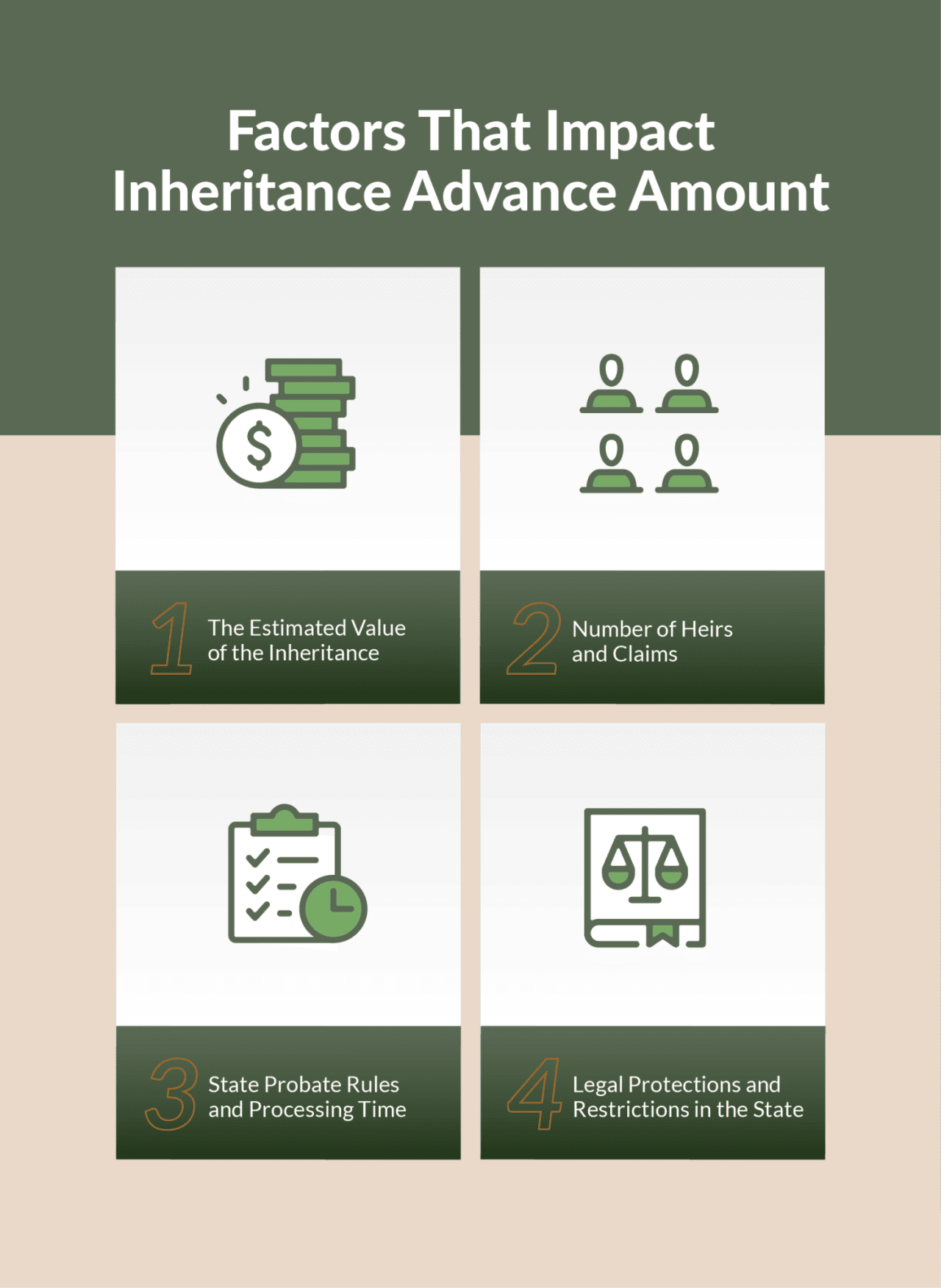
An advance inheritance loan, commonly known as an inheritance cash advance or inheritance funding, is a specialized financial transaction where a funding company provides a cash payout against a beneficiary’s expected share of an estate before the probate process is fully completed. Rather than traditional debt, this is structured as a non-recourse assignment of a portion of an inheritance, meaning the beneficiary typically owes nothing out of pocket if the estate's assets ultimately fall short.
Understanding the Inheritance Advance Landscape
When an individual passes away, their estate generally enters probate—a legal process through which debts are paid, assets are inventoried, and remaining property is distributed to heirs. This process can stretch from several months to multiple years, particularly if wills are contested, assets are difficult to liquidate, or court dockets are congested. For beneficiaries facing immediate financial pressures, waiting for probate to close is often impractical.
An inheritance advance bridges this temporal gap. Third-party funding companies step in to purchase a specific dollar amount of a beneficiary's future inheritance at a steep discount. It is vital to recognize that these agreements are not traditional loans. There are no monthly payments, credit checks, or personal guarantees in the conventional sense. Instead, the transaction represents a purchase and sale of property rights: the company buys a slice of your future inheritance, assuming the risk that the estate might take longer to settle or yield less than anticipated.
Because these transactions operate outside standard banking regulations, they fall under a unique legal classification. They are governed primarily by state contract laws and specialized statutes regulating inheritance funding or consumer transactions, which vary significantly by jurisdiction. Beneficiaries must carefully evaluate whether the speed of accessing liquidity outweighs the substantial financial cost of discounting their inheritance.
Eligibility and the Verification Process
Qualifying for an inheritance advance does not depend on your credit score, employment status, or debt-to-income ratio. Funding companies are entirely unconcerned with your personal financial history because they do not collect repayments from you directly. Instead, their underwriting criteria focus exclusively on the probate estate itself and your verified legal standing as an heir or beneficiary.
To secure an advance, you must pass through a strict verification and documentation process orchestrated by the funding company and its legal counsel. The prerequisites typically include:
- Valid Heir Status: You must be legally named as a beneficiary in a valid last will and testament, or be entitled to a specific statutory share under state intestacy laws if there is no will.
- Probate Court Filing: The estate must be formally opened in a probate court, with an executor or personal representative appointed to manage the estate administration.
- Asset Liquidity and Solvency: The estate must possess sufficient verifiable assets—such as real estate, brokerage accounts, or liquid cash—to cover debts, administrative expenses, and the assigned portion of your inheritance.
- Executor Cooperation: While some states do not legally require the executor's consent, funding companies strongly prefer estates where the executor or estate attorney is cooperative and willing to acknowledge the assignment of funds.
The application procedure generally moves quickly compared to traditional lending. Once you submit basic information regarding the estate, the funding company's legal team reviews court documents, assesses the estate's liabilities, and determines the net distributable value. If approved, an agreement is drafted, and funds can often be wired to your account within a few days.
Financial Mechanics: Costs, Fees, and Multipliers
The primary drawback of an inheritance advance is the cost of capital. Because these transactions carry high risk for the funding company—they cannot pursue you personally if the estate fails—they charge substantial fees, often structured as a flat discount rate or a escalating multiplier based on how long the probate process takes.
Unlike standard loans that feature an Annual Percentage Rate (APR), inheritance advances utilize alternative pricing models. Companies may apply a fixed fee for the duration or charge a percentage that increases every month or six months the probate case remains open.
| Feature | Traditional Personal Loan | Inheritance Advance |
|---|---|---|
| Credit Check Required | Yes | No |
| Monthly Repayments | Yes, fixed monthly installments | None |
| Personal Liability | Full recourse (debt remains if you default) | Non-recourse (repaid only from estate proceeds) |
| Cost Structure | Interest rates (APR) and origination fees | Discount rates, administrative fees, and time-based multipliers |
| Speed of Funding | Days to weeks | Days |
To illustrate the financial impact, consider an example where a beneficiary is due to receive a $100,000 inheritance, but probate is projected to take two years. A funding company might offer an immediate advance of $50,000 in exchange for $75,000 of the final distribution after one year, or $90,000 if it takes two years. The effective cost of capital in these scenarios is exceptionally high, frequently exceeding the financial burden of high-interest credit cards or personal loans if those options are available to the borrower.
Legal and Regulatory Considerations
Because inheritance funding companies occupy a gray area between financial service providers and asset purchasers, regulatory oversight varies widely by region. Some states have enacted specific legislation requiring full transparency of fees, capping maximum charges, or mandating that independent legal counsel review the contract before the beneficiary signs.
Before signing any agreement, beneficiaries should verify whether their state requires court approval for assignments of inheritance. In many jurisdictions, the assignment must be filed with the probate court, putting the executor and other heirs on notice that a third party will receive a portion of the final distribution. Furthermore, tax implications should be reviewed with a certified public accountant or estate attorney. While the advance itself is generally not considered taxable income (as it is an advance on an inheritance), complex estates may trigger capital gains, estate taxes, or inheritance taxes that affect the final net distribution.
Alternatives to Inheritance Advances
Before committing to an inheritance advance, beneficiaries should thoroughly explore alternative financing methods that may preserve more of their inheritance. While these options may require credit checks or regular repayments, their total cost of capital is often significantly lower.
- Executor Advances: Many probate courts allow executors to make partial distributions to beneficiaries before the final estate closing, provided all debts and taxes are reasonably accounted for and other heirs consent.
- Estate Loans: Some specialized lenders offer traditional loans secured by the expected inheritance, featuring lower interest rates than cash advance companies, though they still require creditworthiness and personal repayment guarantees.
- Home Equity Lines of Credit (HELOC) or Personal Loans: If you own a home or maintain steady employment, traditional bank financing generally offers much lower borrowing costs than an inheritance advance.
- Family Loans: Borrowing funds directly from family members who are also beneficiaries, or from trusted relatives, avoids commercial fees entirely, provided clear repayment terms are documented.
Common Mistakes and How to Avoid Them
Navigating probate funding requires vigilance, as rushed decisions can lead to unnecessary financial loss. Beneficiaries frequently encounter several pitfalls during the process:
- Failing to Shop Around: Different funding companies charge vastly different rates and fees. Obtaining multiple quotes allows you to compare the effective cost of capital and negotiate better terms.
- Misunderstanding Non-Recourse Terms: Ensure the contract explicitly states that the transaction is non-recourse. If the estate depreciates significantly or becomes insolvent, you must not be personally liable for repaying the advanced cash.
- Ignoring Hidden Administrative Fees: Some companies tack on exorbitant document preparation, legal review, and processing fees that eat into the initial cash payout. Read the fee disclosure schedule line by line.
- Proceeding Without Independent Legal Advice: Having an attorney who specializes in estate law review the contract ensures that your rights are protected and that the assignment complies with local probate court rules.
Frequently Asked Questions
What happens if the estate runs out of money before it closes?
In a legitimate non-recourse inheritance advance, if the estate becomes insolvent or assets drop in value so that your share cannot cover the agreed-upon payout, the funding company absorbs the loss. You are not required to pay back the difference out of your own pocket.
Will taking an inheritance advance delay the probate process further?
Generally, an advance does not directly slow down probate, as the funding company simply steps into your shoes to collect your share at the end. However, if the assignment requires complex court filings or creates disputes among other heirs, it can occasionally complicate estate administration.
Are inheritance advance fees tax-deductible?
In most cases, fees paid to an inheritance funding company are treated as a reduction of the inheritance amount received rather than a deductible investment or business expense. Consult a qualified tax professional to evaluate your specific tax situation.
Can an executor block an inheritance advance?
While executors cannot arbitrarily prevent a beneficiary from assigning their personal property rights in most jurisdictions, they are not obligated to communicate with funding companies or alter standard estate distribution timelines to accommodate an advance. All distributions are still governed by the probate court and estate administration rules.
How quickly can I receive funds after applying?
Most reputable funding companies can disburse cash within 24 to 72 hours of receiving all necessary court documentation, verifying the estate's solvency, and executing the signed assignment contract.
Next Actions for Beneficiaries
If you are considering an inheritance advance, start by obtaining a realistic timeline and valuation of the estate directly from the executor or estate attorney. Next, request formal, written quotes from multiple inheritance funding companies to compare their discount rates and administrative fees. Finally, consult with an independent estate attorney or financial advisor to weigh the high cost of immediate liquidity against the alternative of waiting for the probate process to conclude naturally.