Adam Dunn compiled 462 home runs, 1,168 runs batted in (RBIs), and 1,317 bases on balls over a 14-season Major League Baseball career spanning from 2001 to 2014. Best known as the ultimate "Three True Outcomes" hitter, Dunn posted a career .237/.364/.490 batting line with an .854 OPS, pairing prolific power and high walk rates with extreme strikeout totals.
Career Overview and Core Standard Statistics
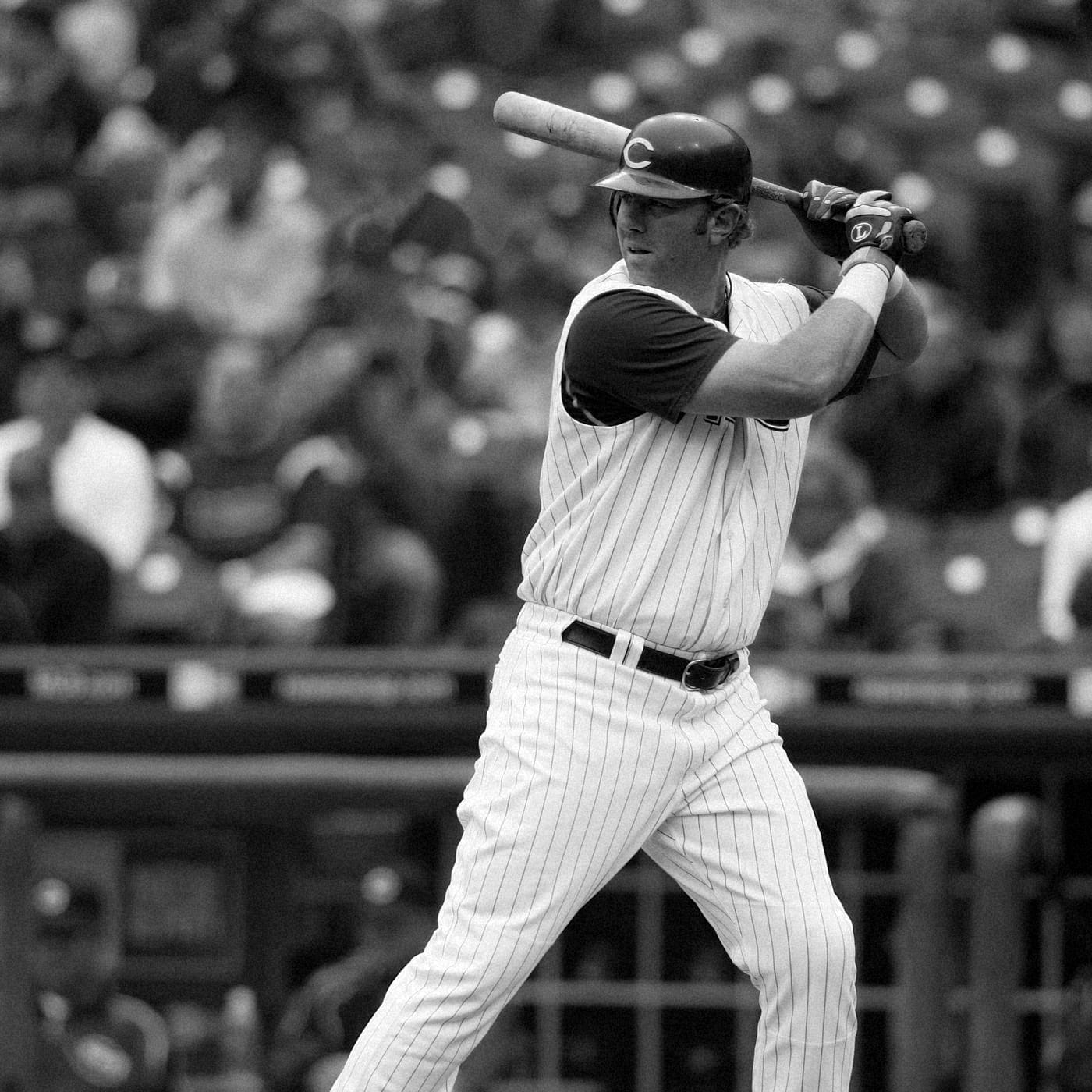
Adam Dunn—nicknamed "The Big Donkey"—was one of the most polarizing and statistically unique sluggers of the early 21st century. Drafted by the Cincinnati Reds in the second round of the 1998 MLB Draft out of New Caney High School in Texas, the 6-foot-6, left-handed hitter possessed natural power and an exceptional understanding of the strike zone.
Across 2,008 career games with the Cincinnati Reds, Arizona Diamondbacks, Washington Nationals, Chicago White Sox, and Oakland Athletics, Dunn amassed 8,328 plate appearances. While his career batting average of .237 led traditionalists to criticize his inconsistency at making contact, his ability to draw walks kept his career on-base percentage (OBP) at a formidable .364. Combined with a .490 slugging percentage (SLG), Dunn recorded an adjusted OPS (OPS+) of 124, indicating he was 24% better than the league average offensive player across his career.
Career Statistics Summary: - Games Played: 2,008 - Plate Appearances: 8,328 - At-Bats: 6,883 - Hits: 1,631 - Home Runs: 462 - Runs Batted In (RBI): 1,168 - Runs Scored: 980 - Walks (BB): 1,317 - Strikeouts (SO): 2,379 - Slash Line: .237 AVG / .364 OBP / .490 SLG / .854 OPS - OPS+: 124
Dunn reached the 40-home run mark in six separate seasons and hit 38 home runs in two others. Remarkably, from 2004 through 2008, he hit exactly 40 home runs in five consecutive seasons, establishing a level of power consistency rarely seen in baseball history.
Year-by-Year MLB Statistics Table
The table below details Adam Dunn's complete year-by-year major league performance across all 14 seasons, reflecting stats from official Major League Baseball records.
| Year | Team(s) | Games | At-Bats | Hits | HR | RBI | BB | SO | AVG | OBP | SLG | OPS |
|---|---|---|---|---|---|---|---|---|---|---|---|---|
| 2001 | CIN | 66 | 217 | 57 | 19 | 43 | 38 | 74 | .262 | .371 | .578 | .949 |
| 2002 | CIN | 158 | 535 | 133 | 26 | 71 | 128 | 170 | .249 | .400 | .454 | .854 |
| 2003 | CIN | 116 | 381 | 82 | 27 | 57 | 101 | 126 | .215 | .354 | .465 | .819 |
| 2004 | CIN | 161 | 568 | 151 | 46 | 102 | 108 | 195 | .266 | .388 | .569 | .957 |
| 2005 | CIN | 160 | 543 | 134 | 40 | 101 | 114 | 168 | .247 | .387 | .529 | .916 |
| 2006 | CIN | 160 | 561 | 131 | 40 | 92 | 112 | 194 | .234 | .365 | .488 | .853 |
| 2007 | CIN | 152 | 522 | 138 | 40 | 106 | 101 | 165 | .264 | .386 | .554 | .940 |
| 2008 | CIN / ARI | 158 | 517 | 122 | 40 | 100 | 122 | 164 | .236 | .386 | .513 | .899 |
| 2009 | WAS | 159 | 546 | 146 | 38 | 105 | 116 | 177 | .267 | .398 | .529 | .927 |
| 2010 | WAS | 158 | 558 | 145 | 38 | 103 | 77 | 199 | .260 | .356 | .533 | .889 |
| 2011 | CWS | 122 | 396 | 63 | 11 | 42 | 75 | 177 | .159 | .292 | .277 | .569 |
| 2012 | CWS | 151 | 539 | 110 | 41 | 96 | 105 | 222 | .204 | .333 | .468 | .801 |
| 2013 | CWS | 149 | 525 | 115 | 34 | 86 | 76 | 194 | .219 | .320 | .442 | .762 |
| 2014 | CWS / OAK | 131 | 375 | 82 | 22 | 64 | 71 | 159 | .219 | .337 | .415 | .752 |
| Total | 14 Seasons | 2,008 | 6,883 | 1,631 | 462 | 1,168 | 1,317 | 2,379 | .237 | .364 | .490 | .854 |
The Archetype of the "Three True Outcomes"
In baseball terminology, the "Three True Outcomes" (TTO) refer to plate appearances that end in one of three events where the fielders behind the pitcher have no play on the ball: a home run, a walk, or a strikeout. Adam Dunn is widely considered the modern archetype of this phenomenon.
Throughout his career, Dunn accumulated:
- 462 Home Runs
- 1,317 Bases on Balls (Walks)
- 2,379 Strikeouts
Combining these three outcomes yields 4,158 plate appearances out of his total 8,328. This means that exactly 49.93% of all plate appearances in Adam Dunn's career ended in a home run, a walk, or a strikeout. Virtually one out of every two times Dunn stepped into the batter's box, the defense on the field was irrelevant to the outcome.
Total Plate Appearances: 8,328 ----------------------------------------------------------- Home Runs: 462 (5.55% of PAs) Walks: 1,317 (15.81% of PAs) Strikeouts: 2,379 (28.57% of PAs) ----------------------------------------------------------- Combined TTO Plate Appearances: 4,158 (49.93% of PAs)
Dunn led his league in strikeouts four times (2004, 2006, 2011, and 2012), including a 2012 campaign in Chicago where he struck out 222 times. However, because he simultaneously drew over 100 walks in eight separate seasons, he consistently generated run value despite high strikeout rates. Long before sabermetrics gained widespread mainstream acceptance, Dunn's profile demonstrated that a hitter with a low batting average could remain an elite offensive contributor if his walk rate and isolated power were sufficiently high.
Cincinnati Reds Era (2001–2008): Peak Production
Adam Dunn broke onto the major league scene in July 2001 with the Cincinnati Reds, instantly showing off raw power. In just 66 games during his rookie season, he hit 19 home runs with an impressive .949 OPS, setting a National League record for most home runs hit by a rookie in the month of August (12).
By 2002, Dunn earned his first National League All-Star selection, drawing 128 walks—the highest single-season total of his career. From 2004 to 2008, he established one of the most remarkable streaks of statistical consistency in baseball history by hitting 40 home runs in five consecutive years.
The 40-Home Run Streak (2004–2008)
- 2004: 46 HR, 102 RBI, 108 BB (.957 OPS) — Finished 13th in NL MVP voting.
- 2005: 40 HR, 101 RBI, 114 BB (.916 OPS)
- 2006: 40 HR, 92 RBI, 112 BB (.853 OPS)
- 2007: 40 HR, 106 RBI, 101 BB (.940 OPS)
- 2008: 40 HR (32 with CIN, 8 with ARI), 100 RBI, 122 BB (.899 OPS)
During his time in Cincinnati, Dunn hit some of the longest home runs recorded in modern stadium histories. On August 10, 2004, Dunn hit a pitch from Los Angeles Dodgers pitcher Jose Lima completely out of Great American Ball Park. The ball cleared the batter's eye in center field, bounced onto the stadium concourse, and landed in the Ohio River, estimated at a distance of 535 feet.
In August 2008, with Dunn approaching free agency, the Reds traded him to the Arizona Diamondbacks. Across 1,087 games in Cincinnati, Dunn hit 270 home runs, cementing his position as one of the top power hitters in franchise history.
Free Agency, Washington Nationals, and Chicago White Sox
Following his late-2008 stint in Arizona, Dunn signed a two-year, $20 million contract with the Washington Nationals prior to the 2009 season.
Washington Nationals (2009–2010)
Dunn continued his offensive output in Washington. Playing alongside Ryan Zimmerman, Dunn hit 38 home runs with 105 RBIs in 2009, posting a .267 batting average and a .398 OBP. He replicated his home run volume in 2010 by hitting another 38 home runs while driving in 103 runs. Over his two seasons in Washington, he missed only five games, maintaining an OPS over .880 in both campaigns.
Washington Nationals Totals (2 Seasons): - Games: 317 - Home Runs: 76 - RBI: 208 - Walks: 193 - OPS: .908
Chicago White Sox and the 2011 Anomaly
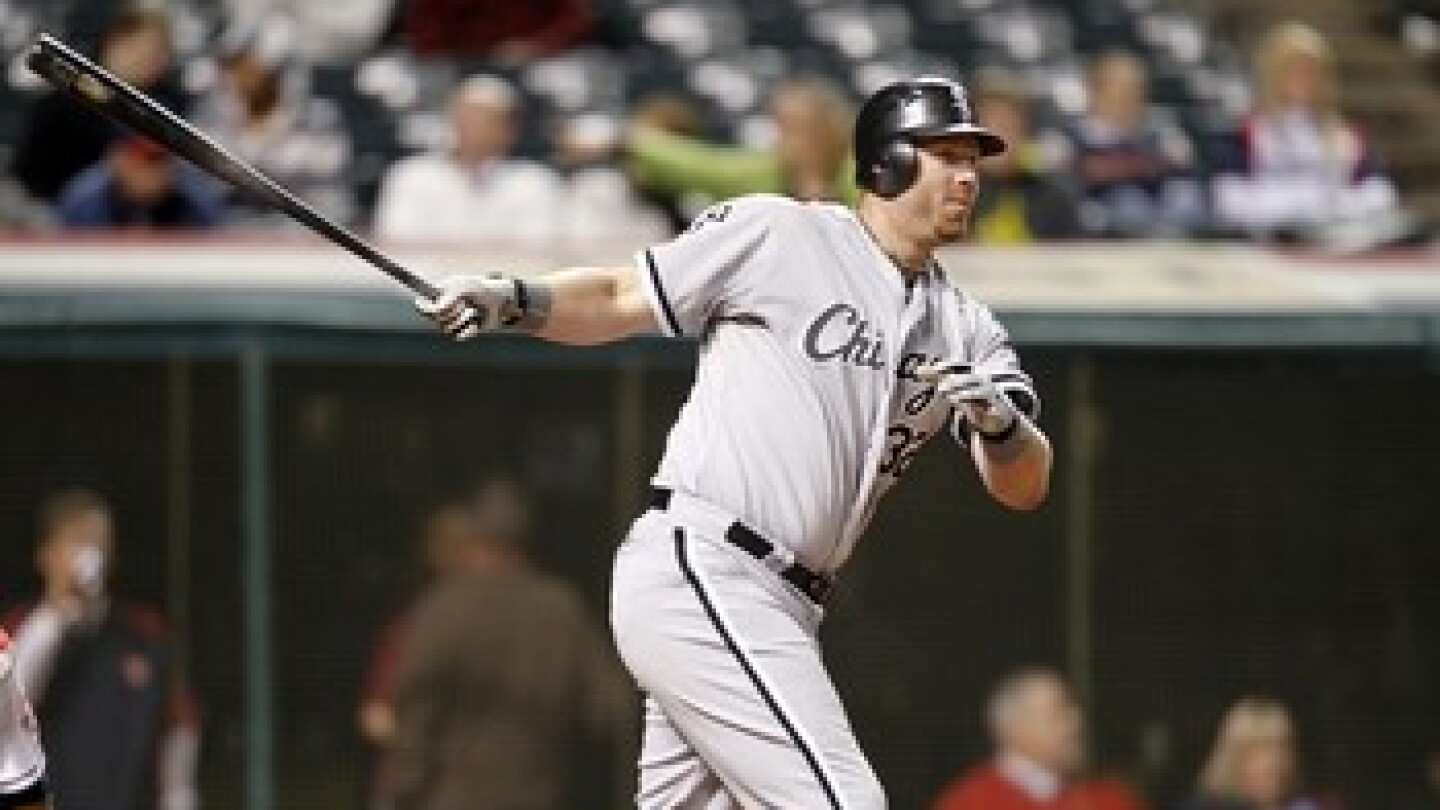
In December 2010, Dunn signed a four-year, $56 million contract with the Chicago White Sox, shifting primarily to the Designated Hitter (DH) role in the American League.
However, his first year in Chicago (2011) proved to be one of the most statistically perplexing seasons for any elite power hitter in modern baseball history. Dunn struggled with a knee injury and plate mechanics, hitting just .159 with 11 home runs, 42 RBIs, and 177 strikeouts in 122 games. His .277 slugging percentage was lower than his .292 on-base percentage.
Dunn rebounded dramatically in 2012. Earning his second career All-Star selection, he hit 41 home runs, drew an American League-leading 105 walks, and drove in 96 runs. Though he struck out 222 times (an AL single-season record at the time), his bounce-back performance helped stabilize his role in the White Sox lineup.
The 2011–2012 Contrast: - 2011: .159 AVG | 11 HR | 42 RBI | .569 OPS | 177 SO - 2012: .204 AVG | 41 HR | 96 RBI | .801 OPS | 222 SO (All-Star)
Dunn added 34 home runs in 2013 and hit 20 more for Chicago in 2014 before being traded to the Oakland Athletics late in August 2014 for the stretch run.
Sabermetric Evaluation and Defense vs. Offense
Adam Dunn's career presents a fascinating divide between pure offensive production and total overall player value as measured by modern sabermetrics, particularly Wins Above Replacement (WAR).
According to Baseball-Reference, Dunn accumulated 17.9 Career bWAR. For a player who hit 462 home runs, this total is exceptionally low. By comparison, most players with more than 400 home runs possess career WAR figures between 40.0 and 70.0+.
The discrepancy stems from two key analytical components:
1. Offensive Value (wRC+ and OPS+)
Offensively, Dunn was a potent threat. His career Weighted Runs Created Plus (wRC+), tracked by FanGraphs, stands at 123, while his career OPS+ is 124. These metrics adjust for park effects and league run environments, demonstrating that his bat provided substantial value over 14 years.
2. Defensive Metrics and Position Penalties
Dunn struggled significantly as an outfielder and first baseman. Defensive metrics such as Defensive Runs Saved (DRS) and Ultimate Zone Rating (UZR) rated him as one of the most limited defensive players of his era.
- Career Defensive WAR (dWAR): -27.8
- Position Penalties: Dunn spent thousands of innings in left field despite limited mobility, costing his teams defensive runs. Later moving to Designated Hitter also incurred a positional penalty in WAR calculations.
Because bWAR combines offensive runs, baserrunning runs, and defensive runs into a single metric, Dunn's negative defensive footprint substantially reduced his total overall WAR rating despite his powerful bat.
Postseason History and Retirement
Despite playing 14 seasons and appearing in 2,008 regular season games, Adam Dunn spent almost his entire career without playing in a playoff game. For many years, he held the active record for the most regular season games played without a postseason appearance.
That streak finally came to an end in 2014. After being traded from the Chicago White Sox to the Oakland Athletics on August 31, 2014, Dunn helped Oakland secure an American League Wild Card spot.
However, during the dramatic 12-inning 2014 AL Wild Card Game between Oakland and the Kansas City Royals, Oakland manager Bob Melvin did not insert Dunn into the lineup against left-handed starter James Shields or bullpen options. Kansas City won the game 9-8 in 12 innings, eliminating Oakland.
Dunn officially retired immediately after the game without taking an at-bat in the postseason. He finished his career as one of only nine players in MLB history to reach 450 home runs and 1,300 walks while maintaining a career slugging percentage near .500.
Frequently Asked Questions (FAQs)
How many home runs did Adam Dunn hit in his career?
Adam Dunn hit 462 home runs over his 14-year MLB career. He reached the 40-home run mark six times (2004, 2005, 2006, 2007, 2008, and 2012) and hit 38 home runs in two additional seasons (2009 and 2010).
What are the "Three True Outcomes" in baseball, and how did Adam Dunn define them?
The "Three True Outcomes" are home runs, walks, and strikeouts—outcomes where the defensive fielders have no play on the ball. Adam Dunn is considered the canonical TTO hitter because 49.93% of his 8,328 career plate appearances ended in one of these three events (462 HR, 1,317 BB, and 2,379 SO).
Why is Adam Dunn's Wins Above Replacement (WAR) relatively low despite hitting 462 home runs?
Dunn's career bWAR is 17.9, which is low for a 462-home run hitter. While his offensive metrics were very strong (career .854 OPS and 124 OPS+), his defensive metrics in the outfield and at first base were among the lowest recorded in modern MLB history (-27.8 dWAR), which severely deducted from his overall cumulative WAR total.
Did Adam Dunn ever play in an MLB postseason game?
Adam Dunn was on an active postseason roster once, with the 2014 Oakland Athletics for the AL Wild Card Game. However, he was not brought in to bat during the 12-inning game. He retired having played 2,008 regular-season games without recording an official postseason plate appearance.
How many times was Adam Dunn selected as an MLB All-Star?
Adam Dunn was a two-time MLB All-Star. He earned his first selection in 2002 with the Cincinnati Reds and his second selection ten years later in 2012 with the Chicago White Sox.
What was Adam Dunn's career high in strikeouts for a single season?
Dunn's career high in strikeouts was 222, which occurred during the 2012 season with the Chicago White Sox. This set an American League single-season record at the time.
Key Takeaways and Legacy
Analyzing Adam Dunn's statistics offers valuable insight into how baseball's evaluation of player performance evolved over the course of his career. While early critics focused heavily on his low batting averages (.237 career) and high strikeout totals (2,379 career), modern analytical frameworks appreciate his elite power output (462 home runs) and disciplined plate vision (1,317 walks, .364 OBP).
For baseball researchers, fantasy analysts, and historians, Adam Dunn remains the definitive baseline for pure power, elite walk rates, and extreme strikeout volume. To evaluate similar modern power-hitting profiles or trace statistical evolutions across era transitions, review the historical leaderboards hosted on Baseball Reference and granular plate-discipline metrics compiled on FanGraphs.