The cast of Final Fantasy VII remains relevant because they represent timeless psychological archetypes and sociopolitical themes that resonate more strongly in 2026 than they did in 1997. Their enduring legacy stems from a unique blend of personal trauma, environmental activism, and the deconstruction of traditional heroism, now revitalized by the modern Remake trilogy.
1. The Deconstruction of the "Macho" Hero
In the landscape of 1990s gaming, protagonists were often defined by unwavering confidence and physical prowess. Cloud Strife appeared to fit this mold: a brooding, spikey-haired mercenary with a massive sword and an indifferent attitude. However, the true brilliance of the Final Fantasy VII cast lies in the systematic deconstruction of this persona.
Cloud is not a stoic warrior; he is a deeply traumatized young man suffering from a profound identity crisis and a fragmented memory. In 2026, as society places a higher premium on mental health awareness and the vulnerability of the male experience, Cloud’s journey is more poignant than ever. He is a character built on a lie—not out of malice, but as a defense mechanism against failure and the loss of his friend, Zack Fair.
This subversion of the "chosen one" trope serves a vital narrative purpose. It teaches the audience that heroism is not about being born special or possessing superhuman strength (as represented by the SOLDIER program), but about the agonizing process of self-acceptance. By the time players reach the conclusion of the story, Cloud’s value comes from his willingness to face his true, flawed self. This level of character depth ensures that he remains a benchmark for narrative design in role-playing games (RPGs).
2. Environmental Activism and Corporate Accountability
When Final Fantasy VII was released in 1997, its themes of ecological collapse were seen by some as speculative sci-fi. In 2026, the struggle between the planet’s health and corporate greed is a central reality of global discourse. The cast of Final Fantasy VII, specifically the members of Avalanche, provides a visceral exploration of these tensions.
Barret Wallace, the leader of the insurgent cell, is a complex figure who embodies the desperation of those pushed to the brink by industrial exploitation. While his methods are often extreme, his motivation is rooted in a desire to provide a future for his daughter, Marlene. The conflict against the Shinra Electric Power Company serves as a stark allegory for the real-world extraction of finite resources.
The "Lifestream"—the planet’s life blood—is not merely a magical plot device; it is a representation of the interconnectedness of all living things. The cast’s mission to save the planet from "Mako" extraction resonates with modern audiences who are navigating the complexities of energy transitions and climate change. By personifying the environment through the eyes of characters who lose their homes and loved ones to corporate expansion, the game transforms a political issue into a deeply personal crusade.
3. The Complexity of Grief and Perpetual Loss
Final Fantasy VII is perhaps most famous for a single moment of loss: the death of Aerith Gainsborough. However, the reason this cast still matters in 2026 is not just the shock of that event, but how the remaining characters process grief over the long term.
Aerith herself is a subversion of the "damsel in distress." She is the last of the Cetra, a powerful ancient race, yet she remains grounded, witty, and possessed of more agency than almost any other character. Her absence is felt throughout the remainder of the narrative, serving as a permanent scar on the party. This mirrors the real-world experience of loss—it is not something one "gets over," but something one learns to live around.
The inclusion of characters like Vincent Valentine and Red XIII further explores different facets of grief. Vincent represents the paralysis of guilt and the desire to hide from the world, while Red XIII (Nanaki) deals with the loss of heritage and the burden of being the last of his kind. These themes of legacy and mourning provide a somber, mature tone that distinguishes the FF7 cast from the more lighthearted ensembles of other contemporary titles.
4. Gender Roles and Emotional Support Systems
The dynamic between Tifa Lockhart and Aerith Gainsborough is a masterclass in writing female relationships that avoid the pitfalls of the "love triangle" cliché. While both women have feelings for Cloud, their relationship is defined by mutual respect, shared trauma, and emotional labor.
Tifa, despite her physical strength as a martial artist, is the emotional anchor of the group. She is often the one who notices the cracks in Cloud’s psyche but hesitates to confront them for fear of breaking him further. In 2026, Tifa is recognized not just for her iconic design, but for her role as a caretaker and a survivor of the Nibelheim massacre.
The cast matters because it presents a support system where characters are allowed to be weak. Tifa and Aerith do not compete for Cloud’s affection in a vacuum; they work together to sustain the group's morale. This focus on "found family" and the necessity of communal support during a crisis is a theme that remains highly relevant to modern players navigating an increasingly isolated social landscape.
5. The Evolution of the Antagonist: Sephiroth as a Legacy
Sephiroth is frequently cited as one of the greatest villains in gaming history, but his relevance in 2026 extends beyond his aesthetic or his theme song, "One-Winged Angel." Sephiroth matters because he represents the ultimate failure of a society that treats living beings as biological weapons.
As a product of the Jenova Project, Sephiroth is a victim of Shinra’s hubris before he becomes the world’s executioner. His descent into madness upon discovering his origins is a terrifying exploration of existential nihilism. He isn't just a boss to be defeated; he is a dark reflection of Cloud. While Cloud struggles to find his identity, Sephiroth embraces a false, destructive identity as a "god."
The modern Remake trilogy has expanded Sephiroth’s role, turning him into a meta-narrative force that seems aware of his own history. This evolution keeps the character fresh for a new generation of fans, transforming him from a historical figure of the 1990s into a contemporary symbol of inevitable fate and the struggle to change one's destiny.
6. Transmedia Presence and Cultural Longevity
The cast of Final Fantasy VII has achieved a level of cultural penetration that few other digital entities can claim. Since 1997, these characters have appeared in films (Advent Children), prequels (Crisis Core), mobile games (Ever Crisis), and even non-franchise titles like Super Smash Bros. and Kingdom Hearts.
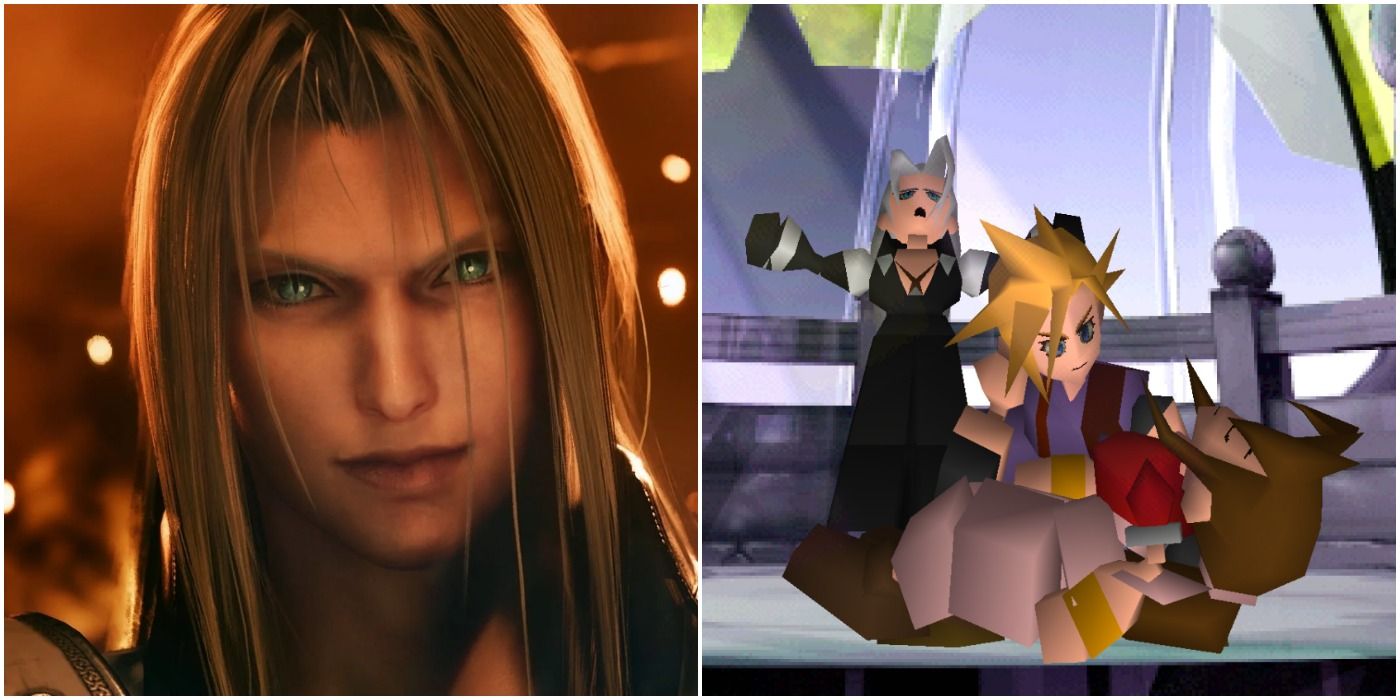
This "Compilation of Final Fantasy VII" has allowed the characters to grow alongside their audience. We have seen Cloud move from the low-polygon model of the original PlayStation to the hyper-realistic, motion-captured performance in the final chapters of the Remake project. This technical evolution hasn't replaced the original characters; it has layered them.
| Character | Core Motivation | 2026 Cultural Significance |
|---|---|---|
| Cloud Strife | Identity Recovery | Symbol of mental health and vulnerability. |
| Aerith Gainsborough | Planetary Preservation | Representation of agency and sacrifice. |
| Tifa Lockhart | Community Stability | Icon of resilience and emotional support. |
| Barret Wallace | Social Justice | Voice for environmental and anti-corporate activism. |
| Sephiroth | Existential Supremacy | Archetype of the "tragic" and "inevitable" antagonist. |
| Red XIII | Preservation of Heritage | Exploration of wisdom and the burden of longevity. |
| Yuffie Kisaragi | Restoring National Pride | Analysis of nationalism and youthful optimism. |
7. The Power of "Found Family" in a Broken World
Ultimately, the FF7 cast matters because they are a group of outcasts who have no reason to be together other than a shared sense of duty to a dying world. They come from disparate backgrounds: an ex-soldier, a bartender, a flower girl, a resistance leader, a research experiment, and a disgraced pilot.
In the mid-2020s, the concept of "found family" has become a vital narrative pillar for many. The cast demonstrates that shared trauma can be converted into shared strength. They argue, they fail, and they often disagree on the path forward, but their commitment to one another is what allows them to face a literal meteor falling from the sky. This message—that ordinary, broken people can confront systemic evil and cosmic threats through unity—is the heart of why Final Fantasy VII never truly goes out of style.
Standard Terminology in the FF7 Universe
To fully understand why these characters resonate, one must understand the technical and narrative framework they inhabit:
- Mako: The processed form of the Lifestream used as an energy source. It is the primary cause of environmental decay in the game.
- The Lifestream: A river of spirit energy that flows beneath the planet's surface, containing the memories and souls of all who have lived.
- SOLDIER: An elite military unit of the Shinra Company, whose members are enhanced with Mako and alien cells (Jenova).
- Cetra (Ancients): A prehistoric race capable of "speaking with the planet," of which Aerith is the last descendant.
- Jenova: An extraterrestrial lifeform that landed on the planet thousands of years ago, capable of mimicking humans and causing mass extinction.
Frequently Asked Questions
Why is Cloud Strife considered a complex protagonist?
Cloud is complex because his entire personality at the start of the story is a mental construct. He has adopted the memories and mannerisms of his friend Zack Fair to cope with the trauma of the Nibelheim incident. This makes him an "unreliable narrator," a rarity in RPGs of that era. His journey is about breaking down that false persona to find the real person underneath, making him a deeply relatable figure for anyone struggling with identity or self-worth.
Is Barret Wallace’s role as an eco-terrorist still controversial?
The term "eco-terrorist" is used within the game's narrative to describe Avalanche, but modern interpretations often view Barret through the lens of radical activism. While the game does not shy away from the civilian cost of Avalanche's actions (such as the Sector 7 plate drop), it focuses heavily on the idea that Shinra’s corporate violence is the "status quo" that necessitated a radical response. This nuance makes Barret a significant character for discussing the ethics of resistance.
How did the Remake trilogy change the characters?
The Remake trilogy (concluding in the mid-2020s) didn't change the core identities of the cast but rather expanded upon them. It provided more screen time for secondary characters like Jessie, Biggs, and Wedge, and gave the main party more opportunities for "downtime" and interpersonal development. Additionally, the Remake introduces a "meta" layer where characters seem to be fighting against the destiny established in the 1997 original, adding a new dimension of agency to their roles.
What is the significance of the relationship between Tifa and Aerith?
Historically, fans have debated "Cloud x Tifa" vs. "Cloud x Aerith." However, the modern consensus and the Remake's writing highlight the bond between the two women. They represent two different ways of dealing with the world: Aerith through spiritual intuition and Tifa through physical and emotional grounding. Their friendship serves as the emotional heart of the party, proving that female characters can coexist without being defined solely by their relationship to the male lead.
Why is Sephiroth still the most famous Final Fantasy villain?
Sephiroth’s fame persists because of his intimate connection to the protagonist. Unlike many villains who want to conquer the world for power, Sephiroth’s goals are deeply personal and existential. His presence is felt throughout the game as an unstoppable force of nature, and his "One-Winged Angel" theme has become a cultural shorthand for an epic, final confrontation.
Final Recommendation
For those looking to understand the enduring appeal of the Final Fantasy VII cast, the best path is to experience the Final Fantasy VII Rebirth and its subsequent concluding chapter. These modern entries provide the necessary context, high-fidelity character acting, and expanded dialogue that bridge the gap between 1990s archetypes and 2026 sensibilities. Whether you are a scholar of narrative design or a casual gamer, the journey of Cloud and his allies remains the definitive example of how characters can transcend their medium to become modern myths.