A 30 60 90 plan template is a structured onboarding and strategic roadmap that outlines key goals, learning milestones, and performance objectives for an employee's first month, second month, and third month in a new role or leadership position.
Introduction to the 30 60 90 Plan Template
Stepping into a new professional role demands a balance of eagerness and structured execution. Without a clear map, new hires and promoted leaders often spend their crucial early weeks drifting through disorganized onboarding tasks, firefighting minor issues, or struggling to understand overarching company culture. A 30 60 90 plan template bridges this gap by breaking a complex transition into three manageable 30-day phases: learning, contributing, and leading.
Whether you are an incoming executive, a mid-level project manager, or an individual contributor navigating a career pivot, a well-structured plan offers clarity. It aligns your personal career trajectory with the strategic goals of your organization. This guide explores the core components, structural requirements, operational challenges, and strategic variations of the 30 60 90 plan template, equipping you to build or adapt a roadmap that drives sustainable success.
Core Objectives and Purpose of the 90-Day Framework
The primary purpose of a 30 60 90 day plan is to accelerate time-to-productivity while establishing a transparent accountability framework between the employee and their manager. In modern organizational environments, ramping up a new hire represents a significant investment of time, capital, and team resources. A structured template ensures that this investment yields a predictable return.
By establishing measurable milestones across three distinct blocks of time, the plan eliminates ambiguity. New hires do not have to guess what matters most; instead, they can focus their cognitive energy on high-impact priorities. Simultaneously, hiring managers gain an objective evaluation tool. Instead of relying on subjective impressions during a 90-day review, managers can reference concrete deliverables, completed training modules, and documented contributions outlined in the template.
Furthermore, this framework psychological safety and organizational integration. It normalizes the fact that month one requires heavy absorption of information rather than immediate transformation. It systematically guides the transition from passive learner to autonomous problem-solver, preventing the burnout and anxiety frequently associated with starting complex corporate roles.
Breaking Down the Phases: 30, 60, and 90 Days
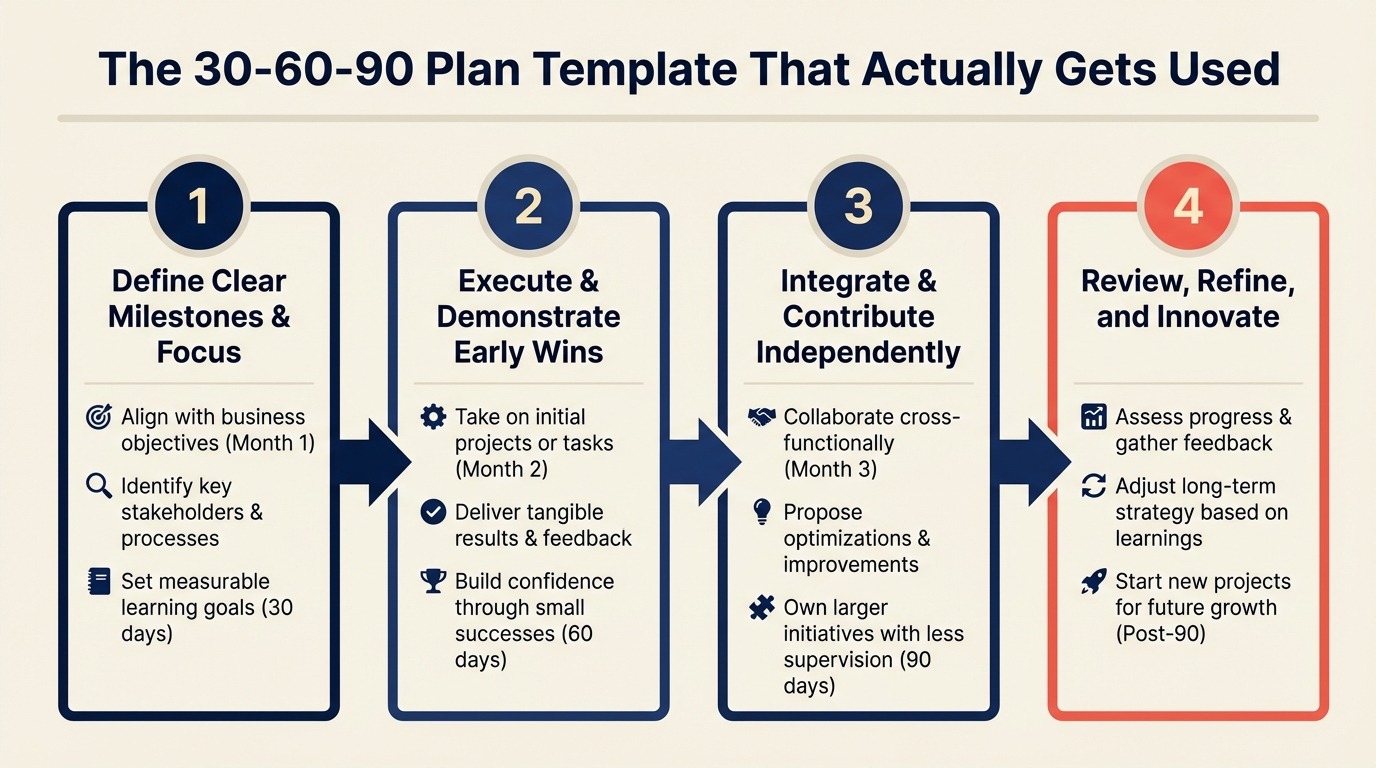
A comprehensive template is deliberately segmented to reflect the progressive nature of workplace integration. Each phase builds directly upon the foundation laid by the previous one.
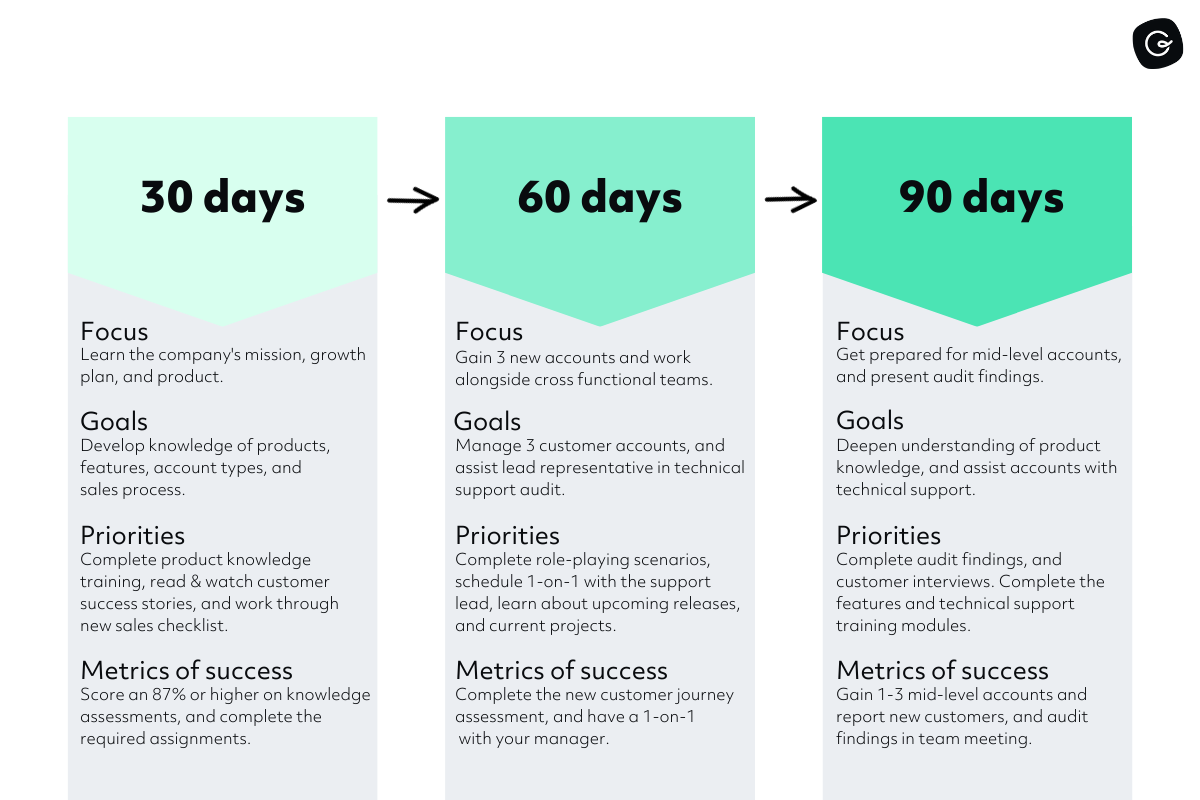
Days 1 to 30: The Learning and Absorption Phase
The first thirty days are rarely about making sweeping changes or launching new initiatives. Instead, this initial window focuses entirely on intake, observation, and relationship building.
- Knowledge Acquisition: Reviewing historical company data, product documentation, technical architecture, standard operating procedures, and industry compliance guidelines.
- Stakeholder Mapping: Conducting introductory one-on-one meetings with direct supervisors, team members, cross-functional partners, and key internal customers.
- Cultural Immersion: Attending team meetings, observing communication norms, and understanding the unwritten rules of organizational behavior.
During this phase, success is defined by how deeply you understand the current state of the business, its pain points, and its operational ecosystem. Trying to force premature solutions before comprehending historical context often alienates veteran team members and leads to flawed strategic decisions.
Days 31 to 60: The Contribution and Execution Phase
Armed with contextual knowledge from the first month, the 60-day mark shifts the focus toward active execution and incremental value delivery.
- Taking Ownership: Assuming responsibility for day-to-day operational tasks, minor projects, or routine administrative workflows.
- Quick Wins: Identifying and executing low-effort, high-impact improvements that demonstrate competence and provide immediate relief to the team.
- Process Feedback: Offering constructive feedback on existing workflows based on fresh perspectives, while respecting established team dynamics.
By the end of the second month, you should no longer be solely a consumer of information. You are now a functional contributor carrying a portion of the team's workload and building trust through reliable execution.
Days 61 to 90: The Leadership and Autonomy Phase
The final segment of the initial quarter marks the transition to full autonomy, strategic ownership, and independent leadership within your domain.
- Autonomous Operation: Managing complex projects, client accounts, or technical pipelines without requiring constant managerial oversight.
- Strategic Input: Contributing fresh ideas to quarterly planning, optimizing legacy processes, and mentoring newer peers or junior staff.
- Long-Term Goal Setting: Establishing personal key performance indicators (KPIs) and OKRs (Objectives and Key Results) for the remainder of the fiscal year.
At the 90-day review, the objective is to demonstrate that you are fully integrated, self-sufficient, and capable of driving measurable value that aligns with organizational mandates.
Essential Components of an Effective Template
A functional 30 60 90 plan template cannot consist merely of vague intentions. It requires a rigid structural layout that categorizes actions into logical dimensions. Below is an overview of the core elements that every professional template must contain.
| Plan Phase | Primary Focus Area | Key Activities | Measurable Outcomes |
|---|---|---|---|
| Days 1–30 | Learning & Integration | Stakeholder interviews, document review, software training | Completed onboarding modules, mapped team network |
| Days 31–60 | Contribution & Execution | Routine task ownership, resolving minor bottlenecks, quick wins | Delivered minor projects, steady workflow contribution |
| Days 61–90 | Autonomy & Leadership | Complex project management, process optimization, strategic input | Independent execution of primary job duties, signed-off 90-day review |
Beyond chronological phases, a robust template categorizes goals across specific operational dimensions to ensure holistic professional development.
1. Learning Objectives
These items dictate what you need to understand. Examples include mastering internal CRM software, studying regulatory compliance frameworks, or reviewing the last three quarters of financial performance reports.
2. Performance and Contribution Goals
These items define what you need to do. This includes closing a specific number of support tickets, writing a designated amount of code, publishing marketing copy, or managing a defined budget.
3. Personal and Cultural Integration Goals
These focus on interpersonal relationships and team alignment. Examples involve scheduling bi-weekly syncs with cross-functional department heads, participating in employee resource groups, or shadowing senior team members.
Customizing the Template for Specific Roles
While the structural skeleton of a 30 60 90 plan remains consistent, the specific content must be tailored to the exact demands of the profession. A generic template applied universally will inevitably fail to address role-specific nuances.
For Sales and Business Development Roles
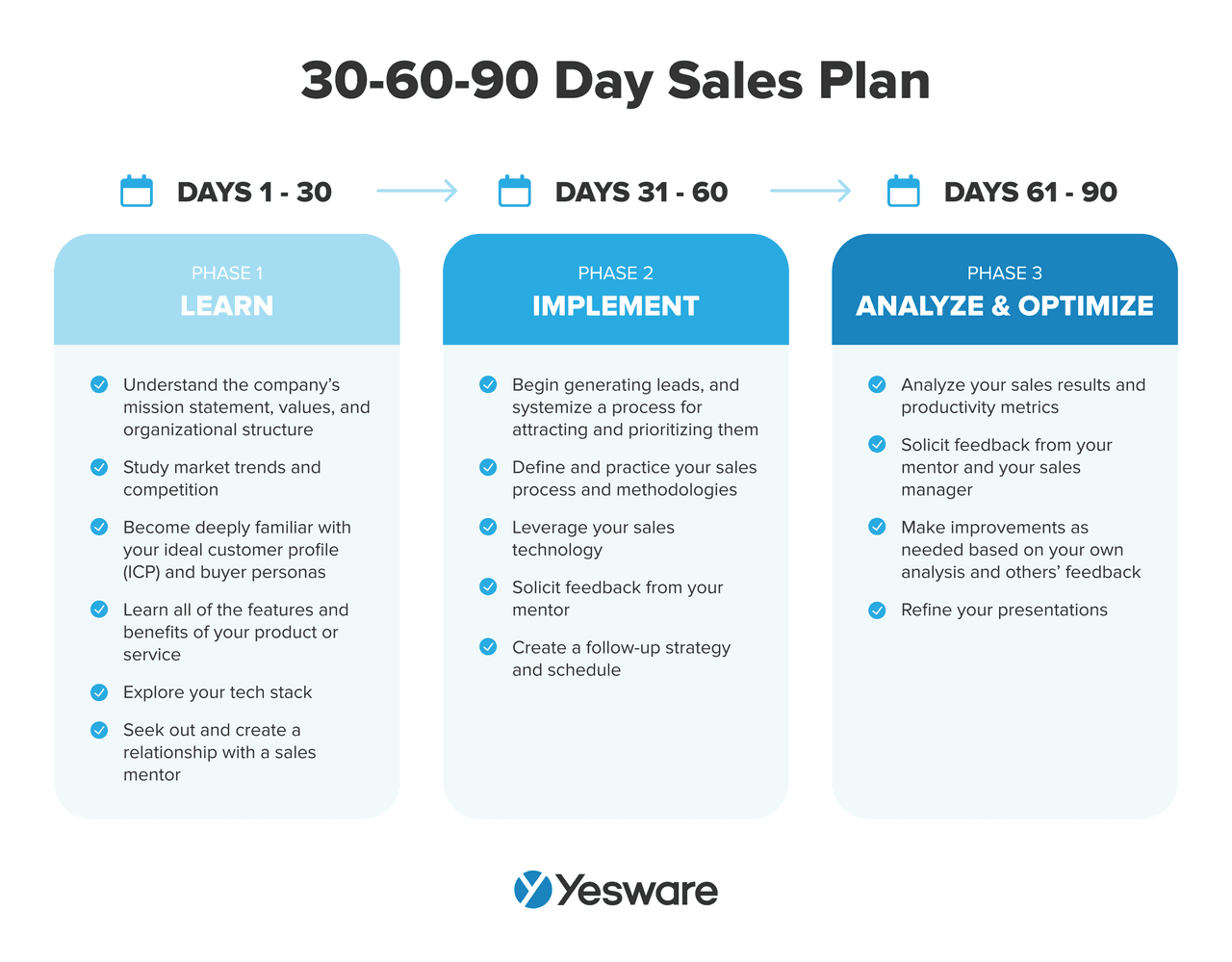
Sales-oriented plans heavily emphasize pipeline metrics. Days 1–30 center on studying product features, competitive intelligence, and CRM hygiene. Days 31–60 involve shadowing discovery calls and managing inbound leads. Days 61–90 require prospecting independently, managing an active pipeline, and meeting initial quota milestones.
For Engineering and Technical Positions
Technical roadmaps focus on systems architecture and codebases. The first month is dedicated to setting up local development environments, reading technical documentation, and completing code reviews. The second month involves fixing minor bugs and contributing minor pull requests. The third month requires designing and deploying feature increments independently.
For Management and Executive Leadership
Leadership plans prioritize cultural assessment and strategic vision. Executives spend their first 30 days listening to direct reports, evaluating team capabilities, and assessing structural bottlenecks. Months two and three focus on restructuring inefficient workflows, securing cross-functional buy-in, and presenting a unified strategic vision to senior stakeholders.
Common Mistakes When Using 30 60 90 Plans
Even with a stellar template, improper implementation can derail the onboarding process. Avoiding these frequent pitfalls ensures the plan serves as a constructive tool rather than a source of administrative friction.
- Overambitious Target Setting: Packing the first thirty days with aggressive performance metrics ignores the reality of steep learning curves. Keep early targets focused on absorption rather than volume output.
- Treating the Plan as Static: A 30 60 90 plan is a living document. If organizational priorities shift, software tools change, or supply chain disruptions occur, the plan must adapt collaboratively between employee and manager.
- Failing to Align with Management: Building the plan in isolation without managerial input leads to mismatched expectations. The template must be co-authored or formally reviewed and approved by your direct supervisor during your first week.
- Neglecting Soft Metrics: Focusing exclusively on hard quantitative KPIs while ignoring relationship-building and cultural integration often results in technical competence paired with organizational friction.
Review, Measurement, and Ongoing Adaptation
The completion of the 90-day mark does not signal the end of professional planning; rather, it marks the transition into standard performance management cycles. As you close out your third month, schedule a formal retrospective with your manager.
Review each line item of your original template. Where did you exceed expectations? Where did you fall short, and what external or internal factors contributed to that variance? Use these insights to transition the 90-day plan into an ongoing quarterly or annual development plan. By maintaining this disciplined approach to professional goal-setting, you establish a reputation for reliability, strategic foresight, and continuous improvement.