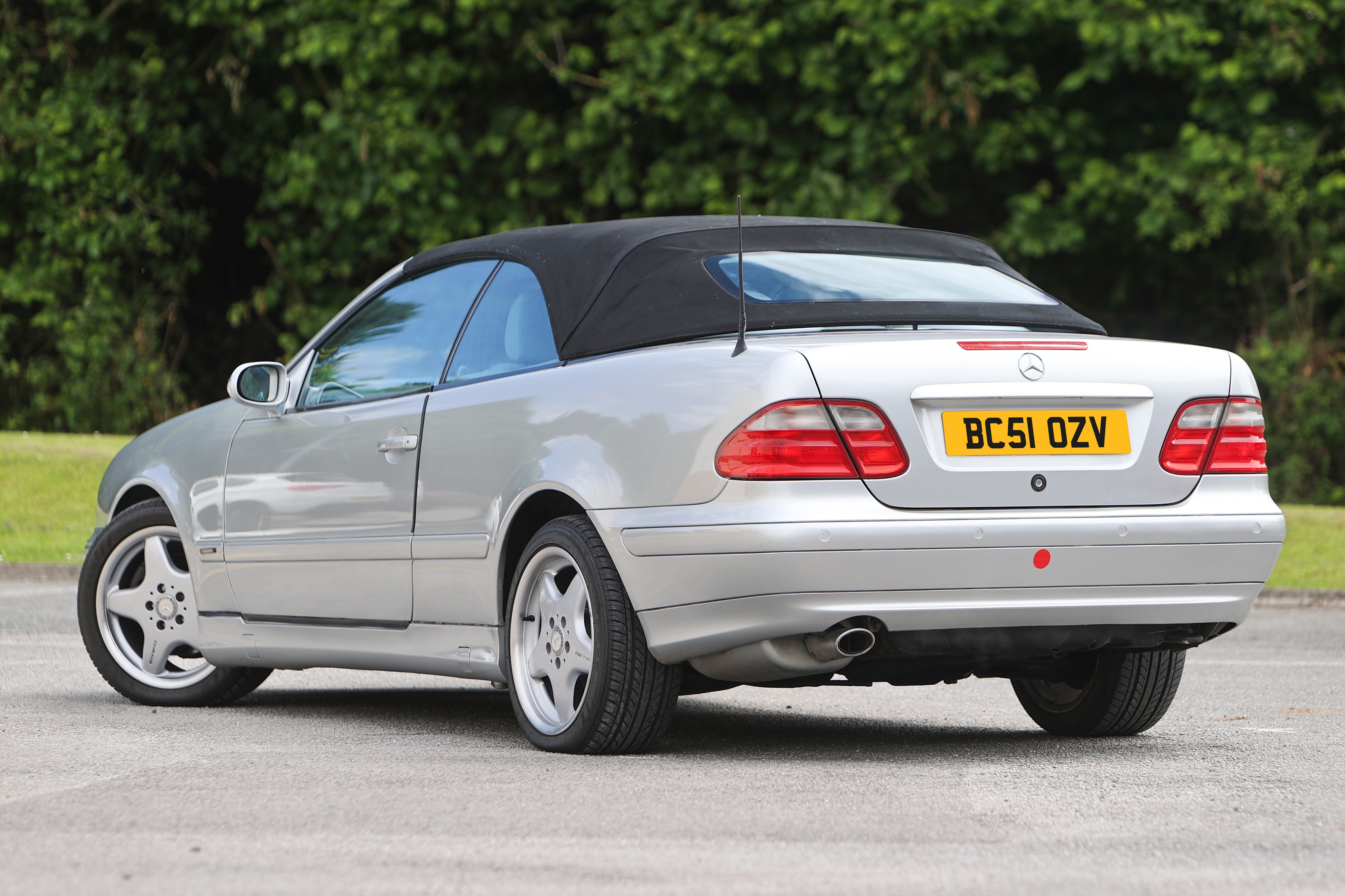
The 2001 Mercedes-Benz E 320 sits in the middle of the W210 generation’s production lifecycle, representing a period of transition toward mid-cycle updates, advanced onboard electronics, and evolving safety standards for the brand's mid-size executive sedan.
Introduction and Subject Scope
Evaluating the 2001 Mercedes-Benz E 320 requires examining both the broader W210 E-Class timeline and the specific milestone events of the 2001 model year. As a core variant of Mercedes-Benz’s executive lineup during the turn of the millennium, the E 320 bridged the gap between traditional mechanical engineering and the rapid integration of digital management systems.
This review establishes the comprehensive timeline of the 2001 Mercedes-Benz E 320, tracing its roots from the 1996 W210 launch, through the substantial 2000 model year facelift, and into its final production phase before the introduction of the W211 generation. Understanding this vehicle's placement in automotive history helps historians, collectors, and automotive enthusiasts contextualize its engineering decisions, common running changes, and market position.
The Origins of the W210 Generation (1995–1999)
To understand the 2001 model year, it is essential to look at the genesis of the W210 platform. Introduced to the European market in 1995 and launched in North America for the 1996 model year, the W210 replaced the legendary W124 E-Class.
Design Philosophy and Aerodynamics
The W210 broke away from the boxy, conservative styling of its predecessor by introducing the signature dual-椭圆 (oval) headlamp layout. Styled under the direction of Bruno Sacco, the design prioritized interior volume, lower aerodynamic drag, and a more sweeping roofline. The vehicle grew slightly in overall length and wheelbase compared to the W124, translating directly into increased cabin space and rear-seat legroom.
Mechanical Foundation
At launch, the E 320 utilized the M104 inline-six engine. However, a major powertrain evolution occurred during the 1998 model year when Mercedes-Benz transitioned the E 320 from the inline-six layout to the newly developed M112 3.2-liter 90-degree V6 engine. Paired with a 5-speed electronic automatic transmission (designated the 722.6), this powertrain combination carried forward through the 2001 model year, praised for its smooth power delivery, reliability, and reduced internal friction compared to the older M104 design.
The 2000 Model Year Facelift: The Mid-Cycle Turning Point
The most significant structural and cosmetic transition in the W210 timeline occurred for the 2000 model year (released in late 1999). This comprehensive update directly shaped the specifications of the 2001 Mercedes-Benz E 320.
| Pre-Facelift (1996–1999) | Post-Facelift (2000–2002) |
|---|---|
| M104 Inline-6 (early) / M112 V6 | M112 3.2L V6 Standard |
| 4-speed / Early 5-speed (722.6) | Electronic 5-speed (722.6) |
| Analog climate controls available | Digital AAC Climate Control standard |
| Simple instrument cluster display | Multi-function steering wheel |
| Basic traction control (ASR) | Electronic Stability Program (ESP) |
Exterior and Interior Refresh
For the 2000 model year, Mercedes-Benz redesigned the front fascia with a more raked grille, revised headlamp surrounds, and integrated turn signals into the side mirrors. Inside, the cabin received an updated instrument cluster featuring a multi-function display screen centered in the speedometer, allowing drivers to interact with audio, navigation, and vehicle settings via steering-wheel-mounted controls.
Safety and Electronic Integration
The facelift brought standard Electronic Stability Program (ESP) across the entire E-Class range, replacing the simpler Acceleration Slip Regulation (ASR) system found on earlier W210 models. Furthermore, window curtain airbags were introduced, augmenting the existing front-seat side airbags and dual front airbags. These upgrades solidified the 2000 and 2001 E 320 models as safety benchmarks for their era.
The 2001 Model Year: Specifications and Position
By 2001, the W210 E-Class was in its penultimate production year. The 2001 Mercedes-Benz E 320 benefited from the maturity of the platform, having resolved many of the early teething issues related to electronics and corrosion that affected 1996–1997 models.
Engine and Transmission Performance
The 2001 E 320 features the M112 E32 engine:
- Displacement: 3,199 cc (3.2 liters)
- Configuration: SOHC, 18 valves (3 valves per cylinder, dual spark plugs)
- Output: 215 horsepower at 5,700 rpm and 233 lb-ft of torque from 3,000 to 4,600 rpm
- Transmission: 5-speed adaptive electronic automatic (722.6)
This powerplant utilized a lightweight aluminum-silicon alloy engine block and dual-length magnesium intake manifold, optimizing low-end torque and high-end breathing.
Trim Levels and Equipment
In markets like North America, the 2001 E 320 was offered in both sedan and wagon (Estate / S210) body styles. Buyers could select from standard luxury configurations or opt for the Sport package, which added AMG-styled lower body cladding, distinct 17-inch alloy wheels, and a slightly firmer suspension calibration. Standard equipment included automatic dual-zone climate control, power-adjustable front seats with memory, genuine burl walnut wood trim, and an integrated Tele Aid emergency communication system.
The Transition to the W211 and End of Production (2002)
The final chapter of the W210 timeline unfolded in 2002, culminating in the handover to the next-generation W211 E-Class.
The Final Run
During 2002, production of the W210 sedan wound down while the station wagon continued briefly into production alongside early W211 sedan releases in select international markets. The 2001 and 2002 models represent the peak refinement of the W210 architecture, featuring the most refined iteration of the 722.6 transmission and updated wiring harnesses that avoided many of the biodegradable insulation issues plaguing early 1990s Mercedes-Benz vehicles.
Legacy of the 2001 E 320
Retrospective analysis of the 2001 Mercedes-Benz E 320 highlights its role as a robust executive cruiser. While early W210 models faced criticism for interior material quality compared to the over-engineered W124, the 2001 model year represents a stable, reliable high-water mark for the generation, particularly when equipped with the M112 V6 engine.
Frequently Asked Questions
What engine powers the 2001 Mercedes-Benz E 320?
The 2001 E 320 is powered by the M112 3.2-liter V6 engine producing 215 horsepower and 233 lb-ft of torque. It utilizes a three-valve-per-cylinder design with dual spark plugs per cylinder for efficient combustion.
Did the 2001 model year feature the W210 facelift?
Yes. The 2001 E 320 includes all the updates introduced in the 2000 model year facelift, such as revised exterior styling, side-mirror turn signals, a multi-function steering wheel, and standard Electronic Stability Program (ESP).
What transmission does the 2001 E 320 use?
It uses the 722.6 five-speed electronic automatic transmission, known for durability when maintained properly. This unit adapts shifting patterns dynamically based on driving style.
How does the 2001 E 320 differ from the 1996–1997 models?
Beyond cosmetic refreshes, the 2001 model uses the V6 engine rather than the older inline-six (M104) found in early cars, includes upgraded electronic safety suites like ESP as standard, and features improved interior ergonomics with steering-wheel controls.
Are there common mechanical considerations for the 2001 E 320?
Common maintenance items for this era include checking the harmonic balancer pulley for wear, monitoring valve cover gaskets for oil seepage, and ensuring the electronic transmission connector o-rings are free of leaks.
Practical Next Actions and Maintenance Guidance
For those examining, acquiring, or maintaining a 2001 Mercedes-Benz E 320 today, verify service records focusing on transmission fluid changes (despite lifetime-fluid marketing claims from that era), suspension arm wear, and cooling system integrity. Prioritize examples with comprehensive documentation to ensure longevity and reliable operation of the vehicle's complex electronic control modules.