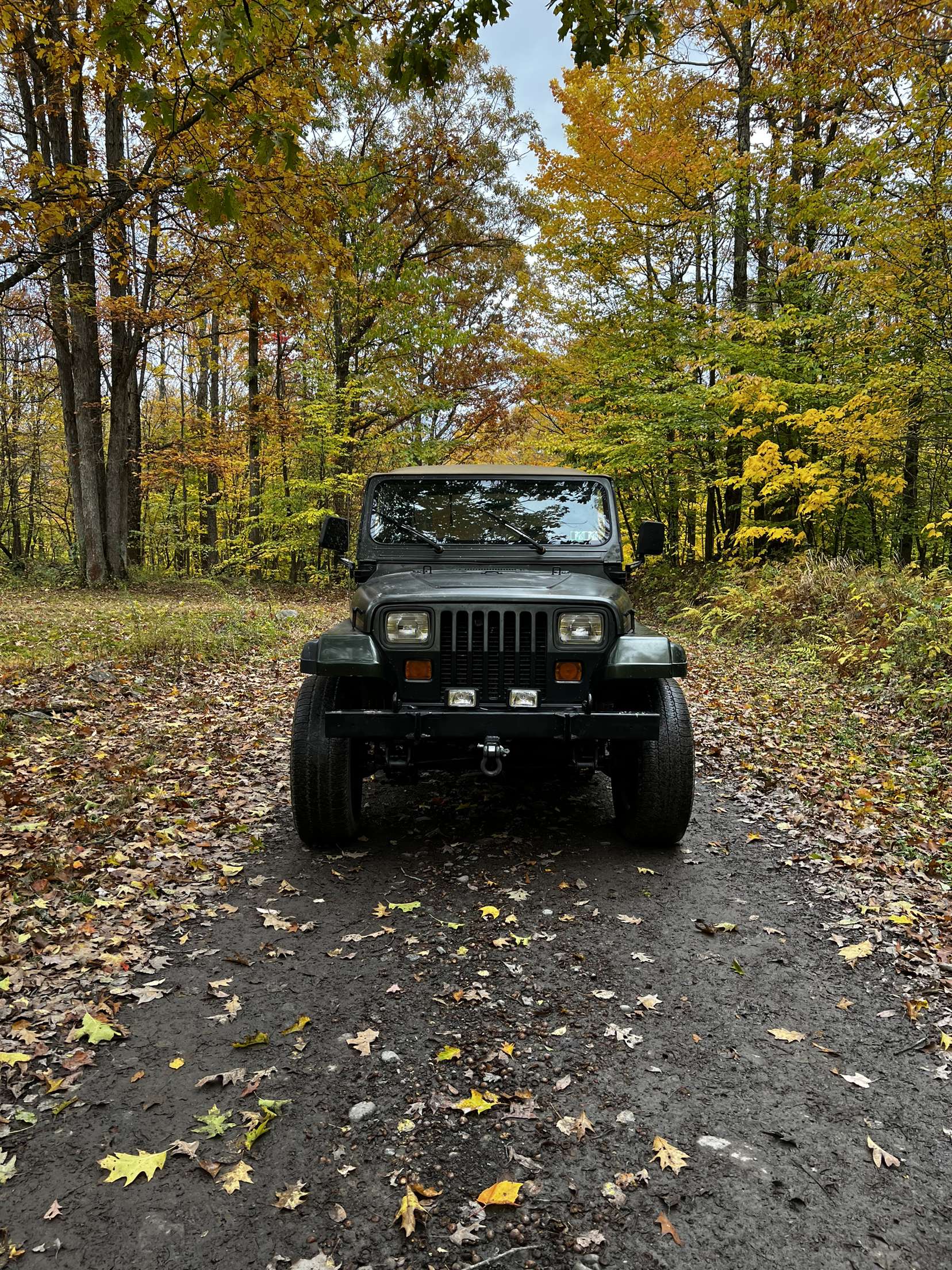
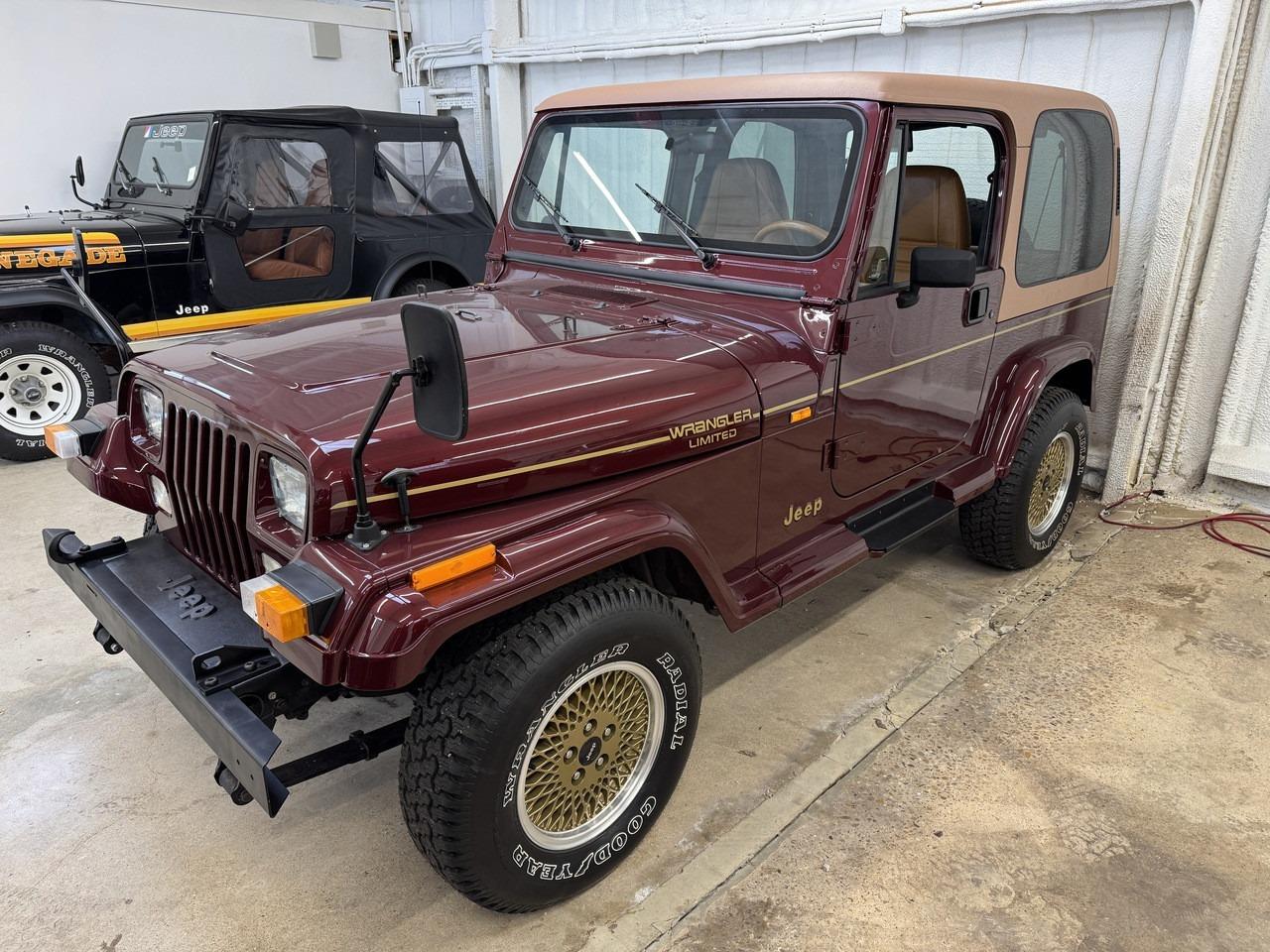
The 1995 Jeep Wrangler Sahara represents the absolute pinnacle of the "YJ" generation, serving as the final and most refined iteration of the square-headlight era. As of 2026, this specific model year has transitioned from a rugged daily driver into a highly coveted classic, prized for its unique aesthetic, mechanical simplicity, and the historical "bridge" it formed before the introduction of the TJ series.
The Significance of the 1995 Model Year
The 1995 model year holds a unique place in Jeep history due to a chronological anomaly: there is no such thing as a 1996 Jeep Wrangler. To facilitate the transition from the leaf-sprung YJ to the coil-sprung TJ, Jeep extended the production of the 1995 model well into the 1996 calendar year. Consequently, the 1995 Wrangler Sahara is often referred to by enthusiasts as the "Last of the YJs," benefiting from nearly a decade of incremental improvements.
For collectors in 2026, the 1995 Sahara is distinguished not just by its branding, but by critical manufacturing updates—most notably the introduction of galvanized steel for the body tub. This single change makes the 1995 model significantly more resistant to the terminal frame and body rot that plagued earlier YJs, making it the "Holy Grail" for restorers looking for a viable 30-year-old project.
The Sahara Trim: A "Safari" Aesthetic
Introduced mid-way through the YJ's lifecycle (specifically in 1988), the Sahara trim was designed to offer a "premium ruggedness" that the base (S) and mid-range (Sport/Laredo) trims lacked. By 1995, the Sahara package had been perfected into a specific visual identity that remains iconic today.
Exterior Styling Cues
The 1995 Sahara was most commonly finished in Moss Green Pearlcoat (PJN) or Light Sand Metallic, though the green version is the one most synonymous with the trim. Key exterior features included:
- Body-Colored Fender Flares: Unlike the textured black plastic flares on lower trims, the Sahara featured wider flares painted to match the body.
- Integrated Side Steps: Steel side steps with a non-slip plastic tread, also color-matched.
- Unique Branding: Small "Sahara" decals featuring a palm tree and sun motif located on the lower front fenders.
- Green-Tinted Wheels: 15-inch steel wheels painted to match the body color, often featuring a tan or gold pinstripe.
Interior Refinements
The interior of the 1995 Sahara was a sharp departure from the utilitarian grey or black vinyl found in other Wranglers. It featured the "Trail Cloth" seating—a durable, textured fabric in a unique khaki/tan color.
- Storage Solutions: The Sahara was famous for its removable storage pouches attached to the door panels and the back of the front seats.
- Full Carpeting: While base models often had rubber floor mats, the Sahara came with heavy-duty tan carpeting throughout.
- The "Family" Roll Bar: By 1995, the "sport" slanted roll bar had been replaced by the "family" bar, which provided a squared-off rear section to accommodate shoulder belts for rear passengers.
Technical Specifications and Performance
The 1995 Wrangler Sahara was almost exclusively equipped with the legendary 4.0-liter Inline-Six (I6) High Output engine. While the 2.5-liter four-cylinder was available for the Wrangler line, very few Saharas were ordered with the smaller power plant.
| Feature | Specification (4.0L I6) |
|---|---|
| Engine Type | OHV 12-valve Inline-6 |
| Horsepower | 180 hp @ 4,750 rpm |
| Torque | 225 lb-ft @ 3,950 rpm |
| Transmission | 5-speed AX-15 Manual or 3-speed 32RH Automatic |
| Transfer Case | Command-Trac NP231 (Part-time 4WD) |
| Front Axle | Dana 30 (Reverse Cut) |
| Rear Axle | Dana 35 |
| Wheelbase | 93.4 inches |
| Fuel Tank | 20 Gallons (standard on Sahara) |
The 4.0L engine is widely regarded as one of the most reliable engines ever produced by Chrysler/Jeep. In 2026, many of these engines are still performing well with over 250,000 miles, provided the cooling system and oil changes were maintained.
Historical Timeline: The Evolution of the 1995 Sahara
To understand the 1995 Sahara, one must look at the timeline of the YJ generation and how the 1995 model became the "perfected" version.
1987–1990: The Early YJ Years
The YJ debuted in 1986 as a 1987 model, replacing the legendary CJ-7. It was criticized for its square headlights and lower center of gravity. The Sahara trim was introduced in 1988 to appeal to a more lifestyle-oriented buyer. Early Saharas used a 4.2L carbureted engine which, while torquey, was prone to vacuum leaks and stalling.
1991: The Power Shift
This is a pivotal year in the timeline. Jeep replaced the 4.2L engine with the fuel-injected 4.0L High Output engine. This solved the reliability issues of the carburetor and increased horsepower from 112 to 180. Any Sahara built after 1991 is considered significantly more "drivable" by modern standards.
1992–1994: Safety and Structure
In 1992, Jeep introduced the "Family" roll cage to improve rear-seat safety. In 1994, several small but important changes occurred: the introduction of a high-mount third brake light and the transition to a slave cylinder for the clutch that was located outside the transmission bell housing (making repairs much cheaper).
1995: The Pinnacle and the "Galvanized Year"
The 1995 production run began in late 1994. Because Jeep knew the YJ would have to stay on showroom floors through part of 1996, they threw everything at the '95 model. The 1995 Sahara received:
- Fully Galvanized Tubs: This is the most important distinction. Previous years used standard steel that rusted aggressively in the floorboards and rockers.
- Improved Seals: Better door and hardtop seals were implemented to reduce the "wind whistle" common in earlier Jeeps.
- The Windshield Bumpers: In 1995, the small rubber bumpers on the hood (where the windshield rests when folded down) were moved slightly, and the footman loop was widened.
1996: The Gap Year
There are no 1996 Wranglers. Production of the 1995 YJ continued until early 1996, at which point the Toledo, Ohio plant switched over to the 1997 TJ. If you see a Wrangler advertised as a 1996, it is likely a late-production 1995 YJ or an early-release 1997 TJ.
Identifying an Authentic 1995 Sahara in 2026
With the surge in "Radwood-era" car collecting, many base-model Wranglers have been modified to look like Saharas. To verify an original 1995 Sahara, check the following:
- The VIN Code: The VIN should indicate a 4.0L engine (usually the "S" or "P" code in the 8th digit for that era).
- The Trim Code: Check the manufacturer's plate inside the driver’s door jamb. The interior trim code should correspond to the "Trail Cloth" tan/khaki scheme.
- The Body Tub: Inspect the rear corners near the body mounts. On a 1995 model, the galvanized coating often leaves a slightly different texture under the paint compared to the 1991-1994 models.
- The Pouches: Authentic Sahara door pouches are rare. They feature heavy-duty snaps and a leather-like texture. If they are missing, the door panels will have specific mounting holes that are hard to replicate.
Maintenance and Ownership in 2026
Owning a 31-year-old Jeep requires a specific maintenance mindset. While the 1995 Sahara is mechanically robust, age affects rubber and electronics regardless of mileage.
Common Troubleshooting Issues
- Vacuum Disconnect (4WD): The YJ uses a vacuum-actuated shift fork on the front axle to engage four-wheel drive. Over 30 years, these vacuum lines crack. Many owners in 2026 replace this with a cable-actuated "Posi-Lok" system for reliability.
- Exhaust Manifold Cracks: The 4.0L engine is famous for cracking its exhaust manifold due to heat cycles. High-quality stainless steel headers are a common and recommended upgrade.
- Capacitors in the ECU: The Engine Control Unit (ECU) in 1995 models can fail as internal capacitors leak over three decades. This typically results in a "no-start" condition or a failure of the "Check Engine" light to illuminate when the key is turned.
- Leaf Spring Sag: Unlike the coil-sprung models that followed, the Sahara rides on leaf springs. By 2026, original springs have usually sagged, leading to a harsh ride. Replacing them with modern multi-leaf packs can significantly improve comfort.
The 1995 Sahara vs. the 1997 TJ Sahara
For buyers choosing between the last YJ and the first TJ, the decision usually comes down to "Character vs. Comfort."
The 1997 TJ Sahara introduced the coil-spring suspension, which rides much better on the road. It also featured a modern dashboard with airbags. However, the 1995 YJ Sahara is favored by purists because of its "flat dash" aesthetic, which harks back to the original military Willys Jeeps. The YJ is also easier to work on, with fewer computerized sensors and a simpler steering geometry.
Frequently Asked Questions
Is the 1995 Jeep Wrangler Sahara a good daily driver in 2026?
While it is mechanically capable, it lacks modern safety features like airbags or advanced crumple zones. It is best suited as a weekend cruiser, beach vehicle, or secondary "fun" car. The fuel economy (typically 14–17 MPG) also makes it expensive for long commutes by 2026 standards.
How can I tell if my 1995 Wrangler has a galvanized body?
All Wranglers produced in the 1995 model year received the galvanized treatment. You can verify the model year by the 10th digit of the VIN; an "S" indicates the 1995 model year. This galvanization significantly retards rust but does not make the vehicle "rust-proof," especially in regions that use road salt.
What is a fair price for a 1995 Sahara in 2026?
Prices vary wildly based on condition. A high-mileage, "project" Sahara may cost between $8,000 and $12,000. However, a low-mileage (under 75,000 miles), pristine example in Moss Green can fetch between $20,000 and $30,000 at specialized auctions. Originality is the biggest factor in value.
Why does my 1995 Sahara have a different roll bar than my friend's 1990 model?
In 1992, Jeep transitioned from the "Sport" bar (which angled down behind the front seats) to the "Family" bar. This was done to provide mounting points for three-point seatbelts for rear-seat passengers, making the Jeep much safer for families.
Did the 1995 Sahara come with a hardtop or softtop?
It could be ordered with either, or both (the "Dual Top Group"). The Sahara-specific hardtop was typically color-matched or painted in a tan/spice color to complement the interior, whereas base models usually had black hardtops.
Final Recommendation for Enthusiasts
If you are looking to purchase or restore a 1995 Jeep Wrangler Sahara in 2026, prioritize originality and frame integrity. While the body tub is galvanized, the frame is not, and it can still rust from the inside out.
The 1995 Sahara is more than just a 4x4; it is a time capsule of 1990s automotive design. Its combination of the rugged YJ chassis with the refined 4.0L High Output engine and the unique Sahara "Safari" aesthetic makes it one of the most balanced Jeeps ever built. For the best experience, seek out a manual transmission (AX-15) model, as it allows you to make the most of the 4.0L engine's torque curve and provides a more engaging, classic driving experience.