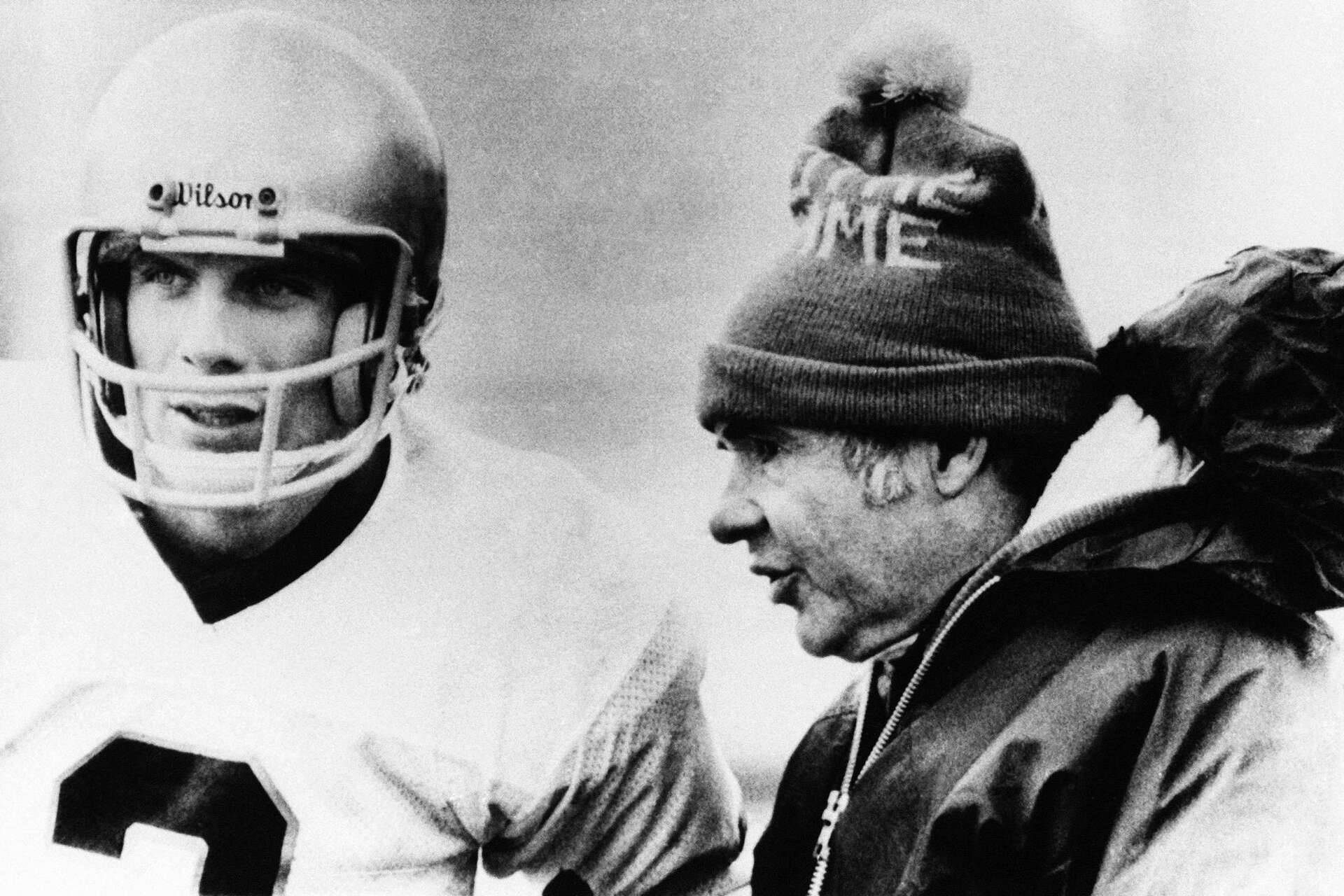
The 1986 Cotton Bowl Classic saw the #11 Texas A&M Aggies defeat the #16 Auburn Tigers with a final score of 36-16. Played on January 1, 1986, at the Cotton Bowl in Dallas, the game is best remembered for the Aggies' "Wrecking Crew" defense successfully containing Heisman Trophy winner Bo Jackson in his final collegiate appearance.
The Historical Context of the 50th Cotton Bowl
As we look back from 2026, the 1986 Cotton Bowl remains a pivotal moment in the history of the Southwest Conference (SWC) and the Southeastern Conference (SEC) rivalry. This game marked the 50th anniversary of the Cotton Bowl Classic, a milestone that demanded a high-stakes matchup. At the time, the Cotton Bowl was one of the "Big Four" New Year's Day bowls, carrying immense prestige and often national championship implications.
The 1985 college football season was a period of transition. The Texas A&M Aggies, led by the charismatic and often controversial Jackie Sherrill, were in the midst of a resurgence. Sherrill had been hired from Pitt with a then-unheard-of salary, tasked with returning the Aggies to national prominence. By 1985, his vision was manifesting in a 9-2 regular-season record and the program's first SWC championship since 1967. The Aggies arrived in Dallas with a chip on their shoulder, eager to prove they belonged among the nation’s elite.
Across the field, the Auburn Tigers, coached by Pat Dye, represented the perennial strength of the SEC. While their 8-3 record was slightly less polished than A&M's, they possessed the ultimate weapon: Bo Jackson. Jackson had just been awarded the Heisman Trophy, narrowly beating out Iowa’s Chuck Long. The narrative entering the game was simple: could the rugged, disciplined defense of Texas A&M stop arguably the greatest pure athlete to ever play college football?
The "Wrecking Crew" vs. Bo Jackson
The centerpiece of the 1986 Cotton Bowl was the clash between the Texas A&M defense—famously dubbed the "Wrecking Crew"—and Auburn's powerhouse offense. Under defensive coordinator R.C. Slocum, the Aggies had developed a defensive identity characterized by extreme speed, aggressive pursuit, and a "bend but don't break" philosophy that relied on forcing turnovers in the red zone.
Bo Jackson entered the game with massive expectations. In 1985, he had rushed for 1,786 yards and 17 touchdowns. However, the Aggie defense, led by players like linebacker Johnny Holland and defensive back Domingo Bryant, employed a strategy designed to limit Jackson's ability to reach the secondary at full speed. They focused on "gap integrity," ensuring that Jackson was met by multiple defenders at the line of scrimmage before he could make his trademark explosive cuts.
While Jackson did manage two touchdowns during the game, his rushing yards were held to 129 on 31 carries—a respectable number for most, but a "containment" success for an A&M defense facing a Heisman winner. The Wrecking Crew’s ability to force Auburn into predictable passing situations later in the game proved to be the structural undoing of the Tigers' offensive game plan.
Detailed Game Narrative: The Shift in Momentum
The game began with the intensity expected of a 50th-anniversary celebration. Auburn took an early lead, signaling that the Tigers' SEC pedigree might overwhelm the Aggies. Pat Washington, Auburn's quarterback, found Bo Jackson on a 73-yard touchdown pass early in the first quarter. It was a play that silenced the pro-Aggie crowd in Dallas, as Jackson showcased the elite receiving skills that would later make him a dual-threat star in the NFL.
However, Texas A&M did not panic. Quarterback Kevin Murray, one of the most underrated signal-callers of the era, began to methodically pick apart the Auburn secondary. Murray’s composure was the perfect foil to Auburn's aggressive front seven. The Aggies relied on a balanced attack, using running back Anthony Toney to soften the middle of the Auburn defense, which eventually opened up lanes for Murray’s precision passing.
The second quarter saw a significant shift in momentum. Texas A&M’s special teams and defensive opportunistic play began to take over. Domingo Bryant, who would go on to be named the game’s defensive MVP, intercepted a crucial pass that set the stage for an Aggie scoring drive. By halftime, the Aggies had clawed back, and the game felt increasingly like a physical war of attrition that favored the depth of Texas A&M.
The Second Half Surge
In the second half, the Aggies completely took control of the narrative. The turning point was a series of blocked kicks and special teams blunders by Auburn that gave Texas A&M excellent field position. Scott Slater, the Aggie kicker, was reliable throughout the afternoon, converting multiple field goals to keep the scoreboard moving even when the offense stalled in the red zone.
As the fourth quarter progressed, the exhaustion of the Auburn defense became apparent. The Aggies' offensive line, a veteran unit, began to win the battle in the trenches. Anthony Toney scored twice, and the Aggies outscored the Tigers 15-0 in the final period. The 36-16 final score reflected a dominant second-half performance that confirmed Texas A&M as a legitimate national power under Jackie Sherrill.
Statistical Comparison and Scoring Summary
To understand the mechanics of the 1986 Cotton Bowl, one must look at the efficiency of the Aggies compared to the big-play reliance of the Tigers.
| Statistical Category | Texas A&M Aggies | Auburn Tigers |
|---|---|---|
| Final Score | 36 | 16 |
| First Downs | 22 | 16 |
| Rushing Yards | 164 | 191 |
| Passing Yards | 292 | 181 |
| Total Offense | 456 | 372 |
| Turnovers | 1 | 4 |
| Penalties-Yards | 6-55 | 6-59 |
| Time of Possession | 33:12 | 26:48 |
The most telling statistic in the table above is the turnover margin. Texas A&M’s ability to protect the football while forcing Auburn into four turnovers was the primary driver of the 20-point victory margin. While Auburn actually out-rushed the Aggies (largely due to Jackson), their inability to sustain drives and their frequent mistakes in the passing game allowed A&M to dominate the time of possession.
The Legacy of the 1986 Cotton Bowl
The 1986 Cotton Bowl is viewed historically as the "arrival" of the modern Texas A&M football program. It validated the heavy investment the university had made in Jackie Sherrill and set the stage for a period of SWC dominance where the Aggies would win three consecutive conference titles (1985, 1986, 1987). For the "Wrecking Crew," this game was their masterpiece, proving that a disciplined, high-speed defensive scheme could neutralize even the most legendary individual talents.
For Auburn and Bo Jackson, the game was a bittersweet end to a legendary collegiate era. Jackson’s performance, while statistically solid, highlighted the limitations of an offense that relied too heavily on a single superstar against a top-tier defensive unit. Jackson moved on to a legendary professional career in both the NFL and MLB, but the 1986 Cotton Bowl remains a rare instance where he was fundamentally "solved" by a college defense.
Furthermore, the game had lasting impacts on the Cotton Bowl itself. As the 50th edition, the success of the event helped secure the bowl's status during a time when the bowl system was beginning to undergo significant changes. It remains a highlight in the archives of the Cotton Bowl Classic, often cited in retrospective documentaries about the greatest games played in the historic Dallas venue.
Frequently Asked Questions
Who was the MVP of the 1986 Cotton Bowl?
The 1986 Cotton Bowl featured two MVPs. The Offensive MVP was Texas A&M quarterback Kevin Murray, who completed 16 of 26 passes for 292 yards, providing the steady leadership and explosive plays needed to overcome Auburn. The Defensive MVP was Aggie defensive back #5 Domingo Bryant, whose interceptions and sure tackling were critical in neutralizing Auburn's passing game and containing Bo Jackson on the perimeter.
How did Bo Jackson perform in the game?
Bo Jackson had a productive but frustrating game. He finished with 129 yards rushing on 31 carries and scored two touchdowns (one rushing, one receiving). His 73-yard touchdown catch in the first quarter was the game’s longest play. However, he was largely kept out of the end zone in the second half as the Texas A&M defense tightened their pursuit and forced Auburn into passing situations.
What was the significance of the "Wrecking Crew" in this game?
The "Wrecking Crew" was the nickname for the Texas A&M defense, and the 1986 Cotton Bowl is considered one of their defining performances. They forced four turnovers and successfully limited the impact of a Heisman-winning running back. This game helped cement the "Wrecking Crew" brand as a symbol of defensive excellence that would persist for decades at Texas A&M.
What was the weather and attendance for the game?
The game was played under ideal conditions for January in Dallas. The weather was sunny with a temperature of approximately 55 degrees Fahrenheit at kickoff. The 50th-anniversary celebration drew a massive crowd, with an official attendance of 73,137 fans packing the Cotton Bowl stadium.
Who were the head coaches for both teams?
Texas A&M was coached by Jackie Sherrill, who was in his fourth season with the Aggies. Auburn was led by Pat Dye, a legendary figure in Tigers history who had coached the team since 1981. Both coaches are members of various Hall of Fames and are credited with building their respective programs into national powers during the 1980s.
Practical Recommendations for Sports Historians
If you are researching the 1986 Cotton Bowl in 2026, the best way to experience the game's impact is through the archived broadcasts and coach's films. Many of these have been digitized by the Texas A&M Cushing Memorial Library and Archives.
- Review the Film: Look for the "all-22" film of the Texas A&M defense. It provides a technical look at how R.C. Slocum’s schemes forced Bo Jackson into the middle of the field where the linebackers could converge.
- Visit the Venue: While the Cotton Bowl stadium has seen many renovations, visiting the site in Dallas offers a sense of the scale and history of the 50th-anniversary game.
- Read Contemporary Accounts: Research the Dallas Morning News archives from January 2, 1986. The local reporting provides excellent context on the "Aggie Fever" that gripped the city during that New Year's week.