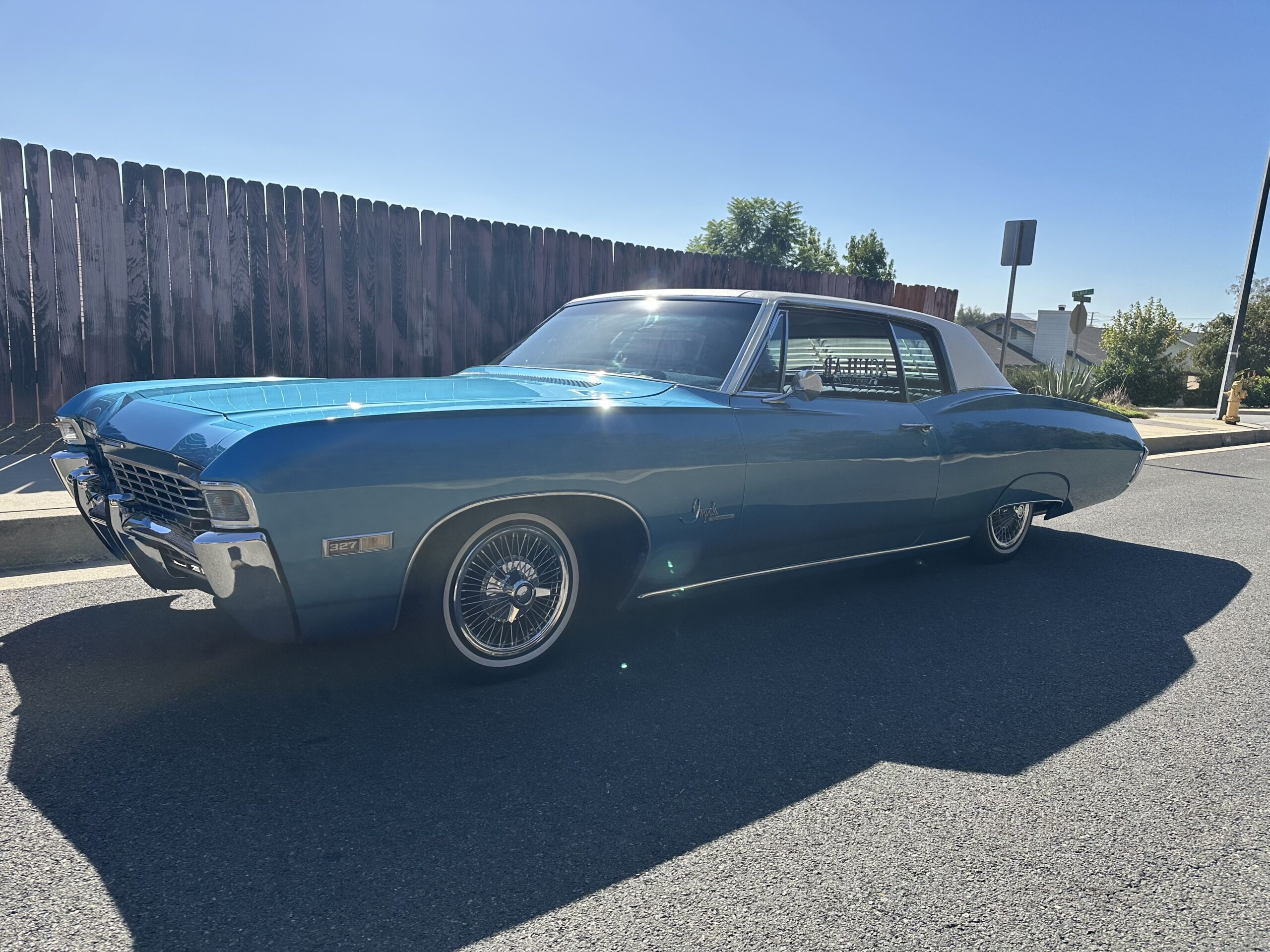
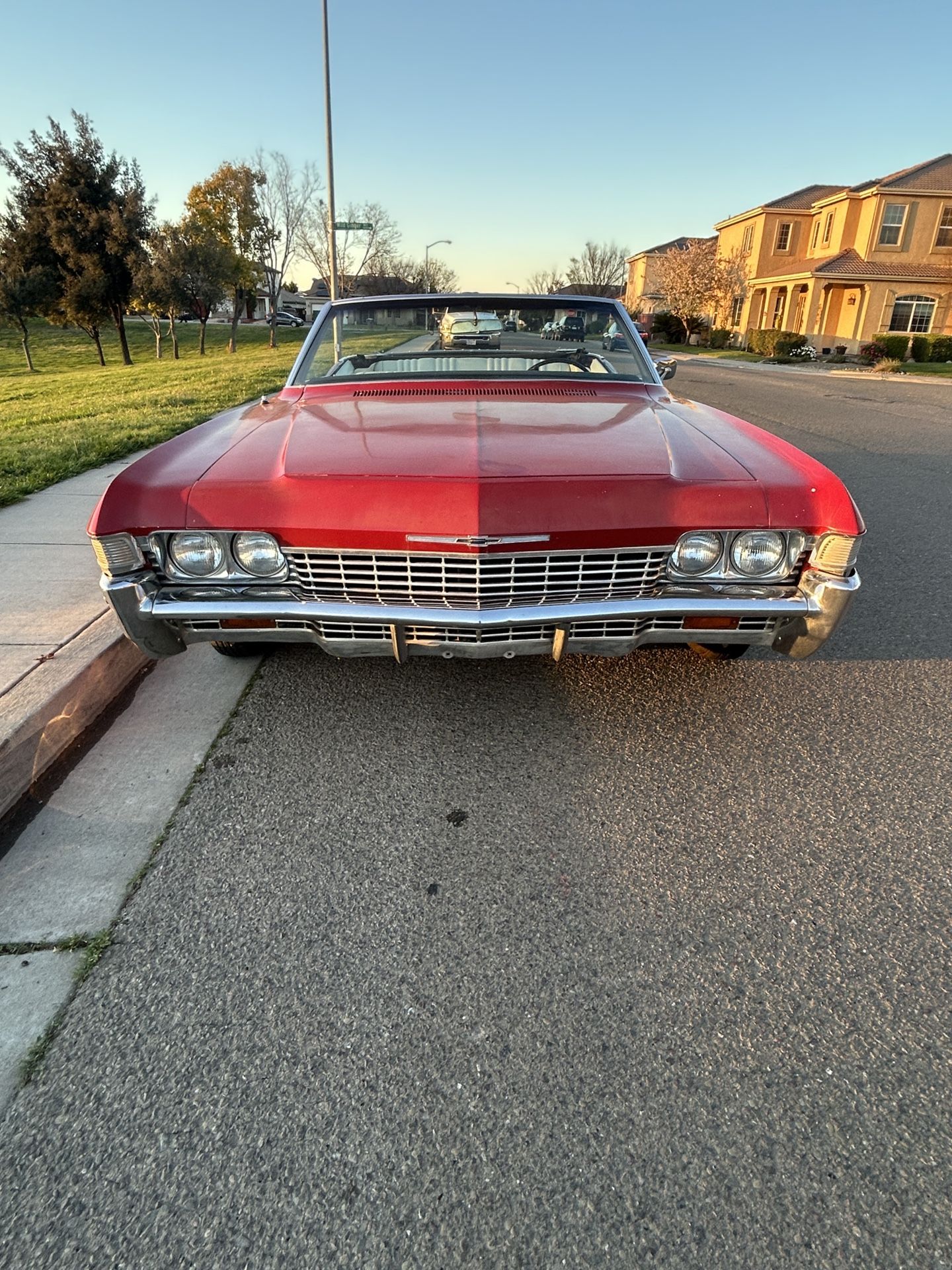
The 1968 Chevrolet Impala represents a high-water mark of late-1960s full-size American automotive design, combining massive proportions, a wide range of potent V8 engines, and enduring cultural impact. Today, values span widely from affordable project cars to six-figure numbers-matching Super Sport convertibles, driven by original specifications, body styles, and overall condition.
Evolution and Design Context of the 1968 Impala
By the late 1960s, Chevrolet’s Impala was the undisputed sales king of the American full-size market. The 1968 model year introduced a subtle yet impactful styling refresh that distanced the car from its 1967 predecessor. Most notably, designers reshaped the front fascia with recessed headlights, a redesigned loop-style bumper, and new rectangular taillights integrated into the rear bumper on most models. These styling cues gave the 1968 Impala a cleaner, more muscular stance that resonated strongly with buyers, pushing total Chevrolet production past the three-million mark for the era.
Beyond the sheet metal, the 1968 Impala was built on General Motors' rugged B-body platform, utilizing a perimeter frame with a full coil-spring suspension. This architecture prioritized ride comfort and highway stability, absorbing road imperfections with ease while maintaining a quiet cabin. Chevrolet offered the Impala in a diverse array of body styles to suit every demographic, ranging from conservative four-door sedans and pillared coupes to the pillarless Sport Coupe, sleek Convertible, and the spacious Kingswood and Parkwood station wagons.
Navigating the 1968 lineup requires understanding how trim levels and body styles intersect. The base Impala sat below the luxury-oriented Impala Custom and the performance-focused Impala Super Sport (SS). While earlier iterations treated the Super Sport as a distinct performance model series, 1968 marked a transition where the SS package could be added to select standard Impala models, creating a blur between luxury cruising and muscle car performance.
Detailed Technical Specifications
The 1968 Chevrolet Impala offered an expansive powertrain catalog, ranging from economical inline-six engines to thunderous big-block V8s. Understanding these factory configurations is essential for evaluating vehicle authenticity, driving dynamics, and market value.
| Engine Displacement | Configuration | Horsepower Range | Primary Applications |
|---|---|---|---|
| 250 cubic inch | Inline-6 | 155 hp | Base models, Sedans |
| 307 cubic inch | Small-Block V8 | 200 hp | Standard V8 entry |
| 327 cubic inch | Small-Block V8 | 250 - 275 hp | Mid-range performance |
| 350 cubic inch | Small-Block V8 | 250 hp | General availability |
| 396 cubic inch | Big-Block V8 (Turbo) | 325 - 350 hp | Performance / SS |
| 427 cubic inch | Big-Block V8 (Turbo) | 385 - 425 hp | High-performance SS |
Transmission and Drivetrain Options
Power was channeled to the rear wheels through a variety of transmissions depending on the engine selection. Base models typically featured a 3-speed manual column-shift transmission, while buyers could upgrade to a 4-speed manual floor shifter or the smooth-shifting 2-speed Powerglide automatic. For high-output big-block V8s, the robust 3-speed Turbo Hydra-Matic 400 (TH400) automatic became the gold standard, offering reliable power delivery and highway efficiency.
Suspension and Braking Architecture
Weighing anywhere from 3,500 to over 4,000 pounds depending on the body style and engine, the 1968 Impala relied on independent front coil springs and a four-link rear suspension with coil springs. Power-assisted steering was a popular option that lightened the parking-lot burden of the car's massive turning radius. Braking duties were handled primarily by four-wheel hydraulic drum brakes, though power front disc brakes were available as a factory safety upgrade—a highly sought-after feature among modern collectors.
Market Value and Valuation Factors
Assessing the financial value of a 1968 Chevy Impala requires careful examination of its condition, originality, and specific mechanical pedigree. The market distinguishes sharply between standard family sedans and high-performance Super Sport variants.
Body Style Hierarchy
- Convertibles: Consistently command the highest premiums due to their low production numbers and open-air styling.
- Sport Coupes (Hardtops): Highly desirable for their classic fastback-adjacent roofline and pillarless side glass.
- Sedans and Wagons: Generally more affordable, making them excellent entry points for vintage car enthusiasts, though rare wagon configurations with big-block engines command niche collector interest.
Condition Tiers
- Project and Driver Condition ($5,000 – $15,000): Vehicles requiring significant rust repair, interior restoration, or mechanical overhaul. These cars run and drive or are close to it, but show heavy patina and wear.
- Good to Collector Condition ($20,000 – $45,000): Clean, well-maintained examples with older restorations or preserved original finishes. These cars feature solid sheet metal, clean interiors, and reliable running gear.
- Concours / Numbers-Matching SS ($50,000 – $90,000+): Flawless, factory-correct restorations featuring rare high-output 427 cubic-inch engines, four-speed manual transmissions, and extensive documentation such as original build sheets and protect-o-plates.
The Impala Legacy in Automotive Culture
The 1968 Impala occupies a unique space in automotive history, bridging the gap between the golden era of full-size family cruisers and the raw aggression of the muscle car movement. While smaller intermediates like the Chevelle often stole the drag strip headlines, the Impala offered luxury-car dimensions with muscle-car heart, proving that straight-line speed did not require sacrificing cabin comfort or trunk space.
Decades after rolling off the assembly line, the Impala legacy endures across diverse automotive subcultures. In the traditional restoration community, purists hunt for factory-original Super Sport models equipped with the legendary 427 big-block engine. Simultaneously, the 1968 model remains an icon in the lowrider community, where its long, flat body panels and robust perimeter frame serve as the ultimate canvas for custom hydraulic suspensions, intricate candy-paint jobs, and wire wheels.
Frequently Asked Questions
What engines were available in the 1968 Chevy Impala?
The engine lineup ranged from an economical 250 cubic-inch inline-six to high-performance 396 and 427 cubic-inch big-block V8s. Small-block V8 options included the 307, 327, and 350 cubic-inch displacements, providing a wide spectrum of power outputs from 155 to 425 horsepower.
How can I verify a real 1968 Impala Super Sport (SS)?
Verification depends heavily on checking the vehicle identification number (VIN) and trim tag. For 1968, the Impala SS series code changed depending on whether it was a standalone model or an option package. Consulting specialized registry guides and examining original factory documentation, such as the build sheet, is critical to confirm authenticity.
Are replacement parts easy to find for a 1968 Impala?
Yes. Because Chevrolet produced hundreds of thousands of full-size cars in 1968, the aftermarket support network is exceptionally strong. Sheet metal, interior soft goods, suspension components, and trim pieces are widely reproduced and readily available through major classic Chevrolet parts suppliers.
What are common rust areas on a 1968 Impala?
Like most vintage GM vehicles, the 1968 Impala is prone to rust in specific moisture-trapping areas. Buyers and restorers should carefully inspect the lower quarter panels, trunk floors, rear wheel arches, rocker panels, and the frame rails immediately surrounding the rear control arm mounts.
Practical Recommendations for Buyers and Owners
Purchasing or maintaining a 1968 Chevrolet Impala requires a methodical approach. Prioritize rust-free structural integrity over cosmetic perfection, as body and frame restoration costs escalate rapidly. If you are shopping for an investment-grade vehicle, demand comprehensive documentation, verify engine stampings against factory records, and inspect the braking and electrical systems thoroughly. For those building a weekend cruiser, prioritize models equipped with power steering, power front disc brakes, and an upgraded cooling system to ensure reliability in modern traffic.