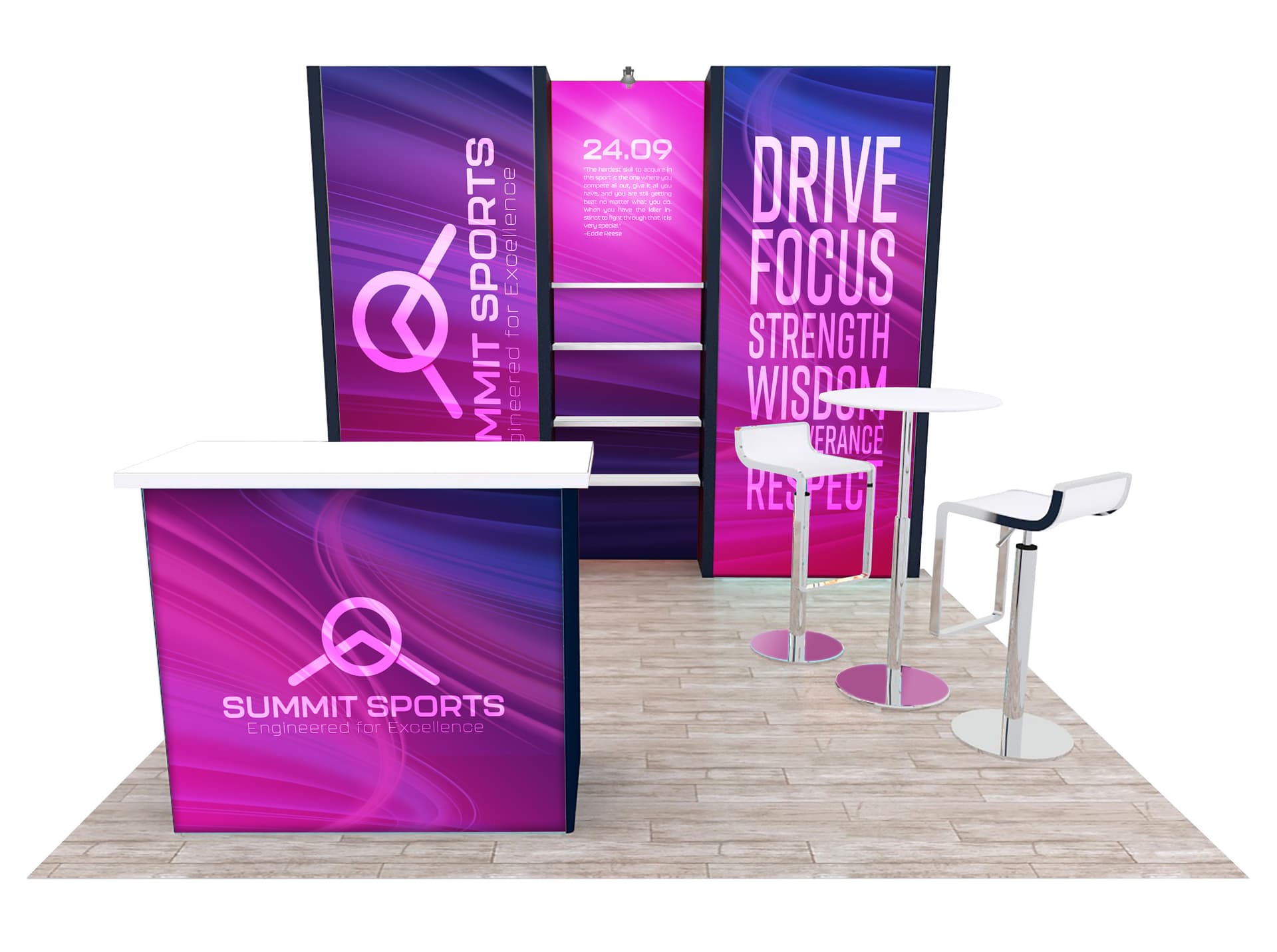
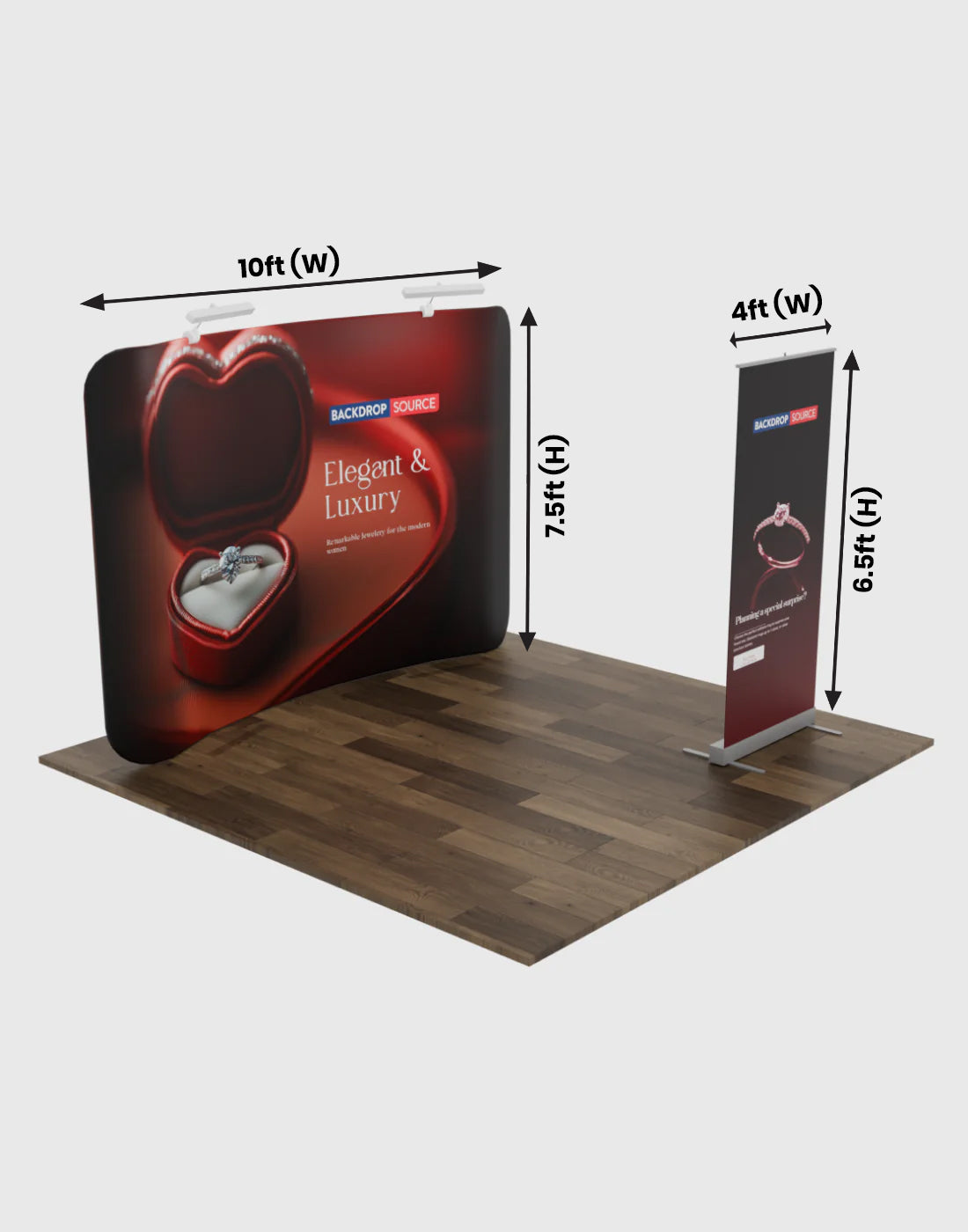
Selecting the right 10x10 trade show display options involves balancing physical footprint limitations, visual impact, portability, and budget to create a functional, engaging booth that attracts attendees within a standard inline space.
Planning a trade show presence requires navigating a crowded marketplace where your booth has mere seconds to capture an attendee's attention. A standard 10x10 foot booth space—often referred to as an inline or linear booth—presents unique spatial constraints. You are typically limited to an 8-foot backwall height restriction (though some venues allow up to 12 feet for perimeter booths) and must fit your entire brand narrative, staff, product demonstrations, and lead generation tools into a 100-square-foot footprint.
Understanding the available display configurations, structural materials, and customization features ensures you invest in hardware that not only looks professional on the show floor but also withstands the logistical rigors of shipping, drayage, and frequent assembly.
Understanding the 10x10 Foot Booth Landscape
Before purchasing or renting any exhibition hardware, you must understand the architectural boundaries and standard regulations enforced by exhibition halls. A 10x10 space is the most common footprint purchased by small-to-medium enterprises and first-time exhibitors. Because neighboring booths flank your left and right sides, your primary visual real estate is the backwall, complemented optionally by a tabletop, hanging sign (where permitted by venue ceiling height rules), or mobile kiosks.
Exhibiting in a 10x10 space forces discipline upon your marketing strategy. You cannot afford to crowd the floor with excessive furniture or cluttered product displays. Every square foot must serve a deliberate purpose: drawing foot traffic from the aisle, engaging the visitor, and communicating your core value proposition instantly.
Common Spatial Restrictions and Venue Rules
- Backwall Height Limitations: Most standard inline booths restrict backwalls to 8 feet. Exceeding this height without prior written approval from show management can result in mandatory on-site dismantling or heavy fines.
- Side-Rail Line of Sight: Many expositions enforce a "line of sight" rule, meaning any sidewall structures extending past 5 feet from the backwall must drop down to 4 feet in height. This prevents exhibitors from blocking the visibility of adjacent booths.
- Electrical and Rigging Drops: Floor access for power and internet must be ordered well in advance. Planning your display layout requires knowing where your power cords will run to prevent tripping hazards.
--
Major Categories of 10x10 Trade Show Displays
Exhibition technology has evolved far beyond heavy, wooden crates and complex bolted structures. Modern 10x10 options prioritize modularity, lightweight construction, and tool-free assembly, allowing marketing teams to set up their own booths without hiring union labor in strict convention centers.
| 10x10 Display Options At-a-Glance | ||
|---|---|---|
| Display Type | Primary Benefit | Best Suited For |
| Pop-Up Displays | Fast setup, low cost | Budget-conscious |
| Modular/Truss | Highly customizable, sturdy | Heavy hardware, tech |
| Tension Fabric | Seamless look, lightweight | Modern, graphic-heavy |
| Backlit Displays | Maximum visual pop | High-traffic halls |
1. Pop-Up Displays
Pop-up displays remain a staple of the trade show industry due to their reliability and cost-effectiveness. The core structure consists of an accordion-style aluminum frame that "pops" outward into a curved or straight grid. Magnetic channel bars attach to the frame, supporting flexible graphic panels or fabric skins.
- Pros: Highly affordable, exceptionally fast to assemble (often under 15 minutes), and packs down into a compact wheeled case that can double as a podium when fitted with a graphic wrap.
- Cons: Graphic panels can show wear and tear over time at the seams, and the overall aesthetic can look dated if you choose traditional PVC graphic murals instead of modern fabric wraps.
2. Tension Fabric Displays
Tension fabric displays utilize a lightweight aluminum tube frame that snaps together like a puzzle, over which a custom-printed, pillowcase-like fabric graphic is slid and zipped tight. The fabric stretches taut, eliminating wrinkles and creating a smooth, monolithic surface.
- Pros: Extremely lightweight, machine-washable graphics, zero tools required for frame assembly, and significantly reduced shipping weights compared to traditional systems.
- Cons: Aluminum tubes can bend if subjected to rough handling during freight shipping, and replacement graphics require exact dimensional matching to the frame manufacturer's specifications.
3. Modular and Truss Systems
Modular and truss displays mimic the industrial look of concert lighting rigs. Constructed from steel or aluminum components, these systems offer exceptional structural integrity and the ability to mount heavy accessories like monitors, shelving, product brackets, and overhead lighting fixtures.
- Pros: Highly durable, infinitely reconfigurable for future show footprints (such as expanding to a 10x20 later), and capable of supporting substantial weight loads.
- Cons: Heavier weight increases freight and drayage costs; assembly can be labor-intensive and time-consuming.
4. Backlit (SEG) Lightbox Displays
Silicone Edge Graphic (SEG) backlit displays use internal LED curtain lighting to illuminate high-resolution fabric graphics from behind. The fabric graphic features a thin silicone strip sewn into its perimeter, which presses easily into a channeled aluminum frame.
- Pros: Unmatched visual prominence on a crowded show floor; draws the human eye naturally; elevates brand perception immediately.
- Cons: Higher initial capital investment, requires careful handling of electrical components, and adds extra weight and packing volume to your shipment.
--
Evaluating Key Factors: Cost, Portability, and Durability
Choosing between these options requires an honest assessment of your annual trade show calendar, travel logistics, and internal staffing resources.
Freight and Shipping Considerations
Every pound matters when calculating shipping expenses and drayage fees charged by convention center unions. A heavy wood-paneled display might look impressive, but the freight bills can quickly eclipse the initial hardware savings. Tension fabric systems and lightweight pop-ups often ship in a single rotomolded case that can be checked as baggage on commercial flights or shipped via standard ground carriers, saving hundreds of dollars per event.
Assembly and Labor Requirements
Consider who will actually build your booth on-site. If your marketing team is flying in late the evening before the exhibition opens, you need a tool-free tension fabric or pop-up display that can be erected by two people in under 30 minutes. Conversely, if you partner with a dedicated exhibition house that handles full turnkey installation and dismantle (I&D) services, you have the flexibility to choose heavier, more complex modular architecture.
--
Essential Accessories to Complete Your 10x10 Booth
A backwall display is only the foundation. To maximize visitor engagement, you must integrate functional accessories that support your booth staff and guide customer interaction.
- Counters and Kiosks: A reception counter provides a physical barrier and a professional greeting point at the front of your booth. Many counters feature internal storage shelves for promotional literature and lead-capture tablets.
- Flooring: Standard convention center concrete is punishing on feet over a three-day exhibition. Interlocking foam tiles, printed vinyl flooring, or modular carpet tiles improve booth aesthetics while reducing physical fatigue for your staff.
- Integrated Lighting: Arm lights or internal LED ladder lights highlight your messaging. Proper illumination is critical, as convention center overhead lighting is often harsh, uneven, or dim.
--
Common Mistakes to Avoid When Designing a 10x10 Display
Exhibitors frequently make strategic errors that diminish their return on investment. Avoiding these pitfalls ensures your 10x10 space works efficiently.
- Information Overload: Packing every square inch of your backwall graphic with dense blocks of text, bullet points, and multiple website URLs overwhelms passersby. Attendees walk past cluttered booths; they stop at clean, bold, minimalist messaging that communicates your core value instantly.
- Ignoring the Eye-Level Rule: Critical brand messaging and your primary logo should always be positioned in the upper third of the display (above 5 feet). If your logo is placed at waist height, it will be obscured the moment a staff member or visitor stands in front of it.
- Failing to Test Assembly Prior to the Show: Never let your first time assembling a display happen on the convention floor. Practice building the booth in your office or warehouse to verify all parts are present and your team knows the sequence.
--
Frequently Asked Questions
Can I upgrade a 10x10 display to a larger booth size later?
Some modular and truss systems are engineered for scalability, allowing you to purchase expansion kits, extra frames, and bridging hardware to convert your 10x10 setup into a 10x20 inline booth in the future. Standard pop-up frames and single-piece tension fabric backwalls generally cannot be scaled up and must be replaced if your footprint changes.
Are tension fabric graphics machine-washable?
Most polyester-spandex blend fabrics used in modern tension displays can be washed on a gentle, cold cycle with mild detergent and air-dried. Always consult the specific manufacturer's care instructions before washing to prevent shrinkage or thermal damage to the printed dyes.
Do I need to hire union labor to set up a 10x10 booth?
Union labor rules vary strictly by convention center and city. In many venues, if you are a permanent full-time employee of the exhibiting company, you are legally permitted to set up your own 10x10 portable display without hiring union workers. However, if you use a third-party installation company or if the venue classifies the display as "heavy modular construction," union rules may apply. Always check the exhibitor manual provided by the show decorator.
What is the average lifespan of a portable trade show display?
With careful handling, proper packing, and indoor climate-controlled storage, a high-quality aluminum frame and tension fabric display can last between 3 to 7 years. Graphic skins are often updated more frequently (every 1 to 2 years) to reflect changing product lines, rebrands, or updated messaging.
--
Next Steps for Exhibitors
Begin by auditing your upcoming trade show calendar, confirming venue height restrictions, and calculating your shipping constraints. If you travel frequently by air, prioritize lightweight tension fabric systems with wheeled travel cases. If you require heavy monitor mounts and extensive shelving, invest in a robust modular or truss framework. Request physical fabric swatches and hardware spec sheets from reputable suppliers before finalizing your purchase to ensure your booth aligns perfectly with your marketing goals.