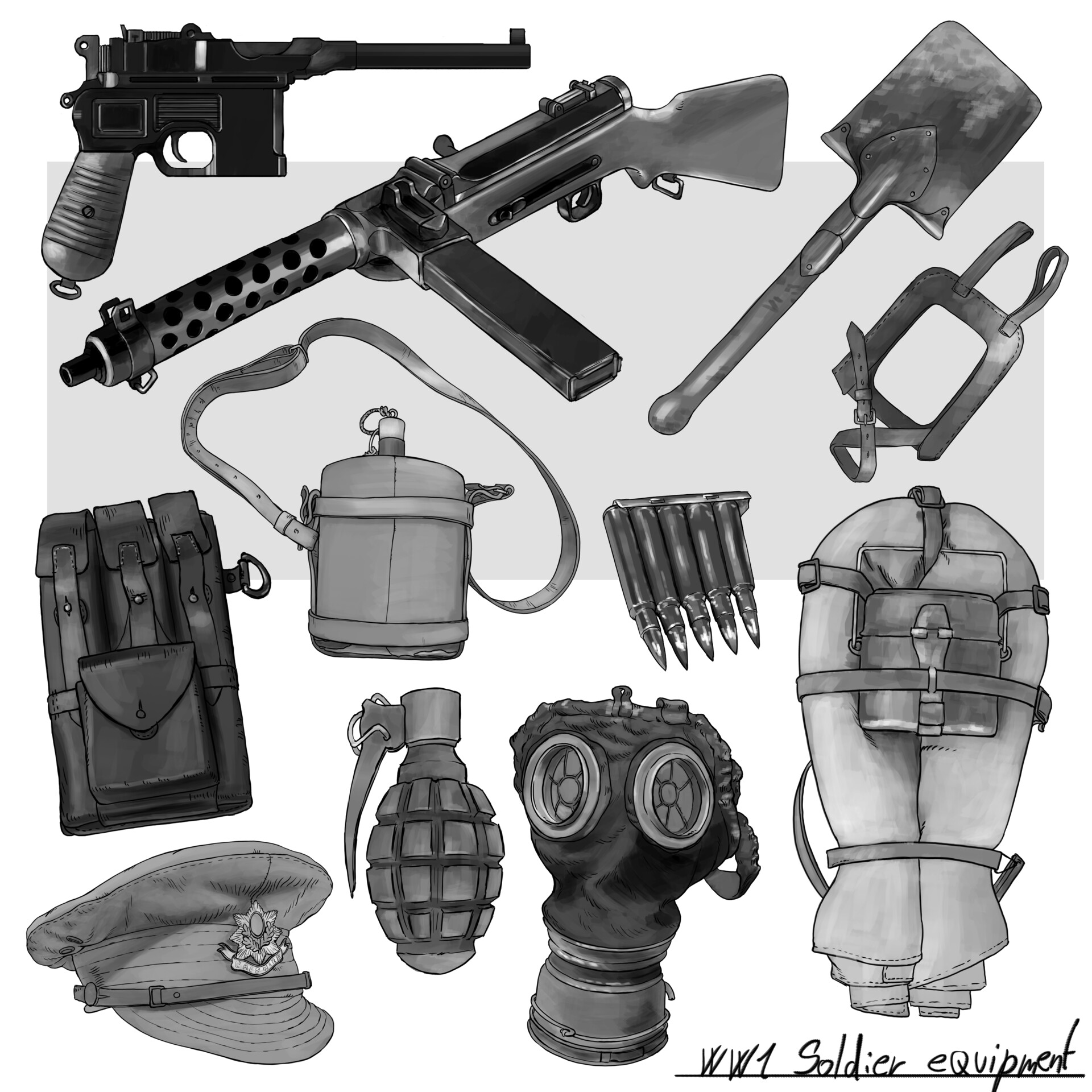
The equipment utilized by soldiers during World War I underwent a radical transformation from 1914 to 1918, shifting from nineteenth-century leather accoutrements to specialized trench warfare gear like steel helmets, gas masks, and web webbing systems designed to handle modern industrial combat.
Introduction to First World War Military Equipment
When the nations of Europe marched to war in the summer of 1914, most armies entered the conflict with field gear largely unchanged since the late nineteenth century. Brightly colored uniforms, leather belt kits, and soft caps quickly proved obsolete in the face of machine guns, rapid-fire artillery, and poison gas. Over the next four years, military logists and industrial manufacturers adapted rapidly, creating an entirely new ecosystem of survival gear.
This 10 WW1 equipment overview examines the vital items issued to frontline infantrymen across major combatant nations. Understanding these artifacts provides crucial insight into the daily survival of soldiers in the muddy, high-casualty environment of the Western Front and other theaters of the First World War.
1. The Steel Helmet (Brodie, Adrian, and Stahlhelm)
Perhaps no piece of equipment symbolizes the transition to modern industrialized warfare quite like the steel combat helmet. Early 1914 combat saw soldiers wearing cloth caps, felt pickelhaubes, or leather spiked helmets that offered zero protection against shrapnel and shell fragments.
- The French Adrian Helmet (1915): Introduced by the French army, the Model 1915 Adrian helmet was the first mass-issued steel helmet of the war, designed primarily to protect against downward-falling shrapnel.
- The British Brodie Helmet (1916): Often called the "doughboy helmet" by Americans or the "tin hat" by British Tommies, the Brodie featured a wide brim ideal for protecting soldiers from artillery bursts exploding overhead.
- The German Stahlhelm (1916): Introduced later in the war, the distinctively shaped German steel helmet offered superior coverage for the ears, neck, and brow compared to its Allied counterparts.
2. Chemical Gas Masks and Respirators
Poison gas was first deployed on a large scale by the German army at Ypres in April 1915, rendering existing warfare doctrines obsolete overnight. Soldiers initially relied on rudimentary improvised respirators—such as cotton pads soaked in urine or sodium bicarbonate solutions—to neutralize chlorine and phosgene gases.
As chemical warfare escalated to include persistent agents like mustard gas, militaries developed sophisticated canvas and rubberized masks. British troops received the Small Box Respirator (SBR), which featured a facepiece connected by a hose to a filter canister containing activated charcoal and chemical absorbents. This technological innovation saved hundreds of thousands of lives as chemical attacks became standard practice.
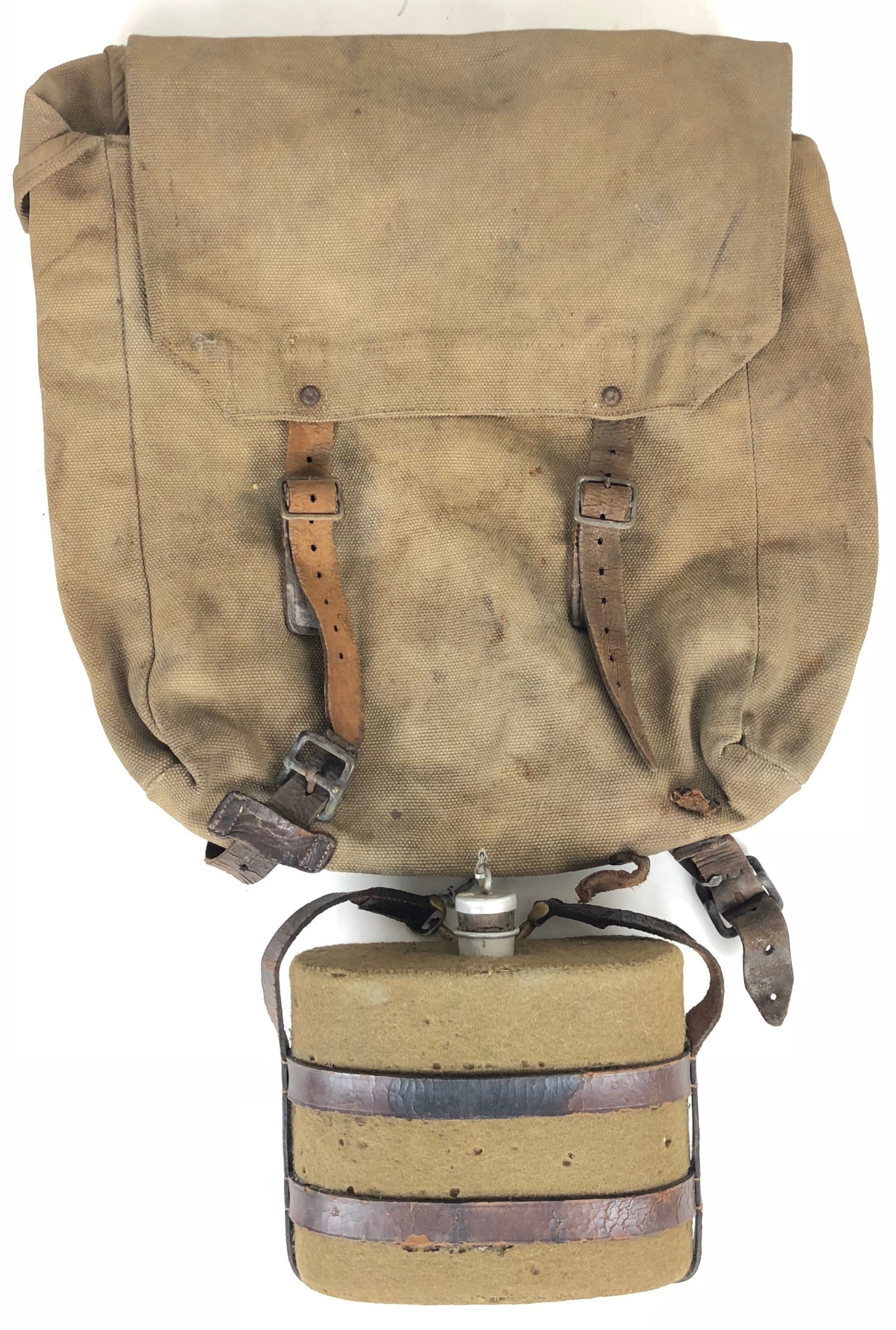
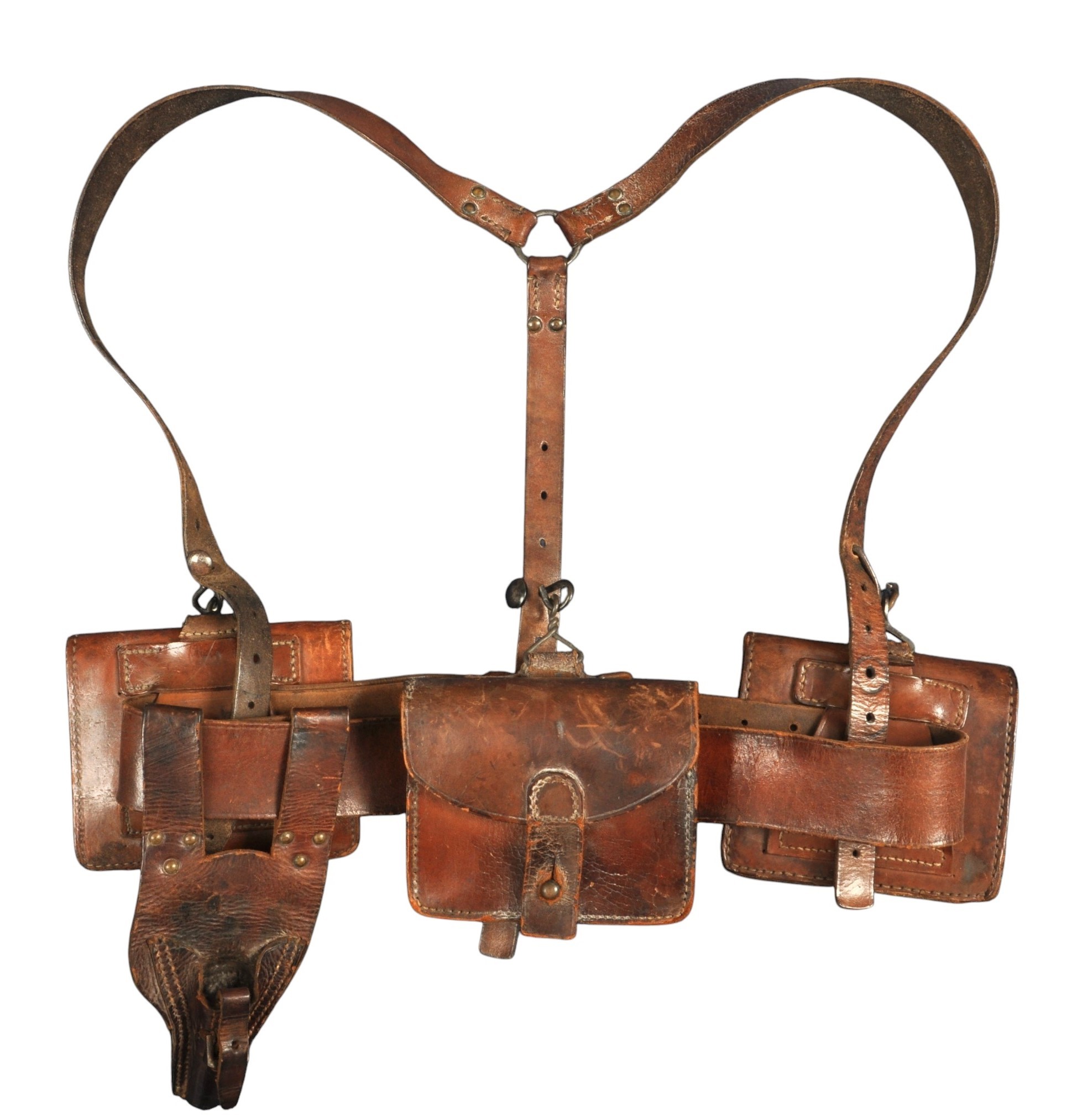
3. Webbing and Load-Carrying Systems (Pattern 08, 1914, and Leatherszeug)
Carrying ammunition, rations, water, and entrenching tools required durable load-bearing systems. Traditional leather belts and cross-straps chafed terribly when wet and degraded quickly in trench mud.
The British Army pioneered revolutionary canvas web equipment, most notably the Pattern 1908 Web Equipment and its simplified successor, the Pattern 1914. Made from tightly woven cotton web fabric treated with waterproof compounds, these systems distributed the weight of heavy ammunition pouches, entrenching tools, and haversacks evenly across the soldier's shoulders and hips. German forces relied primarily on treated leather support straps (Leatherszeug) paired with canvas ammunition pouches, while French troops utilized leather waist belts supplemented by canvas bread bags and knapsacks.
4. Entrenching Tools and Trench Knives
As the frontlines bogged down into static trench systems stretching from the Swiss border to the North Sea, the entrenching tool became a primary weapon for both survival and combat.
Soldiers carried folding spades, mattocks, and small pickaxes to deepen foxholes and reinforce trench walls against artillery fire. In close-quarters trench raids, standard bayonets often proved too long to maneuver effectively. Consequently, armies issued specialized trench knives, brass knuckles, heavy-bladed daggers, and even spiked wooden clubs for brutal hand-to-hand combat in confined spaces.
5. Wool Uniforms, Greatcoats, and Puttees
The environmental conditions of trench warfare—constant moisture, freezing mud, and poor sanitation—made proper clothing a matter of life and death. Trench foot, a debilitating fungal condition caused by prolonged exposure to cold, wet conditions, incapacitated thousands of men before proper preventive measures like whale oil and spare socks were implemented.
- Wool Tunics: Standard uniforms were constructed from heavy wool, which retained some warmth even when wet.
- Greatcoats: Long, heavy wool coats provided vital insulation during freezing winter nights on watch.
- Puttees: Long strips of wool bandage wrapped tightly around the lower leg from ankle to knee. While effective at keeping mud and dirt out of lace-up boots, improper wrapping could cut off blood circulation.
6. The Enamel Mess Kit and Canteen
Nutrition and hydration sustained millions of men under immense physical strain. The standard infantryman carried a metal water bottle (often aluminum, glass, or enameled steel, wrapped in felt or wool to keep water cool) and a compartmentalized mess tin.
Rations typically consisted of canned corned beef (such as British "Bully Beef"), hardtack biscuits or dry bread, preserved vegetables, and tea or coffee. Soldiers cooked over small solid-fuel stoves or makeshift trench burners when fires were prohibited due to enemy sniper and artillery observation.
7. Personal Hygiene Kits and First Aid Packets
Infectious diseases such as dysentery, cholera, typhus, and trench fever posed a deadlier threat to armies than enemy bullets. To combat disease, standard-issue gear included basic hygiene items: shaving razors, soap, toothbrushes, and spare undergarments.
Every soldier carried a standardized First Field Dressing packet sewn into the lining of their tunic. These sterile bandages, often accompanied by iodine ampoules, were designed for immediate self-treatment or buddy-aid before wounded men could be evacuated to battalion aid stations.
8. Entrenching Implements and Sandbags
While not worn on the body, sandbags and timber reinforcements were vital equipment pieces managed at the squad level. Millions of burlap sandbags were filled with earth to absorb shrapnel blasts, reinforce parapets, and construct firing steps. Maintaining the integrity of trench walls required constant shoveling, draining, and revetment work using specialized engineering tools issued to infantry units.
9. Signaling Equipment and Trench Periscopes
Information warfare in the trenches relied heavily on specialized tactical gear. To observe enemy positions without exposing one's head to sniper fire, soldiers used trench periscopes—ingenious contraptions made of mirrors and wooden or metal tubes.
For communication, runners remained vital, but wire-layers strung field telephone lines through the mud. Signal flags, carrier pigeons housed in mobile lofts, and Very pistols firing colored flares for artillery coordination completed the tactical communication kit of the frontline soldier.
10. Identification Discs (Identity Tags)
The unprecedented violence of industrial artillery fire meant that many casualties could not be visually identified. To solve this grim logistical problem, armies issued standardized identification discs—precursors to modern dog tags.
British soldiers wore two circular vulcanized fiber discs (one red, one green) around their necks on cords or laces. German soldiers carried stamped zinc or aluminum oval tokens that could be broken in half if the wearer was killed, allowing one half to be collected for records while the other remained with the body.
Comparison of Major Combatant Equipment (1914–1918)
| Equipment Category | British Empire (Tommies) | German Empire (Landser) | French Republic (Poilus) |
|---|---|---|---|
| Primary Helmet | Brodie Steel Helmet (1916) | Stahlhelm (1916) | Adrian Helmet (1915) |
| Gas Mask Type | Small Box Respirator (SBR) | Gummiermaske (Leather/Rubber) | M2 and ARS Masks |
| Load-Bearing Gear | Pattern 1908/1914 Webbing | Leather Belt & Ammo Pouches | Leather Belt & Haversacks |
| Primary Rifle | Lee-Enfield No. 1 Mk III | Mauser Gewehr 98 | Lebel Model 1886 / Berthier |
| Footwear | Ankle Boots with Puttees | Marschstiefel (Jackboots) | Leather Brogans with Puttees |
Frequently Asked Questions
What was the most important piece of WW1 equipment?
While gas masks and web gear were essential for survival and combat efficiency, military historians generally consider the steel helmet (introduced by all major powers by 1916) to be the single most impactful piece of life-saving equipment, reducing head wound mortality rates by massive margins against artillery shrapnel.
Why did British soldiers wear puttees instead of tall boots?
Puttees were economical, easy to manufacture in vast quantities, and adaptable to various leg sizes. Unlike rigid leather jackboots worn by German troops, puttees offered flexibility, prevented mud from sliding down into lace-up boots, and could double as emergency medical bandages if necessary.
How heavy was a standard WW1 infantryman's pack?
A fully loaded British or German frontline infantryman often carried between 50 to 70 pounds of equipment, including ammunition, rifle, bayonet, entrenching tool, water bottle, heavy wool greatcoat, rations, and shelter halves, all while marching through deep mud.
What caused trench foot during World War I?
Trench foot was caused by prolonged exposure of the feet to damp, unsanitary, and cold conditions in waterlogged trenches. The combination of moisture and constriction from tight boots restricted blood circulation, leading to tissue damage, numbness, and potential gangrene if left untreated.
Did American Doughboys use their own equipment in WW1?
When the American Expeditionary Forces (AEF) arrived in France in 1917, American industrial manufacturing could not yet supply all required gear at scale. Consequently, many U.S. troops were initially issued French artillery, helmets (Brodie-style M1917), and British web equipment before domestic production caught up.
Conclusion and Preservation Next Actions
The equipment of World War I represents a fascinating turning point in military history, bridging nineteenth-century traditions with modern industrial survival requirements. For historians, collectors, and researchers, handling or examining original artifacts requires care due to fragile canvas, degrading leather, and potential hazards from vintage metal preservation treatments. Always store historical military textiles in climate-controlled, acid-free environments to preserve these remarkable artifacts of the Great War for future generations.