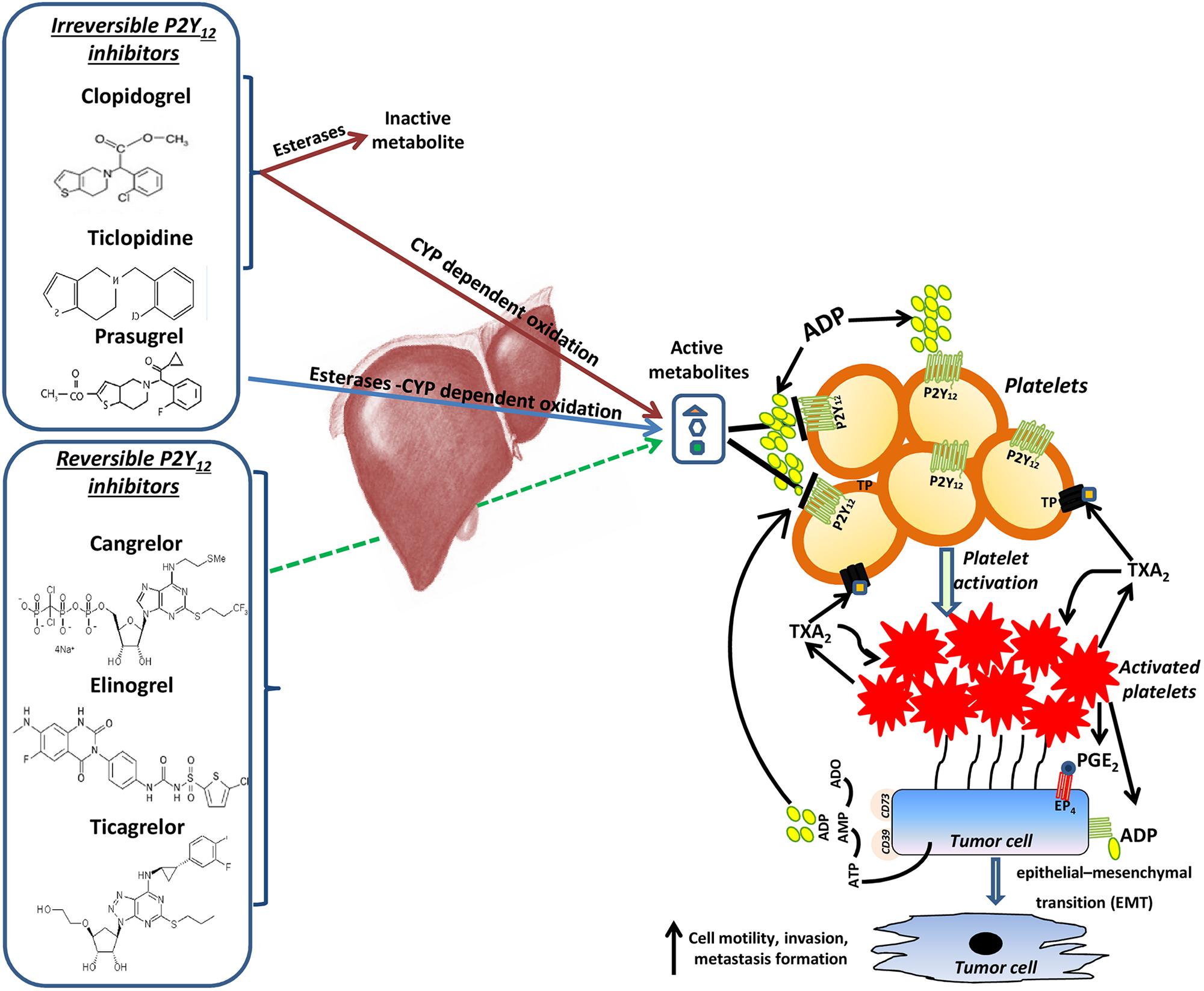
P2Y12 receptor blockade is a cornerstone of modern antiplatelet therapy, designed to prevent the aggregation of blood platelets and reduce the incidence of ischemic events such as myocardial infarction, stroke, and stent thrombosis. By inhibiting the binding of adenosine diphosphate to the P2Y12 platelet receptor, these pharmacological agents disrupt key pathways of thrombus formation, balancing efficacy in preventing cardiovascular events against the risk of bleeding complications.
Introduction to P2Y12 Receptor Blockade
Cardiovascular medicine relies heavily on antiplatelet agents to manage and prevent atherothrombotic diseases. At the physiological center of arterial thrombosis is the blood platelet. When endothelial injury occurs within the vasculature, platelets adhere to the exposed subendothelial matrix, become activated, and release various agonists that recruit additional circulating platelets to form a hemostatic plug or pathological thrombus. Adenosine diphosphate (ADP) plays a pivotal role in this amplification loop. ADP is stored in platelet dense granules and is released upon activation, binding to specific purinergic receptors on the platelet surface—namely, $P2Y_1$ and $P2Y_{12}$.
While the $P2Y_1$ receptor initiates rapid, transient shape changes and calcium mobilization, the $P2Y_{12}$ receptor is coupled to inhibitory G proteins ($G_i$) that inhibit adenylyl cyclase, lower cyclic adenosine monophosphate (cAMP) levels, and activate downstream signaling pathways like phosphoinositide 3-kinase (PI3K). This sustained intracellular cascade is vital for the full activation of glycoprotein IIb/IIIa receptors, which bind fibrinogen and cross-link platelets together. Therefore, pharmacological blockade of the P2Y12 receptor effectively interrupts this amplification phase, preventing the stabilization and propagation of the growing thrombus.
Understanding P2Y12 receptor blockade requires an examination of the distinct pharmacological classes available, their clinical indications in settings such as percutaneous coronary intervention (PCI) and acute coronary syndromes (ACS), the balance between ischemic protection and bleeding risks, and strategies for managing patients undergoing surgical procedures or experiencing adverse effects.
The Pharmacology of P2Y12 Inhibitors
P2Y12 inhibitors are categorized based on their chemical structure, binding characteristics, and reversibility of receptor inhibition. These distinctions dictate their onset of action, offset times, and overall pharmacokinetic and pharmacodynamic profiles.
| Class / Agent | Binding Type | Reversibility |
|---|---|---|
| Thienopyridines | ||
| - Ticlopidine | Irreversible | Irreversible |
| - Clopidogrel | Irreversible | Irreversible |
| - Prasugrel | Irreversible | Irreversible |
| Non-Thienopyridines | ||
| - Ticagrelor | Allosteric | Reversible |
| - Cangrelor | Direct / Competitive | Reversible |
Thienopyridines: Clopidogrel, Prasugrel, and Ticlopidine
Thienopyridines are prodrugs that require hepatic biotransformation via the cytochrome P450 (CYP) enzyme system to generate active metabolites that form an irreversible disulfide bond with the P2Y12 receptor. Because the bond is covalent, platelet function remains impaired for the lifespan of the affected platelet (approximately 7 to 10 days).
- Clopidogrel: As the most widely utilized thienopyridine historically, clopidogrel requires a two-step hepatic oxidation process, heavily influenced by CYP2C19 enzymes. Genetic polymorphisms in the CYP2C19 gene (such as loss-of-function alleles like *2 and *3) can impair the conversion of clopidogrel to its active metabolite, leading to high on-treatment platelet reactivity and increased ischemic risk. Drug-drug interactions, particularly with proton pump inhibitors like omeprazole that inhibit CYP2C19, can similarly diminish its antiplatelet efficacy.
- Prasugrel: A third-generation thienopyridine, prasugrel is metabolized more efficiently than clopidogrel, resulting in a faster onset, greater potency, and more consistent platelet inhibition with less inter-individual variability. However, prasugrel is contraindicated in patients with a history of prior stroke or transient ischemic attack (TIA) due to an unacceptably high risk of intracranial hemorrhage, and it carries cautionary dosing considerations in patients aged 75 and older or those weighing less than 60 kilograms.
- Ticlopidine: The first-generation agent, ticlopidine has largely been abandoned in contemporary practice due to severe adverse effects, notably thrombotic thrombocytopenic purpura (TTP) and severe neutropenia.
Non-Thienopyridines: Ticagrelor and Cangrelor
Non-thienopyridines bind directly to the P2Y12 receptor without requiring hepatic activation, offering rapid onset and offset profiles.
- Ticagrelor: A cyclopentyltriazolopyrimidine, ticagrelor is a reversible, allosteric antagonist of the P2Y12 receptor. Because it does not require metabolic activation, it provides rapid and predictable platelet inhibition independent of CYP2C19 genotype status. Its reversibility means platelet function recovers more quickly after drug discontinuation than with thienopyridines. Ticagrelor is administered twice daily and has been associated with unique non-bleeding side effects, such as self-limiting dyspnea (attributable to adenosine reuptake inhibition and Cfiber stimulation) and asymptomatic ventricular pauses.
- Cangrelor: An intravenous P2Y12 inhibitor, cangrelor provides extremely rapid and potent platelet inhibition with a very short half-life (3 to 6 minutes). It is primarily utilized in the cardiac catheterization laboratory for patients undergoing urgent or primary PCI who have not received an oral P2Y12 inhibitor or in whom oral agents are not feasible or absorbed.
Clinical Indications and Contemporary Guidelines
P2Y12 receptor blockade is foundational in the management of coronary artery disease (CAD), particularly in acute settings and following elective revascularization. Dual antiplatelet therapy (DAPT)—typically combining aspirin with a P2Y12 inhibitor—is the standard of care to prevent stent thrombosis and subsequent ischemic events.
Acute Coronary Syndromes (ACS)
Patients presenting with ST-segment elevation myocardial infarction (STEMI) or non-ST-segment elevation acute coronary syndromes (NSTE-ACS) undergo urgent evaluation and frequently percutaneous coronary intervention. Guidelines from major cardiovascular societies, including the American College of Cardiology (ACC), American Heart Association (AHA), and the European Society of Cardiology (ESC), recommend the early initiation of a potent P2Y12 inhibitor (prasugrel or ticagrelor) over clopidogrel, unless contraindicated by an excessive bleeding risk, advanced age, or low body weight.
Percutaneous Coronary Intervention (PCI)
For patients undergoing elective or urgent PCI with stent placement, DAPT duration is tailored based on ischemic versus bleeding risk.
- In elective stable ischemic heart disease (SIHD) treated with drug-eluting stents (DES), standard DAPT with clopidogrel is typically prescribed for a minimum of 6 months.
- In ACS patients, current guidelines generally recommend a standard DAPT duration of 12 months, though individual risk stratification models (such as the DAPT score or PRECISE-DAPT score) assist clinicians in deciding whether to shorten DAPT (e.g., 3 to 6 months in high bleeding risk patients) or extend it beyond 1 year in patients with high ischemic and low bleeding risks.
Balancing Efficacy and Safety: Ischemic Events vs. Bleeding
The primary therapeutic challenge of P2Y12 receptor blockade is the inherent pharmacological trade-off between preventing thrombotic occlusions and provoking hemorrhagic complications.
| The DAPT Trade-Off: Ischemia vs. Bleeding | |
|---|---|
| Enhanced P2Y12 Inhibition | Reduced Ischemic Events(Myocardial Infarction, Stent Thromb.) |
| Enhanced P2Y12 Inhibition | Increased Bleeding Complications(Minor/Major Bleeding, GI Bleeds) |
Ischemic Protection
Potent P2Y12 inhibitors significantly lower the composite endpoint of cardiovascular death, myocardial infarction, and stroke. In high-risk settings like primary PCI for STEMI, avoiding stent thrombosis—which carries a high mortality rate—justifies the deployment of agents like ticagrelor or prasugrel.
Bleeding Complications
Conversely, systemic platelet inhibition impairs the body's primary hemostatic response, increasing the incidence of bleeding ranging from nuisance bruising and epistaxis to life-threatening gastrointestinal or intracranial hemorrhages. Bleeding events are not merely procedural inconveniences; data consistently show that major bleeding events are independently associated with increased long-term mortality, largely because bleeding leads to the premature discontinuation of DAPT, which in turn triggers rebound ischemic events.
Management Considerations and Special Populations
Clinical implementation of P2Y12 receptor blockade requires careful patient evaluation, perioperative management planning, and consideration of specific demographic or genetic variables.
Perioperative Management of DAPT
When a patient taking a P2Y12 inhibitor requires non-cardiac surgery, clinicians must weigh the risk of surgical bleeding against the risk of stent thrombosis.
- Elective surgeries associated with low bleeding risk may sometimes be performed on continued DAPT or with single antiplatelet therapy.
- For major surgeries where hemostasis is critical, P2Y12 inhibitors must be discontinued ahead of time: clopidogrel and ticagrelor are typically stopped at least 5 days prior to surgery, while prasugrel requires at least 7 days due to its irreversible and potent nature.
- If urgent surgery is required while a patient is on a reversible agent like ticagrelor or cangrelor, offset is rapid once the infusion stops or the drug clears. For irreversible agents, platelet transfusions may be considered in life-threatening bleeding scenarios, though their efficacy can be blunted by circulating active metabolites.
De-escalation Strategies
In patients who initially present with ACS and receive potent P2Y12 inhibitors, clinicians may employ a "de-escalation" strategy—switching from ticagrelor or prasugrel to clopidogrel after the acute high-risk phase (e.g., at 30 days)—to mitigate bleeding risks while maintaining adequate long-term secondary prevention. De-escalation can be unguided or guided by platelet function testing or CYP2C19 genotyping.
Geriatric and Low-Weight Patients
Older adults (aged $\ge 75$ years) and individuals with low body weight ($\le 60$ kg) experience an elevated pharmacokinetic and pharmacodynamic response to antiplatelet agents, dramatically increasing bleeding risk. In these populations, dosing adjustments or selecting clopidogrel over potent agents is frequently indicated to optimize safety without sacrificing efficacy.
Conclusion
P2Y12 receptor blockade represents a cornerstone in the prevention and management of arterial thrombosis, bridging pharmacology and clinical cardiology to save lives during acute coronary events. From the established irreversible thienopyridines like clopidogrel and prasugrel to reversible antagonists like ticagrelor and cangrelor, selecting the appropriate agent requires meticulous clinical judgment. By carefully balancing the reduction of ischemic events against the risk of bleeding, tailoring duration to individual risk factors, and managing transitions around invasive procedures, healthcare providers optimize cardiovascular outcomes for millions of patients worldwide.