Archie Swift was a pivotal regional photographer active during the early 1900s, primarily known for documenting the industrial expansion, mining boom, and social landscape of the Kootenay region in British Columbia, Canada. His work remains a primary visual record for historians studying the transition from frontier settlements to established industrial hubs in the Pacific Northwest.
The Life and Career of Archibald "Archie" Swift
Archibald Swift, popularly known as Archie, established himself as a professional photographer during a period of immense change in North American history. Operating primarily out of Nelson, British Columbia, Swift arrived at a time when the "Silver King" mining boom had transformed a quiet wilderness into a bustling center of commerce and extraction.
Swift’s career was defined by his ability to bridge the gap between artistic landscape photography and cold, technical documentation. In the early 20th century, a photographer was often a chemist, an explorer, and a businessman rolled into one. Swift maintained a studio that served the local population for portraits, but his most enduring legacy lies in his field commissions. He frequently traveled into the rugged interior, hauling heavy glass-plate equipment to remote mine sites, newly constructed bridges, and expanding railway lines.
His work caught the attention of both private industry and local government. By capturing the scale of the infrastructure being built, Swift provided the visual evidence needed by investors in distant cities like Montreal, London, and New York to justify their capital expenditures in the Canadian West.
Technical Mastery: The Equipment and Processes of the 1900s
To understand the quality and historical value of Archie Swift’s photographs, one must understand the technical constraints of the era. Unlike the lightweight digital tools of 2026, or even the film cameras of the late 20th century, Swift worked in the era of the Large Format View Camera.
Glass Plate Negatives
During the peak of Swift's activity (roughly 1900–1915), the primary medium for high-quality photography was the dry plate glass negative. These were glass sheets coated with a light-sensitive gelatin emulsion. They offered several advantages and challenges:
- Resolution: Because the negatives were often 5x7 or 8x10 inches in size, they captured a level of detail that rivals modern high-end digital sensors. This allowed Swift’s photos to be enlarged significantly without losing clarity.
- Stability: Unlike early flexible films which were highly flammable and prone to degradation, glass plates were chemically stable, which is why many of Swift's originals remain in excellent condition in 2026 archives.
- Weight: Carrying dozens of glass plates into the mountains was a grueling physical task, requiring pack horses or significant manual labor.
The Printing Process
Swift utilized several printing techniques, but he is most closely associated with silver gelatin prints and albumen prints. Silver gelatin became the industry standard during his tenure due to its more neutral black-and-white tones and improved shelf life. For his commercial postcard business, he relied on "gaslight" papers, which were sensitive enough to be developed under artificial light, allowing for faster production cycles in his Nelson studio.
The Real Photo Postcard (RPPC) Phenomenon
One cannot discuss Archie Swift without addressing the Real Photo Postcard (RPPC). Between 1905 and 1915, North America and Europe experienced a "postcard craze." The United States Postal Service and Canada Post changed regulations to allow for "divided backs," where the address and a message could be written on the same side, leaving the entire front for an image.
Archie Swift capitalized on this by producing postcards that were not mass-produced lithographs, but actual photographs developed onto postcard-sized paper.
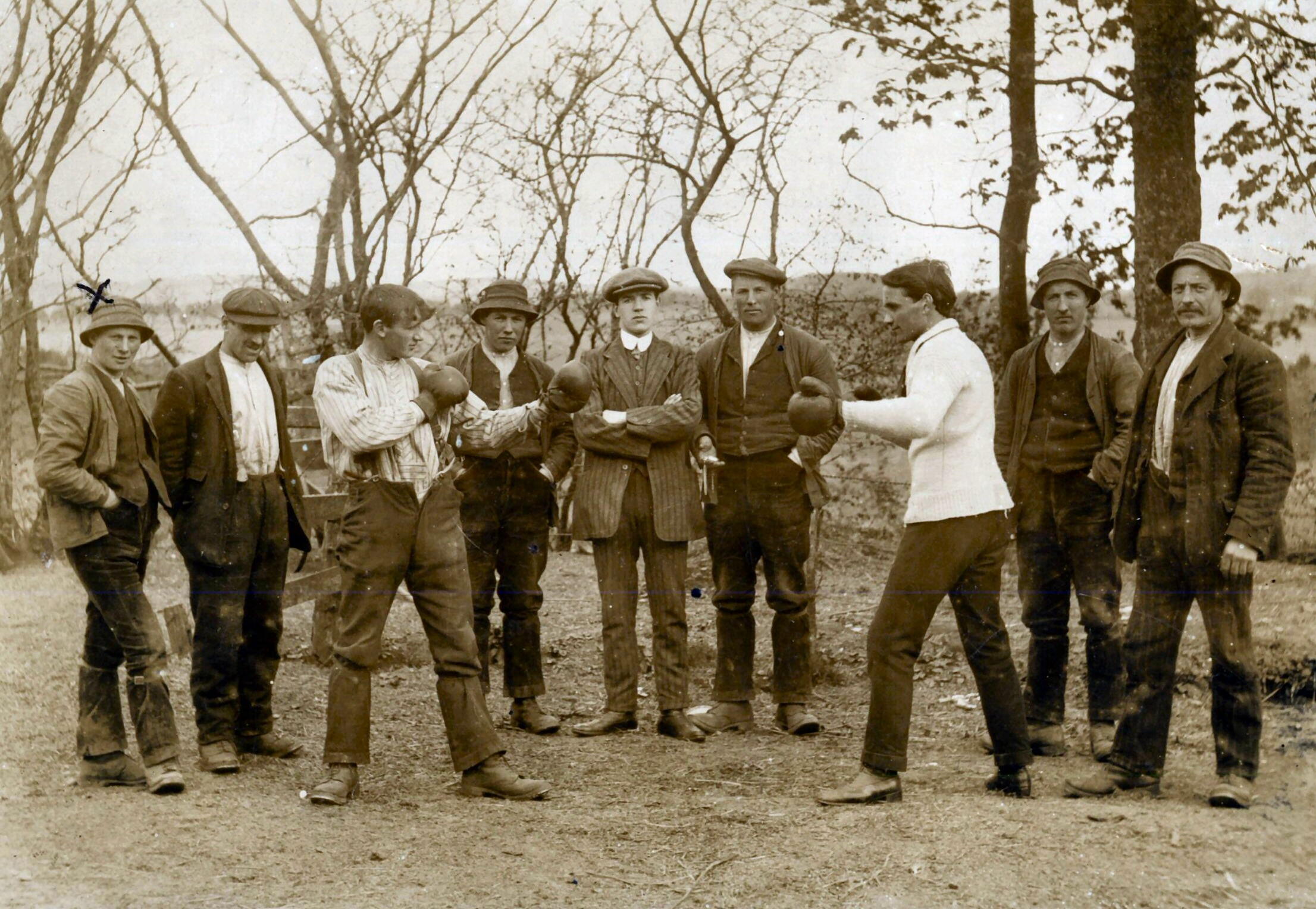
- Direct Documentation: These cards served as the "social media" of 1910. A miner could buy a Swift postcard of the Bonanza Mine, mark his bunkhouse with an 'X', and mail it home to family in England or Ontario.
- Marketing the Region: Swift’s postcards depicted the Kootenays as a land of opportunity and sublime beauty. His shots of Kootenay Lake and the surrounding peaks were widely distributed, acting as an informal tourism bureau for the region.
- Authentication: Many of Swift's postcards are identifiable by his distinct signature or studio stamp, often embossed or written directly into the negative so it appeared in white text on the final print.
Key Subjects in Swift’s Portfolio
Archie Swift’s body of work can be categorized into four primary areas, each providing a different lens into early 20th-century life.
1. Industrial and Mining Operations
The Kootenays were built on silver, lead, and zinc. Swift was often hired by mining companies to document the progress of concentrators, tramways, and smelters. His photographs of the Silver King Mine and the Hall Mines Smelter are some of the most frequently cited images in Canadian industrial history. These photos were not just artistic; they were functional records of engineering.
2. Urban Development and Architecture
As Nelson and surrounding towns like Kaslo and Slocan City grew, Swift documented the transition from canvas tents to Victorian brick architecture. He captured the opening of the Hume Hotel, the construction of civic buildings, and the arrival of the first automobiles in the region. These images allow modern urban planners to trace the original layout of these historic towns.
3. The Natural Landscape
While much of his work was commercial, Swift had a clear eye for the sublime. His panoramic views of the Selkirk and Purcell Mountains demonstrate a mastery of composition and light. He often waited for specific atmospheric conditions—fog lifting off the lake or the harsh shadows of high noon—to accentuate the ruggedness of the terrain.
4. Social Life and Community Events
Beyond the machines and mountains, Swift photographed the people. This included portraits of local dignitaries, hockey teams, and the famous "Slocan drills" or mining competitions. These images provide a rare look at the clothing, tools, and social hierarchy of a frontier society in the process of becoming "civilized."
Comparative Technical Landscape: 1900 vs. 1920
To appreciate how Swift's work fits into the timeline of photography, we can compare the technology at the start of his career versus the end of his active period.
| Feature | The Swift Era (1900–1910) | The Post-War Shift (1920s) |
|---|---|---|
| Primary Negative | Glass Dry Plates | Cellulose Nitrate/Acetate Film |
| Camera Portability | Heavy Field/View Cameras (Tripod essential) | Handheld Folders (Kodak Brownie/Autographic) |
| Exposure Times | Often 1/10th of a second to several seconds | Faster shutters, up to 1/100th or 1/500th |
| Commercial Model | Studio-centric, Real Photo Postcards | Mass-market snapshots, amateur developing |
| Darkroom Chemicals | Hydroquinone, Metol, Potassium Bromide | Introduction of standardized "safety" developers |
Identifying and Verifying Archie Swift Prints
For collectors and historians in 2026, identifying an original Archie Swift photograph requires careful inspection. Because "Swift" was a relatively common name, disambiguation is necessary.
Verification Steps:
- The Studio Mark: Look for "A. Swift, Nelson, B.C." or "Swift Photo" embossed in the lower corner of the print or written in the negative.
- The Subject Matter: If the photo depicts the Kootenays, particularly the mines around Nelson, Sandon, or Kootenay Lake, it is highly likely to be an Archie Swift original.
- The Card Stock: Genuine RPPCs from Swift usually have specific back-stamps such as "AZO" (with four triangles pointing up) or "Velox," which help date the paper to the early 1900s.
- Physical Condition: Authentic 110-year-old silver gelatin prints often exhibit "silvering" (a metallic sheen in the dark areas) when viewed at an angle, a sign of genuine age that modern reproductions lack.
Preservation and Accessibility in 2026
The majority of Archie Swift’s surviving work is held in institutional archives. These organizations have worked throughout the early 21st century to digitize his glass plates to prevent further degradation.
- Touchstones Nelson Museum of Art and History: This is the primary repository for Swift’s local work. Their archives contain hundreds of original prints and several glass plate collections.
- British Columbia Archives (Royal BC Museum): Located in Victoria, this archive holds a broader collection of Swift’s work that was used for provincial promotion and industrial records.
- Library and Archives Canada: Select images related to the Canadian Pacific Railway and national industrial interests are preserved here.
For researchers in 2026, most of these collections are accessible through online digital portals, though viewing the original glass plates usually requires an appointment and adherence to strict preservation protocols (including climate-controlled rooms and the use of nitrile gloves).
Frequently Asked Questions
Where can I find high-resolution digital copies of Archie Swift's work?
Most high-resolution versions are managed by Touchstones Nelson and the BC Archives. In 2026, many of these images are available through the "MemoryBC" portal or the museum's internal digital assets management system. Some images are in the public domain, but high-resolution files for publication usually require a licensing fee to support the preservation of the physical originals.
Was Archie Swift related to the Swift Meat Packing family?
There is no confirmed genealogical link between Archibald Swift of Nelson and the famous Swift & Company meatpacking dynasty based in Chicago. While they share a surname and were active during the same historical period, Archie Swift’s focus remained exclusively on regional photography in the Pacific Northwest and Western Canada.
Did Archie Swift ever take color photographs?
No, the technology for practical color photography (like Kodachrome) did not exist during Swift's primary years of activity. Any "colored" Archie Swift photographs you encounter are hand-tinted. This was a process where an artist in the studio would apply translucent oil paints or watercolors over a black-and-white silver gelatin print to simulate color.
What happened to Archie Swift's studio?
Like many regional studios, Swift's business faced challenges with the rise of amateur photography (the "Kodak Revolution") and the economic shifts following World War I. While the physical studio in Nelson has long since been repurposed, the site remains a point of interest on historical walking tours of the city's heritage district.
How much is an original Archie Swift postcard worth today?
In the 2026 collector's market, the value of an Archie Swift Real Photo Postcard (RPPC) depends on the subject matter. Common scenic views may sell for $20–$50, while rare industrial scenes (specific mines, train wrecks, or early labor strikes) can fetch between $150 and $500 among specialized Kootenay history collectors.
Next Steps for Researchers and Collectors
If you are looking to delve deeper into the visual history captured by Archie Swift, the best course of action is to visit the Touchstones Nelson Museum of Art and History in British Columbia. Their staff can provide context regarding the specific locations in Swift's photos, many of which have been reclaimed by the forest or significantly altered by modern development.
For those interested in the technical side of his work, studying the dry plate process provides a profound appreciation for the labor-intensive nature of early 20th-century photography. Understanding that every single image Swift produced required a physical glass sheet, a chemical bath, and an arduous journey into the wilderness makes his vast portfolio even more impressive.