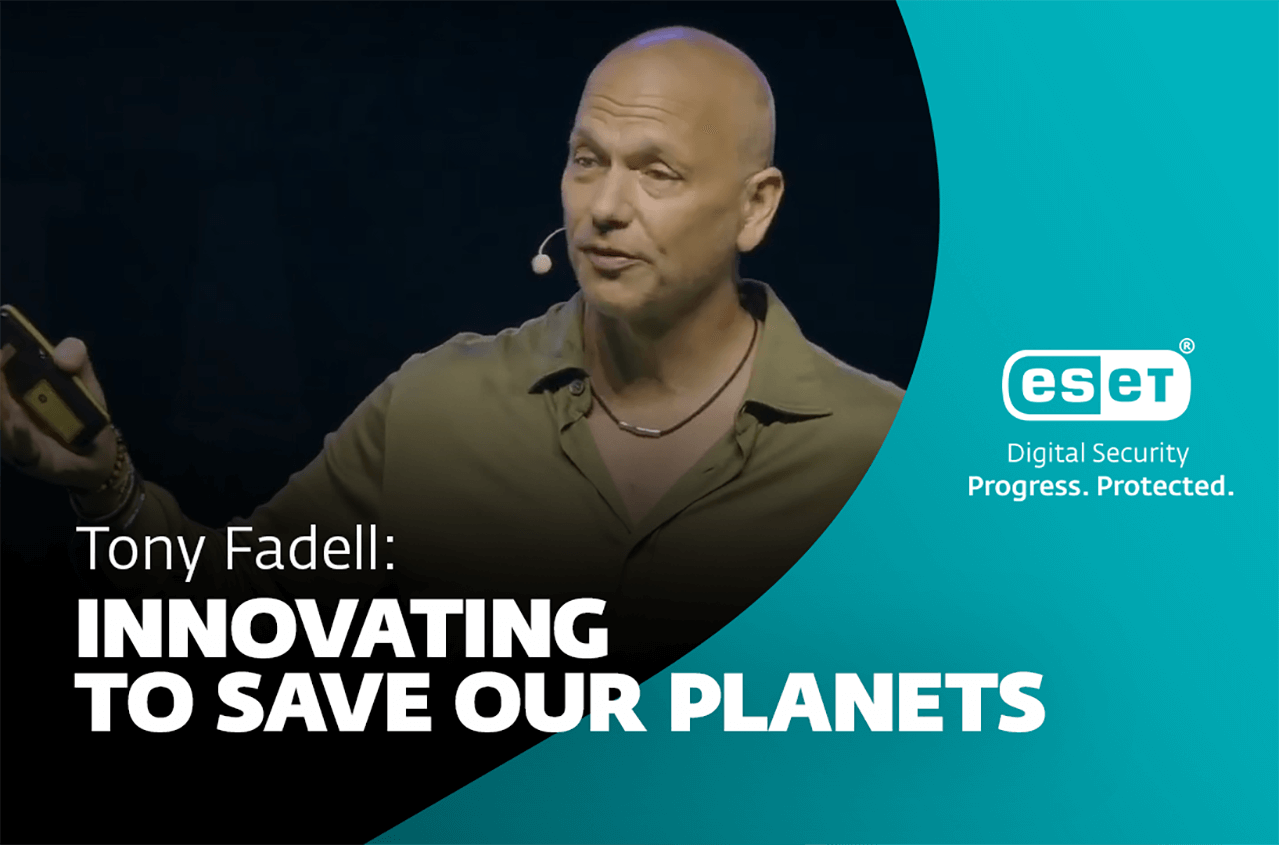
Tony Fadell’s net worth is estimated between $800 million and $1 billion. Often dubbed the "Podfather" for his role in creating the Apple iPod, Fadell built his fortune through executive compensation at Apple, the multi-billion-dollar sale of Nest Labs to Google, and investments in over 200 deep-tech startups through his firm, Future Shape.
| Metric | Tony Fadell Wealth Profile Matrix |
|---|---|
| Estimated Net Worth | $800 Million – $1+ Billion |
| Key Wealth Engines | • Apple Stock Options & Executive Grants (2001–2010)• Nest Labs $3.2 Billion Cash Sale to Google (2014)• Future Shape Investment Portfolio (200+ Startups) |
| Notable Innovations | Co-creator of Apple iPod & iPhone; Co-founder of Nest |
| Investment Focus | Deep tech, microelectronics, climate tech, synthetic biology |
Early Tech Career and General Magic Foundations
Before achieving legendary status at Apple, Anthony M. Fadell developed his technical foundation through software engineering and hardware design. Graduating from the University of Michigan with a Bachelor of Science in Computer Engineering in 1991, Fadell immediately entered Silicon Valley’s innovation ecosystem.
His early career was defined by pivotal roles at pioneering tech firms:
- General Magic: Joining this Apple spin-off in 1992, Fadell worked as a systems architect and software engineer. General Magic developed early concepts for personal digital assistants (PDAs), touchscreen interfaces, and software agents—technologies that predated mobile computing by over a decade.
- Philips Electronics: In 1995, Fadell joined Philips, where he rose to Chief Technology Officer and Vice President of the Mobile Computing Group. He spearheaded the development of Windows CE-based handheld devices, including the Philips Velo and Nino.
While these early endeavors did not generate vast wealth, they established Fadell’s expertise in miniaturized hardware, embedded operating systems, and user-centric industrial design. Furthermore, his time at General Magic exposed him to early equity compensation structures, preparing him for high-stakes corporate negotiation.
Following his departure from Philips, Fadell founded Fuse Systems, an early attempt to create a hard-drive-based digital audio player. Although Fuse Systems folded during the dot-com crash of 2000 due to funding constraints, the core concept directly paved the way for his career-defining work at Apple.
The Apple Years: Building the iPod and iPhone
In early 2001, Apple brought in Tony Fadell as an independent consultant to design a hard-drive-based MP3 player and formulate Apple’s digital music strategy. Recognizing his vision, Steve Jobs hired Fadell full-time as the Senior Director of the iPod Division.
- Fuse Systems Concept
- Apple Advisory Contract (2001)
- VP of iPod Division (2004)
- Apple Stock Option Grants
- SVP of iPod Division (2006)
- High-Tier Executive Equity
Concept to Commercial Dominance
Fadell led the engineering team responsible for bringing the original iPod from initial architecture to store shelves in less than nine months. The device transformed consumer electronics and resurrected Apple’s financial standing.
Recognizing his leadership, Apple promoted Fadell to Vice President of iPod Engineering in 2004, and subsequently to Senior Vice President of the iPod Division in 2006, succeeding Jon Rubinstein. Under his direction, the iPod division grew to account for a substantial portion of Apple's revenue throughout the mid-2000s, selling tens of millions of units globally.
Fadell also played a vital role in the early development of the iPhone. He served on the executive steering committee that oversaw the integration of cellular connectivity, multi-touch interfaces, and mobile operating system design into Apple's phone initiative, cementing his status as a core architect of modern mobile computing.
Executive Equity and Compensation
Fadell’s direct salary as an Apple Senior Vice President was supplemented by substantial restricted stock units (RSUs) and stock option grants during one of the most explosive growth phases in corporate history.
Between 2001 and 2010, Apple’s market value multiplied dramatically. While exact executive compensation details for non-CEO roles remain partially private, SEC filings and historical stock distributions indicate that senior executives during this era accumulated tens of millions of dollars in Apple equity.
When Fadell officially stepped down from his full-time executive role in 2008—remaining an advisor to Steve Jobs until 2010—he possessed substantial liquid wealth and high-value Apple equity. This capital laid the foundation for his future entrepreneurial ventures.
Nest Labs: The Multi-Billion Dollar Entrepreneurial Payday
In 2010, after leaving Apple, Tony Fadell co-founded Nest Labs alongside Matt Rogers, a former lead iPod software engineer. The venture aimed to revolutionize uninspired home automation products by applying smartphone-grade design, machine learning, and internet connectivity to everyday household electronics.
| Year | Nest Labs Financial Trajectory |
|---|---|
| 2010 | Founded by Tony Fadell & Matt Rogers |
| 2011 | Launched Nest Learning Thermostat (Disrupted HVAC Industry) |
| 2012–2013 | Product Line Expansion (Nest Protect Smoke & CO Alarm) |
| 2014 (January) | Acquired by Google Inc. for $3.2 Billion in Cash |
Disrupting Smart Home Hardware
Nest introduced its flagship product, the Nest Learning Thermostat, in October 2011. By combining sleek brushed-aluminum hardware, an intuitive ring-based user interface, and predictive algorithm software, Nest disrupted a market previously dominated by legacy industrial manufacturers.
The company followed up with the Nest Protect smoke and carbon monoxide detector, expanding into home safety. Backed by top-tier venture capital firms including Kleiner Perkins, Google Ventures, and Shasta Ventures, Nest rapidly reached a unicorn valuation.
The Google Acquisition Mechanics
In January 2014, Google announced an agreement to acquire Nest Labs for $3.2 billion in cash. This acquisition stood as one of the largest hardware exits in Silicon Valley history up to that point.
Because the acquisition was executed entirely in cash rather than equity, it provided immediate liquidity to Nest’s founders, early employees, and venture backers.
- Valuation: $3.2 Billion cash consideration.
- Founder Equity: While exact cap table allocations are confidential, industry analysts estimated that Fadell retained significant equity ownership at the time of sale, even after dilution across funding rounds.
- Estimated Payout: Venture analysts estimate that Fadell’s personal stake yielded a pre-tax windfall ranging between $300 million and $500 million, cementing his status as an independent ultra-high-net-worth investor.
Fadell remained Chief Executive Officer of Nest as a Google subsidiary until June 2016. During his tenure under Alphabet/Google, he also briefly oversaw the reorganization of the Google Glass initiative (Project Glass). His exit in 2016 marked his transition from corporate executive to global technology investor.
Future Shape: Venture Capital and Deep Tech Investing
Following his departure from Google, Fadell shifted his focus to venture capital and direct technology investments. Rather than establishing a traditional institutional fund subject to limited partner (LP) mandates, Fadell established Future Shape, a global investment and advisory firm powered by his private wealth.
| Metric | Future Shape Investment Thesis & Portfolio |
|---|---|
| Operating Model | Investment and advisory firm using proprietary capital |
| Active Portfolio Size | 200+ deep-tech, hardware, climate, & healthtech startups |
| Core Focus Areas | • Climate Technology & Renewable Energy Solutions• Materials Science & Synthetic Biology• Semiconductors & Microelectronics• Health Technology & Advanced Medical Devices |
Investment Philosophy and Strategy
Future Shape focuses primarily on "deep tech"—companies developing fundamental scientific breakthroughs, advanced hardware, materials science, and climate technologies. Unlike software startups requiring minimal capital expenditures, deep-tech investments require long-term vision, significant engineering knowledge, and extended patient capital.
Fadell’s firm provides portfolio founders with strategic mentoring on manufacturing, supply chain scaling, brand positioning, and executive management.
Notable Portfolio Investments
Through Future Shape, Fadell has funded over 200 companies globally. High-profile investments and portfolio participants include:
- Impossible Foods: Developer of plant-based meat substitutes aimed at reducing global agricultural emissions.
- Diamond Foundry: Producer of lab-grown diamonds utilizing plasma technology for industrial applications and semiconductor heat sinks.
- SuperNode: Developer of superconducting technology for high-efficiency national electricity grids.
- Salvia BioElectronics: Creator of bio-electronic medical devices for neurological therapy.
- Moxion Power: Manufacturer of clean, mobile battery energy storage systems replacing diesel generators.
By taking early-stage equity stakes in companies addressing foundational global challenges, Fadell has positioned his investment capital across diverse asset classes. As these portfolio companies execute secondary market liquidity events, initial public offerings (IPOs), or corporate buyouts, they continuously feed his net worth.
Breakdown of Wealth Drivers Across Career Phases
The following matrix outlines how Tony Fadell built his estimated $800M – $1B net worth across key career chapters.
| Career Phase / Entity | Primary Wealth Source | Strategic Output & Financial Impact | Key Assets / Outflows |
|---|---|---|---|
| Early Career (General Magic, Philips, Fuse) | Executive Salaries & Early Options | Established microelectronics domain expertise; early startup equity built initial liquid safety net. | Salary compensation, early startup stock holdings. |
| Apple (2001–2010) | Executive Salary, Cash Bonuses, Stock Options, RSUs | Led iPod division and iPhone development; held senior executive equity during Apple’s massive market growth. | Vested Apple equity (AAPL stock and options portfolio). |
| Nest Labs (2010–2014) | Founder Equity & Acquisition Multiples | Co-founded smart-home pioneer; executed a $3.2 billion cash sale to Google in 2014. | Liquid cash payout estimated between $300M and $500M post-dilution/pre-tax. |
| Alphabet / Google (2014–2016) | Corporate Executive Compensation | Led Nest as a Google subsidiary and oversaw Google Glass restructuring. | Corporate retention compensation and executive bonuses. |
| Future Shape (2016–Present) | Direct Private Equity & Venture Capital Portfolio | Invested personal capital into 200+ deep-tech, healthtech, and green-tech companies globally. | Private equity assets, venture holdings, board advisory fees. |
| Author & Keynote Advisory | Book Royalties (Build), Advisory Roles, Speaking Fees | Published bestselling guide Build: An Unorthodox Guide to Making Things Worth Making; advisory retainer fees. | Intellectual property holdings, royalty income streams, board compensation. |
Asset Distribution and Financial Strategy
Tony Fadell’s wealth structure differs significantly from tech founders whose net worth is locked in a single publicly traded company (such as Elon Musk with Tesla or Mark Zuckerberg with Meta). Because his major liquidity event occurred via a cash acquisition, Fadell holds a highly diversified financial portfolio.
- Tony Fadell Portfolio
- Future Shape Portfolio (40–50%): 200+ Deep Tech Startups, Climate, Biotech, Micro
- Liquid Capital Reserve (35–45%): Treasuries, Bonds, Cash, Yield Investments, Public
- Real Estate & Fixed (10–15%): Luxury Properties, IP, Book Royalties (Build)
Liquidity and Portfolio Diversification
- Private Venture Holdings (40-50%): Capital allocated across early- and growth-stage deep-tech startups via Future Shape. While high-risk, this segment yields significant upside through strategic tech exits.
- Liquid Capital & Market Holdings (35-45%): Cash reserves, fixed-income investments, yield-generating money market accounts, and diversified public equities derived from the $3.2 billion Nest cash sale.
- Real Estate, Intellectual Property & Advisory Assets (10-15%): Real estate holdings across the United States and Europe, alongside publishing revenues from his book Build: An Unorthodox Guide to Making Things Worth Making, keynote fees, and board position compensation (such as his advisory roles with microchip design firms like Arm).
Philanthropy and Environmental Impact Spending
Fadell directs a notable portion of his investment capital toward climate technology initiatives. Rather than using conventional grant-making philanthropic foundations, his financial strategy emphasizes "impact investing"—funding double-bottom-line ventures that target financial returns while solving environmental challenges.
Through investments in clean grid infrastructure, carbon management technologies, microplastics alternatives, and sustainable agriculture, Fadell leverages capital allocation to advance global sustainability targets while growing his investment portfolio.
Financial Methodology and Estimation Disclaimer
Net worth estimations for private technology executives rely on public record analysis, regulatory reporting, market acquisition disclosures, and venture valuation modeling:
- Public Acquisitions: The 2014 Nest purchase by Google for $3.2 billion cash is a matter of public regulatory record. Cap-table structures, venture funding dilution curves, and founder equity stakes provide high-confidence baselines for liquid capital generation.
- Private Market Valuations: Future Shape operates as a private family office investment vehicle. Portfolio company valuations fluctuate based on funding rounds, macroeconomic conditions, and tech sector exit environments.
- Tax Considerations: Federal capital gains, California state income taxes (applicable during his Apple and Nest tenures), and international residency tax structures impact net cash retention from major liquidity events.
Because private holdings and family office balance sheets remain private, net worth estimates are presented as target analytical ranges ($800M – $1B) based on verifiable financial events.
Frequently Asked Questions (FAQs)
What is Tony Fadell's estimated net worth?
Tony Fadell's net worth is estimated between $800 million and $1 billion. His wealth stems from executive stock compensation at Apple, the $3.2 billion cash sale of Nest Labs to Google, and extensive venture capital investments via his firm Future Shape.
How much money did Tony Fadell make from selling Nest to Google?
While exact individual cap table payouts were not publicly disclosed, Google acquired Nest Labs for $3.2 billion in cash in January 2014. Industry estimates indicate that Fadell's equity stake yielded a pre-tax windfall of approximately $300 million to $500 million after accounting for prior venture capital dilution.
Is Tony Fadell still receiving royalties from Apple for the iPod or iPhone?
No. Corporate executives and software engineers at Apple do not receive per-unit patent royalties for products created during their employment. Fadell’s financial return from Apple came via executive salary, performance cash bonuses, stock options, and restricted stock units (RSUs) earned during his tenure.
What is Future Shape, and how does it contribute to Fadell's wealth?
Future Shape is an investment and advisory firm founded by Tony Fadell. Powered by his private capital rather than external LPs, it has backed more than 200 deep-tech, healthtech, green-tech, and materials science startups. Successful exits and secondary market funding rounds across these startups continuously grow his liquid net worth.
Did Tony Fadell invent the iPod by himself?
Tony Fadell is widely credited as the "Podfather" because he created the original product proposal, designed the hardware architecture, built the initial team, and led the iPod division at Apple. However, the finished product was a collaborative effort involving Steve Jobs, industrial designer Jony Ive, software developers, and engineering teams at Apple.
Actionable Takeaways for Tech Entrepreneurs and Investors
Tony Fadell’s career trajectory offers clear lessons for tech professionals seeking to build long-term wealth:
- Balance Intrapreneurship and Entrepreneurship: Fadell accumulated foundational wealth and elite domain expertise as an internal executive (at Apple) before risking capital on his own venture (Nest). Working at high-growth companies can provide both equity upsides and operational blueprints.
- Focus on Solving Painful, Unsexy Problems: Nest succeeded by revolutionizing the home thermostat—a product category ignored by major designers for decades. High valuations stem from creating substantial consumer utility in overlooked markets.
- Understand Dilution vs. Value Creation: Holding a smaller percentage of a high-value, cash-exit entity (such as Nest’s $3.2 billion sale) yields more wealth than retaining total ownership of a stagnant business.
- Transition from Operator to Investor: Long-term wealth preservation relies on asset diversification. Moving liquid exit funds into deep-tech, climate-focused private equity allows experienced founders to leverage their operational insight for outsized investment returns.