The Annenberg Foundation holds net assets valued at approximately $1.5 billion to $1.7 billion, placing it consistently among the top 60 largest private non-operating foundations in the United States. Established in 1989 by publisher and diplomat Walter H. Annenberg, the foundation relies on its multi-billion-dollar endowment to fund community, environmental, educational, and cultural initiatives.
| Annenberg Foundation at a Glance | Details |
|---|---|
| Net Asset Value (FMV) | ~$1.5 Billion - $1.7 Billion |
| US Foundation Rank | Approximately #50 - #70 nationwide |
| Annual Grant Distribution | $70 Million - $100 Million+ annually |
| Primary Tax Filing | IRS Form 990-PF |
| Primary Geographic Focus | Los Angeles County, California & National Programs |
Understanding the Annenberg Foundation’s Financial Valuation
Evaluating the "net worth" of a non-profit foundation differs significantly from assessing a private individual's net worth or a publicly traded corporation's market capitalization. For private foundations in the United States, net worth is measured through net asset value (NAV), which represents total financial and physical assets minus outstanding liabilities at the end of the tax year.
The primary financial disclosures for charitable organizations like the Annenberg Foundation are recorded on IRS Form 990-PF, the annual tax return required for private foundations. This filing documents both the book value (historical cost basis) and the fair market value (FMV) of the foundation's investment portfolio, real estate holdings, cash reserves, and other assets.
- Total Investment Assets (Stocks, Bonds, Real Estate, Cash)
- Less: Total Liabilities (Grants Payable, Mortgages, Operating Debt)
- Equals: Net Assets / Total Fund Balance (IRS Form 990-PF Fair Market Value)
In recent public tax filings cataloged by non-profit monitoring platforms such as Candid (formerly the Foundation Center), the Annenberg Foundation has maintained an asset base oscillating between $1.5 billion and $1.7 billion. This valuation fluctuates based on annual investment returns, broader financial market performance, and the volume of charitable grants paid out during a given tax reporting period.
Where the Annenberg Foundation Ranks Nationally
To understand where the Annenberg Foundation sits in the broader landscape of American philanthropy, it is helpful to look at how non-profit assets are distributed across the country. The United States hosts more than 100,000 private foundations, but the vast majority hold less than $10 million in assets.
- Mega-Foundations (>$10B): Gates Foundation, Lilly Endowment, Ford Foundation
- Large-Cap Tier ($1B - $10B): Annenberg Foundation (~$1.6B Rank #50-#70)
- Mid-Tier Foundations ($100M-$1B): Regional Family & Corporate Foundations
- Community & Small Foundations: <$100M Asset Base (Majority of U.S. Foundations)
The US Top 100 Foundation Landscape
The upper echelon of U.S. foundations is dominated by a small group of massive institutions:
- Mega-Tier Foundations (Assets above $10 Billion): Entities like the Bill & Melinda Gates Foundation, the Lilly Endowment, the Ford Foundation, and the Robert Wood Johnson Foundation hold endowments ranging from $13 billion to over $60 billion.
- Large-Cap Foundations (Assets between $1 Billion and $10 Billion): This group includes prominent institutions such as the MacArthur Foundation, the Rockefeller Foundation, the Andrew W. Mellon Foundation, and the Annenberg Foundation.
In nationwide rankings compiled by non-profit research organizations, the Annenberg Foundation typically ranks between #50 and #70 among all private non-operating foundations by fair market value of assets. When ranked specifically within its home state of California, the foundation consistently secures a position among the top 10 to top 15 largest philanthropic endowments, alongside entities like the William and Flora Hewlett Foundation and the David and Lucile Packard Foundation.
Historical Origins of the Annenberg Endowment
The scale of the Annenberg Foundation’s net worth is rooted in one of the most significant media transactions of the 20th century.
Walter H. Annenberg and Triangle Publications
Walter H. Annenberg (1908–2002) built a media empire through Triangle Publications, which included major properties such as The Philadelphia Inquirer, TV Guide, Seventeen magazine, and several radio and television broadcast stations. In 1988, Annenberg sold Triangle Publications to Rupert Murdoch's News Corporation for approximately $3.2 billion.
Following the sale, Annenberg dedicated the bulk of his liquid fortune to philanthropic endeavors. He formally established the modern structure of the Annenberg Foundation in 1989, funding it with initial capital contributions that made it an instant major player in international grantmaking.
- 1988: Sale of Triangle Publications to News Corp ($3.2 Billion)
- Allocation to Personal Bequests & Taxes
- Foundation Funding ($1B+ Initial Endowment Base)
- 1993: Launch of the $500M "Annenberg Challenge" for Public Education
- 2002: Death of Walter Annenberg; Additional Estate Transfers
- Present: Growth into a ~$1.6B Asset Endowment under Board Stewardship
The Annenberg Challenge and Major Bequests
During the 1990s, the foundation orchestrated the Annenberg Challenge, a historic $500 million public education reform initiative matched by local public and private funding, bringing total education investment to over $1 billion.
Upon Walter Annenberg's death in 2002 and the subsequent passing of his wife, Leonore Annenberg, in 2009, additional estate assets and trusts were transferred into philanthropic vehicles, stabilizing the endowment at its current multi-billion-dollar scale.
Financial Structure and Mandated Grantmaking Rules
Private foundations do not operate like conventional business entities; their financial health is governed by strict federal tax regulations designed to ensure that tax-exempt funds actively benefit the public good.
The 5% Payout Rule
Under Section 4942 of the Internal Revenue Code, private non-operating foundations are required to distribute at least 5% of the average fair market value of their non-charitable use assets each year toward qualified charitable expenditures.
Average Net Asset Base ($1.6 Billion) x IRS Mandatory Rate (5%) = Minimum Annual Distribution ($80 Million)
For a foundation holding $1.6 billion in net assets:
- The annual required minimum payout calculation generates a baseline distribution requirement of roughly $80 million per year.
- Qualifying distributions include direct charitable grants to 501(c)(3) public charities, direct charitable activities (such as operating foundation initiative spaces), and necessary administrative expenses incurred to run programs.
- If investment returns exceed 5% in a given year, the asset base grows even after making mandatory distributions. Conversely, during down market years, maintaining the mandatory 5% payout can temporarily reduce total net worth.
Asset Metrics and Ranking Comparison
The following table contextualizes the Annenberg Foundation’s financial standing using verified tax reporting parameters and standard institutional foundation tiers.
| Financial / Ranking Metric | Annenberg Foundation Value / Status | Comparative Industry Baseline |
|---|---|---|
| Total Fair Market Assets | ~$1.5B – $1.7B | Top 1% of all US Private Foundations |
| National Rank (By Asset Size) | Approximately #50 to #70 | Out of ~100,000 active US foundations |
| California State Rank | Top 15 | Among ~12,000 California-based grantmakers |
| Primary IRS Classification | 501(c)(3) Private Non-Operating Foundation | Standard structure for family endowments |
| Annual Grant Volume | ~$70M to $100M+ per fiscal year | Varies based on 5% payout compliance |
| Primary Asset Composition | Diversified public equities, fixed income, private equity, real estate | Standard institutional endowment asset allocation |
Core Initiatives Funded by the Foundation's Net Worth
The Annenberg Foundation’s asset portfolio is structured to generate investment yield, which is then deployed into public grantmaking and direct operational initiatives. Under the leadership of Wallis Annenberg and the board of directors, the foundation's resources focus heavily on several key philanthropic pillars:
- Arts & Culture
- Wallis Annenberg Center for Arts
- Community & Social Justice
- Los Angeles Regional Support
- Non-profit Capacity Building
- Environmental & Wildlife
- Annenberg PetSpace
- Habitat Conservation
- Education & Tech
- Digital Inclusion
- Media Literacy
1. Arts and Cultural Institutions
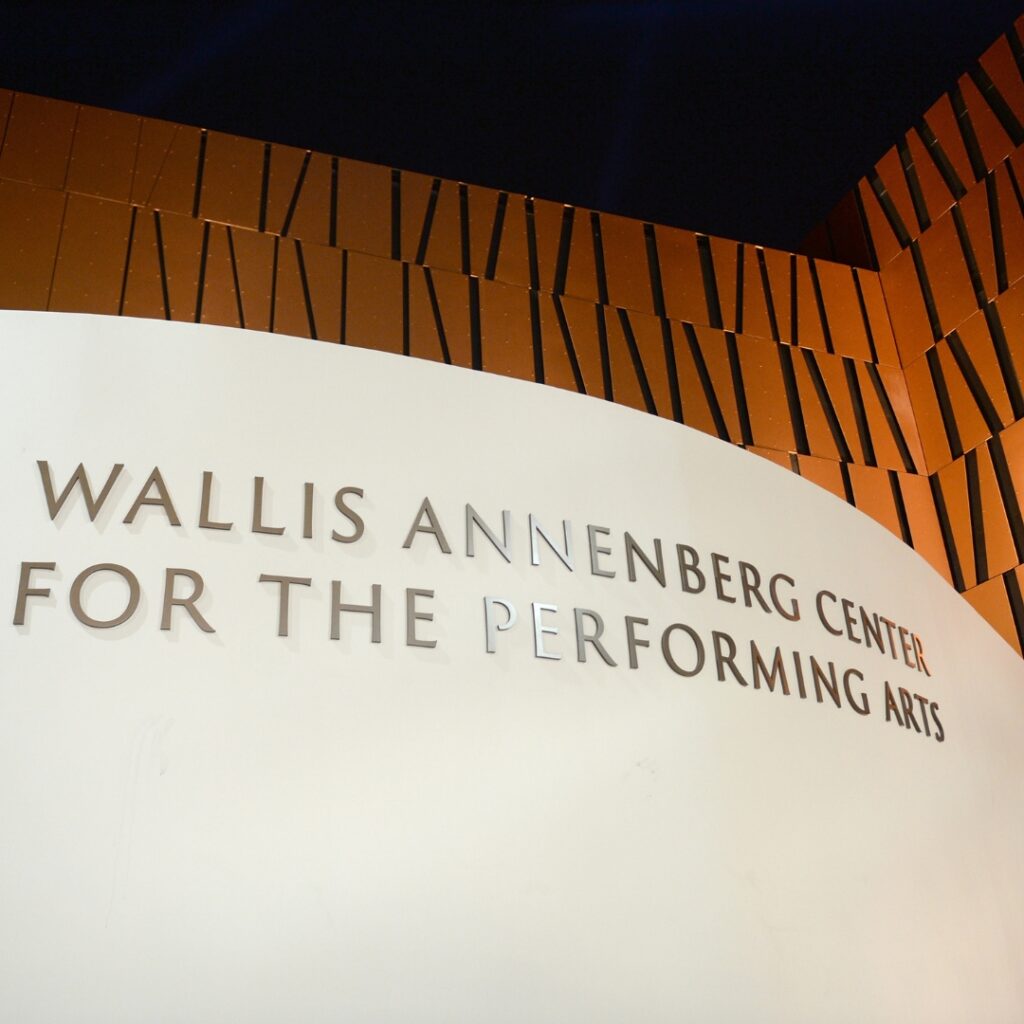
The foundation has channeled significant capital into major cultural infrastructure projects. A notable example is the Wallis Annenberg Center for the Performing Arts in Beverly Hills, California, which transformed a historic postal building into a world-class theater complex funded through major foundation contributions and civic partnerships.
2. Animal Welfare and Environmental Initiatives
Through dedicated investments, the foundation established the Wallis Annenberg PetSpace in Playa Vista, California. Combining animal adoption, interactive education, and academic research on the human-animal bond, PetSpace operates as a specialized direct charitable project.
3. Community and Social Services
In Southern California and select national communities, the foundation provides operating and capital support grants to non-profit organizations addressing homelessness, food security, veteran reintegration, and workforce development.
4. Education and Technology Access
Continuing Walter Annenberg’s historical focus on communication and learning, the foundation funds initiatives aimed at closing the digital divide, supporting public libraries, advancing news literacy, and encouraging media studies across high school and university levels.
Why Foundation Net Worth and Rankings Fluctuate
A foundation's rank on national lists changes from year to year. These changes are driven by financial mechanics rather than shifts in core grantmaking priorities:
- Equities Market Volatility: Because foundation endowments are heavily invested in global stock markets, fixed-income products, and alternative investment funds, broad market swings directly impact year-end fair market evaluations.
- Timing of Major Grant Disclosures: Multi-year capital pledges or large non-recurring gifts can temporarily spike expenditure totals, reducing net asset figures at tax year close.
- Comparative Peer Growth: Tech-funded foundations (such as those tied to newer corporate wealth) may experience rapid capital injections, shifting the relative rankings of legacy endowments over time.
Key Takeaways for Researchers and Grant Seekers
- Asset Range: The Annenberg Foundation holds between $1.5 billion and $1.7 billion in net assets, making it a major funding institution in American philanthropy.
- National Standing: It ranks in the Top 50 to 70 of all U.S. private foundations nationwide and in the Top 15 in California.
- Financial Transparency: Detailed breakdowns of asset holdings, administrative overhead, investment managers, and funded organizations are updated annually via public IRS Form 990-PF filings accessible through databases like Guidestar and Candid.
- Operational Model: The foundation functions as a grantmaking institution, distributing tens of millions of dollars each year to accredited 501(c)(3) charities while operating select public benefit programs.
Frequently Asked Questions
What is the exact net worth of the Annenberg Foundation?
The net asset value (fair market value) of the Annenberg Foundation fluctuates between $1.5 billion and $1.7 billion, depending on market performance and annual grant distribution levels reported in its annual IRS Form 990-PF filings.
Where does the Annenberg Foundation rank among US foundations?
Nationally, the Annenberg Foundation ranks approximately between #50 and #70 among all U.S. private foundations by asset size. Within California, it consistently ranks among the top 15 largest foundations.
Who created the Annenberg Foundation's endowment?
The foundation was funded primarily by publisher, diplomat, and philanthropist Walter H. Annenberg, using proceeds from his media holdings under Triangle Publications, which were sold in 1988 for over $3 billion.
How much money does the Annenberg Foundation grant each year?
Under federal tax law requiring a 5% minimum asset payout, the foundation awards between $70 million and $100 million or more in charitable grants and operational programs annually.
Is the Annenberg Foundation the same entity as the Annenberg School for Communication?
No. While Walter Annenberg funded both, the Annenberg Schools for Communication (located at the University of Pennsylvania and the University of Southern California) are academic units within those universities, funded partly through separate university endowment gifts. The Annenberg Foundation is an independent 501(c)(3) private foundation.
Where can I view the Annenberg Foundation's tax returns and financial filings?
The foundation's public tax returns (IRS Form 990-PF) can be inspected on the official IRS web portal, Candid (formerly Foundation Center/Guidestar), or directly via the financial transparency disclosures on the foundation's official web portal.
EDITORIAL CATEGORY METADATA: