American General Life Insurance Company (AGL) is a premier provider of life insurance and annuity products in the United States, operating as a core subsidiary of Corebridge Financial. In 2026, the company continues to be defined by its robust financial strength ratings, a diverse portfolio ranging from flexible term life to indexed universal life policies, and its stringent adherence to Anti-Money Laundering (AML) compliance protocols required for all financial transactions.
Understanding the Entity: American General Life Insurance Company
As of 2026, American General Life Insurance Company remains one of the most recognized names in the domestic insurance landscape. While many consumers formerly associated the brand with its previous parent company, AIG (American International Group), the transition to Corebridge Financial has solidified AGL’s position as a focused, independent powerhouse in life insurance and retirement solutions.
Founded over a century ago, American General has navigated numerous economic cycles, emerging as a stable entity that manages billions of dollars in assets. Its primary mission is to provide financial security through death benefit protection and tax-advantaged wealth accumulation tools. For policyholders, AGL represents reliability; for financial professionals, it represents a sophisticated suite of products backed by comprehensive institutional support.
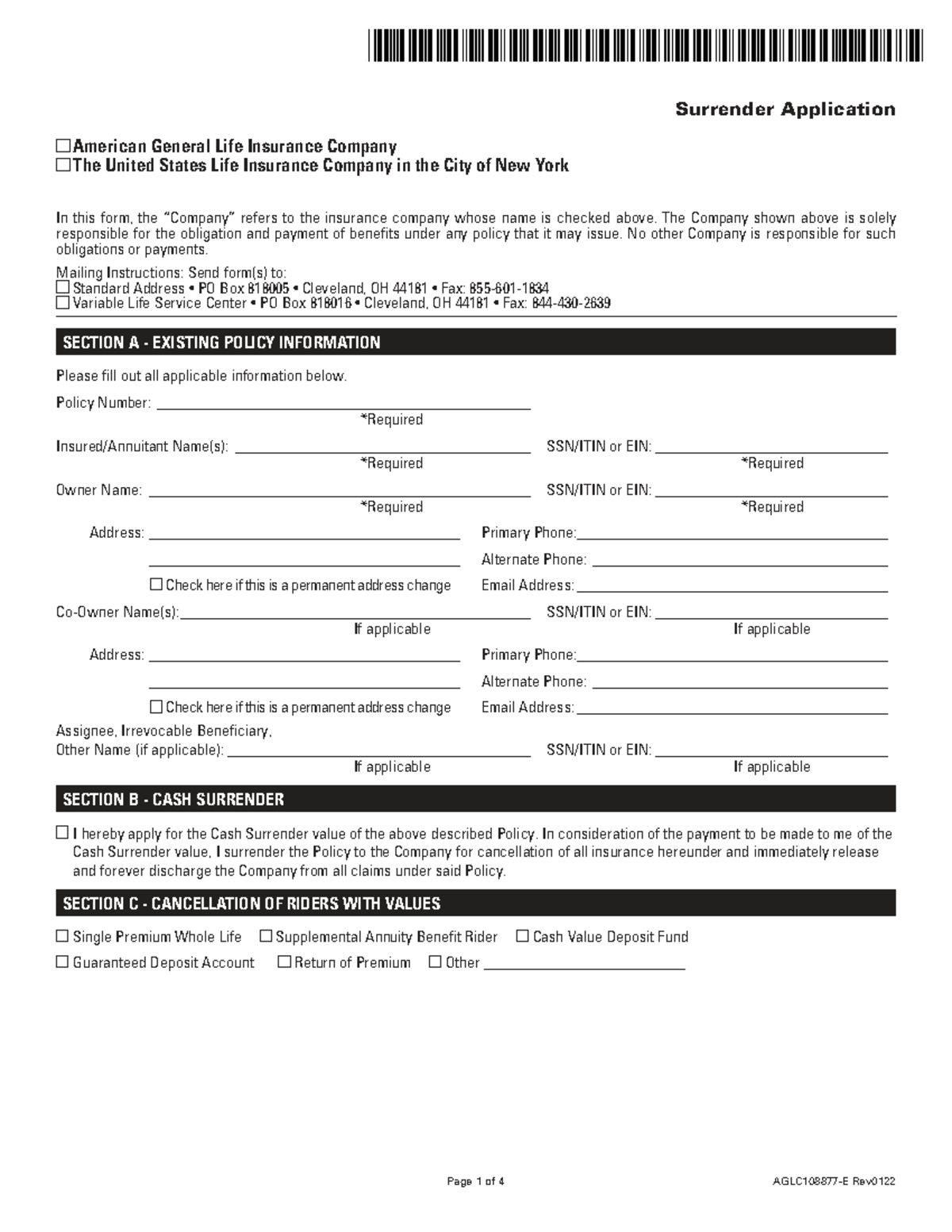
The company is headquartered in Houston, Texas, and maintains a significant operational presence across the country. It is important to distinguish the flagship entity, American General Life Insurance Company, from its affiliate, The United States Life Insurance Company in the City of New York, which handles business specifically within the state of New York to comply with local regulatory frameworks.
The Role of AML (Anti-Money Laundering) in 2026 Operations
The inclusion of "AML" in an overview of American General is critical because the life insurance industry is a primary front in the global effort to combat financial crimes. Under the USA PATRIOT Act and subsequent federal regulations, life insurance companies that offer products with cash value—such as permanent life insurance and annuities—are classified as "financial institutions."
Why AML Compliance is Mandatory
Anti-Money Laundering (AML) protocols are designed to prevent individuals from using insurance products to conceal the origins of illegally obtained money. Because certain life insurance policies allow for large premium payments and have "cash value" components that can be borrowed against or surrendered for cash, they could theoretically be exploited for money laundering.
American General Life Insurance Company maintains a rigorous AML program that includes:
- Customer Identification Programs (CIP): Verifying the identity of every applicant to ensure they are not on government watchlists (such as the OFAC list).
- Monitoring Transactions: Identifying "red flag" behaviors, such as sudden large lump-sum payments into a policy followed by an immediate request for a loan or surrender.
- Agent Training: All licensed agents appointed with American General must complete certified AML training (often through third-party providers like LIMRA) every two years to maintain their appointment.
In 2026, these digital verification processes are more integrated than ever, using advanced data analytics to flag suspicious patterns in real-time, ensuring that American General remains compliant with Financial Crimes Enforcement Network (FinCEN) standards.
Key Facts and Corporate Identity
To understand American General Life Insurance Company’s standing in 2026, one must look at the specific data points that define its operational scale. The company is not merely a single entity but a component of a larger financial ecosystem.
| Feature | Details |
|---|---|
| Parent Company | Corebridge Financial, Inc. |
| Primary NAIC Code | 60488 |
| State of Domicile | Texas |
| Main Headquarters | Houston, TX |
| Key Product Lines | Term Life, Universal Life (UL), Indexed Universal Life (IUL), Fixed/Variable Annuities |
| AML Training Provider | LIMRA (Standard Requirement) |
| Distribution | Independent Agents, Broker-Dealers, and Financial Advisors |
Financial Strength Ratings
Financial strength ratings are the most objective way to measure an insurer's ability to pay future claims. As of early 2026, American General Life Insurance Company maintains high marks from the major credit rating agencies. These ratings reflect the company’s capital adequacy and the quality of its investment portfolio.
- A.M. Best: Generally rated in the "A" (Excellent) category, signifying a strong ability to meet ongoing insurance obligations.
- Standard & Poor’s (S&P): Typically maintains an "A+" range, indicating a strong capacity to meet financial commitments.
- Moody’s Investors Service: Often falls within the "A2" range, representing low credit risk.
- Fitch Ratings: Generally holds an "A+" or similar high-investment-grade rating.
These ratings are vital for consumers purchasing long-term products like 30-year term policies or whole life insurance, where the company’s longevity is the primary concern.
Core Insurance Product Offerings
American General’s market dominance is driven by its "Select-a-Term" and "Quality of Life" (QoL) product suites. These offerings are designed to meet diverse needs, from simple debt protection to complex estate planning.
Select-a-Term: Flexibility in Protection
The Select-a-Term product is a flagship offering that allows policyholders to choose the exact duration of their coverage. Unlike many competitors who only offer 10, 20, or 30-year terms, AGL provides the ability to pick almost any duration between 10 and 35 years. This is particularly useful for matching a life insurance policy to a specific financial obligation, such as a mortgage with 17 years remaining or a child’s education fund that concludes in 12 years.
Indexed Universal Life (IUL)
In 2026, IUL products remain a popular choice for those seeking "downside protection" with "upside potential." American General’s IUL policies link cash value growth to the performance of a market index (like the S&P 500) while guaranteeing that the account value will not decrease even if the market drops. These policies are complex and require agents to provide clear illustrations regarding participation rates, caps, and floor rates.
Quality of Life (QoL) Riders
American General is a pioneer in "living benefits." Their QoL suite includes riders that allow the policyholder to accelerate a portion of the death benefit if they are diagnosed with a qualifying critical, chronic, or terminal illness. In 2026, these features are often built into the base policy, providing a "triple-threat" of protection: death benefit for heirs, cash value for retirement, and living benefits for medical emergencies.
Compliance and Regulatory Requirements for Agents
For financial professionals, the "AML American General" query often relates to the specific onboarding and maintenance requirements for their license. American General is proactive in ensuring its distribution force adheres to federal law.
The Appointment Process
To sell AGL products in 2026, an agent must complete a multi-step verification process:
- State Licensing: The agent must hold a valid life insurance license in the state where the sale occurs.
- Contracting: Completing the Corebridge Financial/AGL contracting paperwork.
- AML Certification: Agents must provide proof of completed Anti-Money Laundering training within the last 24 months. If the training is not up to date, the company will not issue the policy, and commissions may be withheld.
- Product Training: For complex products like IULs or Annuities, specific "product-knowledge" training is often required before an agent is authorized to illustrate or sell the plan.
Suspicious Activity Reporting (SAR)
As part of the AML framework, AGL and its agents are legally obligated to report suspicious activities. A "SAR" is filed with FinCEN if a transaction is suspected to involve funds derived from illegal activity or is designed to evade the reporting requirements of the Bank Secrecy Act. Examples include "smurfing" (breaking large cash payments into smaller amounts to avoid the $10,000 reporting threshold) or providing false identification during the application process.
Customer Service and Policy Management in 2026
Modernizing the policyholder experience has been a major focus for American General. Through the Corebridge Financial portal, customers can manage almost every aspect of their policy digitally.
- Premium Payments: Electronic Funds Transfer (EFT) is the standard, though the company still accepts checks. Note that credit card payments are often restricted for permanent life insurance premiums to satisfy AML concerns regarding "layering" of funds.
- Beneficiary Updates: Most beneficiary changes can now be completed with an e-signature, significantly reducing the administrative burden during life transitions.
- Claims Process: American General has streamlined its death claim process. In 2026, many claims can be initiated online, with basic life insurance payouts being processed in as little as 5 to 10 business days, provided the policy is past its two-year contestability period.
The Importance of the Two-Year Contestability Period
Every American General life insurance policy includes a contestability period. If the insured passes away within the first two years of the policy, the company has the right to investigate the original application for material misrepresentations. This is a standard industry practice, but AGL is known for its thorough underwriting. Accurate disclosure of medical history and tobacco use is essential during the application phase to ensure the death benefit is paid without delay.
Common Pitfalls and How to Avoid Them
When dealing with a company as large as American General, certain administrative hurdles can arise. Understanding these can help policyholders and agents navigate the system more effectively.
- Lapsed Policies: Many universal life policies fail because they are "underfunded." If the cost of insurance inside the policy exceeds the premium being paid and the cash value hits zero, the policy will lapse. Regular "in-force illustrations" are recommended to ensure the policy stays on track.
- Incorrect AML Records: Agents often find their business stalled because American General does not have their latest AML certificate on file. It is best practice to upload these certificates to the agent portal annually.
- Entity Confusion: Ensure you are looking at the correct financial statement. American General Life Insurance Company (Texas) is the primary carrier, but if you are in New York, your policy is likely with The United States Life Insurance Company in the City of New York.
Comparison: American General vs. Industry Peers
In 2026, the life insurance market is highly competitive. American General often competes directly with companies like Prudential, Lincoln Financial, and Transamerica.
- Pricing: AGL is typically very competitive in the "Term" market, especially for individuals in the "Standard" or "Preferred" health classes.
- Underwriting: They are often more lenient with certain medical conditions, such as well-controlled diabetes or certain types of cancer history, compared to "niche" high-end carriers.
- Innovation: While some carriers focus on "whole life" dividends (like Northwestern Mutual), American General focuses on the flexibility of Universal Life and the utility of "living benefits."
Frequently Asked Questions
What is the relationship between AIG and American General in 2026?
By 2026, the transition is complete: American General Life Insurance Company is a subsidiary of Corebridge Financial. While AIG was the historical parent company, Corebridge is now the distinct, publicly traded entity responsible for the life and retirement business. You may still see "AIG" on older policy documents, but current branding and operations are under Corebridge.
How do I complete my AML training for American General?
Most agents complete their AML training through the LIMRA portal. Once completed, the results are typically shared electronically with American General. If you are a policyholder, you do not need to take AML training; however, you must provide valid identification and answer "Know Your Customer" (KYC) questions during the application process.
Does American General offer a "conversion" option on term policies?
Yes, most American General Select-a-Term policies include a conversion rider. This allows the policyholder to convert their term coverage into a permanent life insurance policy (like Universal Life) without undergoing a new medical exam. This is a crucial feature for individuals whose health declines during their term period.
Where can I find the NAIC number for American General?
The primary NAIC (National Association of Insurance Commissioners) number for American General Life Insurance Company is 60488. This number is essential for filing state taxes, regulatory complaints, or identifying the specific legal entity on financial reports.
What happens if I fail to provide AML information during a claim?
If a beneficiary is receiving a large payout, the company may require updated identification or tax information to comply with AML and IRS regulations. Failure to provide this information can delay the disbursement of the death benefit.
Summary of Next Actions
For consumers interested in American General Life Insurance Company, the next step is to request a formal illustration from a licensed financial professional. This document will detail the projected costs, death benefits, and any "living benefit" riders available based on your specific age and health profile.
For insurance agents, ensuring that your AML certification is updated via LIMRA and that your appointment with Corebridge Financial is active should be your first priority before submitting new business. As of 2026, the company's commitment to regulatory compliance remains as high as its commitment to financial stability, making it a cornerstone of the American life insurance market.