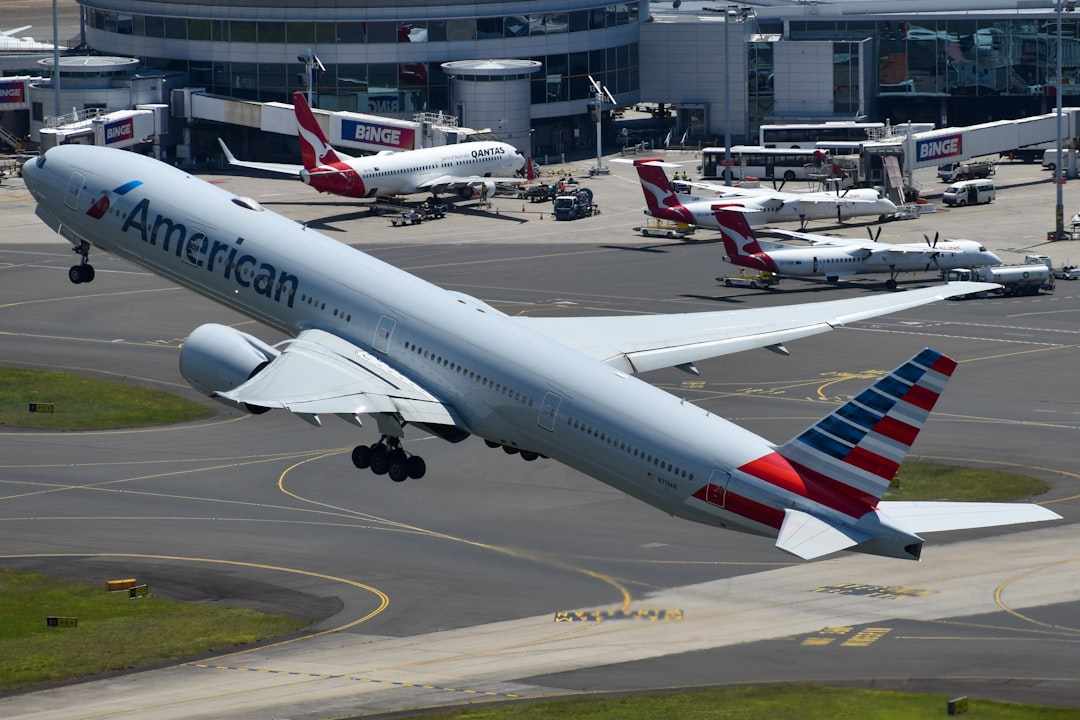
American Airlines follows FAA-mandated emergency evacuation procedures designed to clear an aircraft in 90 seconds or less. These protocols integrate advanced aircraft technology, rigorous crew training, and clear passenger communication to ensure safety during ground emergencies or water ditching, prioritizing life preservation through rapid, systematic egress and the use of specialized survival equipment.
The Regulatory Framework: FAA Compliance and Safety Oversight
As of 2026, American Airlines operates under the stringent safety guidelines established by the Federal Aviation Administration (FAA), specifically those outlined in Title 14 of the Code of Federal Regulations (CFR) Part 121. These regulations are not merely suggestions; they are federal mandates that dictate how an airline designs its cabins, trains its staff, and responds to crises.
The cornerstone of evacuation safety is the "90-second rule." Under 14 CFR § 25.803, aircraft manufacturers must demonstrate that a full load of passengers and crew can exit the aircraft within 90 seconds using only half of the available emergency exits. This certification is performed in dark conditions to simulate a power failure. American Airlines incorporates these certification standards into its operational manual, ensuring that every Boeing 737, 787, and Airbus A320 or A321 in its fleet meets or exceeds these rigorous survival timelines.
Beyond the 90-second threshold, American Airlines works closely with the National Transportation Safety Board (NTSB) to analyze past incidents. Lessons learned from historical events—such as the importance of non-flammable cabin materials and the positioning of emergency floor lighting—are integrated into the 2026 safety standards. This regulatory synergy ensures that the procedures are constantly evolving based on empirical data and technological advancements in aviation safety.
Pre-Flight Safety Preparations: The First Line of Defense
Passenger safety begins long before an emergency occurs. American Airlines utilizes a multi-layered approach to pre-flight briefings to ensure that every passenger is aware of their surroundings and the necessary actions during an evacuation.
The Safety Briefing and Demonstration
Flight attendants perform a standardized safety demonstration before every takeoff. While many frequent flyers may overlook this, the briefing is carefully scripted to meet FAA requirements. It covers the operation of seatbelts, the location of the nearest exits (reminding passengers that the closest exit may be behind them), and the use of oxygen masks. In 2026, many American Airlines aircraft have supplemented these live demonstrations with high-definition seatback screen animations that provide clear, visual instructions on how to navigate the specific cabin layout of that aircraft model.
Emergency Exit Row Briefings
Passengers seated in emergency exit rows are subject to additional scrutiny. American Airlines agents and flight attendants verify that these individuals are "willing and able" to assist in the event of an evacuation. This involves a verbal confirmation and a review of the specific exit-opening mechanics. If a passenger is under 15 years old, lacks the physical strength to lift an exit hatch (which can weigh up to 45 pounds on some older narrow-body models), or has a condition that might impede their ability to act quickly, they must be reseated.
The Safety Information Card
The physical or digital safety card located in the seat pocket is a critical resource. It provides aircraft-specific diagrams showing the location of slides, life rafts, and manual inflation handles. American Airlines ensures these cards use universal pictograms to bridge language barriers, ensuring that the primary search intent—understanding how to exit—is accessible to all travelers regardless of their native tongue.
Crew Roles and Command Hierarchies During Egress
In an emergency, the cabin environment can quickly become chaotic. American Airlines crew members are trained to transition from "hospitality providers" to "safety commanders" instantly. Their training at the American Airlines Flight Academy in Fort Worth, Texas, involves high-fidelity simulators that replicate smoke, darkness, and tilted fuselage angles.
The Flight Deck's Command
The Captain holds the ultimate authority to initiate an evacuation. The command "Evacuate, Evacuate, Evacuate!" or "Easy Victor, Easy Victor, Easy Victor" (a common aviation shorthand for 'Evacuate') is the trigger for the cabin crew to begin their procedures. If the flight deck is incapacitated or communication is severed, flight attendants are authorized to initiate an evacuation if they perceive an immediate life-threatening danger, such as fire, thick smoke, or structural failure.
Cabin Crew Stations and Commands
Each flight attendant is assigned a specific "primary exit" and a "secondary exit." Upon the evacuation command, they move to their stations and assess the conditions outside the windows. If fire or water is visible outside a specific door, they must "block" that exit and redirect passengers to a safe alternative.
Flight attendants are trained to use "assertive commands." Instead of polite requests, they use loud, rhythmic shouts such as:
- "Release seatbelts!"
- "Leave everything!"
- "Come this way!"
- "Jump and slide!"
These commands are designed to overcome passenger "freezing" or "behavioral inaction," a psychological phenomenon where individuals in shock fail to move toward safety.
Technical Operational Procedures for Aircraft Exits
The mechanical process of opening an aircraft door in an emergency is significantly different from normal operations. On American Airlines aircraft, the doors are typically "armed" before departure, meaning the emergency escape slide is mechanically linked to the door frame.
Slide Deployment and Inflation
When an armed door is opened from the inside, the slide is pulled from its "bustle" (the container at the base of the door) and inflated via a high-pressure gas aspirator. This process takes approximately 6 to 10 seconds. In 2026, the slide materials are more durable and heat-resistant than ever, designed to withstand the intense heat of an external fuel fire for a specified duration.
Narrow-body vs. Wide-body Exit Differences
The procedure varies slightly based on the aircraft type. On wide-body aircraft like the Boeing 777-300ER, the doors are power-assisted. A flight attendant only needs to move the handle a certain distance before a pneumatic system takes over to swing the massive door open. On smaller narrow-body aircraft, such as the Airbus A319, some exits are "over-wing" hatches that must be manually pulled inward and then tossed outward onto the wing or away from the aircraft.
| Aircraft Category | Primary Exit Type | Slide System | Typical Evacuation Capacity |
|---|---|---|---|
| Narrow-body (e.g., B737-800) | Manual/Plug Door | Single-lane inflatable slide | ~170 Passengers |
| Wide-body (e.g., B777-200) | Power-Assisted | Dual-lane slide/raft | ~300+ Passengers |
| Regional (e.g., CRJ-700) | Airstair Door | Integrated steps (no slide needed) | ~70 Passengers |
| Over-wing (e.g., A321neo) | Automatic Hatch | Off-wing ramp and slide | Supplemental flow |
Passenger Safety: The Critical "No Luggage" Rule
One of the most significant challenges American Airlines faces during evacuations is passenger behavior regarding carry-on luggage. During an emergency, seconds are the difference between life and death.
The Danger of Carry-on Bags
In recent years, NTSB reports have highlighted a dangerous trend of passengers stopping to retrieve bags from overhead bins during evacuations. American Airlines strictly enforces a "leave everything" policy. Luggage creates several life-threatening hazards:
- Aisle Obstruction: A single suitcase can block the narrow aisle, preventing dozens of people from reaching the exits.
- Slide Damage: The sharp corners, wheels, or zippers of a bag can puncture the inflatable slide, rendering an entire exit useless.
- Physical Injury: Carrying a heavy bag down a slide can cause the passenger to lose balance, leading to collisions and injuries at the bottom of the slide.
Personal Protective Actions
Beyond leaving luggage, passengers are instructed to remove high-heeled shoes, as these also pose a puncture risk to the slides. If smoke is present in the cabin, passengers should stay low to the floor, where the air is cooler and more breathable. The FAA's guidance on smoke inhalation emphasizes that most fatalities in survivable crashes are caused by smoke, not the impact itself.
Water Evacuations and Ditching Procedures
While extremely rare, a "ditching" (emergency landing on water) requires a different set of operational procedures. American Airlines' fleet is equipped for these scenarios with specialized life vests and, on longer over-water flights, slide/rafts.
Life Vest Deployment
Passengers are instructed to locate the life vest under their seat (or in the center console). A critical safety rule is: Do not inflate the life vest inside the aircraft. If the cabin fills with water, an inflated vest will trap a passenger against the ceiling, making it impossible to swim out of the exit. Vests should only be inflated once the passenger is at the door or has already exited the aircraft.
Slide/Rafts
On American's international wide-body fleet, the emergency slides are designed to double as life rafts. Once the evacuation is complete, these rafts can be detached from the aircraft. They come equipped with survival kits containing flares, sea dye markers, water purification tablets, and basic first aid supplies. The crew is trained to rig a "canopy" over the raft to protect survivors from sun exposure and elements.
Emergency Lighting and Visibility Systems
In an evacuation, visibility is often compromised by power loss or smoke. American Airlines utilizes two primary types of emergency lighting systems to guide passengers to safety:
- Floor Proximity Emergency Escape Path Lighting (FPEEPL): This consists of either incandescent/LED lights or photoluminescent (glow-in-the-dark) strips embedded in the floor. These strips lead directly to the exits, with red markers indicating where an exit is located.
- Exterior Lighting: Once a door is opened, exterior lights illuminate the slide and the ground area around the aircraft to prevent injuries during the transition from the slide to the tarmac.
The FAA requires these systems to function even if the aircraft’s main electrical system is destroyed. They are powered by independent, rechargeable batteries designed to last for at least 10 minutes of continuous operation—ample time for a 90-second evacuation.
Post-Evacuation Protocols: Assembly and Accountability
The procedure does not end once the passengers are off the aircraft. American Airlines crew members are trained to lead passengers to a safe distance—typically at least 500 feet upwind from the aircraft to avoid smoke and the risk of explosion.
Passenger Accountability
Crew members attempt to group passengers and perform a "headcount" or manifest check where possible. They are also trained to provide basic triage and first aid until airport emergency services (ARFF - Aircraft Rescue and Firefighting) arrive. In 2026, most major airports have rapid response teams capable of reaching a downed aircraft within three minutes.
Communication with Authorities
The Captain or the most senior surviving crew member remains the "Person in Command" on the ground until relieved by emergency services or airline officials. They are responsible for communicating with the airline’s Emergency Operations Center (EOC) to coordinate transport, medical care, and family notifications.
Frequently Asked Questions
What happens if an emergency slide fails to inflate?
Every American Airlines emergency slide is equipped with a "manual inflation handle." If the slide does not automatically deploy when the door is opened, the flight attendant or a passenger must pull this handle (usually red and clearly labeled). If it still fails, the exit is considered "unusable," and the crew will redirect passengers to the next nearest exit.
Are children and infants handled differently during an evacuation?
Parents are instructed to carry infants and small children in their arms while sliding. They should not use "baby carriers" or "slings" that attach the child to the adult’s body during the slide, as this can lead to injury if the adult falls. On the slide, the adult should sit with the child in their lap and legs extended.
Why must window shades be open during takeoff and landing?
American Airlines requires window shades to be open during these critical phases of flight so that both passengers and crew can see outside. This "situational awareness" is vital for identifying hazards (like an engine fire) and for helping passengers' eyes adjust to the outside light levels, which speeds up an evacuation.
Do oxygen masks drop during an evacuation on the ground?
No. Oxygen masks are designed for high-altitude depressurization. During a ground evacuation, the masks would provide no benefit and the dangling yellow tubes could actually become an entanglement hazard, slowing down the egress.
Can I be sued for helping or not helping in an evacuation?
Aviation safety is governed by federal law and international treaties. Passengers who act in good faith to assist others during an emergency are generally protected from liability. Conversely, passengers are not legally required to assist unless they have specifically accepted the responsibilities of an exit row seat.
Practical Recommendations for Travelers
To maximize your personal safety on an American Airlines flight, follow these professional recommendations:
- Count the rows: Physically count the number of seat rows between your seat and the two nearest exits. In a smoke-filled cabin, you may need to find the exit by touch.
- Keep your shoes on: Keep your footwear on during takeoff and landing, as these are the most likely times for an incident. Running on a hot tarmac or sharp debris is much safer with shoes.
- Study the handle: If you are in an exit row, take 30 seconds to look at the handle mechanism. Understand if it pulls in, pushes out, or lifts up.
- Listen for the "Brace" command: If the crew shouts "Brace for impact!", lean forward, grab your ankles, or press your head against the seat in front of you to minimize "secondary impact" injuries.