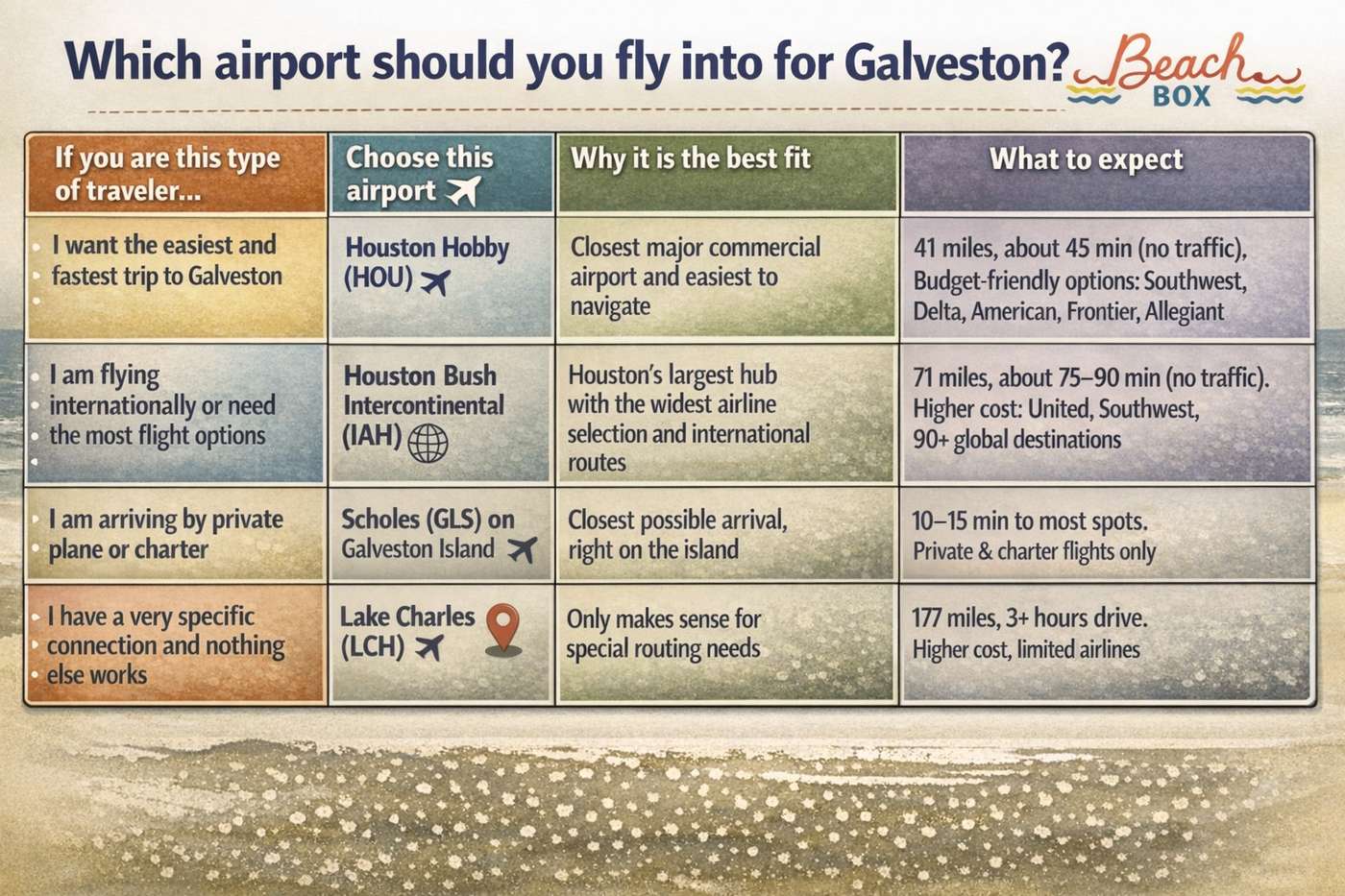
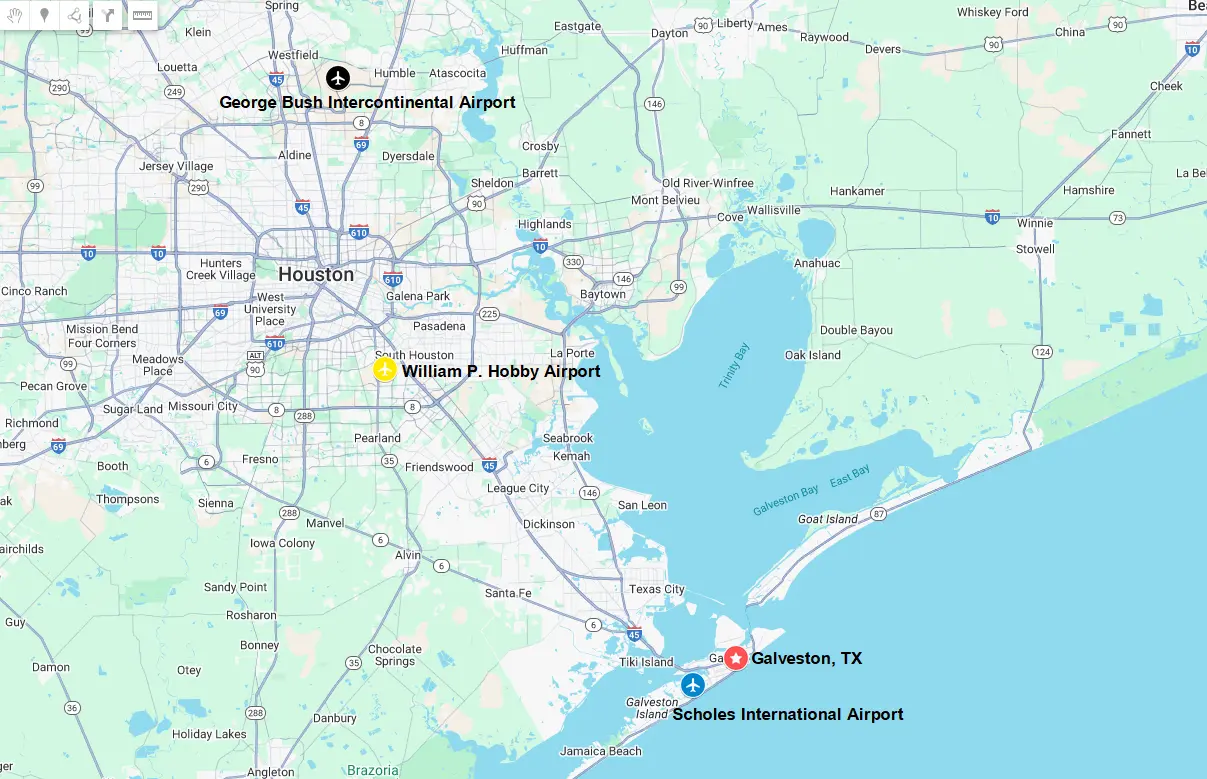
The primary airport code for Galveston, Texas, is GLS, which stands for Scholes International Airport. While GLS serves as the city’s dedicated aviation facility, it is primarily used for general aviation, private charters, and offshore helicopter operations. Most commercial travelers flying into the region use Houston’s major hubs: HOU (William P. Hobby Airport) or IAH (George Bush Intercontinental Airport).
Identifying the correct airport code for a trip to Galveston depends entirely on how you are traveling. If you are piloting a private aircraft or booking a high-end charter, GLS is your destination. However, if you are a commercial passenger—likely heading to the Port of Galveston for a cruise—you will find no scheduled commercial airline service at GLS. Instead, you must coordinate your arrival through the Houston airport system, located approximately 40 to 70 miles north of the island.
Understanding the distinction between these codes and the logistics of the Texas Gulf Coast is essential for avoiding costly transportation mistakes. As of 2026, the regional infrastructure continues to evolve, making the choice between GLS, HOU, and IAH a matter of convenience, cost, and specific travel intent.
Scholes International Airport (GLS): The Local Gateway
Scholes International Airport (GLS) is a public-use airport located on the west end of Galveston Island. Named after a former airport manager, the facility has a rich history dating back to its origins as a World War II United States Army Air Forces airfield. Today, it operates as a premier "reliever airport" for the Houston metropolitan area.
Technical Specifications and Capabilities
GLS is equipped with two primary runways. Runway 14/32 and Runway 18/36 both offer lengths exceeding 6,000 feet, which is sufficient to accommodate most corporate jets, mid-sized transport aircraft, and even certain military planes. The airport’s infrastructure includes a modern terminal building, though its function differs significantly from a standard commercial terminal. You will not find TSA checkpoints or baggage carousels for major airlines here.
Instead, the terminal and the surrounding Fixed Base Operators (FBOs) focus on:
- General Aviation: Private pilots frequently use GLS for its proximity to the beach and local attractions.
- Offshore Support: Galveston is a critical hub for the Gulf of Mexico’s energy sector. GLS serves as a primary base for helicopter fleets that transport personnel and supplies to offshore oil and gas rigs.
- Charter Services: While scheduled flights are absent, several private charter companies operate out of GLS, providing "on-demand" air taxi services for business executives and wealthy vacationers.
The Lone Star Flight Museum Legacy
For many years, GLS was synonymous with the Lone Star Flight Museum. While the museum moved its primary operations to Houston's Ellington Airport years ago to avoid hurricane risks, the aviation culture in Galveston remains strong. The airfield still hosts various fly-ins and remains a point of interest for aviation enthusiasts visiting the Texas coast.
Why Most Travelers Use HOU (William P. Hobby Airport)
For the vast majority of visitors asking for the "airport code for Galveston," the practical answer is HOU. Located on the south side of Houston, William P. Hobby Airport is the closest commercial airport to Galveston Island, situated roughly 40 miles north.
The Southwest Airlines Hub
HOU is a major domestic hub, dominated largely by Southwest Airlines. For travelers coming from within the United States or near-international locations (like Mexico and Central America), HOU is often the most convenient choice. Because it is smaller than George Bush Intercontinental, the "curb-to-gate" time is generally shorter, and the layout is much easier to navigate for first-time visitors.
Proximity and Transit to Galveston
The drive from HOU to Galveston typically takes 45 to 60 minutes, depending on traffic on Interstate 45 (I-45 South). This makes it the preferred choice for cruise passengers. Most major cruise lines, such as Carnival, Royal Caribbean, and Norwegian, operate their primary shuttle services out of HOU because of this proximity.
George Bush Intercontinental Airport (IAH): The International Option
While HOU is closer, IAH is the regional powerhouse. Located on the north side of Houston, about 70 miles from Galveston, George Bush Intercontinental Airport is the primary international gateway for Southeast Texas.
International and Long-Haul Connectivity
If you are flying into Texas from Europe, Asia, or South America, you will almost certainly land at IAH. It serves as a massive hub for United Airlines and hosts dozens of international carriers. Travelers who prioritize specific airline alliances (like Star Alliance or SkyTeam) or who require a direct flight from a distant city will likely find IAH more suitable than HOU, despite the longer ground transit.
Logistics from IAH to the Island
The journey from IAH to Galveston is significantly longer than the trip from HOU. Travelers should budget at least 75 to 100 minutes for the drive. During Houston’s notorious rush hour, this commute can easily extend to two hours or more. Because IAH is located on the opposite side of the Houston metropolitan area, you must navigate through the heart of the city or take the Sam Houston Tollway (Beltway 8) to reach I-45 South.
Comparing Regional Airport Codes for Galveston Visitors
| Feature | GLS (Scholes International) | HOU (William P. Hobby) | IAH (George Bush Intercontinental) |
|---|---|---|---|
| Primary Use | General Aviation / Private | Commercial Domestic | Commercial International |
| Distance to Galveston | 3 Miles | ~40 Miles | ~70 Miles |
| Scheduled Airlines | None | Southwest, Delta, American, Allegiant, Frontier | United, American, Delta, Spirit, International Carriers |
| Transit Time | 5–10 Minutes | 45–60 Minutes | 75–120 Minutes |
| Best For | Private pilots, Charter flights | Domestic cruise passengers | International travelers, United flyers |
| Ground Transport | Local Taxis, Rental Cars | Shuttles, Rideshare, Car Rental | Shuttles, Rideshare, Car Rental |
Ground Transportation: Getting from the Code to the Coast
Once you have identified your airport code, the next challenge is bridging the gap to the Galveston "Strand" or the cruise terminals. Because Galveston is an island connected primarily by the I-45 causeway, transportation options are standardized but vary in cost.
Cruise Line Shuttles
If you are flying into HOU or IAH for a cruise, the most straightforward (though often most expensive) option is the official cruise line shuttle. These must be booked in advance and are tied to your flight arrival times. They provide peace of mind but lack flexibility if you wish to explore the city before embarking.
Independent Shuttle Services
Companies like Galveston Express or Saltwater Express provide scheduled van services between the Houston airports and the island. These are often more affordable than cruise line shuttles and offer multiple drop-off points, including local hotels and the Port of Galveston wharves.
Rideshare and Taxis
Uber and Lyft are widely available at both HOU and IAH. A rideshare from HOU to Galveston typically costs between $60 and $90, while a ride from IAH can range from $100 to $160, depending on demand and vehicle type. For groups of three or four, this is often the most cost-effective and direct method of transportation.
Rental Cars
Most major rental car agencies operate at HOU and IAH. If you plan to stay in Galveston for several days before or after a cruise, renting a car allows you to visit West End beaches, the Moody Gardens, and the historic downtown district at your own pace. Note that parking in Galveston—especially at the cruise terminals—can be expensive, so factor "park and cruise" fees into your budget.
Aviation History: The Evolution of GLS
To understand why Galveston has its own airport code but no commercial flights, one must look at the geography and history of the island. Galveston was once the "Wall Street of the South" and the primary port of entry for Texas. However, after the Great Storm of 1900 and the subsequent rise of the Houston Ship Channel, the center of commerce shifted inland.
The airport was established in 1931. During the mid-20th century, there were periods where Galveston saw limited commercial air service. However, as aircraft grew larger and the hub-and-spoke model of aviation took hold, it became more efficient for airlines to centralize operations at Houston’s larger airfields.
Today, GLS thrives as a specialized facility. It is critical for emergency response; during hurricane evacuations or medical emergencies, the airport serves as a staging ground for the Coast Guard and Life Flight services. Its status as an "International" airport is maintained through its customs facilities, which allow private international flights to clear entry into the United States directly on the island.
General Aviation and FBO Services at GLS
For those specifically searching for the GLS code for piloting purposes, the airport offers robust services. Galveston Aviation Services and other FBOs provide fuel (100LL and Jet A), hangar space, and maintenance.
The airport’s location is unique, with approaches often taking pilots over the Gulf of Mexico or the Galveston Bay. Pilots must remain aware of the high volume of helicopter traffic moving to and from the offshore platforms. The tower at GLS is generally responsive and accustomed to managing a mix of slow-moving tour helicopters and fast-moving corporate jets.
Navigating Common Misconceptions
One common mistake travelers make is searching for "flights to Galveston" on major booking engines like Expedia or Google Flights and becoming frustrated when no results appear for GLS. This is because these engines are designed for scheduled commercial carriers.
If you are determined to land on the island itself, you must look for "Charter Flights to Galveston" or "Private Air Taxi Southeast Texas." These services are generally not listed on standard booking sites and require direct contact with the operator.
Is there a plan for commercial service at GLS?
As of 2026, there are no immediate plans by major carriers to resume scheduled service to GLS. The proximity of HOU, combined with the infrastructure requirements for TSA screening and large-scale baggage handling, makes commercial service at GLS redundant for most airlines. The focus for the City of Galveston remains on maintaining GLS as a high-quality general aviation and industrial support facility.
Frequently Asked Questions
Which airport is closest to the Galveston cruise port?
William P. Hobby Airport (HOU) is the closest commercial airport to the Galveston cruise port. It is located approximately 40 miles north of the terminals. Under normal traffic conditions, the drive takes about 45 to 55 minutes.
Does Southwest Airlines fly to Galveston?
Southwest Airlines does not fly into Galveston (GLS). However, Southwest has a massive presence at William P. Hobby Airport (HOU), which is the primary airport used by Southwest passengers traveling to Galveston.
Can I fly a private plane into Galveston?
Yes, you can fly a private plane into Scholes International Airport using the airport code GLS. The airport features two 6,000-foot runways and offers full FBO services, including refueling and overnight tiedowns.
How much is a shuttle from IAH to Galveston?
In 2026, a one-way shuttle from George Bush Intercontinental (IAH) to Galveston typically costs between $50 and $75 per person. Private car services or large-capacity rideshares may be more economical for families or groups.
Is there a train from Houston airports to Galveston?
Currently, there is no passenger rail or light rail service connecting HOU or IAH to Galveston. Public transportation is limited to bus services and private shuttles. Most travelers rely on I-45 via motor vehicle.
What is the best way to avoid traffic when driving to Galveston?
Traffic on I-45 South can be heavy, especially on "cruise days" (typically Thursdays, Fridays, Sundays, and Mondays). To avoid the worst congestion, try to schedule your arrival or departure during mid-morning (after 10:00 AM) or early afternoon (before 3:00 PM), avoiding the standard Houston commute times.
Final Recommendation for Travelers
If you are planning a trip to Galveston, Texas, set your flight destination to HOU (Hobby Airport) for the most convenient experience. It offers the shortest transit time and the most straightforward route to the island. If you are traveling internationally or require a specific airline not served by Hobby, IAH (Bush Intercontinental) is your necessary alternative. Reserve the GLS code only for private aviation, charter needs, or when researching the local history of Galveston's West End. Regardless of which Houston hub you choose, ensure you book your ground transportation at least two weeks in advance to secure the best rates and guaranteed timing for your island getaway.