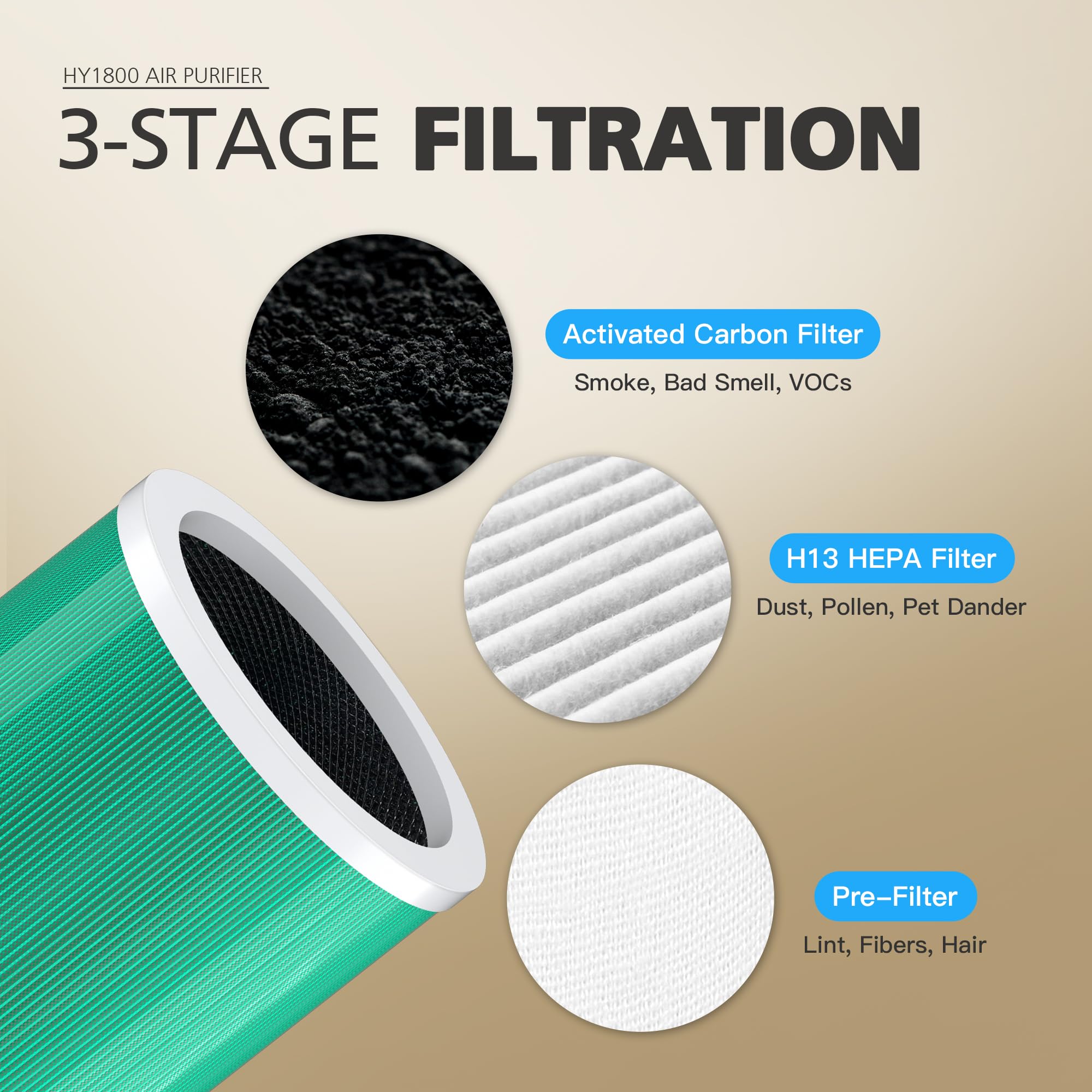
An air purifier with an activated charcoal filter uses porous carbon to capture gaseous pollutants, volatile organic compounds (VOCs), odors, and smoke that standard particle filters miss. While High-Efficiency Particulate Air (HEPA) filters trap solid matter like dust and pollen, activated charcoal specializes in chemical adsorption, making combination units essential for comprehensive indoor air quality management.
The Science of Air Purification: HEPA vs. Activated Charcoal
Indoor air pollution comprises a complex mixture of solid particulate matter and gaseous contaminants. To address both effectively, modern consumer air purification relies on a dual-stage approach combining mechanical filtration and chemical adsorption. Understanding the distinct mechanisms of these two technologies explains why an air purifier equipped with both a HEPA filter and an activated charcoal component represents the gold standard for residential air cleaning.
How HEPA Filters Handle Particulates
HEPA filters are engineered to capture microscopic solid particles suspended in the air. By definition, a true HEPA filter must trap 99.97 percent of airborne particles that are 0.3 microns in size. This includes common allergens such as dust mites, pet dander, mold spores, and certain bacteria.
The mechanism is mechanical. Air is forced through a dense, randomly arranged mat of fibers, usually made of fiberglass. Particles are caught through three primary methods:
- Impaction: Large particles collide directly with the fibers and stick.
- Interception: Medium-sized particles follow the airflow contour around the fibers but brush against them and become trapped.
- Diffusion: Extremely small, ultrafine particles collide with gas molecules, causing them to zig-zag erratically and hit the filter fibers.
Despite their high efficiency against solids, HEPA filters are fundamentally porous at the molecular level. Gaseous pollutants, volatile organic compounds (VOCs), and individual odor molecules pass straight through a standard HEPA filter without resistance.
How Activated Charcoal Handles Gases
Activated charcoal—frequently referred to as activated carbon—bridges this gap by targeting gaseous pollutants through a process called adsorption. Unlike absorption, where a fluid is soaked up or absorbed throughout the volume of a material, adsorption involves gas or liquid molecules adhering to the external and internal surfaces of a solid.
Charcoal is "activated" through exposure to extreme heat or gases, which opens up millions of microscopic pores between the carbon atoms. This treatment creates a massive internal surface area. A single gram of activated charcoal can possess a surface area exceeding 1,000 square meters.
When indoor air passes through an activated charcoal filter, gas molecules are drawn to these pores and held there by intermolecular forces (van der Waals forces). This physical and chemical trapping mechanism effectively removes odors, chemical fumes, and gases that bypass particulate filters.
Key Targets: What Activated Charcoal Removes and Misses
An activated charcoal filter is a powerful tool for cleaning indoor air, but it has specific operational boundaries. Knowing what these filters can and cannot capture helps users select the right equipment and manage expectations regarding indoor air quality.
Primary Targets
Activated charcoal excels at neutralizing airborne chemicals and smells. Common targets include:
- Volatile Organic Compounds (VOCs): Chemical gases emitted from paints, cleaning supplies, new furniture, carpets, and building materials (such as formaldehyde and benzene).
- Household Odors: Cooking smells, pet odors, bathroom odors, and stubborn scents from stale environments.
- Smoke and Combustion Byproducts: Smoke particles from tobacco, wildfires, or wood-burning fireplaces, along with associated gases like carbon monoxide (though specialized catalysts are required for complete carbon monoxide conversion).
- Chemical Fumes: Off-gassing from electronics, glues, and hobby materials like glues or paints.
Limitations and What It Misses
Activated charcoal is not designed to capture solid particles. Dust, pollen, pet dander, and bacteria pass right through pure carbon filters unless a HEPA or pre-filter is present.
Furthermore, activated charcoal has limited effectiveness against certain small-molecule gases, such as carbon dioxide, ammonia, and nitrogen oxides, unless the carbon has been specially treated or impregnated with secondary chemicals like potassium permanganate or copper oxide.
Most importantly, activated charcoal filters have a finite adsorption capacity. Once all the microscopic pores are filled—a process known as saturation—the filter can no longer trap gases. If left in a unit past its useful lifespan, a saturated carbon filter can begin releasing trapped pollutants back into the environment.
Evaluating Filter Quality and Construction
Not all activated charcoal filters found in air purifiers are created equal. The physical construction, weight, and density of the carbon bed heavily influence the unit's performance, lifespan, and price point.
Thin Carbon Sheets vs. Granular Carbon Beds
Entry-level air purifiers often feature a thin, paper-like pre-filter sprayed or dusted with a light layer of carbon powder. While marketed as "carbon filters," these generally contain very little actual charcoal—sometimes only a few grams. They may provide minor odor control for a few weeks, but they saturate rapidly and offer minimal VOC removal.
Mid-range and high-end air purifiers utilize honeycomb or mesh compartments filled with activated carbon pellets or granules. These granular carbon beds provide significantly more surface area and mass, allowing them to capture substantial amounts of chemical pollutants over many months.
Weight Matters
When shopping for an air purifier with an activated charcoal filter, filter weight is one of the most reliable indicators of performance.
- Lightweight carbon sheets might weigh under 50 ounces (or fractions of a pound) and offer brief odor reduction.
- Moderate carbon filters weigh between one to three pounds, providing balanced performance for typical household odors and mild VOCs.
- Heavy-duty carbon canisters can weigh anywhere from five to over fifteen pounds. These are designed for severe chemical sensitivities, heavy smoke environments, or multi-cat households.
Practical Performance Comparison
To help evaluate how different air purifier configurations manage indoor air quality, the following table compares common filtration setups based on particulate capture, odor removal, maintenance needs, and ideal use cases.
| Filter Configuration | Particulate Removal (Dust/Pollen) | Odor & VOC Removal (Gases) | Typical Lifespan | Best Use Case |
|---|---|---|---|---|
| Basic Carbon Pre-Filter + HEPA | Excellent (99.97%) | Minimal to Moderate | 3 to 6 months (carbon) / 1 year (HEPA) | Standard bedrooms, light dust, minor cooking odors. |
| Thick Granular Carbon + HEPA | Excellent (99.97%) | High | 6 to 12 months (carbon) / 1 to 2 years (HEPA) | Homes with pets, smokers, open-concept kitchens, or mild chemical sensitivities. |
| Standalone Carbon / Chemical Filter | Poor | Maximum | 6 to 12 months | Industrial settings, heavy VOC remediation, or pairing with an existing HEPA unit. |
| Impregnated Carbon (Zeolite/Potassium) | Excellent (with HEPA) | Specialized (Ammonia, Formaldehyde) | 6 to 12 months | New construction off-gassing, pet litter areas, specialized chemical exposure. |
Maintenance, Lifespan, and Replacement Realities
Operating an air purifier with an activated charcoal filter requires ongoing maintenance to ensure peak efficiency. Neglecting filter replacements leads to degraded air quality and can place unnecessary strain on the purifier's internal fan motor.
Determining Replacement Intervals
Unlike HEPA filters, which often change color visibly as they trap dust, activated charcoal filters rarely show physical signs of saturation. A carbon filter heavily loaded with VOCs looks identical to a brand-new one. Consequently, users must rely on time-based schedules or environmental indicators.
- Standard Household Use: Carbon filters in typical living spaces generally require replacement every 6 to 12 months.
- High-Exposure Environments: Homes subjected to wildfire smoke, heavy indoor smoking, frequent deep-frying, or high VOC levels (such as recent home renovations) may saturate carbon filters in as little as 2 to 3 months.
Can Activated Charcoal Filters Be Recharged?
A common consumer question is whether saturated carbon filters can be cleaned or "recharged" at home by washing them or baking them in an oven. For standard residential air purifiers, the short answer is no.
Reactivating carbon requires industrial kilns operating at extreme temperatures in an oxygen-free environment to burn off trapped chemical compounds without destroying the carbon structure. Attempting to wash granular carbon filters destroys the paper or mesh containers, washes away specialized chemical impregnations, and fails to release trapped compounds embedded deep within the pores. Replacing the filter per manufacturer guidelines is the only reliable method to restore adsorption capacity.
Common Mistakes When Using Carbon Air Purifiers
Avoiding common operational and purchasing errors ensures maximum benefit from an investment in an activated charcoal air purifier.
- Ignoring the Plastic Packaging: Many users install replacement filters directly into the unit without removing the protective plastic wrap. This chokes off airflow entirely, rendering the purifier useless and risking motor burnout.
- Expecting Carbon to Trap Dust: Relying solely on a carbon filter without a HEPA stage means fine particles will remain unaddressed. True clean air requires both components working in tandem.
- Underestimating Room Size: Purchasing a compact desktop unit with a tiny carbon pad for a large, open-concept living room will yield negligible results. Match the Clean Air Delivery Rate (CADR) and carbon mass to the square footage of the space.
- Ignoring Pre-Filter Maintenance: Many combination units feature a mesh pre-filter designed to catch hair and large dust bunnies before they hit the carbon or HEPA layers. Failing to vacuum or wash this pre-filter restricts airflow and shortens the life of the internal filters.
Frequently Asked Questions
Do activated charcoal filters remove mold?
Activated charcoal filters do not remove mold spores from the air; that is the job of the HEPA filter. However, carbon filters do help neutralize the musty, earthy odors (microbial volatile organic compounds or mVOCs) associated with mold growth.
Can an air purifier with charcoal help with wildfire smoke?
Yes. Wildfire smoke contains a dangerous combination of fine particulate matter and noxious gases. A unit combining a True HEPA filter (for the ash and fine soot particles) and a thick activated charcoal filter (for the chemical gases and smoke odor) provides comprehensive protection during smoke events.
Do carbon filters produce ozone?
High-quality activated charcoal filters do not produce ozone; they are passive media. Buyers should verify that the air purifier itself is certified ozone-free (such as CARB-certified in California) to ensure the electrical ionizer or motor components do not generate harmful ozone gas.
Will an activated charcoal filter remove pet dander?
Pet dander is a microscopic solid particle, meaning it is captured by the HEPA filter, not the charcoal filter. The charcoal filter's role in a pet-friendly household is to eliminate the lingering odors associated with pets, litter boxes, and pet bedding.
Why does my new air purifier smell like chemicals or plastic?
Some brand-new air purifiers emit a slight chemical or plastic odor upon first operation, often originating from manufacturing residues, fresh plastics, or sealants. Running the unit on high speed in a well-ventilated room or garage for a few hours typically dissipates this initial odor quickly.
Conclusion and Next Actions
Selecting and maintaining an air purifier with an activated charcoal filter requires balancing room size, carbon weight, and specific household pollutant challenges. To proceed effectively, measure the square footage of the target room, identify primary air quality concerns—such as smoke, chemical off-gassing, or persistent odors—and choose a unit featuring a verified HEPA filter paired with a substantial granular carbon bed. Establish a calendar reminder to inspect pre-filters monthly and replace the carbon media every six to twelve months to maintain optimal indoor air performance.