Securing an affordable auto insurance service requires balancing low premium payments with adequate legal and financial protection. Drivers can reduce costs by comparing quotes across multiple carriers, maximizing policy discounts, increasing deductibles, and selecting coverage limits tailored to their vehicle's market value and personal risk tolerance.
Understanding the Structure of Auto Insurance Policies
Auto insurance is a contract between a vehicle owner and an insurance provider designed to safeguard against financial loss in the event of an accident, theft, or vehicle damage. While state laws generally require a minimum level of financial responsibility, choosing the right combination of coverages ensures comprehensive protection without overpaying for unnecessary add-ons.
Insurance policies consist of distinct coverage types, each serving a specific financial function:
- Bodily Injury Liability (BI): Pays for medical expenses, lost wages, and legal defense costs for injuries caused to other individuals in an accident where the policyholder is at fault.
- Property Damage Liability (PD): Covers repairs or replacement costs for another party's vehicle, structures, or property damaged during an accident caused by the policyholder.
- Collision Coverage: Pays to repair or replace the policyholder's vehicle following a crash with another automobile, object, or rollover incident, regardless of fault.
- Comprehensive Coverage: Protects against non-collision damage, including theft, vandalism, weather events (such as hail or flooding), falling objects, and animal strikes.
- Personal Injury Protection (PIP) / Medical Payments (MedPay): Covers medical bills and, in the case of PIP, lost earnings and essential services for the policyholder and passengers, regardless of who caused the accident.
- Uninsured and Underinsured Motorist (UM/UIM) Coverage: Steps in when an at-fault driver either lacks insurance entirely or carries coverage limits insufficient to pay for resulting damages and injuries.
State regulations dictate minimum coverage levels, but state minimums rarely provide complete protection against severe accidents. Purchasing only mandatory coverage lowers monthly premiums, but it exposes drivers to catastrophic out-of-pocket costs if a claim exceeds legal minimum limits.
Disclaimer: Auto insurance requirements, policy options, and rate regulations vary by jurisdiction. Policyholders should consult licensed insurance professionals or state regulatory authorities to address specific legal and financial needs.
Core Factors Driving Auto Insurance Costs
Insurance providers use actuarial science and statistical algorithms to evaluate risk. Rates vary significantly from driver to driver based on key pricing criteria:
Driving History and Record
A clean driving record is the most significant factor in maintaining lower premiums. Accidents, moving violations, reckless driving charges, and driving under the influence (DUI) convictions signal higher risk to underwriters, triggering substantial premium surcharges that typically remain on record for three to five years.
Vehicle Make, Model, and Repair Expenses
Insurers analyze historic claim frequency, repair costs, vehicle safety statistics, and theft probability for every vehicle model. High-end luxury cars, sports vehicles, and automobiles equipped with expensive specialized components usually cost more to insure than domestic sedans or compact SUVs with high safety ratings.
Geographic Location and Zip Code Data
Where a vehicle is parked overnight heavily influences risk calculations. Urban centers with high traffic density, elevated vehicle theft rates, and frequent vandalism command higher rates than suburban or rural areas. Regional weather trends, such as frequent severe hail or coastal flooding, also affect local pricing models.
Credit-Based Insurance Scores
In jurisdictions where permitted, insurers use credit-based insurance scores to predict the likelihood of future claims. Statistical analyses published by insurance regulators show a correlation between credit management and insurance risk. However, several states—including California, Hawaii, Massachusetts, and Michigan—prohibit or strictly limit the use of credit scores in auto insurance rating models.
Annual Mileage and Commute Patterns
Drivers who log fewer annual miles present less statistical exposure to potential accidents. Policyholders who commute short distances, work remotely, or drive primarily for leisure often qualify for lower rate tiers compared to daily long-distance commuters.
Strategic Steps to Lower Auto Insurance Premiums
Finding an affordable auto insurance service requires deliberate planning and annual evaluation. Drivers can implement several proven strategies to reduce insurance expenses while preserving appropriate coverage limits.
- Step 1: Evaluate Current Coverage & Minimum Needs
- Step 2: Gather Comparison Quotes (3+ Providers)
- Step 3: Optimize Deductibles & Policy Limits
- Step 4: Stack Eligible Discounts & Telematics
- Step 5: Finalize Policy & Maintain Continuous Coverage
1. Conduct an Annual Policy Audit
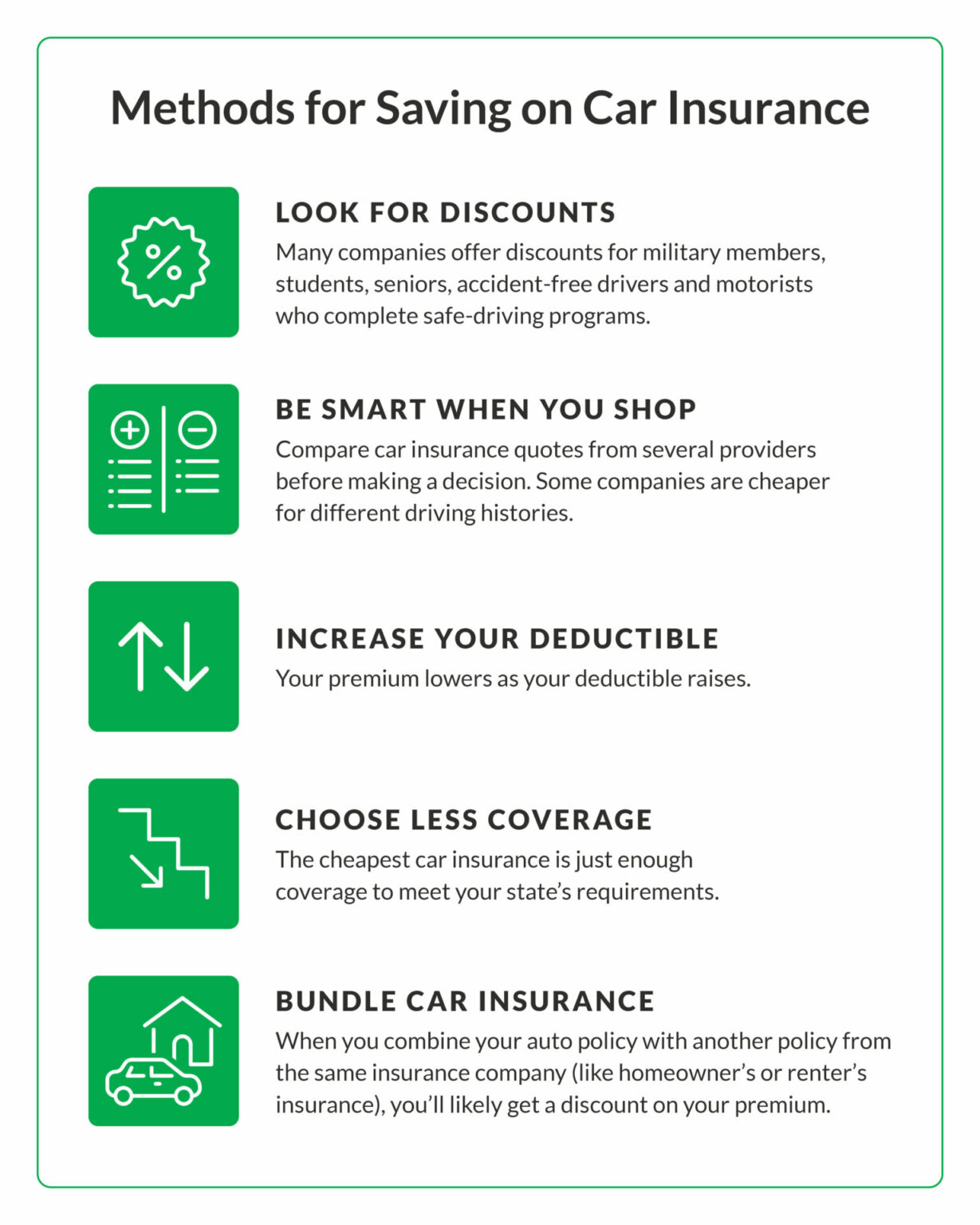
Review policy declarations pages once per year or whenever significant life events occur (such as moving, purchasing a vehicle, or changing job locations). Eliminating unnecessary options—such as roadside assistance or rental reimbursement if already provided through credit cards or auto club memberships—reduces recurring expenses without compromising core coverage.
2. Compare Quotes Across Multiple Carrier Types
Auto insurance companies fall into distinct categories, including national direct writers, regional carriers, mutual insurers, and independent agencies representing multiple brands. Rates for identical coverage profiles can vary by hundreds of dollars annually between carriers due to differing target risk profiles and underwriting algorithms. Gathering quotes from at least three different companies ensures competitive market valuation. Policyholders can cross-check carrier licensing and consumer complaint indexes using tools provided by the National Association of Insurance Commissioners (NAIC).
3. Adjust Policy Deductibles Realistically
The deductible is the out-of-pocket amount paid before insurance coverage applies to a comprehensive or collision claim. Raising standard collision and comprehensive deductibles from $250 or $500 to $1,000 can lower annual collision and comprehensive premiums significantly. However, drivers should maintain an accessible emergency fund equal to the chosen deductible amount to avoid financial hardship in the event of an unexpected claim.
4. Enroll in Usage-Based Insurance (UBI) Programs
Telematics programs utilize mobile applications or plug-in OBD-II vehicle devices to monitor driving behavior, including braking patterns, acceleration rate, cornering force, driving times, and total distance traveled. Drivers who exhibit low-risk habits can secure initial sign-up discounts and earn ongoing policy discounts up to 20% to 30%.
5. Stack Available Discounts
Insurers offer numerous discounts that can be combined for cumulative savings:
- Multi-Policy / Bundling Discount: Combining auto insurance with homeowners, renters, or condo insurance under a single carrier.
- Multi-Vehicle Discount: Insuring two or more vehicles on the same policy.
- Good Driver Discount: Maintaining an accident-free and violation-free record for 3 to 5 consecutive years.
- Good Student Discount: Qualifying full-time high school or college students maintaining a "B" average (3.0 GPA) or higher.
- Defensive Driving Course Credit: Completing an approved accident prevention or defensive driving course (particularly useful for senior drivers).
- Paperless and Automatic Payment Discount: Electing electronic document delivery and automatic bank draft payments.
6. Adjust Coverage on Older Vehicles
As vehicles age, their actual cash value (ACV) declines. When the annual premium cost for collision and comprehensive coverage approaches or exceeds 10% of the vehicle’s market value, maintaining optional physical damage protection may no longer make financial sense. Dropping collision and comprehensive coverages on older, fully paid-off vehicles reduces total policy costs to basic liability and uninsured motorist protections.
Comparing Auto Insurance Coverage Options
Evaluating options requires comparing coverage levels, deductible structures, cost impacts, and practical recommendations across standard policy components.
| Coverage Type | Financial Protection Focus | Impact on Total Premium | Optimization Strategy |
|---|---|---|---|
| Bodily Injury Liability | Third-party medical bills, lost wages, and legal defense costs. | Moderate to High | Maintain higher limits (e.g., 100k/300k) to protect assets; do not cut to state minimums. |
| Property Damage Liability | Third-party vehicle and property repair costs. | Moderate | Match limits to common vehicle replacement values (minimum $50,000 recommended). |
| Collision Coverage | Policyholder vehicle repairs after traffic accidents. | High | Select a higher deductible ($500–$1,000) or drop if vehicle ACV is very low. |
| Comprehensive Coverage | Non-collision incidents (theft, weather, animal strikes). | Low to Moderate | Align deductible with risk tolerance; keep on newer or financed vehicles. |
| PIP / MedPay | Policyholder and passenger injury care regardless of fault. | Low to Moderate | Maintain according to state mandates or sync with existing personal health insurance coverage. |
| Uninsured Motorist (UM) | Injuries/damages caused by uninsured or hit-and-run drivers. | Low | Retain limits equal to Bodily Injury Liability levels for personal asset safety. |
Nuances and Mistakes to Avoid in Discount Auto Insurance
While securing an affordable auto insurance service is a priority, cutting costs improperly can cause long-term financial risk. Avoiding common pitfalls ensures insurance policies remain functional when needed.
Avoid Dropping Liability Limits to State Minimums
State minimum liability requirements were created decades ago in many jurisdictions and often fail to cover modern vehicle repair costs or modern hospital bill amounts. For example, carrying a $15,000 property damage limit leaves a driver personally liable for remaining expenses if they cause an accident involving a modern $50,000 vehicle. If damage expenses exceed insurance limits, injured parties can seek judgments against personal savings, income garnishments, or property assets.
Avoid Unintentional Coverage Lapses
Allowing a policy to lapse—even for a few days—creates significant issues. Insurers classify drivers with coverage gaps as high-risk, resulting in higher future premiums across the board. State motor vehicle departments may also assess fines, suspend registration credentials, or require formal SR-22 financial responsibility filings. Always ensure a new replacement policy is fully bound before canceling an existing one.
Understand Telematics Data Trade-Offs
While telematics applications offer rate reductions for low-risk behavior, drivers who frequently travel late at night, commute in heavy urban stop-and-go traffic, or brake hard may see smaller discounts or, with certain carriers, risk rate increases. Review program terms thoroughly before enrolling in usage-based tracking.
Accurately Declare Vehicle Usage and Drivers
Failing to declare all household drivers or misrepresenting primary vehicle usage (e.g., claiming pleasure use for a vehicle used daily for rideshare services or commercial deliveries) can lead to claim denials or policy cancellation due to material misrepresentation. Ensure policy details accurately reflect household driving reality. Drivers interested in consumer protections and regulatory guidelines can consult resources provided by the Consumer Financial Protection Bureau (CFPB).
Frequently Asked Questions
How often should drivers compare auto insurance quotes?
Policyholders should compare quotes across multiple providers once a year or whenever major life milestones occur. Key triggering events include moving to a new address, buying a car, adding or removing household drivers, getting married, or experiencing an improvement in credit score. Re-evaluating coverage regularly ensures rates remain aligned with current market conditions.
Does raising an auto insurance deductible always save money?
Increasing collision and comprehensive deductibles lowers monthly or annual premium costs because the driver assumes greater financial responsibility per claim. However, it only results in true savings if the driver remains accident-free or maintains sufficient liquid savings to pay the higher deductible out of pocket when a claim occurs.
How do moving violations affect auto insurance premiums?
Moving violations—such as speeding tickets, running red lights, or reckless driving—typically lead to higher premiums upon policy renewal. Insurers assess surcharges based on the severity of the offense. Most violations impact rates for three to five years, after which premiums generally drop if the driver maintains a clean driving record.
What is the difference between collision and comprehensive coverage?
Collision coverage pays for physical damage to your vehicle resulting from an impact with another car, building, guardrail, or rollover event. Comprehensive coverage pays for damage caused by non-collision events, such as vehicle theft, vandalism, fire, hail, fallen tree branches, or striking an animal.
Can completing a defensive driving course reduce insurance costs?
Yes, many insurance carriers offer discounts—typically ranging from 5% to 10%—to drivers who complete an state-approved defensive driving or accident prevention course. These discounts are particularly prevalent for younger drivers and seniors, with benefits typically lasting up to three years per completion.
Practical Action Plan for Lowering Insurance Costs
To secure affordable auto insurance service without jeopardizing financial security, complete the following actionable steps:
- Gather Existing Documents: Retrieve the declaration pages for all current auto policies to identify present coverage limits, deductibles, and total annual costs.
- Verify Vehicle Equity: Research current market values for insured vehicles using industry valuation resources. If a vehicle’s market value is low relative to annual collision premiums, consider dropping physical damage coverages.
- Request Standardized Comparison Quotes: Request quotes from at least three competing insurance providers, maintaining consistent coverage limits across all requests to allow accurate comparisons.
- Confirm Discount Eligibility: Ask prospective agents or use online quote systems to verify eligibility for multi-policy bundling, safe driver credits, paperless billing, and driver training discounts.
- Review Telematics Terms: If considering usage-based tracking programs, review carrier privacy terms and potential rate adjustments to determine if your driving habits align with discount criteria.
- Bind New Coverage First: Ensure the prospective replacement insurance policy is fully active with verified payment confirmation before requesting cancellation of old insurance coverage to avoid costly policy gaps.