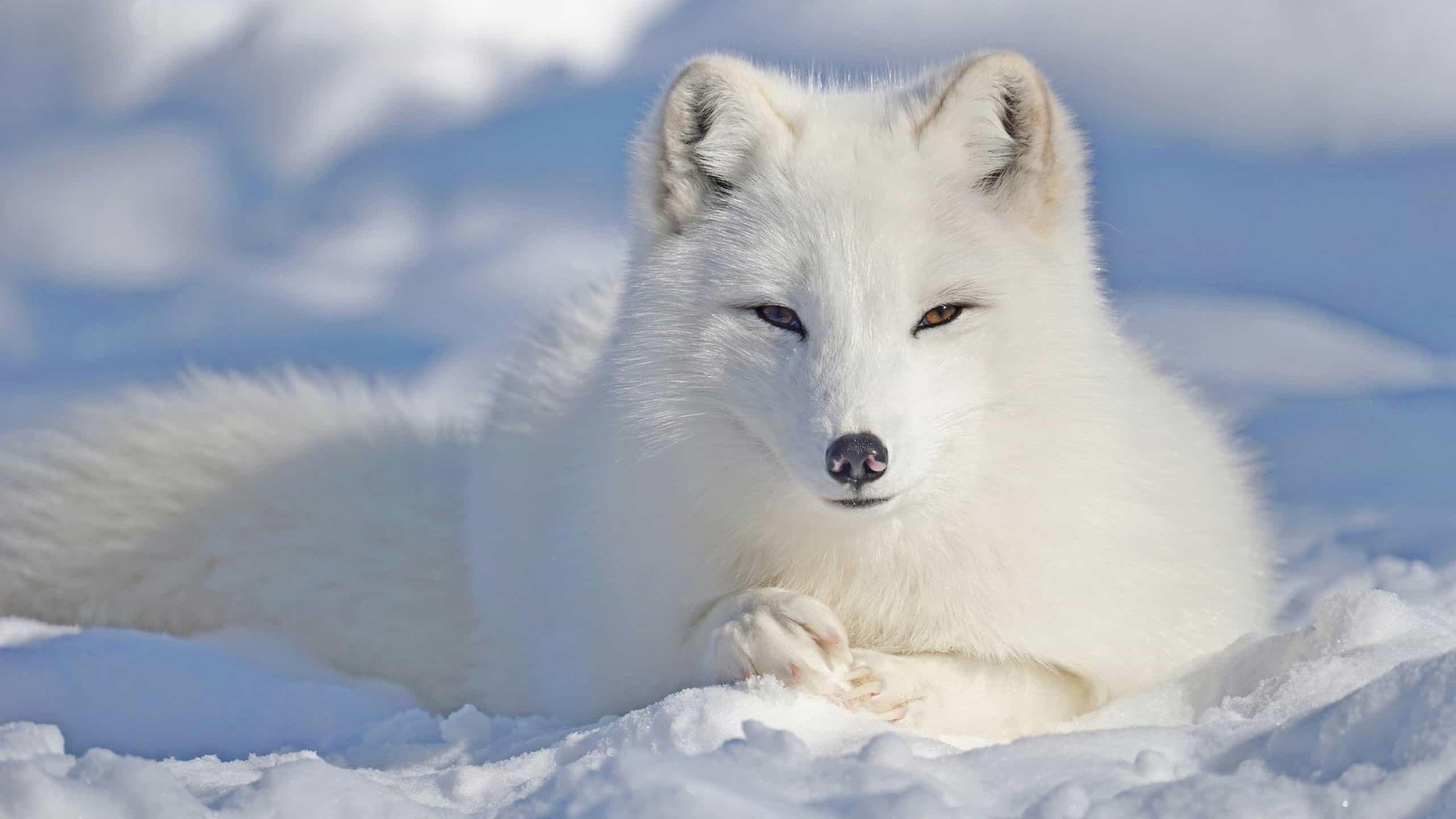
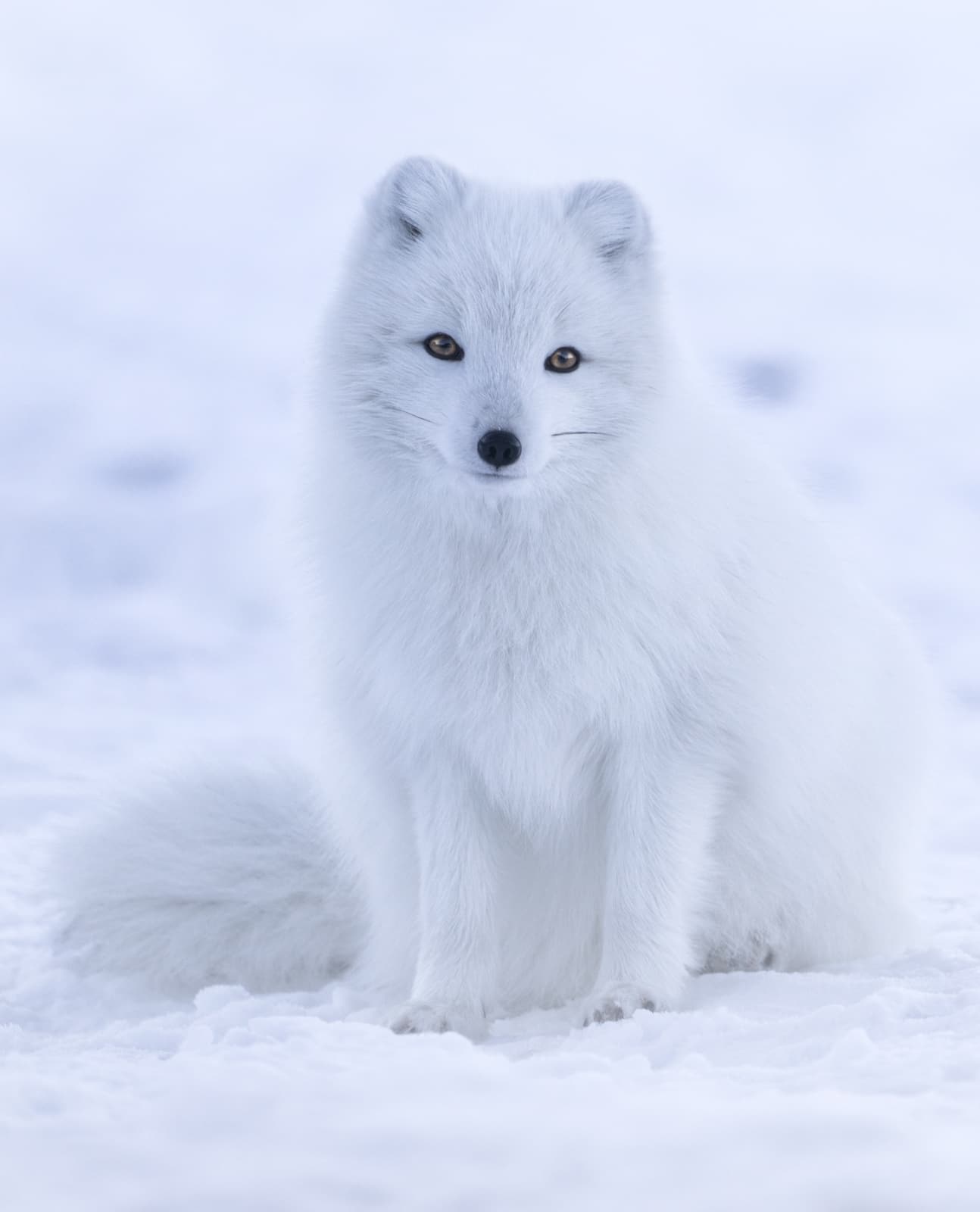
The Arctic fox (Vulpes lagopus) survives extreme tundra conditions through physical, physiological, and behavioral adaptations. Key adaptations include dense seasonal fur that changes color for camouflage, a compact body shape with short limbs to prevent heat loss, a specialized countercurrent blood circulation system in its paws, an extraordinary metabolic resilience to sub-zero temperatures, and strategic food caching in permafrost.
Morphological Adaptations: Structural Defenses Against Extreme Cold
Living in the high Arctic tundra requires structural adaptations that protect an animal from extreme sub-zero temperatures, howling winds, and snow-covered terrain. The physical anatomical traits of the Arctic fox demonstrate how evolutionary pressures shape a mammal's body to optimize heat retention and energy efficiency.
- Compact Body Morph: Small ears, short legs, stubby muzzle
- Reduced Surface-Area-to-Volume Ratio (Allen's Rule)
- Minimal Conductive & Convective Heat Loss
The Multi-Layered Seasonal Coat and Camouflage
The coat of the Arctic fox is one of the most effective insulating coats found in any land mammal. It features a dense, multi-layered fur system consisting of a thick, woolly underfur that traps an insulating layer of warm air directly against the skin, covered by longer guard hairs that shed wind, snow, and water. During the winter, the density of the fur increases by up to 140%, providing exceptional thermal insulation without adding excessive weight or inhibiting movement.
Beyond thermal regulation, the fur provides essential seasonal camouflage through two distinct genetic color phases, or morphs:
- White Morph: Predominant in inland tundra habitats, this coat shifts from a brownish-gray hue during the brief summer months to pure white in autumn. This transition allows the fox to blend seamlessly with snow drifts while stalking prey such as lemmings or hiding from apex predators like golden eagles and polar bears.
- Blue Morph: More common in coastal regions and maritime islands where open rock and dark gravel remain exposed year-round, this coat transitions from a dark brown or charcoal shade in summer to a bluish-gray or slate tone in winter.
This pelage transformation is driven by photoperiodism—changes in daylight hours trigger hormonal shifts that regulate melanin production in newly growing hair follicles.
- Summer Photoperiod (Long Days)
- Low Melanin Inhibition
- Dark Fur (Brown/Slate)
- Low Melanin Inhibition
- Winter Photoperiod (Short Days)
- High Melanin Inhibition
- Light Fur (White/Blue-Gray)
- High Melanin Inhibition
Allen’s Rule and Reduced Surface-Area-to-Volume Ratio
In evolutionary biology, Allen's Rule states that endothermic animals living in colder climates typically possess shorter limbs and extremities than closely related species in warmer environments. The Arctic fox serves as a classic example of this principle. Compared to its close relative, the red fox (Vulpes vulpes), the Arctic fox features:
- Short, rounded ears: Minimizes exposed skin surface area, reducing heat radiation and protecting delicate ear tissues from frostbite.
- A compact, stubby muzzle: Shortens nasal passages and reduces convective heat loss during respiration.
- Short, stocky legs: Keeps the main body mass close to the ground, decreasing total body surface area relative to overall volume.
By maintaining a minimal surface-area-to-volume ratio, the Arctic fox reduces the rate at which thermal energy escapes into the frigid surrounding atmosphere.
Fur-Covered Paws and Countercurrent Heat Exchange
The botanical name of the species, lagopus, translates from Ancient Greek to "hare-footed," referencing the dense fur that covers the undersides of the animal's paw pads. This thick foot-fur serves two vital functions: it provides thermal insulation against frozen ground and increases traction on slippery ice and packed snow.
- Warm Arterial Blood (Core) transfers heat to Cool Venous Blood (Returning)
- Maintains Warm Paw Temperature Without Loss of Core Thermal Energy
Deep within the extremities, the fox utilizes a countercurrent heat exchange system. Arteries carrying warm, oxygenated blood from the heart run immediately adjacent to veins bringing cold blood back from the paws. As warm blood flows downward toward the feet, it transfers thermal energy to the adjacent cool venous blood traveling upward. This mechanism ensures that the blood returning to the core body organs remains warm, while the paws maintain a temperature just above the tissue-freezing threshold (around 0°C to 1°C). Consequently, the animal avoids melting the snow beneath its feet—which would lead to ice buildup on its fur—and prevents significant loss of core body heat.
Physiological and Metabolic Adaptations
While external physical features provide a barrier against the cold, internal metabolic and physiological systems allow the Arctic fox to generate heat efficiently and conserve energy when resources are scarce.
Exceptional Lower Critical Temperature (LCT)
The Lower Critical Temperature (LCT) represents the ambient temperature threshold below which an endothermic animal must increase its basal metabolic rate to produce extra body heat. For human beings, the LCT without clothing is approximately 27°C (80°F). For many temperate mammals, it ranges between 0°C and 10°C.
In contrast, the Arctic fox boasts an extraordinary LCT of approximately -40°C to -50°C (-40°F to -58°F). Within this neutral thermal zone, the fox can rest comfortably without expending extra metabolic energy or burning stored fat just to maintain its core body temperature of roughly 38°C (100.4°F). When temperatures drop below -50°C, the fox increases its metabolic rate through non-shivering thermogenesis, fueled by specialized brown adipose tissue (BAT) and stored body fat reserves.
Energy Conservation and Metabolic Flexibility
Food supply in the high Arctic fluctuates wildly between seasons. During the summer flush, lemmings, nesting birds, and marine resources are abundant. In deep winter, prey becomes sparse. To navigate these boom-and-bust cycles, the Arctic fox exhibits significant physiological flexibility:
- Subcutaneous Fat Accumulation: During autumn, foxes consume excess calories, increasing their total body weight by up to 50%. This layer of subcutaneous fat provides both extra thermal insulation and a reservoir of metabolic energy for winter survival.
- Metabolic Downregulation: When food sources are scarce in mid-winter, the Arctic fox can lower its baseline resting metabolic rate by up to 30%. This physiological slowdown reduces daily caloric requirements, allowing the animal to survive extended periods without successful hunts.
- Autumn Caloric Excess
- Subcutaneous Fat Storage (+50% Mass)
- Winter Food Scarcity
- Metabolic Downregulation (-30% Rate)
- Extended Survival Window
Water Storage and Osmoregulation in Arid Cold
Despite being covered in ice and snow, the Arctic tundra is an ecologically arid environment. Liquid water is virtually nonexistent during the long winter months, and eating snow consumes valuable thermal energy because body heat must melt the ice inside the stomach.
To counter dehydration, the Arctic fox relies heavily on metabolic water production—water synthesized internally as a byproduct of breaking down stored fats and proteins. Additionally, the animal's kidneys feature highly efficient nephrons capable of concentrating urine to an extraordinary degree, conserving body fluids and minimizing metabolic water loss.
Behavioral Adaptations for Scarcity and Shelter
Physical structures and metabolic functions are complemented by behavioral strategies. The Arctic fox displays complex behaviors tailored to energy conservation, shelter, and opportunistic foraging.
Thermal Denning and Subnivean Exploitation
When extreme blizzards strike, physical fur alone is insufficient to prevent heat loss. The Arctic fox uses specific digging behaviors and snow shelters to withstand severe storms:
- Snow Burrows (Quinzhees): During sudden Arctic storms, foxes dig temporary shelters into deep snowdrifts. Snow is an excellent thermal insulator due to trapped air pockets; inside a snow burrow, ambient temperatures can remain 10 to 20 degrees warmer than the exposed air outside.
- Complex Natal Den Systems: For breeding and long-term shelter, foxes inhabit massive underground den networks constructed in elevated tundra mounds or stable Esker ridges. Some of these multi-entrance den complexes have been continuously used, modified, and expanded by successive generations for hundreds of years. The accumulation of fox waste over decades enriches the surrounding tundra soil with nitrogen and phosphorus, creating lush green patches of vegetation that stand out against the landscape.
- Cold Ambient Air (-40°C) during Storm Conditions / Blizzards
- Snow Burrow / Complex Den traps air to create a Microclimate (-10°C to 0°C)
Permafrost Food Caching Practices
Food availability in the Arctic is highly seasonal. During periods of abundance, such as the summer lemming population peaks or bird nesting season, an Arctic fox will kill more prey than it can immediately consume.
Rather than wasting excess food, the fox engages in cryic food caching. It digs pits down to the top of the permafrost layer, places surplus prey—such as lemmings, goslings, or bird eggs—into the cold soil, and covers the cache with turf and snow. The freezing temperatures act as a natural freezer, preserving the food for months. During the barren winter, the fox returns to these stored caches, using its acute sense of smell to locate frozen food beneath feet of snow.
Scavenging Networks and Commensal Relationships
When local prey populations collapse, Arctic foxes often travel hundreds of miles across sea ice, adopting an opportunistic scavenging lifestyle.
- Apex Predator: Polar Bear (Kills Seal / Consumes Blubber)
- Carcass Left on Pack Ice
- Arctic Fox Scavenges Muscle/Viscera (Commensal Relationship)
Foxes often form a commensal relationship with polar bears (Ursus maritimus). By following polar bears across the pack ice, foxes wait for the bear to hunt ringed or bearded seals. After the bear feeds primarily on high-calorie seal blubber, the fox scavenges the remaining meat, bones, and viscera. While this behavior carries risks—such as accidental predation by the bear—it provides a crucial calorie source during frozen winters.
Comparative Breakdown: Arctic Fox Adaptations vs. Red Fox
To understand how specialized the Arctic fox is, it is helpful to compare its traits directly with its temperate relative, the red fox (Vulpes vulpes).
| Trait / Feature | Arctic Fox (Vulpes lagopus) | Red Fox (Vulpes vulpes) | Functional Advantage for Arctic Survival |
|---|---|---|---|
| Lower Critical Temperature (LCT) | -40°C to -50°C | Approx. 0°C | Conserves energy without increasing metabolic heat production. |
| Ear Structure | Small, rounded, heavily furred | Large, pointed, lightly furred | Reduces radiative heat loss; prevents frostbite. |
| Paw Insulation | Covered in thick fur year-round | Exposed leather pads with minimal fur | Prevents heat loss to frozen ground; improves traction on ice. |
| Winter Coat Density | Extremely dense; up to 140% winter increase | Moderately dense; lower underfur ratio | Traps maximum air layer for thermal insulation. |
| Seasonal Camouflage | Dual coat morphs (White/Blue phase) | Consistent red/orange coat year-round | Essential stealth for hunting and predator avoidance on snow. |
| Metabolic Flexibility | Can lower metabolic rate by up to 30% | Relies on consistent food intake | Allows long-term survival during severe food shortages. |
| Circulatory Adaptations | Advanced countercurrent heat exchange in paws | Basic peripheral thermoregulation | Keeps core warm while protecting extremities from freezing. |
Climate Pressures and Future Vulnerabilities
Despite millions of years of evolutionary adaptation, the Arctic fox faces challenges driven by rapid climate change in polar regions. As global temperatures rise, the boundaries of tundra ecosystems are shifting north, altering the balance between native Arctic species and invading temperate competitors.
- Global Climate Warming
- Northern Expansion of Boreal Forest
- Invading Red Fox Population Overpowers Arctic Fox (Habitat Displacement)
The primary competitive threat comes from the larger red fox (Vulpes vulpes). Historically, the harsh Arctic winter kept red foxes from establishing permanent populations in the high tundra due to their higher Lower Critical Temperature and larger energy requirements. However, as Arctic winter temperatures moderate and tree lines shift northward, red foxes are moving into historical Arctic fox habitats.
Red foxes are larger, more aggressive, and outcompete Arctic foxes for natal dens and prey. In regions where their ranges overlap, red foxes have been documented killing Arctic foxes and taking over their den complexes. Researchers and conservation organizations, such as the IUCN Red List, monitor these shifting populations to assess the long-term conservation status of isolated Arctic fox subpopulations.
Additionally, climate change disrupts the periodic population cycles of tundra lemmings—a primary prey source for inland Arctic foxes. Irregular freeze-thaw cycles create ice crusts over snowpacks, preventing lemmings from accessing subnivean vegetation and causing localized prey population crashes.
Frequently Asked Questions About Arctic Fox Adaptations
How does the Arctic fox keep its paws from freezing on ice?
The Arctic fox uses a specialized countercurrent heat exchange system in its legs and paws. Arterial blood flowing down to the feet transfers its thermal energy to cold venous blood returning to the heart. This keeps the paw tissue just above freezing (around 1°C), minimizing heat loss into the ice while preventing tissue damage or frostbite.
Why do Arctic foxes change color in the winter?
Color change is driven by shifts in daylight hours, known as photoperiodism. Reduced daylight signals the fox's body to stop producing dark melanin pigments in new hair growth. The resulting white or slate-gray winter coat provides essential camouflage against snow and ice, allowing the fox to hide from predators and stalk prey.
How cold of a temperature can an Arctic fox tolerate?
An Arctic fox can tolerate temperatures dropping to -50°C (-58°F) before it needs to increase its basal metabolic rate to produce extra body heat. Their multi-layered fur, compact body structure, and internal thermoregulation make them one of the most cold-tolerant land mammals on Earth.
What do Arctic foxes eat when food is scarce in winter?
When live prey like lemmings and voles are scarce, Arctic foxes rely on food cached in the permafrost during summer, scavenge remains of marine mammal kills left by polar bears, eat marine invertebrates along open coastlines, or downregulate their metabolic rate to survive on stored body fat.
Practical Guidance for Wildlife Observation and Research
For researchers, wildlife biologists, and naturalists studying Arctic fauna, observing Arctic fox adaptations requires careful planning and adherence to Arctic safety protocols:
- Respect Active Den Sites: Natal den networks are critical for species reproduction. Maintain a minimum distance of 300 meters (approx. 1,000 feet) from active den mounds during the spring and summer breeding seasons to avoid disturbing nursing females or pups.
- Avoid Wildlife Feeding: Never feed Arctic foxes. Supplementing their diet habituates them to human presence, disrupts their natural caching behaviors, and increases their vulnerability to diseases like rabies and predation by red foxes or domestic dogs.
- Utilize Remote Monitoring Equipment: To record natural behaviors—such as caching, subnivean hunting, and interspecies interactions—use remote trail cameras equipped with lithium batteries rated for sub-zero performance.
- Practice Biosecurity Protocols: Field researchers traveling between different tundra zones should sanitize boots, outerwear, and gear to prevent the spread of pathogens, such as Echinococcus multilocularis, a parasitic tapeworm carried by wild canids.
Understanding the adaptations of the Arctic fox offers clear insights into evolutionary biology, thermal physiology, and ecosystem interdependence, underscoring the importance of preserving fragile polar environments.